


Woven Wire Fence Melbourne: Industrial Engineering and Mesh Selection Guide
In the industrial landscape of Melbourne, the requirement for high-performance materials often spans from specialized filtration systems to robust structural enclosures. While the term "woven wire fence Melbourne" is frequently associated with perimeter security or architectural installations, engineers and procurement specialists in the industrial sector recognize that the core material—Woven Wire Mesh—is a critical component in high-precision applications.
Selecting the right mesh involves more than choosing a pattern; it requires a deep understanding of metallurgy, weave geometry, and environmental resistance. For industries operating in the chemical, food and beverage, and water treatment sectors, the choice of stainless steel mesh directly impacts the longevity and efficiency of their operations. This guide explores the technical parameters of woven wire mesh, its industrial applications, and the engineering considerations necessary for selecting high-grade materials in demanding environments.
Understanding the Fundamentals of Woven Wire Mesh
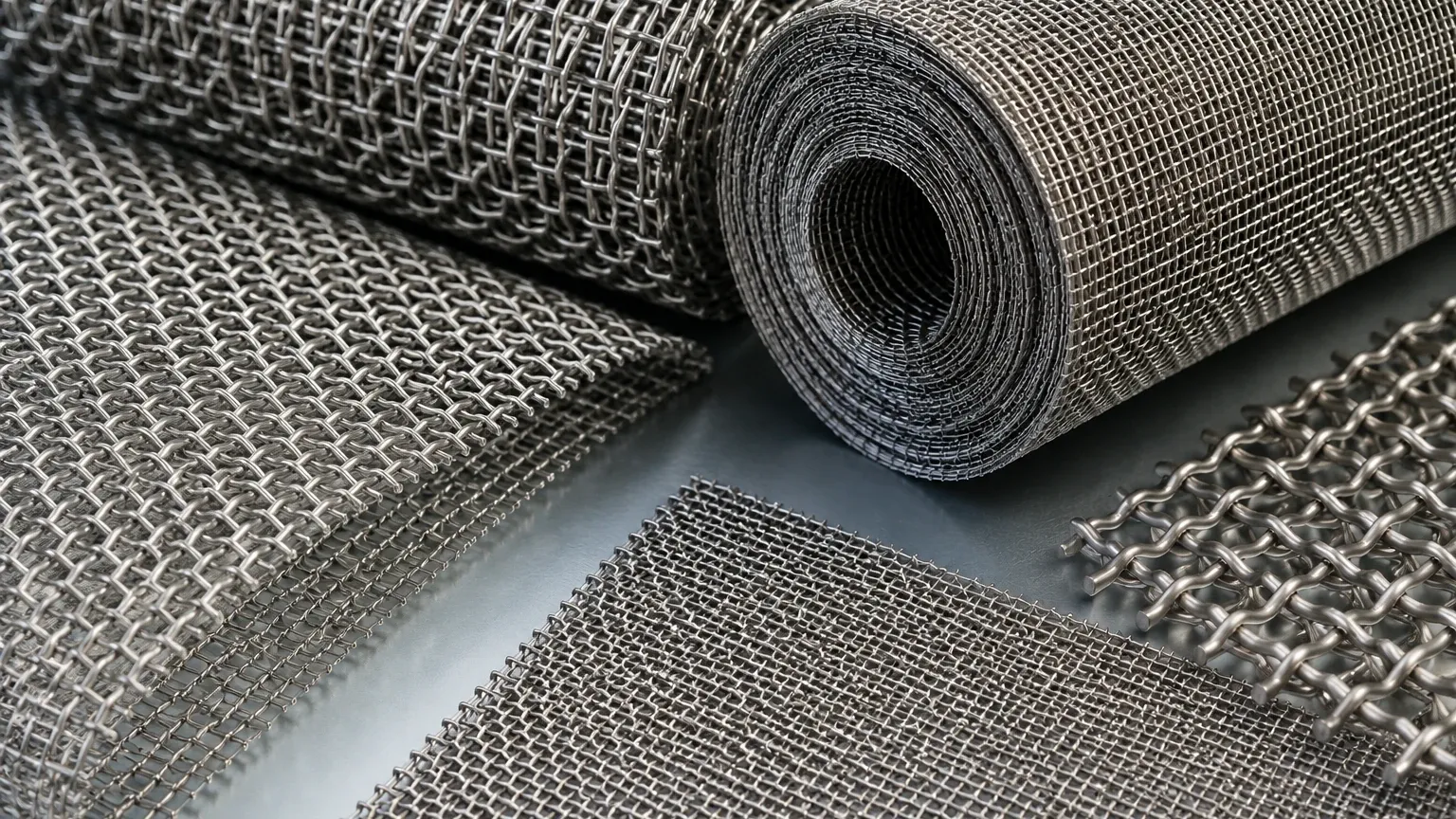
Woven wire mesh is produced by weaving metallic wires on industrial looms, a process that creates precise openings (apertures). Unlike welded mesh, where wires are fused at intersections, woven mesh relies on the mechanical interlocking of the warp (longitudinal) and weft (transverse) wires. This structure provides a unique combination of flexibility, strength, and high open-area percentages.
Material Selection: SS304 vs. SS316L
For industrial applications in Melbourne, particularly those near coastal areas or involving chemical exposure, material selection is the first line of defense against premature failure.
* Stainless Steel 304: The most common grade, offering excellent cost-to-performance ratios for general industrial use. It provides good corrosion resistance and is suitable for most indoor partitions and standard filtration tasks.
* Stainless Steel 316L: Containing molybdenum, this grade offers superior resistance to chlorides and pitting. In the context of a woven wire fence in Melbourne's industrial zones, 316L is often the preferred choice for outdoor installations or equipment exposed to saline air and aggressive cleaning agents.
Weave Types and Their Mechanical Properties
The geometry of the weave determines the mesh’s filtration accuracy and structural integrity. Engineers must choose based on the specific requirements of the application:
1. Plain Weave: The most straightforward pattern where each weft wire passes over and under one warp wire. It provides the most consistent aperture size and is ideal for standard screening and protective barriers.
2. Twill Weave: Each weft wire passes over and under two warp wires. This allows for the use of heavier wire diameters relative to the mesh count, increasing the mechanical strength and durability of the mesh without sacrificing the aperture size.
3. Dutch Weave (Plain and Twill): These weaves utilize different diameters for warp and weft wires, resulting in a dense, multi-layered structure. While less common for fencing, they are the industry standard for high-pressure filtration where fine micron ratings are required.
To find the specific configuration for your project, you can Review product options and application support for Plain, twill and dutch woven wire mesh in SS304/316L — rolls, cut mesh and framed panels. Send mesh count or micron target for a technical quote.
Industrial Applications of Woven Wire Mesh in Melbourne
Melbourne serves as a hub for diverse industries that utilize woven wire mesh in various capacities. While a "woven wire fence" might imply a simple boundary, in an industrial facility, these structures often serve complex technical purposes.
Machine Guarding and Safety Enclosures
In manufacturing plants, woven wire mesh is used to create safety partitions around automated machinery. Unlike solid barriers, the mesh allows for airflow and visibility, which are essential for heat dissipation and visual monitoring of equipment. The high tensile strength of stainless steel ensures that the enclosure can withstand mechanical impacts, protecting both personnel and sensitive hardware.
Food and Beverage Processing
Melbourne’s food processing sector requires materials that meet stringent hygiene standards. Woven wire mesh used in these environments must be easy to sanitize and resistant to the caustic chemicals used in Clean-in-Place (CIP) cycles. Stainless steel 316L mesh is frequently used for sorting, drying, and filtering, as it does not leach contaminants into the product stream.
Chemical and Petrochemical Filtration
For chemical plants, the mesh must resist corrosion from acidic or alkaline solutions. Here, the precision of the weave is paramount. Engineers often specify a exact micron rating to ensure that particulate matter is effectively removed from process fluids, preventing downstream equipment damage.
Engineering Considerations for Mesh Selection
When specifying woven wire mesh for an industrial project, several technical factors must be evaluated to ensure the material performs as expected over its service life.
Aperture Size and Open Area
The aperture size (the distance between two adjacent wires) and the percentage of open area are critical for applications involving flow. In a filtration context, the aperture dictates the smallest particle that will be retained. In a structural or fencing context, the open area determines the wind load and visibility. A higher open area reduces the pressure drop in filtration but may decrease the overall mechanical strength of the mesh.
Wire Diameter and Tensile Strength
The diameter of the wire used in the weave affects the weight, durability, and cost of the mesh. Heavier wires provide greater resistance to abrasion and physical impact, which is essential for a woven wire fence Melbourne installation in a high-traffic industrial zone. However, increasing the wire diameter for a fixed mesh count will decrease the open area.
Corrosion Resistance and Environmental Factors
Melbourne’s climate can be challenging for metallic structures. Atmospheric corrosion, particularly in areas with high humidity or industrial pollutants, can lead to surface staining (tea staining) or structural weakening. Specifying a passivated stainless steel finish or choosing higher-grade alloys like 316L can significantly extend the replacement cycle of the mesh.
Comparison: Industrial Mesh vs. Commercial Fencing
It is important to distinguish between commercial-grade fencing and industrial-grade woven wire mesh. While they may appear similar, the engineering tolerances and material quality differ substantially.
| Feature | Commercial Woven Wire Fence | Industrial Woven Wire Mesh |
| :— | :— | :— |
| Material Purity | Often lower-grade galvanized steel | High-purity SS304, SS316L, or specialty alloys |
| Aperture Precision | High tolerance (variable openings) | Precision-controlled apertures (micron-level) |
| Durability | Designed for standard weather exposure | Designed for chemical, thermal, and mechanical stress |
| Customization | Standard roll sizes and heights | Custom weave patterns, wire diameters, and finishes |
For engineers, the cost-benefit analysis often favors industrial-grade mesh due to its lower total cost of ownership. The reduced need for maintenance, painting, or frequent replacement makes stainless steel woven mesh a more sustainable choice for long-term infrastructure.
Customization and OEM Solutions
Every industrial application has unique requirements that off-the-shelf products may not meet. Customization is a key advantage of working with specialized manufacturers like Kaifil.
Custom Mesh Counts and Micron Ratings
In filtration, the "mesh count" refers to the number of openings per linear inch. For specialized chemical processing, a standard mesh count might not provide the exact flow rate or particle retention required. Custom weaving allows for the production of mesh that meets specific micron targets, ensuring process efficiency.
Fabrication: Cut-to-Size and Framed Panels
Beyond the raw mesh, many industrial projects require the mesh to be integrated into frames or cut into specific shapes (circles, rectangles, or complex geometries). Framed panels are particularly useful for creating modular woven wire fence Melbourne sections that can be easily installed or moved within a facility. Precision laser cutting and specialized welding techniques ensure that the edges of the mesh are secure and do not fray under stress.
Maintenance and Longevity of Stainless Steel Mesh
While stainless steel is inherently durable, its performance in an industrial setting depends on proper maintenance.
1. Regular Cleaning: Removing accumulated dust, salt, and chemical residues prevents the breakdown of the passive chromium oxide layer that protects the steel.
2. Inspection for Mechanical Damage: In high-vibration environments, the wires can experience fatigue. Regular inspections should check for broken wires or shifts in the weave pattern.
3. Chemical Compatibility Checks: Ensure that any cleaning agents or process fluids are compatible with the specific grade of stainless steel used. For instance, even 316L can be susceptible to high concentrations of hot hydrochloric acid.
Conclusion: Making an Informed Decision
Selecting the appropriate woven wire mesh for an industrial application in Melbourne requires a balance of material science and practical engineering. Whether the goal is to install a high-durability woven wire fence Melbourne for a facility or to integrate a precision filter cartridge into a production line, the specifications must be tailored to the environment and the mechanical loads involved.
By focusing on high-quality stainless steel (SS304/316L), understanding the implications of different weave types, and considering the long-term environmental factors, engineers can ensure their filtration and structural systems operate reliably. For those requiring precise technical specifications and reliable manufacturing, choosing a partner with OEM capabilities ensures that the final product meets the exact demands of the application.
When evaluating your next project, consider the total cost of ownership. High-performance woven wire mesh may require a higher initial investment than standard materials, but its durability, precision, and low maintenance requirements provide significant value over the life of the installation.
