


Strainers vs Filters Industrial Water Treatment
In the field of industrial water treatment, the effective removal of solid contaminants is a fundamental requirement for protecting downstream equipment, ensuring process integrity, and meeting environmental discharge standards. While the terms are often used interchangeably in general conversation, the technical distinction between strainers and filters is critical for engineering design and procurement. Understanding the nuances of strainers vs filters industrial water treatment applications allows facility managers and engineers to optimize system performance and reduce the total cost of ownership.
Selecting the wrong technology can lead to frequent downtime, damaged pumps, fouled membranes, or contaminated end-products. This guide examines the technical differences, selection criteria, and engineering considerations necessary for choosing the correct solid-liquid separation solution.
The Fundamental Distinction in Particle Separation
The primary difference between a strainer and a filter lies in the size of the particles they are designed to remove and the nature of the media used for separation. In an industrial context, the distinction is usually defined by the micron rating and the impact on the system's pressure drop.
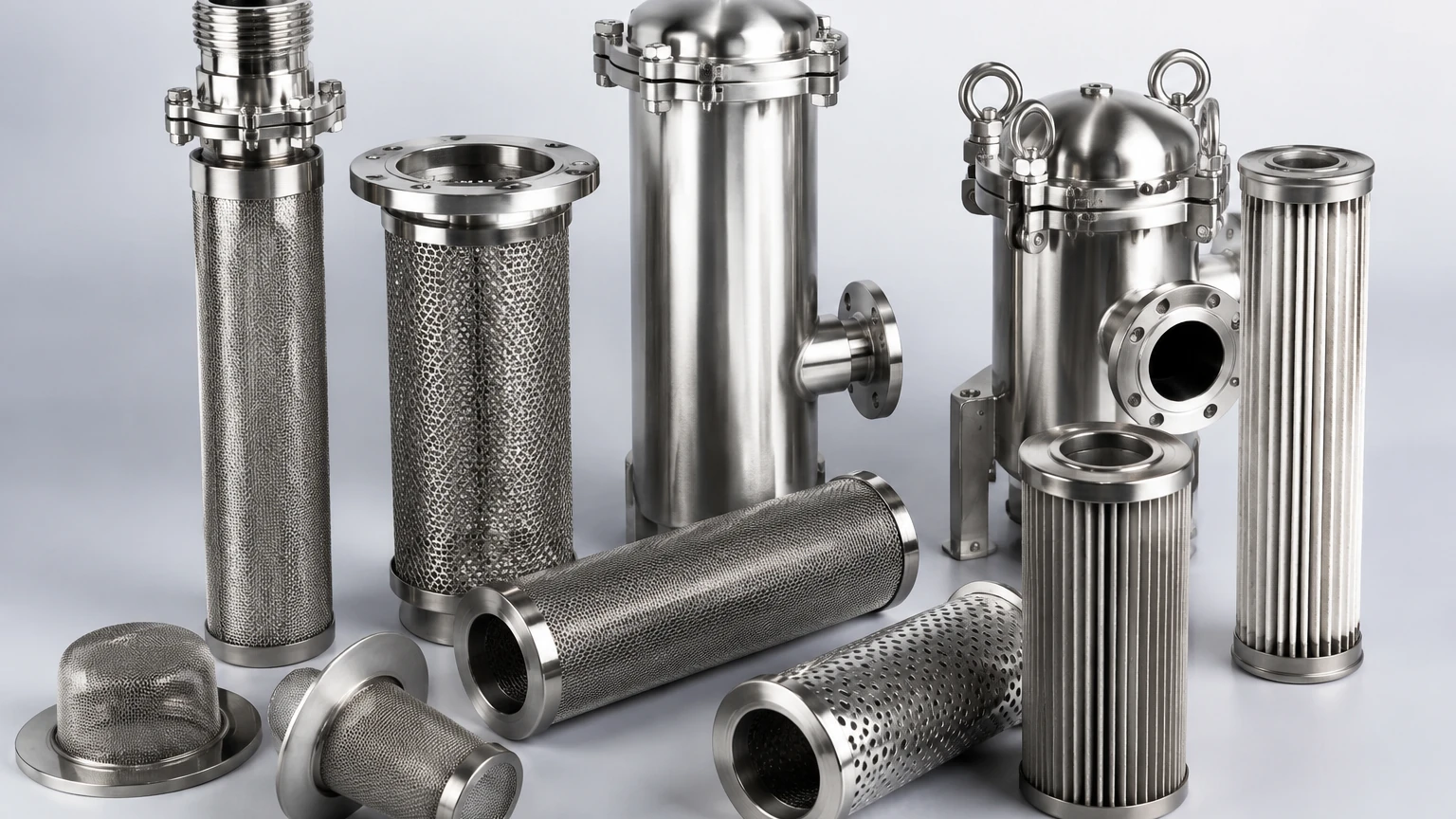
Strainers are typically categorized as coarse separation devices. They are designed to remove larger, macroscopic solids from a liquid stream—particles that are generally visible to the naked eye, typically 50 microns or larger. The primary function of a strainer is to protect downstream equipment, such as pumps, valves, and heat exchangers, from damage or clogging caused by large debris. Because the media is relatively open, strainers offer low resistance to flow, resulting in a minimal pressure drop across the device.
Filters, conversely, are engineered to remove much finer particles, often down to the sub-micron level. Industrial filtration is used when the clarity of the water or the purity of the process fluid is the primary objective. Filters utilize finer media, such as pleated stainless steel mesh, sintered metal, or depth-loading cartridges, to capture microscopic contaminants. Due to the tighter pore structure, filters naturally create a higher pressure drop and require more frequent monitoring of differential pressure to ensure operational efficiency.
Engineering Characteristics of Industrial Strainers
Industrial strainers are the first line of defense in water treatment systems. They are usually constructed from perforated plate or heavy-duty wire mesh. When evaluating strainers vs filters industrial water treatment strategies, engineers must consider the specific mechanical configuration of the strainer.
Y-Strainers
Named for their shape, Y-strainers are typically used in pressurized lines, either liquid or gas, but are most common in water cooling and intake systems. They are compact and best suited for applications with low concentrations of solids. Their design allows for cleaning without removing the strainer from the piping, though the process usually requires a temporary system shutdown unless a blow-off valve is installed.
Basket Strainers
Basket strainers feature a vertical chamber that houses a removable "basket" of mesh or perforated metal. These are preferred when high flow rates are required or when the solids loading is higher. The basket design offers a larger surface area than a Y-strainer, which results in a lower pressure drop and longer intervals between cleanings. For continuous processes, duplex basket strainers—which consist of two separate strainer chambers connected by a diverting valve—allow for cleaning one side while the other remains in operation.
Self-Cleaning Strainers
In high-volume industrial water treatment, manual cleaning is often impractical. Self-cleaning strainers use mechanical scrapers or back-flushing mechanisms to remove accumulated debris based on a timer or a differential pressure trigger. These are essential in raw water intake from rivers or lakes where debris levels can fluctuate significantly.
Technical Capabilities of Industrial Filtration Systems
When the process requires the removal of particles smaller than 50 microns, filtration systems become necessary. In industrial water treatment, stainless steel filter cartridges and wire mesh filters are favored for their durability and cleanability compared to disposable polymer alternatives.
Surface vs. Depth Filtration
Surface filters, such as those made from fine stainless steel wire mesh, capture particles on the surface of the media. These are excellent for consistent particle sizes and are relatively easy to clean through backwashing. Depth filters, however, capture contaminants throughout the thickness of the media. While depth filters can hold a larger volume of contaminants, they are generally more difficult to regenerate and are often treated as semi-disposable or specialized cleanable components in high-end industrial applications.
Micron Ratings and Efficiency
Filters are defined by their micron rating, which can be either nominal or absolute. A nominal rating indicates the filter can trap a large percentage of particles of a certain size, while an absolute rating (often associated with a Beta Ratio) guarantees the removal of nearly 100% of particles at that size. For critical water treatment steps, such as pre-filtration for Reverse Osmosis (RO) membranes, absolute-rated stainless steel cartridges are often required to prevent membrane fouling.
Critical Selection Criteria for Water Treatment Applications
Choosing between a strainer and a filter involves more than just looking at particle size. Engineers must conduct a comprehensive analysis of the fluid dynamics and the nature of the contaminants. For those starting a new project or looking to upgrade existing systems, reviewing the technical specifications on the Main Page can provide a baseline for available hardware configurations.
Particle Size Distribution (PSD)
An accurate PSD analysis of the influent water is essential. If the water contains a wide range of particle sizes, a multi-stage approach is often the most cost-effective. Using a coarse strainer to remove large debris followed by a fine filter to capture microscopic solids prevents the fine filter from clogging prematurely, thereby extending the service life of the more expensive filtration elements.
Flow Rate and Pressure Drop
Every separation device introduces a pressure drop (delta P) into the system. In industrial water treatment, maintaining a specific flow rate is often non-negotiable. Strainers are chosen when high flow must be maintained with minimal energy loss. If a fine filter is required, the system must be sized with enough surface area (often through multi-cartridge housings) to keep the initial pressure drop within acceptable limits, typically below 2-5 psi.
Contaminant Loading
The concentration of solids, usually measured in parts per million (ppm) or milligrams per liter (mg/L), dictates the frequency of maintenance. High contaminant loading in a fine filter will lead to rapid clogging. In such cases, a self-cleaning strainer or a centrifugal separator may be used as a pre-filter to reduce the burden on the primary filtration system.
Material Selection and Chemical Compatibility
In industrial water treatment, the environment can be highly corrosive. The choice of material for the strainer or filter housing and media is paramount to the system's longevity. Stainless steel is the industry standard due to its resistance to oxidation and its ability to withstand high temperatures and pressures.
* 304 Stainless Steel: Suitable for most general water treatment applications, including municipal water and mildly corrosive industrial process water.
* 316L Stainless Steel: Contains molybdenum, providing superior resistance to chlorides and acids. This is the preferred material for brackish water treatment, chemical processing, and pharmaceutical applications where corrosion resistance and sanitary conditions are required.
* Specialty Alloys: For highly aggressive environments, such as seawater desalination or high-temperature chemical filtration, alloys like Monel or Hastelloy may be necessary for the filter mesh.
Kaifil specializes in the precision manufacturing of these components, ensuring that the mesh weave and structural integrity of the filter cartridges meet the rigorous demands of industrial environments.
Maintenance Cycles and Operational Efficiency
The total cost of ownership (TCO) of a separation system is heavily influenced by maintenance requirements. When comparing strainers vs filters industrial water treatment options, the labor and downtime associated with cleaning or replacing media must be calculated.
1. Cleaning Methods: Strainers are generally easier to clean, often requiring a simple rinse or mechanical brushing. Many stainless steel filters are also cleanable via ultrasonic baths or back-flushing, which provides a significant cost advantage over disposable plastic or paper filters that must be purchased and disposed of repeatedly.
2. Monitoring: Modern industrial systems utilize differential pressure (DP) transmitters to monitor the health of the filter or strainer. A sudden spike in DP indicates a blockage or a surge in contaminant loading, while a drop in DP could indicate a ruptured media element.
3. Replacement Cycles: While stainless steel elements are designed for long-term use, they are not infinite. Factors such as erosion from high-velocity particles or fatigue from repeated pressure cycling will eventually necessitate replacement. Choosing high-quality, precision-manufactured components ensures these cycles are as long as possible.
Conclusion
The decision between a strainer and a filter is not a matter of one being superior to the other, but rather which technology is appropriate for the specific particle size, flow requirements, and water quality goals of the operation. Strainers provide essential protection for mechanical equipment by removing large debris with minimal pressure impact. Filters provide the necessary refinement to ensure water purity for sensitive industrial processes.
For engineers and purchasing teams, the key is to define the target particle size and the allowable pressure drop before selecting a hardware configuration. By integrating both technologies in a tiered approach, industrial facilities can achieve high-performance water treatment that is both reliable and cost-effective. For detailed engineering support and to explore a wide range of custom stainless steel filtration solutions, professionals are encouraged to Review product options and application support to find the ideal match for their specific industrial requirements.
Download Strainers vs Filters Industrial Water Treatment as a PDF
