


Filter Foam Sheet
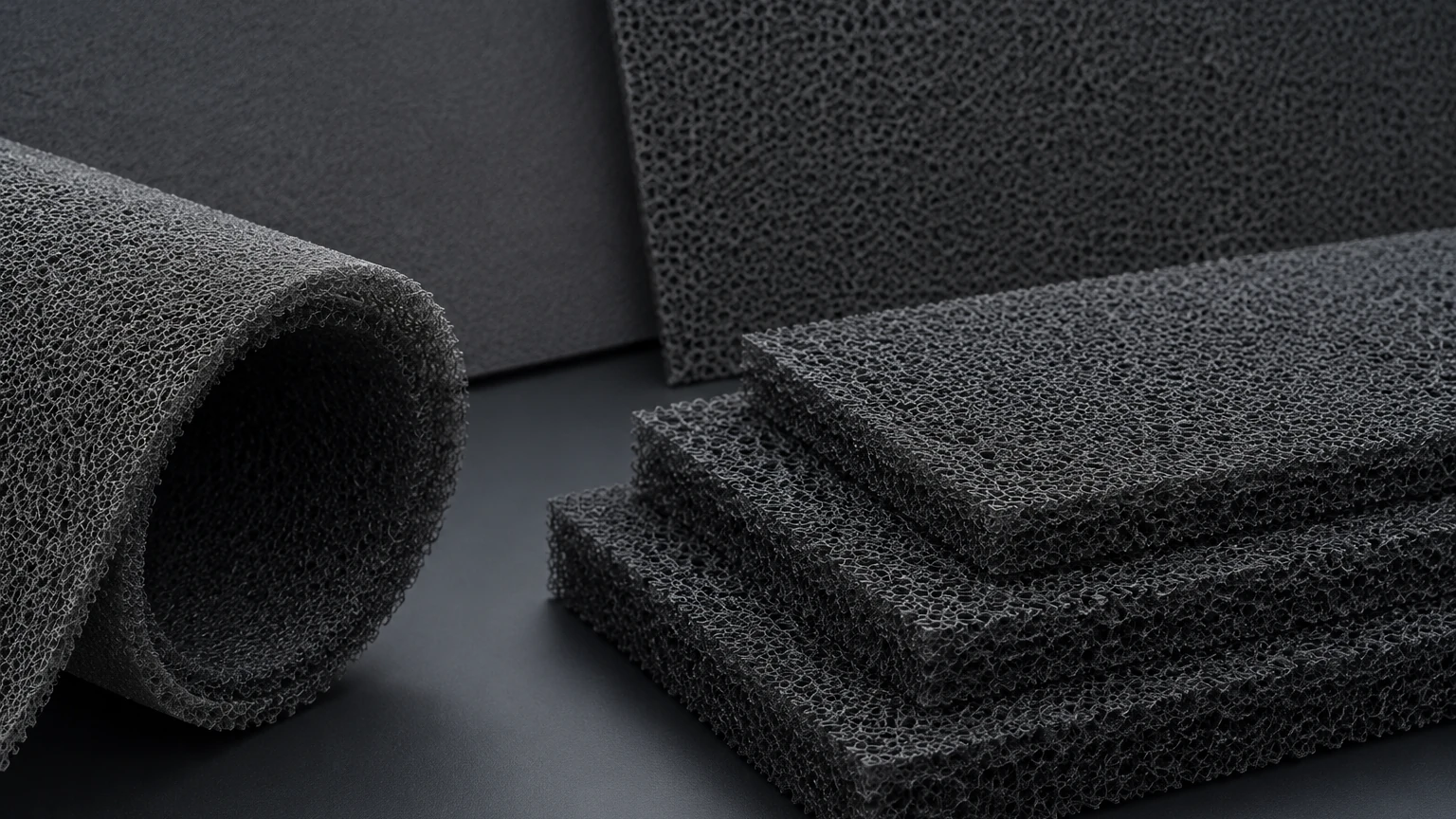
In industrial filtration, the selection of media is dictated by the specific physical and chemical demands of the application. A filter foam sheet, specifically reticulated polyurethane or specialized metal-based foam, represents a versatile solution for air and liquid pre-filtration, moisture separation, and acoustic damping. Unlike standard sponge materials, industrial-grade filter foam undergoes a process called reticulation, which removes the cell membranes to create a highly porous, three-dimensional skeletal structure. This open-cell architecture is critical for ensuring low resistance to airflow while maximizing the surface area available for particle entrapment.
For engineers and procurement specialists, understanding the technical nuances of filter foam sheets—ranging from Pores Per Inch (PPI) ratings to chemical compatibility—is essential for optimizing system performance and extending the service life of downstream high-precision components, such as those found on our Main Page.
The Engineering Behind Reticulated Filter Foam
The performance of a filter foam sheet is primarily defined by its reticulation process. During manufacturing, a standard foam block is placed in a reaction chamber where a controlled thermal or chemical explosion occurs. This process, often referred to as "zapping," consumes the thin membranes (windows) between the cell struts while leaving the struts themselves intact. The result is a 97% void volume material that allows for high-velocity fluid or gas flow with minimal pressure drop.
Pores Per Inch (PPI) and Filtration Efficiency
The most common metric for specifying a filter foam sheet is PPI. This value indicates the number of linear pores per inch. Standard industrial ratings typically range from 10 PPI (very coarse) to 100 PPI (very fine).
* 10 to 30 PPI: These sheets are typically used for heavy-duty pre-filtration, such as in large air intake systems or as a primary stage in wastewater treatment. They excel at capturing large debris and have a high dust-holding capacity.
* 45 to 60 PPI: This range is frequently used in small engine air filters, electronic cabinet cooling, and general HVAC applications. It provides a balance between moderate efficiency and low resistance.
* 80 to 100 PPI: High-density foam sheets are used for fine dust filtration and as specialized reservoirs in medical or cosmetic applications. However, they require more frequent monitoring due to their higher initial pressure drop and faster clogging rates.
Material Composition and Chemical Compatibility
Selecting the correct polymer or base material for a filter foam sheet is vital for ensuring structural integrity under operational stress. The two most common types of polyurethane foam are Polyester and Polyether.
Polyester-Based Foam
Polyester foams are known for their superior physical strength and resistance to hydrocarbons, oils, and fuels. They are the preferred choice for automotive and industrial machinery applications where the filter may come into contact with lubricants or petroleum-based solvents. However, polyester foam is susceptible to hydrolysis—a breakdown of the material when exposed to high humidity and heat over long periods.
Polyether-Based Foam
Polyether foams offer excellent resistance to water and microbial growth. They are the standard for aqueous filtration, water treatment, and outdoor applications where moisture exposure is constant. While slightly less resistant to oils than polyester, their stability in humid environments makes them a reliable choice for long-term industrial use.
Metal and Ceramic Foams
In extreme environments involving high temperatures or aggressive chemicals, polymer foams may fail. In these instances, engineers often turn to metal foams (such as nickel or stainless steel) or ceramic foams. These materials provide the same open-cell structure as a standard filter foam sheet but with the thermal and mechanical properties required for molten metal filtration or high-temperature gas exhaust systems.
Key Performance Metrics for Engineers
When integrating a filter foam sheet into a system design, several engineering factors must be evaluated to ensure the component meets the required performance benchmarks.
Pressure Drop (ΔP)
The resistance to flow is perhaps the most critical factor. A high initial pressure drop can lead to increased energy consumption by fans or pumps. Reticulated foam is prized for its low ΔP compared to non-woven or felted media. Engineers must calculate the face velocity of the fluid and consult the manufacturer’s ΔP/velocity curves to ensure the system operates within its design parameters.
Dust Holding Capacity (DHC)
DHC refers to the amount of contaminant a filter can capture before reaching a terminal pressure drop. Because a filter foam sheet utilizes depth filtration—trapping particles throughout the thickness of the material rather than just on the surface—it typically offers a higher DHC than surface-loading thin-film media.
Face Velocity
The speed at which the air or liquid passes through the foam sheet affects its efficiency. At higher velocities, inertial impaction becomes the primary mechanism for particle capture, whereas, at lower velocities, diffusion and interception play larger roles. For most HVAC and industrial cabinet cooling applications, a face velocity of 250 to 500 feet per minute (fpm) is standard.
Filter Foam Sheet vs. Stainless Steel Wire Mesh
While filter foam sheets are excellent for pre-filtration and low-cost applications, they are often compared to or used in conjunction with stainless steel wire mesh. Understanding when to use each is crucial for technical decision-making.
1. Durability: Stainless steel wire mesh, such as the solutions found on our Main Page, offers significantly higher mechanical strength and can withstand high-pressure differentials that would collapse or tear a foam sheet.
2. Temperature Resistance: Polyurethane foam is generally limited to temperatures below 100°C (212°F). Stainless steel filters can operate in environments exceeding 500°C.
3. Cleanability: While some foam sheets are "washable," they eventually degrade and lose their structural integrity. Stainless steel mesh is fully regenerable through ultrasonic cleaning or backwashing, making it the superior choice for permanent industrial installations.
4. Precision: Wire mesh provides a fixed, absolute micron rating. In contrast, a filter foam sheet provides a nominal rating, as the irregular pore structure allows some larger particles to pass through via a "tortuous path."
In many high-performance systems, a filter foam sheet is used as a sacrificial pre-filter to protect a more expensive, high-precision stainless steel filter cartridge.
Application-Specific Engineering Considerations
HVAC and Air Handling
In air handling units (AHUs), foam sheets are often used to protect coils from large dust particles. Because they can be easily cut to size, they are ideal for custom-sized intake vents. Engineers should specify flame-retardant additives (such as those meeting UL 94 HF-1 standards) when using foam in electrical enclosures or building ventilation.
Hydraulic and Lubrication Systems
In hydraulic reservoirs, a coarse foam sheet can act as a breather filter, preventing large environmental contaminants from entering the oil while allowing the tank to "breathe" during fluid level fluctuations. Here, the compatibility with hydraulic fluids (typically requiring polyester-based foam) is the primary concern.
Acoustic Damping and Mist Elimination
Beyond filtration, the open-cell structure of a filter foam sheet is highly effective at dissipating sound energy. It is frequently used in compressor housings to reduce noise. Additionally, in gas-liquid separation, foam sheets serve as mist eliminators, where the struts of the foam provide a surface for fine droplets to coalesce and drain away.
Customization and Procurement Checklist
When sourcing a filter foam sheet for an OEM project, providing specific technical data to the manufacturer ensures the final product meets the application's requirements. Before placing an order, confirm the following:
* Dimensions and Tolerances: Foam is flexible; specify whether the sheet needs to be oversized for a compression fit within a frame.
* PPI Requirement: Determine the required filtration efficiency versus the allowable pressure drop.
* Environmental Exposure: Identify if the foam will be exposed to UV light, moisture, specific chemicals, or temperatures above 80°C.
* Regulatory Compliance: Check for requirements such as RoHS, REACH, or specific fire-retardancy ratings (e.g., FMVSS 302 for automotive applications).
* Secondary Processing: Does the sheet require adhesive backing, framing, or die-cutting into complex geometries?
Total Cost of Ownership and Maintenance
The low initial cost of a filter foam sheet makes it an attractive option for many B2B buyers. However, the total cost of ownership (TCO) must account for replacement frequency and labor. In high-dust environments, a foam pre-filter may require monthly cleaning or replacement. If the labor cost of maintenance exceeds the savings of using foam, transitioning to a more permanent solution like a stainless steel mesh filter may be more cost-effective over the long term.
For systems requiring the highest levels of reliability and durability, exploring specialized metal filtration components is often the next logical step. You can review our full range of high-performance industrial filtration products on our Main Page.
Conclusion
The filter foam sheet remains a fundamental component in the industrial filtration landscape due to its versatility, low cost, and unique depth-filtration capabilities. By carefully selecting the PPI, base polymer, and physical dimensions, engineers can effectively manage contaminants in a wide array of air and liquid systems. Whether used as a standalone filter or as a protective pre-filter for precision stainless steel components, understanding the technical boundaries of reticulated foam is key to maintaining efficient and reliable industrial operations.
