


300 Micron Mesh Filter
In the landscape of industrial filtration, the 300 micron mesh filter serves as a critical component for medium-to-coarse particulate separation. Defined by its ability to capture particles larger than 0.3 millimeters, this specific filtration grade is a staple in systems where protecting downstream equipment, ensuring fluid purity, and maintaining high flow rates are simultaneous priorities. For engineers and procurement specialists, selecting a 300 micron solution requires a deep understanding of material science, mechanical design, and the specific hydraulic demands of the application.
As a specialized manufacturer, Kaifil focuses on high-performance stainless steel filtration components that provide the structural integrity and precision required for demanding industrial environments. Whether used as a primary filter or a pre-filtration stage, the 300 micron mesh filter must be engineered to withstand pressure differentials, corrosive media, and rigorous cleaning cycles.
Understanding the Technical Specifications of a 300 Micron Mesh Filter
The term "300 micron" refers to the clear opening between the wires of the mesh. In the context of wire cloth, this is often correlated with a mesh count. While the exact mesh count can vary based on the wire diameter used, a 300 micron opening typically corresponds to approximately a 50-mesh weave (50 openings per linear inch) when using standard industrial wire diameters.
Micron vs. Mesh Count
It is vital for engineers to distinguish between nominal and absolute micron ratings. In a woven wire 300 micron mesh filter, the rating is generally considered absolute because the geometric pore size is fixed by the weaving process. Unlike fabric or depth filters, which may have varying pore sizes, a high-quality stainless steel mesh provides a consistent 0.3mm barrier. This precision is essential in applications like nozzle protection, where any particle larger than the orifice must be strictly excluded.
Open Area and Flow Capacity
The performance of a 300 micron filter is largely dictated by its percentage of open area. The open area is calculated by the ratio of the area of the openings to the total area of the mesh. A larger wire diameter increases the structural strength of the filter but decreases the open area, leading to higher initial pressure drops. Conversely, thinner wires increase the open area and flow capacity but may require additional support structures, such as perforated metal backing, to prevent deformation under high-pressure loads.
Material Engineering: Why Stainless Steel is the Industrial Standard
For most industrial B2B applications, stainless steel is the preferred material for a 300 micron mesh filter. Kaifil utilizes advanced alloys to ensure that the filtration media can survive the chemical and thermal stresses of the processing environment.
Grade 304 vs. Grade 316L
* Stainless Steel 304: This is the standard industrial grade, offering excellent mechanical properties and good resistance to atmospheric corrosion. It is suitable for water treatment, hydraulic oils, and general industrial fluids.
* Stainless Steel 316L: For more aggressive environments, 316L includes molybdenum, which provides superior resistance to pitting and crevice corrosion, particularly in chloride-rich environments. In the pharmaceutical and food and beverage sectors, 316L is often the requirement due to its high corrosion resistance and ease of sterilization.
Thermal and Chemical Stability
Unlike polymer-based filters, a stainless steel 300 micron mesh filter can operate at temperatures exceeding 500°C (depending on the alloy and housing) and is compatible with a wide range of solvents, acids, and alkaline solutions. This stability ensures that the filter does not leach contaminants into the process stream and maintains its pore geometry even under thermal expansion.
Structural Variations and Design Considerations
A 300 micron mesh filter is rarely used as a flat sheet in industrial settings. Instead, it is integrated into various mechanical configurations designed to maximize surface area and facilitate installation.
Cylindrical and Basket Filters
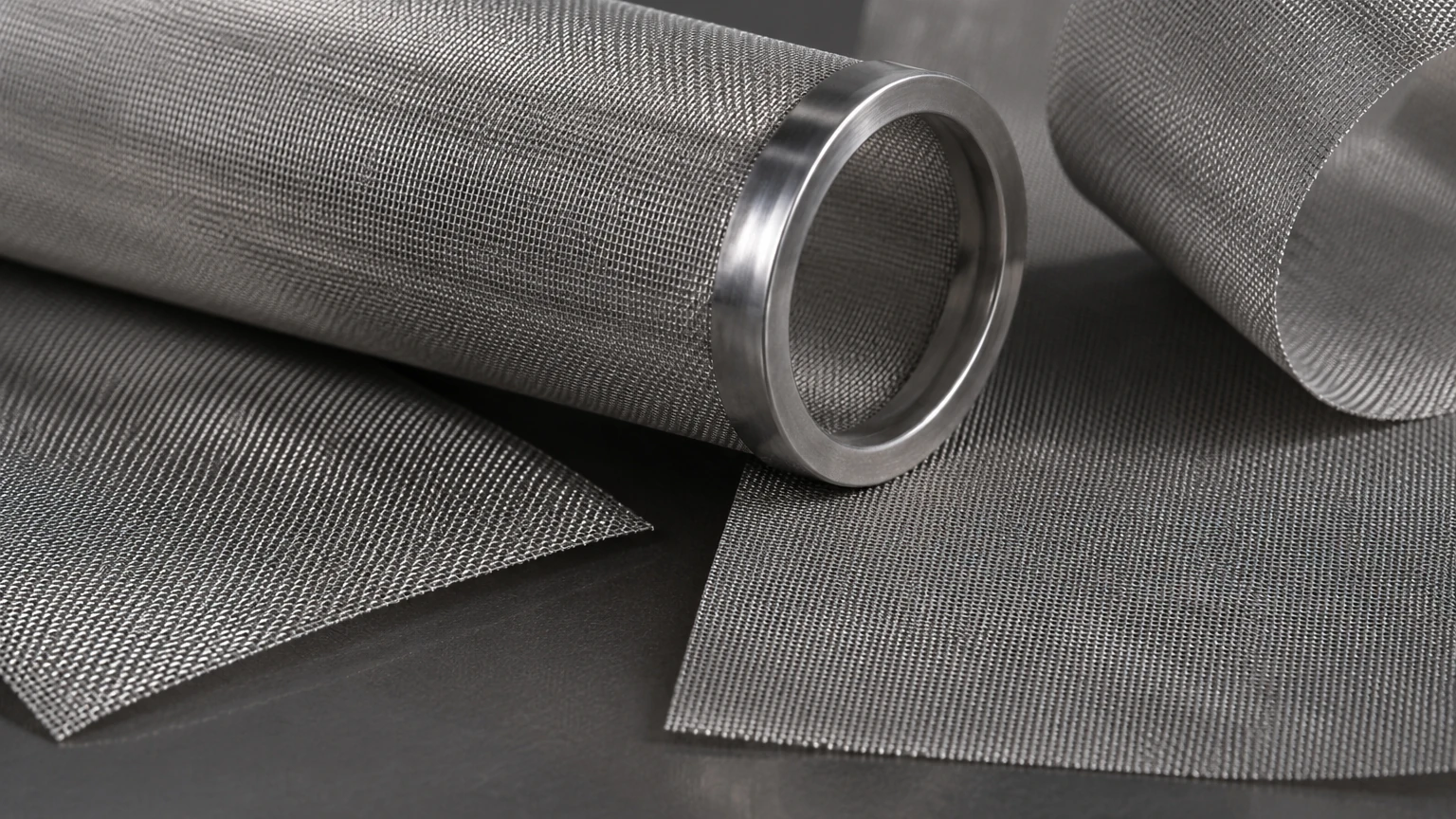
The most common configuration is the cylindrical filter cartridge or the basket strainer. These designs are ideal for pipeline applications. A basket strainer allows for the collection of large volumes of solids, making it easier to remove and clean during maintenance intervals. For higher pressure applications, the 300 micron mesh is often sintered or welded to a perforated metal core to provide the necessary collapse strength.
Pleated Filter Elements
When high flow rates are required within a compact footprint, pleated 300 micron mesh filters are utilized. By folding the mesh, the effective surface area is increased significantly compared to a standard cylindrical design. This results in:
* Lower flux rates (velocity through the mesh).
* Longer service life between cleanings.
* Reduced pressure drop across the filter.
Multi-Layer Sintered Mesh
In environments where the filter is subjected to extreme mechanical stress or frequent backwashing, multiple layers of mesh are sintered together. A 300 micron mesh might be used as the active filtration layer, bonded to coarser mesh layers that provide drainage and structural support. This creates a robust, monolithic component that resists wire migration and delamination.
Industrial Applications and Performance Expectations
The 300 micron mesh filter is versatile, finding its place in numerous sectors where "fine-coarse" filtration is necessary.
Food and Beverage Processing
In the production of juices, syrups, and dairy products, 300 micron filters are used to remove pulp, seeds, or undissolved solids. Because stainless steel is non-toxic and can be polished to a high degree, it meets the stringent hygienic standards required for food contact. It is also capable of withstanding Clean-in-Place (CIP) procedures using caustic chemicals and steam.
Chemical and Petrochemical Industry
Chemical processors use 300 micron filters to protect pumps and valves from scale, catalyst fines, and other debris. The ability to select specific alloys (like 316L or even exotic alloys) allows these filters to operate in highly corrosive environments where plastic alternatives would fail.
Hydraulic and Lubrication Systems
In heavy machinery, a 300 micron mesh filter often serves as a "suction strainer" or a "last chance filter." While finer filtration (5-20 microns) is used for system-wide cleanliness, the 300 micron stage ensures that large contaminants do not cause catastrophic pump failure or block major fluid passages.
Selection Criteria: Flow Rates and Pressure Drop Management
When specifying a 300 micron mesh filter, engineers must evaluate the relationship between fluid viscosity, flow rate, and pressure drop ($ΔP$).
The Impact of Viscosity
As the viscosity of the fluid increases (e.g., heavy oils or resins), the resistance to flow through a 300 micron opening increases exponentially. For high-viscosity fluids, it is often necessary to oversize the filter housing or use a pleated design to maintain an acceptable $ΔP$. Failure to account for viscosity can lead to premature filter bypass or structural failure of the mesh.
Dirt-Holding Capacity
While a 300 micron filter is a surface filtration medium (capturing particles on the surface rather than within the depth of the material), its dirt-holding capacity is influenced by the total open area. Once the openings begin to bridge with contaminants, the pressure drop will rise sharply. Monitoring this $ΔP$ is the primary method for determining when a filter requires cleaning or replacement.
Maintenance, Cleaning, and Service Life Optimization
One of the primary advantages of a stainless steel 300 micron mesh filter over disposable media is its cleanability. For many B2B operations, this significantly reduces the total cost of ownership.
Cleaning Methods
1. Backwashing: Reversing the flow of the fluid to dislodge particles from the mesh surface. This is common in automated self-cleaning systems.
2. Ultrasonic Cleaning: Using high-frequency sound waves in a cleaning solvent to remove fine particles trapped within the weave. This is highly effective for restoring the filter to near-original condition.
3. Chemical Cleaning: Using acids or bases to dissolve organic or mineral scale that has accumulated on the mesh.
Determining Replacement Cycles
While stainless steel filters are durable, they are not infinite. Fatigue from pressure pulsations, abrasion from hard particulates, and repeated cleaning cycles can eventually lead to wire breakage. Regular inspection for "blinding" (permanent plugging of the pores) and mechanical integrity is essential to prevent bypass of unfiltered fluid.
Custom OEM Solutions for Specialized Filtration Needs
Every industrial system has unique constraints, from space limitations to specific flow characteristics. Standard off-the-shelf filters often fall short in specialized machinery. Kaifil specializes in providing customized 300 micron mesh filter solutions that align with specific engineering drawings and performance requirements.
Our manufacturing process includes precision TIG welding, plasma cutting, and advanced pleating techniques to ensure that every component meets the required tolerances. By working directly with a manufacturer, purchasing teams can ensure that material certifications are provided, and the filtration accuracy is verified through rigorous quality control.
To explore our full range of capabilities and technical resources, you can Review product options and application support on our Main Page. We provide the engineering expertise needed to transition from a concept to a high-performance filtration component that enhances the reliability of your industrial systems.
Conclusion
The 300 micron mesh filter is a fundamental tool in the industrial filtration toolkit. Its ability to provide precise, absolute filtration of 0.3mm particles while maintaining high flow rates makes it indispensable in food processing, chemical manufacturing, and hydraulic systems. By selecting high-quality stainless steel media and the appropriate structural design, engineers can achieve a balance of performance, durability, and cost-effectiveness. Whether you require a standard cartridge or a bespoke OEM component, understanding the technical nuances of 300 micron filtration is the first step toward optimized system performance.
