


Bag Filters for Water
In industrial liquid processing, bag filters for water represent one of the most versatile and cost-effective methods for removing suspended solids and contaminants. Unlike complex membrane systems or high-maintenance sand filters, bag filtration relies on a straightforward pressure-driven mechanism where the fluid is forced through a replaceable or cleanable bag media. For engineers and procurement specialists, selecting the right bag filter involves a deep understanding of fluid dynamics, material science, and the specific requirements of the industrial application.
Industrial water filtration is rarely a one-size-fits-all solution. Systems range from simple pre-filtration for municipal water to critical sediment removal in chemical processing and food production. This guide examines the technical nuances of bag filters for water, focusing on engineering considerations, material selection, and the operational advantages of high-performance metal filtration components.
Understanding Industrial Bag Filtration for Water Treatment
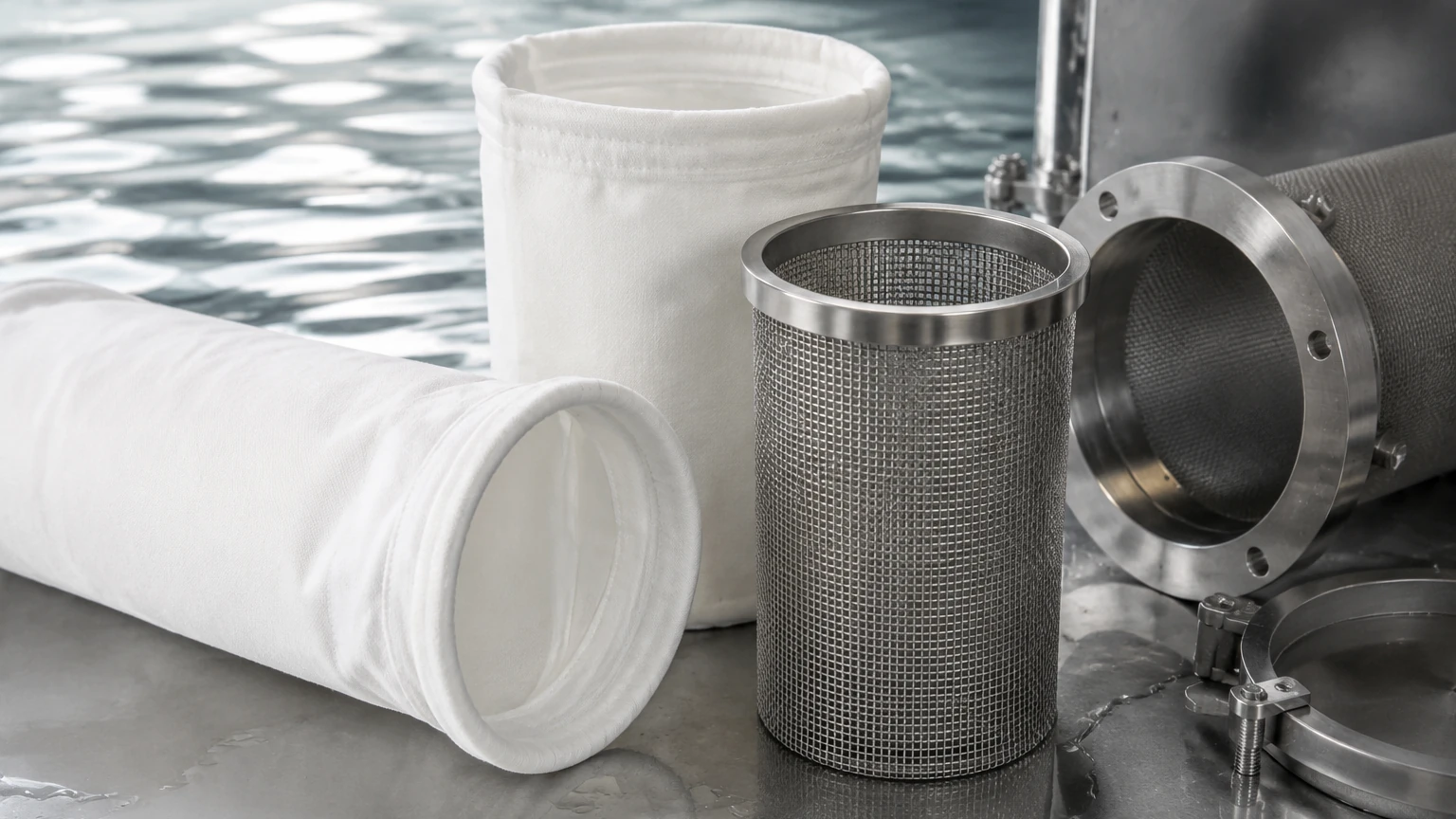
Bag filtration systems are typically classified as "surface filtration" or "depth filtration" depending on the media used. In water treatment, these systems are used to capture particles ranging from 1 micron to over 1,000 microns. The basic assembly consists of three primary components: the filter housing (pressure vessel), the internal support basket, and the filter bag itself.
The process begins when untreated water enters the housing through the inlet, usually located at the top or side. The water is directed into the interior of the filter bag. As the water passes through the media, contaminants are trapped inside the bag, while the clean effluent exits through the support basket and out the discharge port. This "inside-to-out" flow pattern ensures that all captured debris remains contained within the bag, preventing downstream contamination during the replacement process.
For high-volume applications, bag filters for water offer a distinct advantage over cartridge filters: they can handle significantly higher flow rates and higher dirt-holding capacities per unit. This makes them ideal for primary filtration stages where the suspended solid load is relatively high.
Engineering Considerations: Micron Ratings and Flow Rates
When specifying bag filters for water, engineers must balance filtration efficiency with system throughput. The two most critical metrics are the micron rating and the allowable pressure drop.
Micron Ratings: Nominal vs. Absolute
Most standard synthetic bag filters are "nominally" rated, meaning they can trap a high percentage (typically 60% to 80%) of particles at the specified micron size. However, in critical applications such as pharmaceutical water or fine chemical processing, an "absolute" rating may be required, ensuring that 99% or more of the particles are captured. Stainless steel wire mesh bags, often used in precision industrial applications, provide more consistent pore sizes and better structural integrity than felt or fleece bags, allowing for more predictable performance in high-pressure environments.
The Impact of Differential Pressure
The efficiency of a bag filter is closely tied to the differential pressure ($ΔP$), which is the difference between the inlet and outlet pressure. A clean filter bag starts with a low initial pressure drop. As particles accumulate, the effective surface area decreases, and the pressure drop increases.
In water applications, it is standard engineering practice to replace or clean the bag when the differential pressure reaches 15 to 25 PSI (1.0 to 1.7 bar). Exceeding this limit risks "bypass"—where the pressure forces particles through the media—or mechanical failure of the bag itself. Calculating the correct housing size is essential to ensure the initial pressure drop does not exceed 2 PSI, providing a wide operational window before maintenance is required.
Material Compatibility in Water Filtration Systems
The choice of material for bag filters for water is dictated by the temperature, chemical composition, and pH of the fluid. While synthetic materials like polypropylene and polyester are common for general water use, demanding industrial environments often require the durability of metal.
1. Polypropylene (PP): Excellent for general water filtration and resistant to most acids and alkalis. However, it is limited by a maximum operating temperature of approximately 90°C (194°F).
2. Polyester (PE): Offers higher temperature resistance (up to 150°C) and good tensile strength, making it suitable for hot water circuits and boiler feed applications.
3. Stainless Steel Mesh: For heavy-duty industrial water treatment, stainless steel (SUS304 or SUS316L) wire mesh bags are the preferred choice. Unlike disposables, these are cleanable and reusable. They are essential for high-temperature water, high-viscosity fluids, or applications involving aggressive cleaning chemicals. Stainless steel mesh provides a rigid structure that prevents fiber migration—a common issue with felt bags where small fibers can break off and contaminate the filtered water.
Selecting the right seal is equally important. Options include galvanized steel or stainless steel rings sewn into the bag top, or molded plastic flanges (such as the "Sentinel" style) that provide a bypass-free compression seal against the housing lid.
Comparison: Bag Filters vs. Cartridge Filters
Deciding between bag filters and cartridge filters is a common challenge for system designers. Each has a specific role in the water treatment hierarchy.
* Flow Capacity: Bag filters for water are generally superior for high-flow applications. A single Size #2 bag can often handle the flow equivalent of several 10-inch cartridges, reducing the footprint of the filtration skid.
* Dirt-Holding Capacity: Because bag filters have a larger internal volume, they can collect a greater mass of solids before requiring service. This is particularly beneficial in pre-filtration for reverse osmosis (RO) systems, where removing bulk sediment protects expensive membranes.
* Precision: Cartridge filters are typically used for fine polishing (sub-1 micron) or when absolute filtration is mandatory. Bag filters are more commonly used for 1 to 1,000-micron applications.
* Waste Generation: Disposable bags generate less waste volume than cartridges, though they are still a consumable cost. Reusable stainless steel bags, such as those manufactured by Kaifil, eliminate this waste stream entirely, offering a lower total cost of ownership (TCO) over the equipment's lifespan.
Optimizing the Lifecycle of Water Bag Filters
To maximize the performance of bag filters for water, maintenance teams must look beyond the initial purchase price and consider the total operational impact.
Monitoring and Automation
Installing pressure gauges on the inlet and outlet of the filter housing is the most effective way to monitor bag health. In automated facilities, differential pressure transmitters can trigger an alarm or automatically divert flow to a standby filter housing when the bag reaches its loading limit. This prevents unplanned downtime and ensures water quality remains consistent.
Cleaning and Reuse
For applications using stainless steel mesh bags, the cleaning process is critical. Depending on the contaminant, bags can be cleaned via backwashing, ultrasonic cleaning, or chemical soaking. Because metal mesh maintains its pore geometry even after multiple cleaning cycles, it provides a level of reliability that synthetic media cannot match in high-stress environments.
Avoiding Bypass
Bypass is the primary cause of filtration failure. It occurs when fluid escapes around the top seal of the bag rather than passing through the media. Ensuring that the bag is properly seated in the support basket and that the housing lid applies even pressure to the bag flange is vital. High-quality precision-engineered baskets and bags are designed to fit with tight tolerances to mitigate this risk.
Customization and OEM Solutions for Specialized Water Filtration
Many industrial processes involve non-standard requirements that off-the-shelf bag filters cannot meet. This is where custom manufacturing becomes essential. Whether it is a unique housing dimension, a specific alloy requirement for corrosive saltwater filtration, or a specialized mesh weave for high-velocity water streams, customized solutions ensure the filtration system integrates seamlessly with existing infrastructure.
Kaifil specializes in these high-performance components, providing custom stainless steel filtration solutions that bridge the gap between standard consumables and heavy-duty industrial hardware. By focusing on precision metal filter components, Kaifil helps engineers develop systems that are not only efficient but also durable enough for the most demanding hydraulic and chemical environments.
When evaluating a custom filter partner, technical professionals should confirm the manufacturer's ability to provide:
* Material certifications (e.g., 304, 316, 316L).
* Precise mesh counts and micron rating verification.
* Custom flange and ring designs for proprietary housings.
* Engineering support for flow rate calculations and pressure drop modeling.
Technical Evaluation Checklist for Purchasing Teams
Before finalizing a procurement decision for bag filters for water, technical teams should answer the following questions to ensure the selected product meets the application's long-term needs:
1. What is the target particle size? Determine if a nominal rating is sufficient or if absolute filtration is required.
2. What is the maximum flow rate? Ensure the housing and bag combination can handle peak flow without exceeding the recommended velocity.
3. What are the chemical properties of the water? Check for pH extremes or the presence of oxidizing agents that might degrade synthetic fibers.
4. What is the operating temperature? Confirm the media and seal materials can withstand thermal cycling.
5. Is the contaminant hazardous? If so, consider a design that minimizes operator exposure during bag changes.
6. Can a reusable solution be implemented? Evaluate the potential for stainless steel mesh bags to reduce long-term consumable costs and environmental impact.
By addressing these factors, engineers can optimize their water treatment systems for reliability and efficiency. For more information on high-performance filtration components and custom manufacturing capabilities, visit the Main Page to explore professional filtration solutions tailored to industrial needs.
Conclusion
Bag filters for water remain a cornerstone of industrial liquid processing due to their simplicity and effectiveness. While the concept of a filter bag is basic, the engineering behind the materials and the integration into a larger water treatment system is complex. By moving toward durable, high-precision components—particularly stainless steel alternatives—industrial facilities can achieve better filtration results, lower maintenance overhead, and a more sustainable operation. Whether for pre-filtration, cooling water loops, or wastewater treatment, the right bag filter choice is a critical step in maintaining the integrity of industrial water systems.
