


Sparging Stone
In industrial gas-liquid processing, the efficiency of gas mass transfer is a critical factor that dictates the success of chemical reactions, fermentation yields, and product stability. The sparging stone, a specialized porous diffuser, serves as the primary interface for introducing gases into liquids. Unlike traditional drilled pipes or open-ended tubes, a high-quality sparging stone utilizes controlled porosity to generate millions of tiny bubbles, significantly increasing the surface area for gas absorption.
For engineers and procurement teams sourcing filtration and diffusion components, understanding the technical nuances of sintered metal sparging stones is essential. These components are not merely passive hardware; they are precision-engineered tools designed to withstand high pressures, corrosive environments, and rigorous cleaning cycles. This guide provides a technical overview of sparging stone technology, selection criteria, and operational best practices for industrial applications.
Understanding the Role of the Sparging Stone in Industrial Processes
Sparging is the process of injecting a gas into a liquid. The fundamental goal is usually to dissolve the gas into the liquid or to use the gas to strip unwanted volatile components from the liquid phase. The sparging stone acts as the diffusion element that breaks the gas stream into discrete bubbles.
The effectiveness of this process is governed by the interfacial area between the gas and the liquid. According to the principles of mass transfer, smaller bubbles provide a much larger total surface area for a given volume of gas compared to larger bubbles. Furthermore, smaller bubbles rise more slowly through the liquid column, increasing the "residence time" or the duration the gas is in contact with the liquid. This combination of increased surface area and extended contact time leads to higher gas absorption rates and improved process efficiency.
In B2B industrial contexts, sparging stones are utilized for several critical functions:
* Oxygenation: Introducing oxygen into bioreactors for aerobic fermentation or wastewater treatment.
* Carbonation: Dissolving CO2 into beverages like beer, soda, or sparkling water.
* Hydrogenation: Injecting hydrogen into oils or chemical precursors in the presence of a catalyst.
* Nitrogen Stripping: Using nitrogen to remove dissolved oxygen or other contaminants from sensitive liquids to prevent oxidation.
Engineering Characteristics of Sintered Metal Spargers
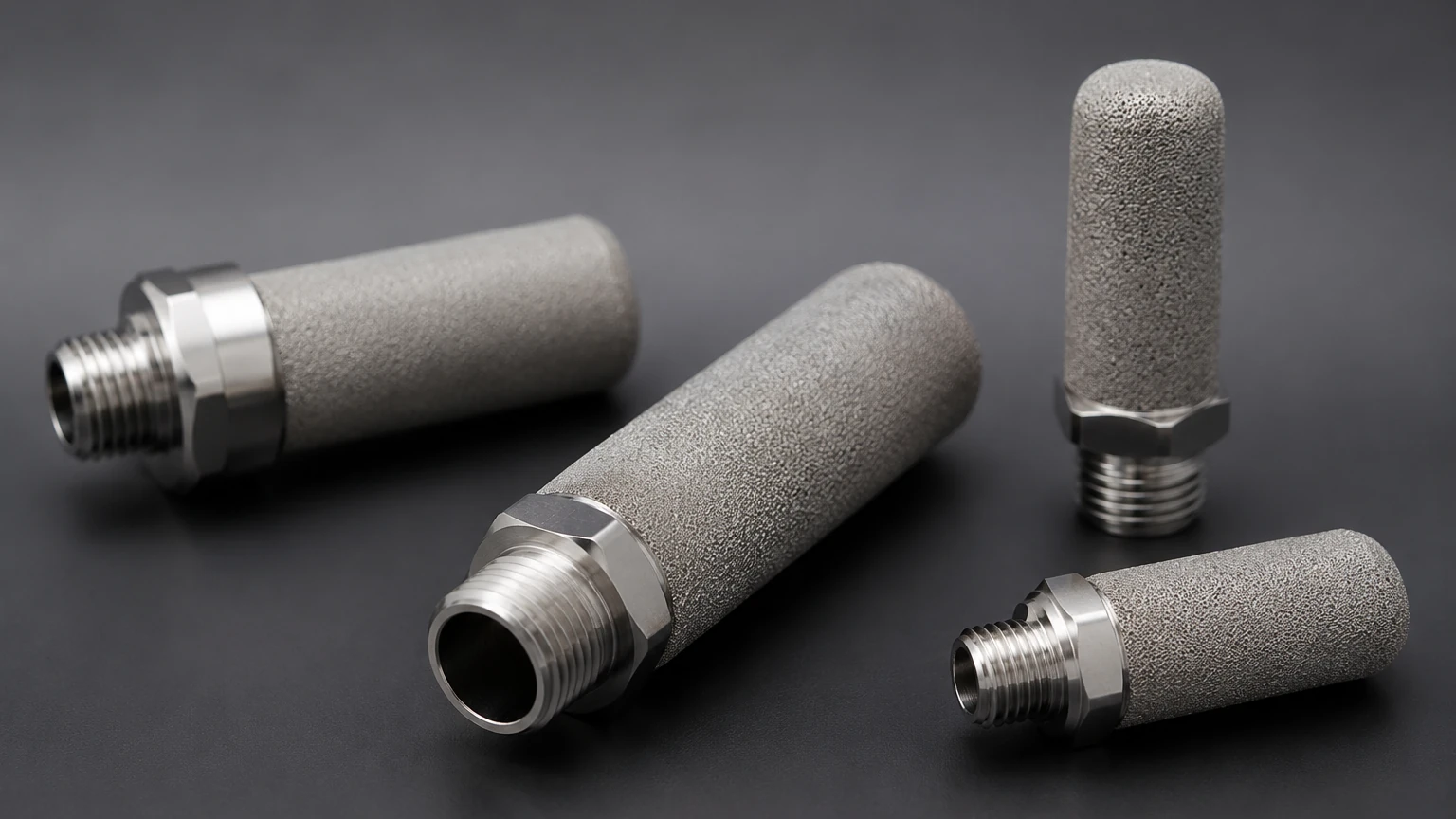
While sparging stones can be made from various materials, sintered stainless steel is the industry standard for demanding applications. Sintering is a metallurgical process where metal powders are compacted and then heated below their melting point to fuse the particles together. This creates a porous structure with a highly controlled pore size distribution.
Pore Uniformity and Micron Ratings
One of the primary advantages of sintered metal sparging stones is the uniformity of the pores. Manufacturers like Kaifil produce these components with specific micron ratings, typically ranging from 0.5 microns to 100 microns. A 0.5-micron stone produces extremely fine bubbles (often called micro-bubbles), which are ideal for applications requiring maximum gas dissolution, such as carbonation or oxygenation in cell cultures.
Structural Integrity
Unlike ceramic or plastic diffusers, sintered metal stones offer superior mechanical strength. They can operate under high differential pressures and are resistant to thermal shock. This durability is vital in industrial settings where the sparger may be subjected to high-velocity fluid flows or rapid temperature changes during sterilization or cleaning cycles.
Tortuous Path Diffusion
The internal structure of a sintered sparging stone consists of a "tortuous path." As gas passes through the interconnected pores, it is forced to change direction multiple times. This internal turbulence helps ensure that when the gas exits the surface of the stone, it does so as discrete, uniform bubbles rather than merging into large pockets of gas.
Factors Influencing Gas Diffusion and Mass Transfer Efficiency
Selecting the right sparging stone requires an analysis of the fluid dynamics within the vessel. Several variables influence how effectively the gas will interact with the liquid.
Bubble Size and Surface Area
The relationship between bubble diameter and surface area is inverse; as the diameter decreases, the total surface area for a specific volume of gas increases exponentially. For instance, replacing a 20-micron sparger with a 2-micron sparger can increase the available surface area by a factor of ten, assuming the same gas flow rate. This is particularly important in oxygen-limited fermentations where the rate of oxygen transfer is the bottleneck for production.
Liquid Viscosity and Surface Tension
The physical properties of the liquid significantly affect bubble formation. In high-viscosity liquids, bubbles tend to coalesce (merge) more easily, which reduces efficiency. Similarly, liquids with high surface tension require higher gas pressure to initiate bubble formation at the pores. Engineers must account for these properties when determining the required micron rating and gas pressure.
Gas Flow Rate and Velocity
Every sparging stone has a maximum gas flux capacity. If the gas flow rate is too high for the surface area of the stone, the gas will "jet" out of the pores, causing bubbles to merge immediately at the surface. This phenomenon, known as coalescence, negates the benefits of using a porous diffuser. To avoid this, it is often better to use a larger sparging stone or multiple stones to maintain a low exit velocity for the gas.
Material Compatibility and Durability in Corrosive Environments
In the chemical and pharmaceutical industries, the sparging stone must be chemically inert to the process fluids. Material selection is the first line of defense against premature failure and product contamination.
316L Stainless Steel
The most common material for industrial spargers is 316L stainless steel. The "L" stands for low carbon, which makes the material more resistant to sensitization (carbide precipitation at grain boundaries) during welding. 316L offers excellent corrosion resistance in a wide range of organic and inorganic chemicals, as well as high-temperature stability.
Specialized Alloys
For environments involving high concentrations of chlorides or aggressive acids, 316L may not be sufficient. In these cases, alloys such as Hastelloy® C-22 or C-276, Monel®, or Inconel® are used. These materials provide superior resistance to pitting and stress corrosion cracking. Titanium sparging stones are also used in specific applications, such as seawater processing or highly oxidizing environments, due to their exceptional corrosion resistance and high strength-to-weight ratio.
For detailed information on material compatibility and custom alloy options, technical teams should consult the Main Page of the Kaifil website to review available manufacturing specifications.
Selection Criteria: Micron Rating, Pressure Drop, and Flow Rates
When specifying a sparging stone for a new system or a replacement, engineers should focus on three primary technical metrics:
1. Micron Rating: This determines the initial bubble size. For gas stripping (e.g., removing oxygen with nitrogen), a 10-20 micron stone is often sufficient. For gas dissolution (e.g., carbonating beer), a 0.5-2 micron stone is preferred.
2. Differential Pressure (ΔP): This is the pressure required to push the gas through the porous media and overcome the hydrostatic pressure of the liquid. Sintered stones with smaller pores have a higher "bubble point" pressure. It is essential to ensure that the gas supply system can provide sufficient pressure to maintain the desired flow rate through the stone.
3. Total Surface Area: The length and diameter of the sparging stone must be calculated based on the total gas volume required. A common engineering mistake is undersizing the sparger, which leads to high exit velocities and poor gas absorption. As a rule of thumb, increasing the surface area is always safer than increasing the gas pressure.
Operational Maintenance and Cleaning Protocols
One of the most significant challenges with porous media is fouling. Over time, particulates from the gas stream or biological/chemical deposits from the liquid can clog the pores of the sparging stone. This leads to an increased pressure drop and reduced gas flow.
Clean-In-Place (CIP) and Sterilization
In food, beverage, and pharmaceutical applications, sparging stones must be compatible with CIP procedures. Sintered stainless steel is ideal for this because it can withstand caustic cleaning agents (such as sodium hydroxide) and acid washes (such as nitric or phosphoric acid). Furthermore, these stones can be sterilized in place using saturated steam (SIP) without degrading the porous structure.
Ultrasonic Cleaning
For heavy fouling that cannot be removed by chemical circulation, ultrasonic cleaning is highly effective. The stone is submerged in a cleaning solution, and ultrasonic waves create microscopic cavitation bubbles that implode against the surface and inside the pores, dislodging deeply embedded contaminants.
Prevention of Backflow
To prevent liquid from entering the sparging stone when the gas flow is turned off, check valves should be installed in the gas line. If liquid enters the porous structure and dries, it can leave behind solids that are extremely difficult to remove. This is particularly critical in applications involving sugary liquids or salt-laden water.
Customization and Integration for OEM Systems
Industrial systems often require bespoke sparging solutions that fit specific vessel geometries or piping configurations. Customization options typically include:
* Connection Types: Sparging stones can be manufactured with NPT or BSP threaded fittings, sanitary tri-clamp flanges, or plain ends for welding.
* Configurations: While the cylindrical "stone" is most common, spargers can also be designed as flat plates, rings (for large tanks), or even flexible hoses made of sintered metal fibers.
* Probe Lengths: In large fermenters, the sparging stone is often attached to a long stainless steel probe to position the gas injection point at the bottom of the vessel, maximizing the rise distance and contact time.
Kaifil specializes in providing these custom configurations, ensuring that the filtration and diffusion components meet the exact mechanical and performance requirements of the end-user. By working with a manufacturer that understands both the metallurgy and the fluid dynamics of sparging, engineers can optimize their systems for maximum productivity.
Conclusion
The selection of a sparging stone is a pivotal decision in the design of any gas-liquid contact system. By prioritizing sintered metal construction, engineers gain the benefits of durability, precise pore control, and ease of maintenance. Whether the goal is to achieve 100% carbonation in a beverage or to maintain critical dissolved oxygen levels in a bioreactor, the right sparging stone ensures that gas is used efficiently, reducing waste and improving the overall quality of the final product. For those looking to explore specific product options or request custom engineering support, visiting the Main Page provides access to a wealth of technical resources and manufacturing capabilities tailored to industrial filtration and diffusion needs.
