


Tubular Reactors
In the landscape of modern chemical engineering and industrial processing, the transition from batch to continuous manufacturing has been driven by the need for higher efficiency, better safety profiles, and consistent product quality. At the heart of this transition are tubular reactors, specifically designed to facilitate continuous chemical reactions under controlled conditions. Often referred to as Plug Flow Reactors (PFRs), these systems are essential for high-volume production in industries ranging from petrochemicals and specialty chemicals to pharmaceuticals and food processing.
For engineers and procurement teams, understanding the mechanical and chemical nuances of tubular reactors is only half the battle. The operational success of these systems depends heavily on the integration of high-performance filtration components. Without precise filtration, the integrity of the reaction, the longevity of the equipment, and the purity of the final output are all at risk. As a specialized manufacturer of stainless steel filtration solutions, Kaifil provides the technical expertise required to optimize these complex systems.
Understanding Tubular Reactor Design and Functionality
A tubular reactor consists of a cylindrical pipe or tube through which reactants flow at a steady rate. Unlike batch reactors, where the composition of the mixture changes over time, the composition in a tubular reactor changes with respect to the position along the length of the tube. This creates a steady-state environment that is ideal for large-scale production.
The primary engineering concept behind these reactors is "plug flow." In an ideal PFR, the fluid is assumed to be perfectly mixed in the radial direction but not in the axial direction. This means that every "plug" of fluid spends the exact same amount of time—known as the residence time—inside the reactor. This uniformity is critical for reactions that are sensitive to timing, such as those where over-exposure to a catalyst or heat could lead to undesirable by-products.
Tubular reactors can vary significantly in scale and complexity. They may consist of a single long pipe, a bundle of tubes similar to a shell-and-tube heat exchanger, or a jacketed system designed for precise thermal management. Regardless of the configuration, the internal environment is often characterized by high pressures, extreme temperatures, and corrosive chemical environments, necessitating the use of robust materials for both the reactor body and its internal filtration components.
The Critical Role of Precision Filtration in Tubular Reactor Systems
Filtration is not merely a peripheral concern in tubular reactor operations; it is a fundamental requirement for process stability. In many industrial applications, tubular reactors are used as Packed Bed Reactors (PBRs), where the tube is filled with solid catalyst particles. The role of filtration here is multifaceted:
1. Catalyst Retention: One of the most common applications for stainless steel mesh in these systems is to serve as a catalyst support or containment screen. These filters must be engineered to withstand the weight and pressure of the catalyst bed while preventing any fine particles from migrating downstream into the final product or sensitive equipment.
2. Inlet Protection: To maintain the efficiency of the reaction, the incoming reactants must be free of particulate matter. Contaminants in the feed stream can lead to "hot spots" within the reactor, where uneven flow causes localized overheating, potentially damaging the catalyst or the reactor walls.
3. Downstream Purity: In reactions where the catalyst may undergo attrition (breaking down into smaller fines), a high-precision filter at the outlet is necessary to ensure that the effluent meets strict purity standards. This is particularly vital in the pharmaceutical and food and beverage sectors.
For more information on the specific types of filter cartridges and wire mesh components used in these applications, you can visit the Main Page of our technical resource center.
Engineering Considerations for Filter Media in Reactive Environments
When selecting filtration components for tubular reactors, material science is the first line of defense. Because these reactors often handle aggressive solvents, acids, or high-temperature gases, standard filtration materials are rarely sufficient. Stainless steel, particularly grades 304 and 316L, is the industry standard due to its exceptional mechanical strength and chemical resistance.
Corrosion Resistance and Alloy Selection
In chemical processing, the choice between 304 and 316L stainless steel often comes down to the presence of chlorides or specific acids. 316L, with its addition of molybdenum, offers superior resistance to pitting and crevice corrosion. In even more extreme environments, specialized alloys like Hastelloy or Monel may be required. Engineers must evaluate the pH, chemical concentration, and temperature of the reaction to ensure the filter media will not degrade and contaminate the process.
Thermal Stability and Mechanical Strength
Tubular reactors frequently operate at temperatures exceeding 300°C. At these levels, polymer-based filters would fail instantly. Stainless steel wire mesh and sintered metal cartridges maintain their structural integrity across a wide thermal range. Furthermore, the filtration media must be able to withstand the differential pressure (ΔP) that naturally occurs as fluid is forced through the mesh. High-strength weaves and reinforced support structures are often necessary to prevent media migration or collapse under high-flow conditions.
Performance Metrics: Pressure Drop and Filtration Accuracy
For a tubular reactor to operate efficiently, the hydraulics of the system must be carefully balanced. Every component placed in the flow path, including filters, introduces a pressure drop. If the pressure drop is too high, it can reduce the flow rate, alter the residence time, and increase the energy consumption of the pumps or compressors.
Calculating Differential Pressure
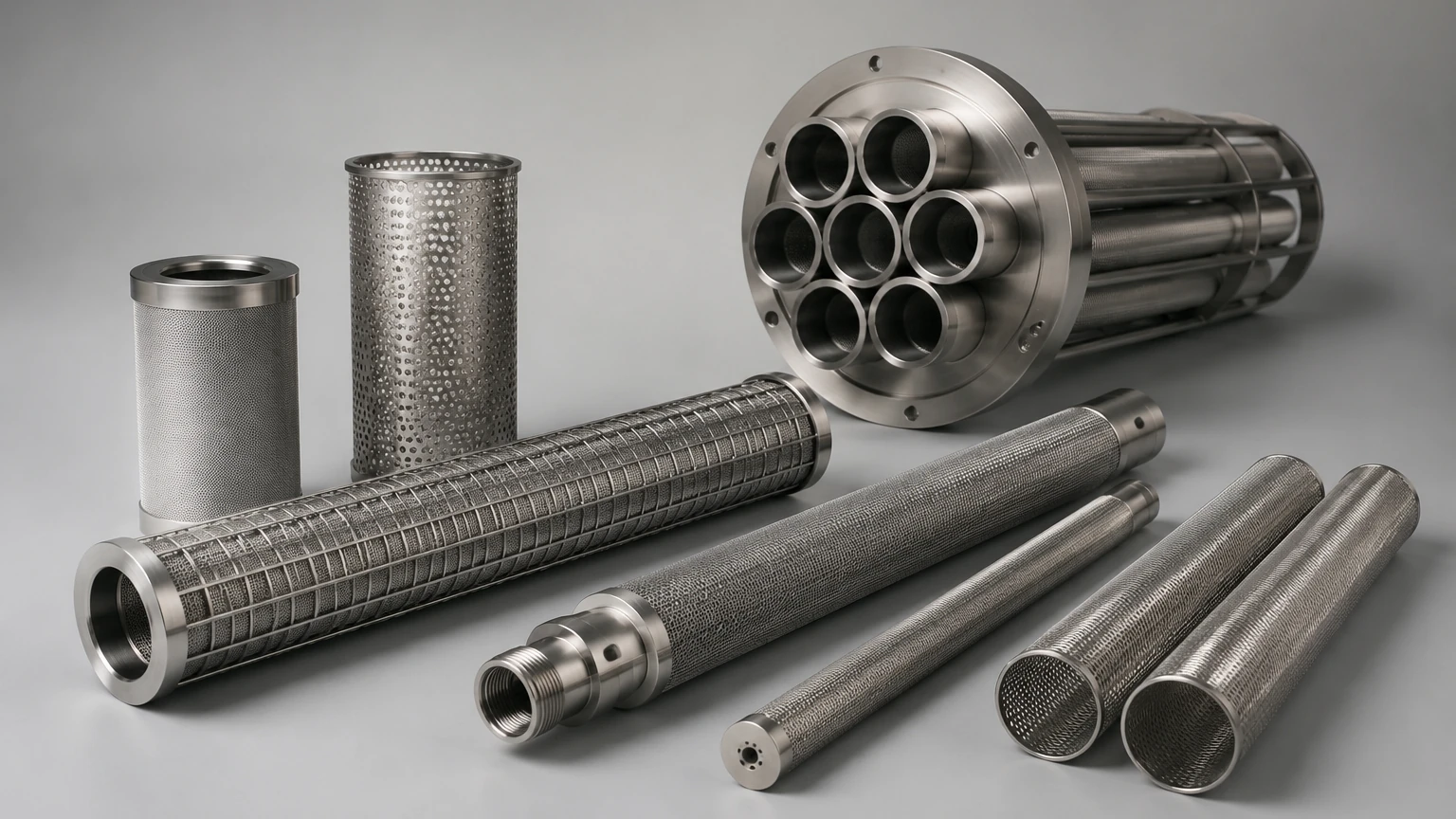
Engineers must calculate the clean pressure drop and the terminal pressure drop (the point at which the filter must be cleaned or replaced). Factors influencing this include the fluid viscosity, the velocity of the flow, and the open area of the filter mesh. Kaifil specializes in designing custom wire mesh filters that maximize the open area while maintaining the required micron rating, effectively minimizing the impact on system hydraulics.
Micron Rating and Beta Ratio
Filtration accuracy is defined by the micron rating, but for industrial reactors, the "Beta Ratio" provides a more accurate picture of efficiency. A nominal rating might capture 60-80% of particles at a certain size, whereas an absolute rating (supported by a high Beta ratio) ensures that 99.9% of particles are retained. In tubular reactors where even small amounts of catalyst fines can ruin a batch, absolute filtration is often the preferred specification.
Managing Risks: Clogging, Corrosion, and Thermal Stress
Operating tubular reactors involves managing several inherent risks that can lead to costly downtime. Identifying these risks during the design phase allows for the implementation of robust mitigation strategies.
* Fouling and Clogging: Over time, carbon deposits (coking) or chemical by-products can accumulate on the filter surface. This leads to an exponential increase in pressure drop. Implementing a regular maintenance cycle or utilizing backwashable sintered metal filters can extend the service life of the components.
* Thermal Expansion: In long tubular reactors, the difference in thermal expansion rates between the reactor shell and the internal filter housing can lead to mechanical stress. Designing filters with flexible support structures or specific tolerances is essential to prevent cracking or bypassing.
* Catalyst Poisoning: If the filtration media itself reacts with the chemicals or the catalyst, it can "poison" the reaction, rendering the catalyst inactive. This is why using high-purity, passivated stainless steel is non-negotiable in sensitive chemical synthesis.
Customization and Specification for Industrial Applications
No two tubular reactor systems are identical. Variations in tube diameter, flow velocity, and chemical composition mean that off-the-shelf filtration products often fall short of performance expectations. Customization is the key to achieving optimal filtration performance and total cost of ownership (TCO) efficiency.
When working with a manufacturer like Kaifil, engineers should be prepared to confirm several technical parameters:
* Flow Configuration: Is the flow internal-to-external or external-to-internal? This dictates the structural reinforcement required for the filter element.
* Connection Types: Standard NPT/BSP threads, flanged connections, or custom sanitary fittings (Tri-Clamp) for pharmaceutical applications.
* Micron Requirements: Detailed particle size analysis of the catalyst or potential contaminants.
* Operating Envelope: Maximum and minimum operating pressures and temperatures, including potential surge conditions.
By addressing these factors, Kaifil can develop OEM solutions that integrate seamlessly into the reactor design, ensuring that the filtration component is an asset to the process rather than a bottleneck.
Conclusion: Optimizing Reactor Performance Through Engineering Excellence
Tubular reactors are workhorses of the modern industrial world, enabling the continuous production of the chemicals and materials that sustain global infrastructure. However, the efficiency of these reactors is inextricably linked to the quality of their internal components. High-precision stainless steel filtration is essential for protecting catalysts, ensuring product purity, and maintaining the hydraulic balance of the system.
Choosing the right filtration partner involves more than just looking at a price list. It requires a deep understanding of material science, fluid dynamics, and the specific demands of reactive environments. By focusing on durability, precision, and customized design, Kaifil helps engineers and purchasing teams achieve reliable, long-term performance in their filtration processes. For technical support and to explore our full range of industrial filtration solutions, please visit our Main Page and connect with our engineering team.
