


Aquaculture Filters
In the modern industrial aquaculture sector, maintaining water quality is the primary factor determining biological success and operational profitability. As systems move toward higher densities and Recirculating Aquaculture Systems (RAS), the demand for robust, high-efficiency aquaculture filters has increased. These filtration components are responsible for removing total suspended solids (TSS), including uneaten feed, feces, and environmental debris, which, if left untreated, can lead to oxygen depletion, ammonia toxicity, and the proliferation of pathogens.
For engineers and facility managers, selecting the right filtration media involves more than simply choosing a micron rating. It requires a deep understanding of material science, fluid dynamics, and the specific biological requirements of the aquatic species being raised. Stainless steel filtration solutions, such as those featured on the Kaifil Main Page, offer the structural integrity and corrosion resistance necessary for these demanding environments.
The Role of Mechanical Filtration in Aquaculture
Mechanical filtration is the first line of defense in any water treatment loop. In aquaculture, the primary goal is the rapid removal of solid waste before it breaks down into dissolved organic compounds. The efficiency of aquaculture filters in this stage directly impacts the load on subsequent biological filters and UV sterilization systems.
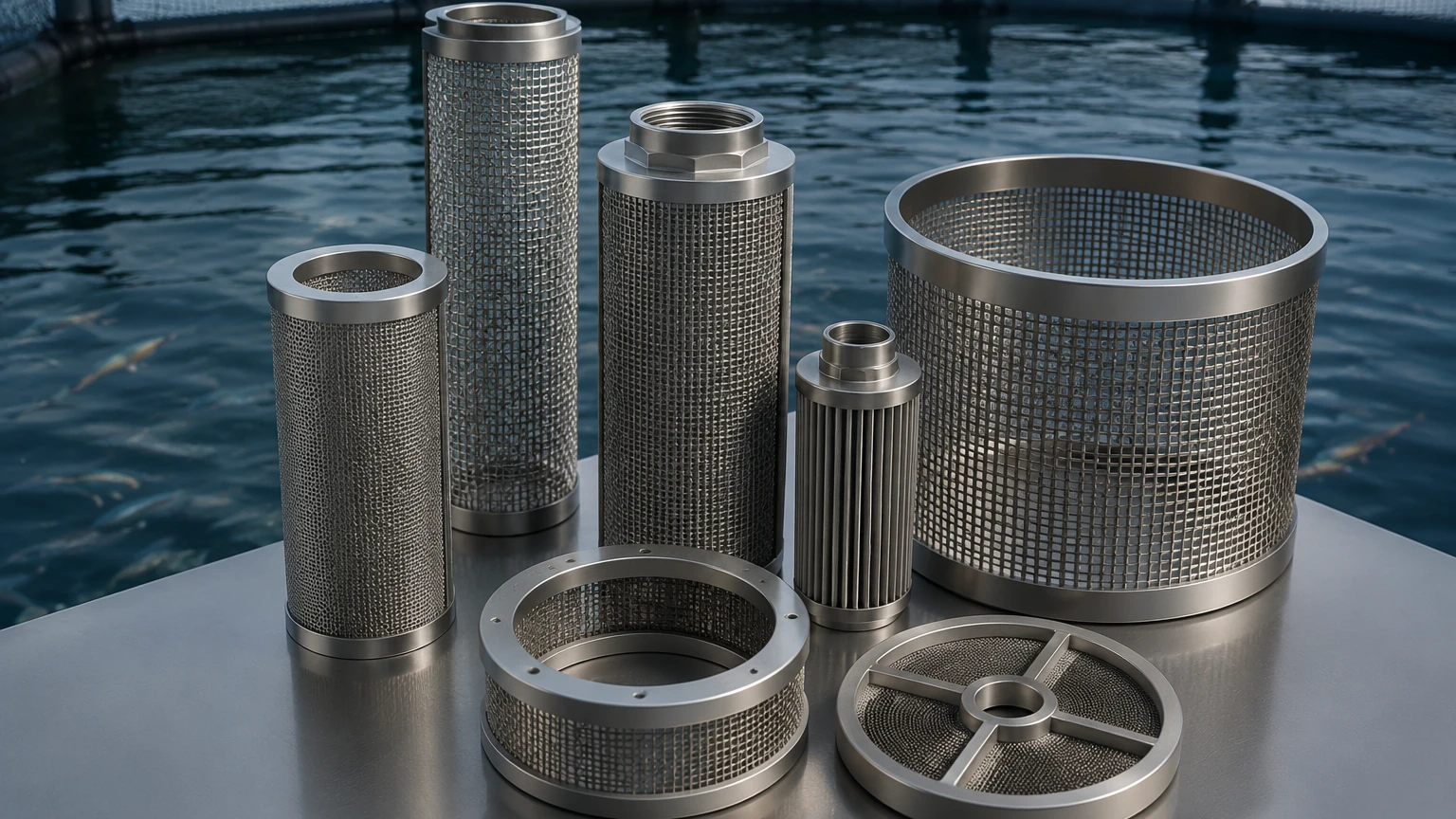
Industrial aquaculture systems typically utilize several types of mechanical filters, including drum filters, disc filters, and pressurized cartridge filters. The core of these systems is the filter media, which must provide a precise aperture to capture fine particles while maintaining a high flow rate. Stainless steel wire mesh is often the preferred material for these applications due to its ability to maintain a consistent pore size under pressure, unlike fabric or plastic meshes that may stretch or deform over time.
Engineering Considerations for Material Selection
When specifying aquaculture filters, material selection is critical, particularly in saline or brackish water environments. The choice of alloy determines the filter's lifespan and its resistance to localized corrosion, such as pitting or crevice corrosion.
Stainless Steel 304 vs. 316L
While Type 304 stainless steel is suitable for many freshwater applications, Type 316L is the industry standard for marine aquaculture. The addition of molybdenum in 316L provides significantly better resistance to chlorides. For high-salinity environments or systems utilizing ozone for disinfection, specialized alloys or high-grade stainless steel components are essential to prevent premature failure and heavy metal leaching into the water column.
Structural Integrity and Durability
Unlike disposable polymer filters, stainless steel filter elements are designed for long-term reuse. In industrial settings, aquaculture filters must withstand high-pressure backwashing cycles and mechanical stresses. A rigid metal structure ensures that the filtration surface remains flat and uniform, preventing "channelling"—a phenomenon where water bypasses the media through gaps or deformations, leading to poor filtration performance.
Technical Specifications: Micron Ratings and Flow Rates
The performance of aquaculture filters is defined by two primary metrics: filtration accuracy (micron rating) and hydraulic capacity (flow rate). Finding the balance between these two is the central challenge in filtration engineering.
1. Micron Rating: In most RAS applications, mechanical filters are expected to capture particles ranging from 20 to 100 microns. Removing particles smaller than 20 microns usually requires secondary treatment, such as protein skimming or sand filtration. However, for specialized hatcheries, finer stainless steel wire mesh can be engineered to capture smaller debris without the risk of fiber shedding associated with synthetic media.
2. Open Area and Flow Velocity: The "open area" of a filter refers to the percentage of the mesh surface that is not obstructed by wires. A higher open area allows for higher flow rates and lower pressure drops. This is critical in aquaculture, where pumping costs represent a significant portion of operational expenses. Precision-woven wire mesh provides a predictable open area, allowing engineers to calculate exact flow velocities and ensure the system meets the biological oxygen demand (BOD) of the stock.
Customization in Aquaculture Filtration Systems
Every aquaculture facility has unique requirements based on its geographic location, water source, and the species being cultured. Off-the-shelf filtration solutions often fail to address specific spatial constraints or unique flow requirements. This is where custom-engineered aquaculture filters become invaluable.
Customization options typically include:
* Variable Geometry: Designing filter cartridges or screens to fit existing housing units or unique tank configurations.
* Reinforced Structures: Adding internal supports or perforated metal cores to filter elements that must operate under high differential pressures.
* Multi-Layer Sintered Mesh: For applications requiring extreme durability, multiple layers of stainless steel wire mesh can be sintered together. This creates a filter medium that combines fine filtration with high mechanical strength, ideal for high-capacity intake screens or heavy-duty waste separation.
Managing Bio-fouling and Maintenance Cycles
A significant challenge in aquatic environments is bio-fouling—the accumulation of algae, bacteria, and biofilms on the filter surface. If not managed, bio-fouling can quickly blind a filter, leading to reduced flow and potential system failure.
Stainless steel aquaculture filters offer several advantages in maintenance:
* Chemical Compatibility: Metal filters can be cleaned using a wider range of detergents and mild acids compared to plastic components, allowing for more effective removal of organic and mineral scale.
* Thermal Resistance: In some industrial processes, steam cleaning or high-temperature washes are used to sterilize equipment. Stainless steel maintains its properties at temperatures that would melt or warp polymer filters.
* Backwash Efficiency: The smooth surface of stainless steel wire allows for more effective cake release during backwashing. This reduces the volume of wastewater generated and extends the time between manual cleaning intervals.
Total Cost of Ownership (TCO)
While the initial capital expenditure for stainless steel aquaculture filters may be higher than for plastic or disposable alternatives, the Total Cost of Ownership (TCO) is often lower. The longevity of metal components—often lasting years rather than months—reduces the frequency of procurement and the labor costs associated with frequent filter changes. Furthermore, the reliability of high-quality metal filtration protects the biological assets of the farm, where a single filtration failure can result in catastrophic stock loss.
Engineers should evaluate TCO by considering:
* Replacement Frequency: How often must the media be replaced due to wear or degradation?
* Energy Consumption: Does the filter design minimize pressure drop and reduce pump load?
* Operational Downtime: How much time is lost during maintenance or unplanned filter failures?
Integration and Selection Strategy
Selecting the appropriate aquaculture filters requires a collaborative approach between the facility engineers and the filter manufacturer. Before finalizing a specification, it is essential to confirm the following data points:
* Influent Characteristics: What is the typical and peak TSS load in the raw water?
* Target Water Quality: What are the specific micron requirements for the species at various life stages (e.g., larvae vs. grow-out)?
* System Pressure: What are the maximum operating and burst pressures the filter must withstand?
* Chemical Exposure: Will the filters be exposed to ozone, chlorine, or specific cleaning agents?
By addressing these technical parameters, purchasing teams can ensure they acquire filtration components that provide consistent performance and long-term durability. For those seeking specialized manufacturing and OEM support, exploring the capabilities listed on the Main Page of a professional manufacturer can provide the necessary technical foundation for a successful project.
Conclusion
As the aquaculture industry continues to scale and adopt more sophisticated water reuse technologies, the role of high-performance aquaculture filters becomes increasingly central. Stainless steel and precision metal filtration components provide the reliability, accuracy, and durability required to maintain the delicate balance of an aquatic ecosystem. By focusing on material quality, precise engineering, and customized design, industrial aquaculture operations can achieve higher yields, lower operational costs, and improved environmental sustainability.
