


Single Pass Shell and Tube Heat Exchanger
In industrial thermal management, the single pass shell and tube heat exchanger represents one of the most fundamental and widely utilized designs for transferring heat between two fluids. Characterized by its straightforward flow path and robust construction, this equipment is a staple in chemical processing, power generation, and heavy manufacturing. For engineers and procurement professionals, understanding the technical nuances of single pass configurations—often designated as 1-1 exchangers—is essential for optimizing process efficiency and ensuring long-term equipment reliability.
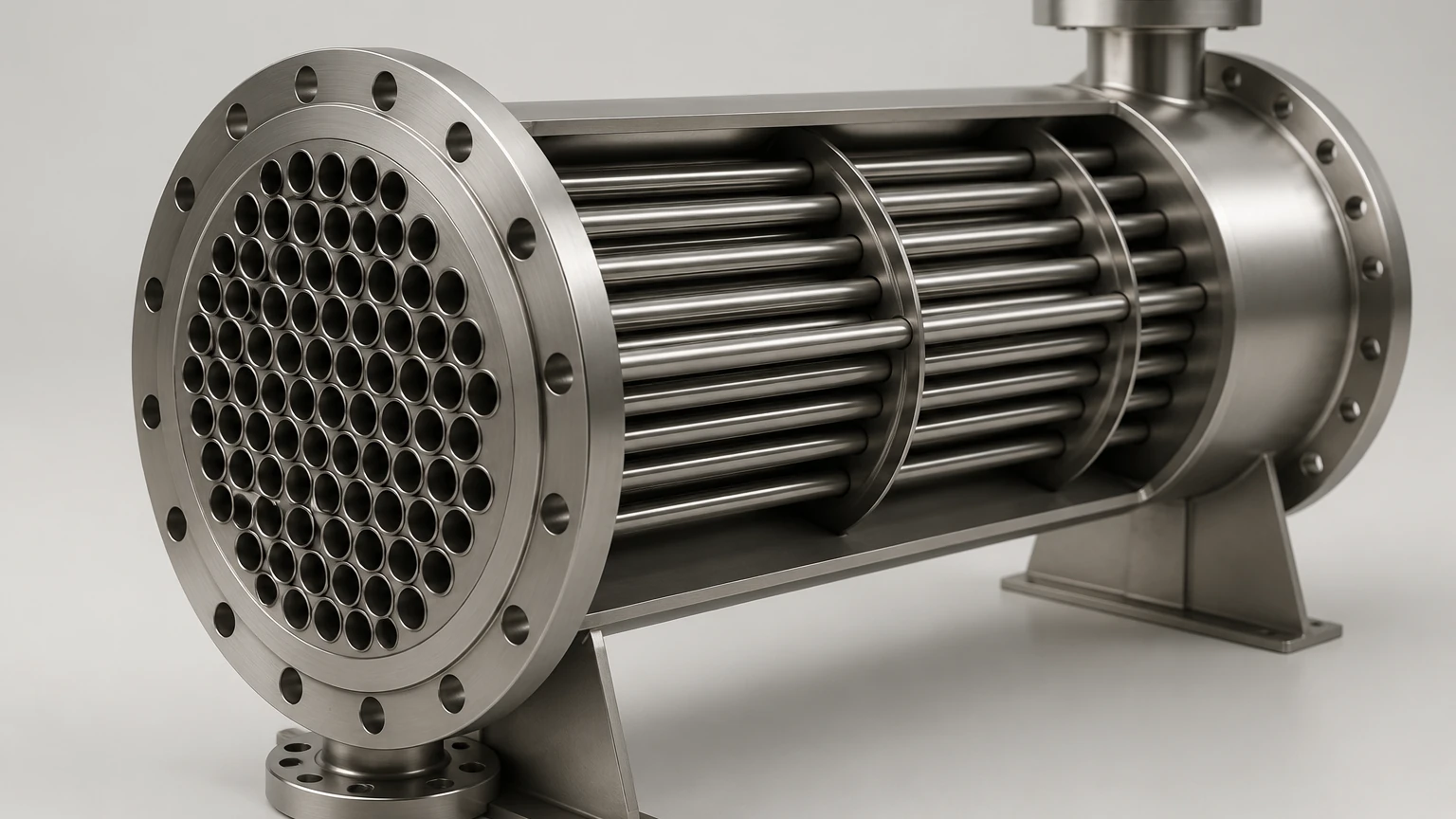
A single pass shell and tube heat exchanger consists of a series of tubes housed within a cylindrical shell. In this specific configuration, the tube-side fluid enters through one header, passes through the entire length of the tube bundle exactly once, and exits through the opposite header. Simultaneously, the shell-side fluid flows over the exterior of the tubes, typically guided by baffles to enhance turbulence and heat transfer. This article examines the engineering principles, design considerations, and maintenance requirements of these systems, while highlighting the critical role of auxiliary components like precision filtration in maintaining system integrity.
Understanding the Single Pass Configuration
The "single pass" designation refers specifically to the travel path of the tube-side fluid. While multi-pass heat exchangers use internal partitions in the headers to force the fluid back and forth through the tube bundle multiple times, the single pass design maintains a linear path. This simplicity offers several distinct engineering advantages, particularly regarding pressure drop and mechanical design.
Flow Dynamics: Counter-Current vs. Co-Current
One of the primary reasons engineers select a single pass shell and tube heat exchanger is the ability to achieve true counter-current flow. In a counter-current arrangement, the two fluids enter at opposite ends of the exchanger and flow in opposite directions. This maximizes the temperature gradient across the entire length of the unit, allowing for the highest possible heat transfer rate and enabling the "temperature cross" phenomenon, where the outlet temperature of the cold fluid exceeds the outlet temperature of the hot fluid.
Conversely, co-current flow (where both fluids enter at the same end) is less thermally efficient but may be used when there is a need to limit the maximum temperature of a heat-sensitive fluid. The single pass design is uniquely suited to these pure flow regimes, whereas multi-pass designs inherently involve a mix of counter-current and co-current flow, which complicates the Log Mean Temperature Difference (LMTD) calculations.
Mechanical Simplicity and Thermal Expansion
From a mechanical perspective, the single pass design is often easier to manufacture and maintain. Because the fluid enters one end and exits the other, the headers (or water boxes) do not require complex internal pass partitions. This reduces the risk of internal bypassing, where fluid leaks across a partition plate rather than traveling through the tubes.
However, the single pass design requires careful consideration of thermal expansion. Since the tubes and the shell may expand at different rates due to temperature differentials, engineers must choose between a fixed tubesheet design (which may require an expansion joint on the shell) or a floating head design. The floating head allows one end of the tube bundle to move independently of the shell, effectively neutralizing thermal stress, though it increases the initial capital cost.
Engineering Advantages and Performance Metrics
When evaluating a single pass shell and tube heat exchanger for a specific application, engineers focus on several key performance indicators. These metrics determine whether a single pass unit is more appropriate than a multi-pass or plate-and-frame alternative.
Low Pressure Drop Characteristics
One of the most significant advantages of the single pass configuration is the minimal pressure drop on the tube side. In multi-pass exchangers, every "turn" the fluid makes in the headers results in a loss of kinetic energy and an increase in pressure drop. For applications involving high-velocity flows or fluids with limited pumping head, the linear path of the single pass exchanger is often the only viable solution. This low-pressure-drop characteristic is particularly valued in vacuum systems and large-scale cooling water circuits.
Heat Transfer Efficiency and LMTD
The efficiency of a heat exchanger is largely governed by the equation $Q = U \times A \times LMTD$. In a single pass counter-current setup, the LMTD correction factor ($F$) is typically 1.0. In multi-pass units, the $F$ factor is always less than 1.0 because of the mixed flow directions. This means that for a given heat load and temperature profile, a single pass exchanger might require less surface area than a multi-pass unit, provided the flow velocities are high enough to maintain a good heat transfer coefficient ($U$).
Velocity Considerations
To prevent fouling and maximize the heat transfer coefficient, engineers aim for turbulent flow within the tubes (typically a Reynolds number greater than 4,000). In a single pass design, the total flow is distributed across all tubes simultaneously. If the total flow rate is low, the velocity in each tube may drop into the laminar regime, significantly reducing efficiency. In such cases, a multi-pass design might be used to increase velocity by reducing the number of tubes per pass. Therefore, single pass exchangers are most effective in high-flow-rate applications.
Material Compatibility and Corrosion Resistance
In industrial environments, the longevity of a single pass shell and tube heat exchanger is heavily dependent on material selection. Stainless steel is the industry standard for many demanding applications due to its balance of thermal conductivity, mechanical strength, and chemical resistance.
Stainless Steel Grades
* 304/304L: Suitable for general-purpose applications with low chloride concentrations. It offers excellent weldability and is cost-effective for food and beverage or light industrial use.
* 316/316L: The preferred choice for pharmaceutical and chemical processing. The addition of molybdenum provides superior resistance to pitting and crevice corrosion, especially in environments containing chlorides or organic acids.
* Duplex Stainless Steel: Used in high-pressure or highly corrosive environments (such as seawater cooling). Duplex alloys provide higher yield strength and better stress-corrosion cracking resistance than austenitic grades.
Surface Finish and Cleanability
In the pharmaceutical and food industries, the internal surface finish of the tubes is critical. Electropolished or high-grit mechanical finishes reduce the ability of proteins or chemical residues to adhere to the tube walls. This not only maintains heat transfer efficiency but also facilitates Clean-in-Place (CIP) procedures. For engineers, specifying the required Ra (roughness average) value is a vital step in the procurement process.
Managing Fouling and the Role of Precision Filtration
Fouling is the accumulation of unwanted material on the heat transfer surfaces, which creates an insulating layer that reduces efficiency and increases pressure drop. In a single pass shell and tube heat exchanger, fouling can be particularly problematic because it can lead to uneven flow distribution among the tubes. If several tubes become partially blocked, the remaining tubes must carry a higher flow, potentially leading to erosion-corrosion.
The Necessity of Pre-Filtration
To protect the heat exchanger, integrated filtration solutions are often mandatory. Particulates such as sand, scale, biological growth, or process debris must be removed before the fluid enters the exchanger. This is where high-quality filtration components become essential. Utilizing stainless steel wire mesh filters or precision filter cartridges ensures that only clean fluid reaches the tube bundle, significantly extending the time between manual cleanings.
For engineers designing these systems, consulting a specialist manufacturer like Kaifil is recommended to ensure that the filtration system is correctly sized for the flow rate and particle load. Detailed information on available filtration technologies can be found on the Main Page, which provides insights into custom stainless steel filtration solutions tailored for industrial heat transfer protection.
Fouling Factors in Design
During the design phase, engineers apply a "fouling factor" ($R_f$) to the heat transfer calculations. This factor acts as a safety margin, over-sizing the heat exchanger to account for the inevitable decrease in performance over time. However, excessive over-sizing can lead to low velocities, which actually accelerates fouling. A well-designed filtration system allows for a lower, more realistic fouling factor, resulting in a more compact and cost-effective heat exchanger design.
Selection Criteria for Industrial Engineers
Selecting the right single pass shell and tube heat exchanger requires a comprehensive analysis of the process requirements. Before contacting a manufacturer, the following criteria should be confirmed:
1. Fluid Properties: Accurate data for density, viscosity, specific heat, and thermal conductivity for both fluids at their respective operating temperatures. Non-Newtonian fluids or fluids with high solids content require special consideration.
2. Thermal Profile: The required inlet and outlet temperatures for both the hot and cold streams. This determines the LMTD and the required surface area.
3. Allowable Pressure Drop: The maximum permissible pressure loss for both the shell and tube sides. This often dictates the tube diameter and the baffle spacing.
4. Design Pressure and Temperature: Must account for both steady-state operation and potential process upsets. This determines the thickness of the shell, tubes, and tubesheets according to ASME or TEMA standards.
5. Space Constraints: Single pass exchangers are typically longer than multi-pass units with the same surface area. Engineers must ensure there is sufficient "pull space" for bundle removal and maintenance.
Customization Options
Industrial applications often require customized designs. This may include specialized nozzle orientations to fit existing piping, the use of finned tubes to enhance shell-side heat transfer for gas-phase fluids, or the inclusion of impingement plates to protect the tube bundle from high-velocity shell-side entry. Customization ensures that the exchanger integrates seamlessly into the broader plant infrastructure.
Maintenance, Cleaning, and Replacement Cycles
The total cost of ownership (TCO) of a single pass shell and tube heat exchanger is heavily influenced by its maintenance requirements. While the single pass design is generally robust, it is not immune to wear.
Inspection Protocols
Regular inspection is vital for preventing catastrophic failure. Common techniques include:
* Eddy Current Testing (ECT): Used to detect wall thinning, pitting, or cracks in non-ferrous and some stainless steel tubes.
* Hydrostatic Testing: Performed during shutdowns to check for leaks between the shell and tube sides.
* Visual Inspection: Using borescopes to examine the internal condition of the tubes and headers.
Cleaning Methods
When fouling occurs, the single pass design allows for relatively easy mechanical cleaning. Because the tubes are straight and accessible from both ends (once the headers are removed), brushes or high-pressure water jets can be passed through the entire length of the tubes. For the shell side, chemical cleaning or steam cleaning is often used, depending on the nature of the foulant.
Replacement Indicators
A heat exchanger should be considered for replacement or retubing if the number of plugged tubes (tubes taken out of service due to leaks) exceeds a certain percentage—typically 10% to 15%—as this significantly alters the flow dynamics and thermal performance. Additionally, if the shell shows signs of significant corrosion or if the expansion joint fails, a full unit replacement may be more cost-effective than a repair.
Conclusion
The single pass shell and tube heat exchanger remains a cornerstone of industrial thermal processing due to its efficiency in counter-current applications and its low pressure drop. By focusing on rigorous material selection, adhering to TEMA design standards, and implementing robust pre-filtration strategies, engineers can ensure these units provide decades of reliable service. When specifying a system, it is critical to look beyond the initial purchase price and consider the long-term impacts of fouling, maintainability, and the integration of high-quality components to protect the heat transfer surfaces. For those seeking to optimize their industrial filtration and fluid handling systems, reviewing the technical resources and product options available on the Main Page is a practical next step in the engineering process.
