


Sterile Air Filters
In industrial manufacturing, particularly within the pharmaceutical, biotechnology, and food and beverage sectors, the quality of compressed air and process gases is a critical factor in product safety and process integrity. Sterile air filters serve as the primary defense against microbial contamination, ensuring that air coming into contact with sensitive products or sterile environments is free from bacteria, viruses, and sub-micron particulates. Unlike standard industrial filtration, sterile filtration requires a higher degree of validation, material durability, and resistance to rigorous sterilization protocols.
For engineers and procurement teams, selecting the right filtration solution involves understanding the interplay between filtration efficiency, flow dynamics, and the physical environment of the production line. As a manufacturer specializing in custom stainless steel filtration, Kaifil provides the technical expertise necessary to navigate these complex requirements. For more information on our full range of industrial solutions, visit our Main Page.
The Role of Sterile Air Filters in Industrial Processes
Sterile air filters are designed to remove microorganisms and particulate matter from compressed air or gas streams. In many applications, such as the aeration of fermenters or the blanketing of storage tanks, the air must be effectively "sterile," meaning it is free from viable microorganisms.
The standard for sterile filtration in the industry often centers on the removal of particles down to 0.2 microns or smaller. While many bacteria range from 0.5 to 5.0 microns, certain pathogens and contaminants can be significantly smaller. Therefore, sterile air filters must utilize high-efficiency media capable of achieving a high Log Reduction Value (LRV), typically 7 or greater, for specific challenge organisms like *Brevundimonas diminuta*.
Key Applications for Sterile Filtration
1. Fermentation: In large-scale bioreactors, sterile air is bubbled through the growth medium to provide oxygen to microorganisms. Any contamination in the air supply can lead to the loss of an entire batch.
2. Aseptic Packaging: In the food and beverage industry, sterile air is used to inflate containers or maintain a sterile zone during the filling process to prevent spoilage.
3. Tank Venting: As liquid is pumped out of a sterile storage tank, air must enter to equalize pressure. A vent filter ensures this makeup air does not introduce environmental contaminants.
4. Pharmaceutical Processing: Compressed air used for pneumatic conveying of powders or for drying equipment must meet stringent sterility standards to comply with Good Manufacturing Practices (GMP).
Engineering Standards and Filtration Mechanisms
Understanding how sterile air filters function is essential for proper selection. Filtration in gas streams differs from liquid filtration due to the behavior of particles in a gaseous medium. The three primary mechanisms for particle capture in sterile gas filters are:
* Inertial Impaction: Larger particles with higher mass cannot follow the gas streamlines around the filter fibers and instead collide with and adhere to the fibers.
* Interception: Particles that follow the streamline but come close enough to a fiber to be captured by its surface.
* Diffusion (Brownian Motion): Very small particles (typically less than 0.1 microns) move erratically due to molecular collisions, increasing the likelihood that they will contact a filter fiber.
Because of these mechanisms, sterile air filters often exhibit a "most penetrating particle size" (MPPS), usually around 0.05 to 0.2 microns. Engineering the filter media to capture these specific sizes while maintaining low resistance to flow is the hallmark of a high-performance sterile filter.
Material Selection: The Case for Stainless Steel
While disposable polymer-based filters are common in some applications, industrial environments often demand the robustness of metal. Stainless steel, specifically 316L grade, is the preferred material for sterile air filters in demanding applications for several reasons:
Thermal Stability and Sterilization
Sterile filters must be sterilized regularly to maintain their efficacy. This is typically done via Steam-in-Place (SIP) or Autoclaving. Stainless steel components can withstand repeated high-temperature steam cycles (often at 121°C to 135°C) without the risk of thermal degradation, softening, or structural failure that can plague plastic housings and certain synthetic media.
Mechanical Strength
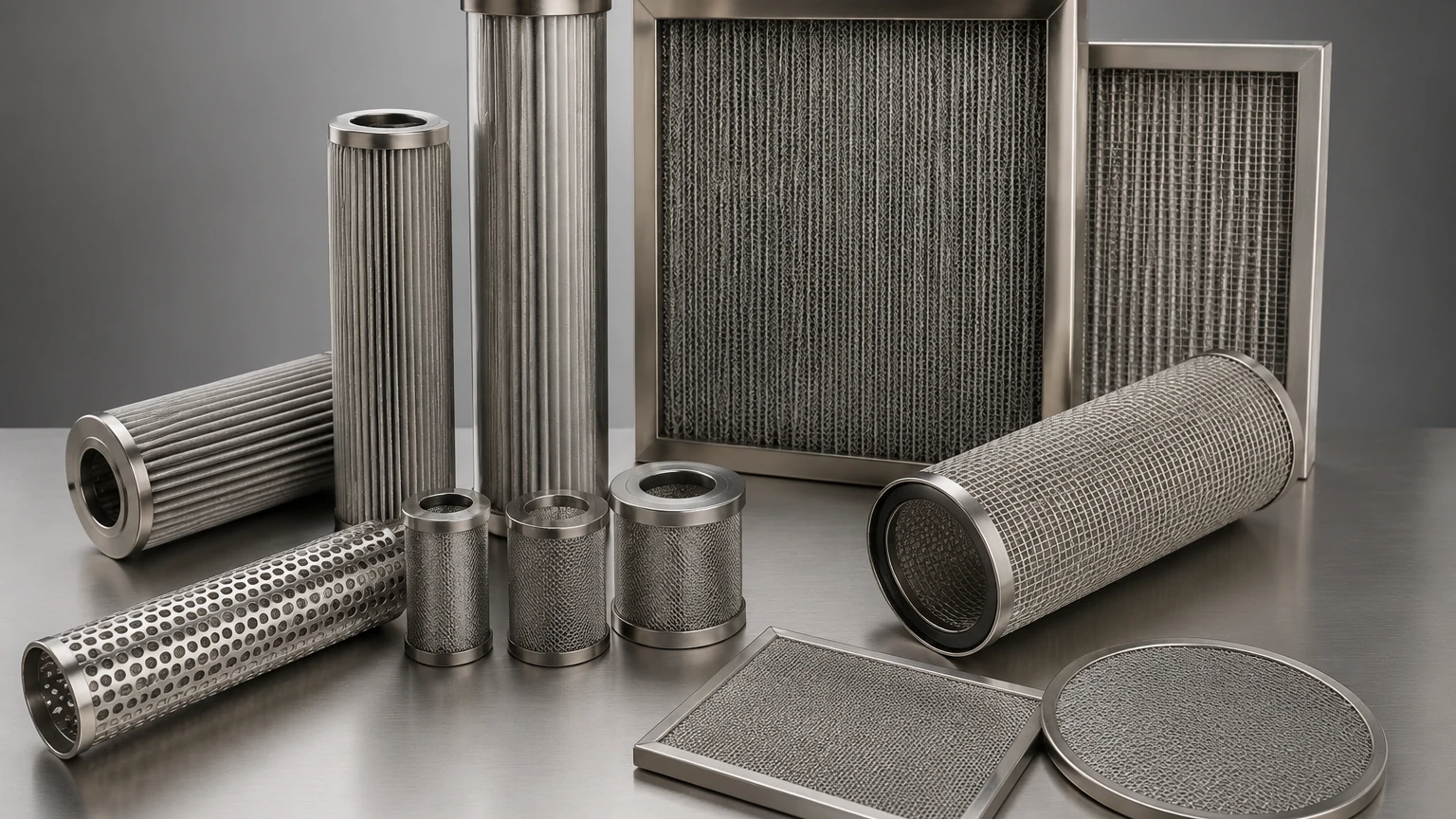
Compressed air systems can experience pressure surges or flow fluctuations. Sintered stainless steel or pleated wire mesh filters provide the mechanical rigidity required to resist deformation under high differential pressure. This ensures that the pore structure remains consistent, preventing "unloading" of captured contaminants.
Chemical Compatibility
In chemical processing or environments where aggressive cleaning agents are used, stainless steel offers superior corrosion resistance. This longevity reduces the frequency of filter replacements and ensures that the filter itself does not become a source of metallic or chemical contamination.
Key Performance Metrics and Selection Criteria
When evaluating sterile air filters for a specific project, engineers must look beyond the micron rating. Several technical parameters dictate the long-term viability and cost-effectiveness of the filtration system.
Flow Rate and Differential Pressure (Delta P)
Every filter introduces a resistance to flow. For sterile air applications, it is vital to balance the filtration efficiency with the pressure drop. A high initial Delta P requires more energy from the compressor to maintain the required downstream pressure. Selecting a filter with a high void volume (the ratio of open space to solid material in the media) can help minimize pressure drop while maintaining high capture efficiency.
Dirt Holding Capacity
Although sterile air is often pre-filtered to remove bulk moisture and oils, the sterile filter must still handle residual fine particulates. A filter with a high dirt-holding capacity will have a longer service life before the pressure drop reaches the terminal limit, necessitating cleaning or replacement.
Integrity Testing Capability
In regulated industries, the ability to verify that a filter is intact and functioning correctly is paramount. Sterile air filters should be compatible with standard integrity tests, such as the Bubble Point Test, Aerosol Challenge, or Water Intrusion Test (WIT). These tests provide documented proof that the filter has not suffered any bypass-inducing damage during installation or sterilization.
Maintenance and Sterilization Protocols
The lifespan of a sterile air filter is largely determined by its maintenance regime. Because these filters operate in critical points of the process, a failure to adhere to sterilization schedules can result in biofilm growth on the downstream side of the filter, leading to systemic contamination.
Steam-in-Place (SIP) Best Practices
When performing SIP, it is critical to manage the rate of temperature change and the direction of steam flow. Rapid cooling can create a vacuum that may damage certain filter structures. Furthermore, the steam used for sterilization should itself be filtered (culinary grade steam) to prevent the sterile air filter from becoming blinded by pipe scale or rust from the steam lines.
Monitoring and Replacement Cycles
Engineers should install differential pressure gauges across the filter housing. A sudden drop in Delta P may indicate a breach in the filter media, while a steady increase signals that the filter is reaching the end of its functional life. For stainless steel filters, professional cleaning—such as ultrasonic cleaning or chemical backflushing—can often restore the filter to its original performance levels, significantly lowering the total cost of ownership compared to single-use alternatives.
Customization and OEM Integration
Standard off-the-shelf filters do not always meet the spatial or performance requirements of specialized industrial equipment. Customization is often necessary to optimize the filtration system for specific flow rates, connection types (such as NPT, Flange, or Tri-clamp), and housing geometries.
Kaifil specializes in the design and manufacture of customized stainless steel filtration components. By working directly with a manufacturer, engineering teams can specify the exact alloy, pore size, and structural reinforcement needed for their unique sterile air application. This collaborative approach ensures that the filtration component is not an afterthought but an integrated part of the system's engineering.
Conclusion: Making Informed Purchasing Decisions
Selecting sterile air filters requires a deep understanding of the specific demands of the application, from the biological challenge to the mechanical stresses of the production environment. By prioritizing high-quality materials like stainless steel and focusing on validated performance metrics, facilities can ensure long-term process stability and product safety.
Before finalizing a filtration specification, engineers should confirm:
* The maximum operating temperature and pressure.
* The required flow rate and acceptable maximum pressure drop.
* The compatibility of the filter media with intended sterilization methods.
* The availability of integrity testing documentation.
For technical support in selecting or designing the optimal filtration solution for your facility, explore the resources available on our Main Page or contact our engineering team to discuss your specific requirements.
