


Pleated Sediment Filter
In industrial fluid processing, the removal of suspended solids is a fundamental requirement for protecting downstream equipment, ensuring product purity, and maintaining process efficiency. The pleated sediment filter stands as a primary solution for high-flow, high-efficiency particulate removal. Unlike traditional depth filters that rely on the thickness of the media to trap contaminants, pleated filters utilize a geometric design to maximize surface area, offering distinct advantages in terms of flow rate, pressure drop, and service life.
For engineers and procurement professionals, selecting the correct pleated sediment filter involves more than simply matching a micron rating. It requires a technical understanding of media composition, structural integrity, and the specific dynamics of the fluid being filtered. As a manufacturer specializing in high-performance filtration, Kaifil provides the engineering expertise necessary to navigate these variables, ensuring that filtration components meet the rigorous demands of industrial environments.
The Engineering Principles of Pleated Geometry
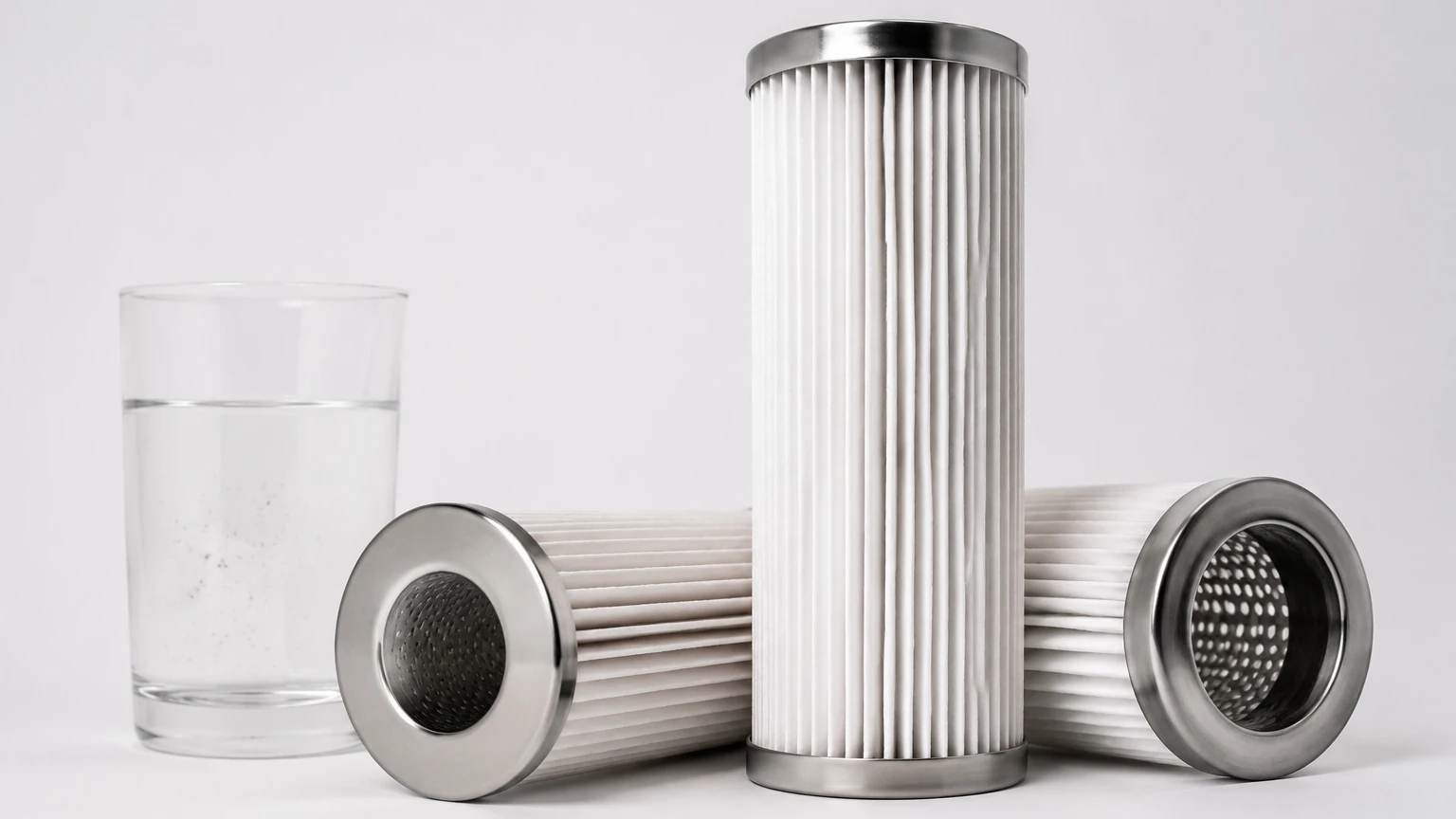
The defining characteristic of a pleated sediment filter is its accordion-like structure. By folding the filter media, manufacturers can fit a significantly larger surface area into a standard cartridge footprint compared to a cylindrical or depth-style filter. This increase in surface area has several direct impacts on filtration performance.
Surface Area and Flux Rate
Flux rate refers to the volume of fluid passing through a unit area of filter media over a specific time. By increasing the available surface area, a pleated design allows for a lower flux rate at the same overall flow volume. Lower flux rates are beneficial because they reduce the velocity of particles as they approach the media, increasing the likelihood of capture and preventing "breakthrough," where particles are forced through the pores by high pressure.
Dirt-Holding Capacity
A larger surface area naturally translates to a higher dirt-holding capacity. In a pleated sediment filter, contaminants are captured primarily on the surface of the media. Because there is more surface available, the filter can accumulate a greater mass of sediment before the accumulated "filter cake" causes an unacceptable increase in differential pressure. This leads to longer intervals between maintenance or replacement, reducing downtime in continuous industrial processes.
Material Selection: Stainless Steel vs. Synthetic Media
While many commercial pleated filters use polypropylene or polyester, industrial applications often require more robust materials. The choice of material dictates the filter’s chemical compatibility, thermal resistance, and mechanical strength.
Stainless Steel Pleated Filters
Kaifil specializes in stainless steel filtration solutions, which are often the preferred choice for demanding industrial applications. Stainless steel (typically Grade 304 or 316L) offers several advantages over synthetic media:
- Thermal Stability: Stainless steel can operate at temperatures far exceeding the melting points of polymers, making it essential for steam filtration or high-temperature chemical processing.
- Chemical Compatibility: It is resistant to a wide range of aggressive solvents, acids, and bases that would degrade or dissolve synthetic fibers.
- Mechanical Strength: Stainless steel pleated elements can withstand significantly higher differential pressures without collapsing or bypassing.
- Reusability: Unlike disposable synthetic filters, stainless steel elements can often be cleaned and reused, providing a lower total cost of ownership (TCO) over the long term.
Synthetic Pleated Media
Polypropylene or pleated paper filters are common in water treatment and less aggressive chemical applications. They are generally lower in initial cost but are limited by their temperature thresholds and the fact that they are typically single-use components. When selecting a pleated sediment filter, engineers must evaluate whether the application justifies the durability of metal or the disposability of synthetics.
Understanding Filtration Efficiency and Micron Ratings
When specifying a pleated sediment filter, the micron rating is the most cited specification. However, without understanding the distinction between nominal and absolute ratings, engineers may select a filter that fails to meet process requirements.
Nominal vs. Absolute Ratings
- Nominal Rating: This is an arbitrary value indicating the filter's ability to retain a majority of particles of a specific size (usually between 60% and 90%). It does not guarantee that all particles above that size will be removed.
- Absolute Rating: An absolute rating indicates that the filter has been tested to remove 99.9% (Beta 1000) or more of particles at the specified micron size. For critical applications, such as protecting high-pressure nozzles or sensitive analytical equipment, an absolute-rated pleated filter is necessary.
Beta Ratio
In technical specifications, the Beta Ratio (β) provides a more precise measure of efficiency. It is the ratio of particles of a given size in the influent (upstream) versus the effluent (downstream). A higher Beta ratio indicates higher efficiency. For industrial-grade pleated filters, understanding the Beta ratio at specific micron levels is crucial for calculating the expected cleanliness of the fluid after a single pass.
Key Performance Indicators for Industrial Selection
To optimize a filtration system, engineers must look beyond the filter element itself and consider the operational parameters of the entire system. Several KPIs define the success of a pleated sediment filter installation.
Differential Pressure (Delta P)
Differential pressure is the difference between the pressure at the inlet and the outlet of the filter housing. Every pleated sediment filter has a clean pressure drop (the resistance of the media itself) and a terminal pressure drop (the point at which the filter is considered fouled and must be cleaned or replaced). A well-designed pleated filter will have a low initial Delta P, allowing for more "headroom" for contaminant loading.
Flow Velocity and Housing Design
The velocity of the fluid within the filter housing affects the distribution of sediment across the pleats. If the velocity is too high, it can cause uneven loading, where the pleats near the inlet become clogged while the rest of the filter remains clean. Proper housing design, combined with correctly sized pleated elements, ensures uniform flow distribution and maximum media utilization.
Application-Specific Considerations
The versatility of the pleated sediment filter makes it suitable for a wide range of industries, each with unique challenges.
Chemical and Petrochemical Processing
In these environments, filters must handle corrosive fluids and high pressures. Stainless steel pleated elements are used to remove catalysts, scale, and other particulates from process streams. The ability to withstand high differential pressure is critical here, as process upsets can cause sudden spikes in contaminant loading.
Food and Beverage Industry
Filtration in this sector requires compliance with stringent hygienic standards (such as FDA or 3-A). Pleated filters are used for clarifying liquids, protecting bottling equipment, and filtering culinary steam. Stainless steel is preferred because it can withstand Clean-in-Place (CIP) procedures involving caustic chemicals and high-heat sterilization.
Hydraulic and Lube Oil Systems
Particulate contamination is the leading cause of failure in hydraulic systems. Pleated sediment filters are used to maintain ISO cleanliness codes for oils. Because hydraulic fluids can be highly viscous, the high surface area of a pleated filter is essential to maintain flow without excessive pressure drop, even in cold-start conditions.
Maintenance, Cleaning, and Reusability
One of the primary engineering decisions in filtration is whether to use a disposable or a cleanable filter. For many industrial processes, the move toward sustainable and cost-effective operations favors cleanable stainless steel pleated elements.
Cleaning Methods
When a stainless steel pleated sediment filter reaches its terminal pressure drop, it can be restored through various methods:
- Backwashing: Reversing the flow of fluid to dislodge particles from the surface of the pleats.
- Ultrasonic Cleaning: Using high-frequency sound waves in a cleaning solvent to remove fine particulates trapped deep within the mesh or pleats.
- Chemical Cleaning: Using specific acids or alkalis to dissolve organic or inorganic scaling without damaging the stainless steel structure.
Replacement Cycles
Even with cleanable filters, there is a finite lifespan dictated by the mechanical fatigue of the media and the effectiveness of the cleaning process. Monitoring the "clean" pressure drop after each cleaning cycle allows engineers to track the filter's recovery. When the post-cleaning Delta P begins to rise significantly, it indicates that the media is permanently fouled or blinded, and a replacement is required.
Customization and OEM Integration
Standard off-the-shelf filters often fall short in specialized industrial machinery. Customization is a core component of Kaifil’s service, allowing for the development of filtration components that fit specific spatial and performance constraints.
Specifying Custom Pleated Filters
When requesting a custom pleated sediment filter, engineers should provide the following data:
- Fluid Characteristics: Viscosity, temperature, and chemical composition.
- Contaminant Profile: Particle size distribution, concentration, and the nature of the sediment (e.g., hard, deformable, or fibrous).
- Mechanical Interface: End cap configurations (e.g., DOE, Code 7, threaded), gasket materials (EPDM, Viton, PTFE), and overall dimensions.
- Operating Conditions: Normal and maximum flow rates, and maximum allowable pressure drop.
By providing these details, procurement teams can ensure they receive a component engineered for their specific application rather than a generic substitute. To explore technical specifications and available configurations, engineers can visit the Main Page for comprehensive product support.
Conclusion
The pleated sediment filter is a sophisticated tool in the industrial filtration arsenal. Its ability to provide high-efficiency particulate removal with minimal pressure drop makes it indispensable across the chemical, food, and hydraulic sectors. By understanding the technical nuances of pleat geometry, material science, and filtration efficiency, engineering and purchasing teams can make informed decisions that enhance system reliability and reduce long-term operational costs. Whether the requirement is for a standard replacement or a custom-engineered OEM component, focusing on quality construction and precise specification is the key to optimized filtration performance.
