


Non Woven Wire Mesh
In the landscape of industrial filtration, the terminology used to describe media can often lead to technical ambiguity. While engineers and procurement specialists are intimately familiar with the geometric precision of Woven Wire Mesh, the term "non woven wire mesh" is frequently used to describe a specific class of depth filtration media—primarily sintered metal fiber felt. Understanding the distinction between these two formats is critical for optimizing filtration efficiency, managing pressure drops, and ensuring the longevity of industrial equipment.
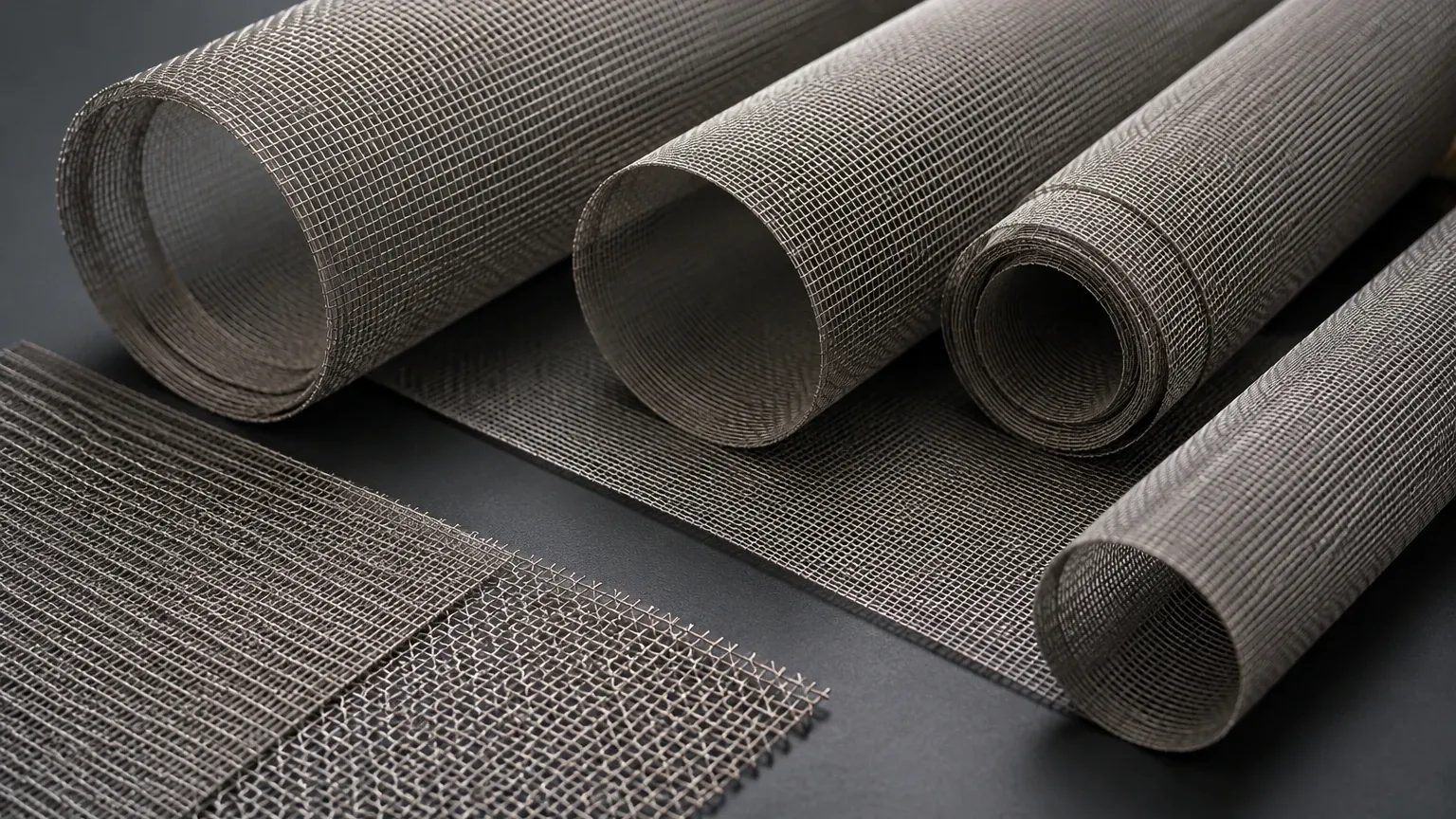
This guide explores the technical characteristics, application suitability, and engineering considerations of non-woven metal media, contrasting it with traditional Plain, twill and dutch woven wire mesh in SS304/316L — rolls, cut mesh and framed panels. Send mesh count or micron target for a technical quote. to help technical teams make informed selection decisions.
Defining Non Woven Wire Mesh in an Industrial Context
In the textile industry, "non-woven" refers to fabrics bonded by chemical, mechanical, or heat treatment. In the metal filtration industry, non woven wire mesh typically refers to sintered metal fiber felt. Unlike woven media, which is manufactured by interlacing individual wires in a predetermined pattern (such as plain, twill, or dutch weave), non-woven metal media is composed of extremely fine stainless steel fibers that are randomly laid to form a uniform web.
These fibers are then subjected to a high-temperature vacuum sintering process. This metallurgical bonding creates a robust, three-dimensional porous structure. While a Woven Wire Mesh provides a two-dimensional surface filtration barrier with precise pore shapes, the non-woven counterpart offers a complex, labyrinthine path for fluids, characterizing it as a depth filtration medium.
Structural Differences: Woven vs. Non-Woven Metal Media
The fundamental difference between these two types of media lies in their internal geometry and how they interact with particulate matter.
Woven Wire Mesh Structure
Woven Wire Mesh is defined by its regularity. The intersection of warp and weft wires creates fixed apertures. This regularity allows for a high degree of predictability in "absolute" micron ratings. Because the openings are uniform, any particle larger than the pore size is captured on the surface of the mesh. This makes woven mesh ideal for surface filtration where easy cleaning (backwashing) is a priority.
Non-Woven (Sintered Fiber) Structure
In contrast, non woven wire mesh (sintered fiber felt) consists of fibers with diameters often much smaller than the wires used in weaving. These fibers are compressed and sintered into a mat. The result is a high-porosity media (up to 80% or higher) compared to the 30-45% typical of woven mesh. The random orientation of fibers creates a depth effect, where particles are trapped not just on the surface, but throughout the thickness of the media.
Performance Metrics: Porosity and Dirt-Holding Capacity
When evaluating non woven wire mesh against woven alternatives, engineers must look at three primary performance indicators: dirt-holding capacity, permeability, and filtration efficiency.
1. Dirt-Holding Capacity
Because of its three-dimensional structure, non-woven metal fiber felt can hold significantly more contaminants before reaching its terminal pressure drop. In many industrial applications, a non-woven filter element can offer two to four times the dirt-holding capacity of a single-layer Woven Wire Mesh. This translates directly into longer on-stream life and reduced maintenance intervals.
2. Permeability and Pressure Drop
The high porosity of non-woven media allows for higher flow rates at lower differential pressures. For systems where energy efficiency is paramount, or where the fluid is highly viscous (such as polymer melt filtration), the low resistance of a non-woven structure is a major technical advantage.
3. Filtration Efficiency
Non-woven media excels at capturing irregular or deformable particles that might otherwise "slug" through the fixed apertures of a woven mesh under high pressure. The tortuous path within the fiber felt ensures that particles have multiple opportunities to be intercepted by the fiber matrix.
Engineering Selection Criteria: When to Choose Non-Woven Media
Choosing between a structured Woven Wire Mesh and a non-woven fiber felt depends on the specific requirements of the process environment. Engineers should consider the following factors:
Fluid Characteristics
If the fluid contains a high concentration of hard, spherical particles, a woven mesh is often sufficient. However, if the contaminants are gelatinous, fibrous, or vary widely in size, the depth filtration of non woven wire mesh prevents the surface blinding that would prematurely choke a woven screen.
Cleaning and Reusability
Woven meshes are generally easier to clean via ultrasonic baths or back-flushing because the contaminants are trapped on a single plane. While sintered fiber felt is cleanable, the process is more complex because particles are embedded deep within the media. In applications where the filter must be cleaned and reused dozens of times, a high-quality stainless steel Woven Wire Mesh is often the more cost-effective choice.
Mechanical Stress and Pleatability
Both media types can be pleated to increase the effective filtration area within a standard filter housing. However, non-woven fiber felt is more susceptible to mechanical damage if not properly supported. In most high-pressure applications, Kaifil engineers design composite filter elements that use a layer of Woven Wire Mesh as a drainage and support layer for the non-woven filtration mat. This combination provides the high efficiency of non-woven media with the structural integrity of woven wire.
Common Applications for Non-Woven Metal Filtration
While Woven Wire Mesh is the standard for general industrial sieving and straining, non woven wire mesh (sintered fiber felt) is preferred in several high-demand sectors:
* Polymer Filtration: In the production of synthetic fibers and plastic films, non-woven media is used to remove gels and degraded polymer particles that would cause breaks in the extrusion process.
* Hydraulic Systems: High-performance aerospace and industrial hydraulic systems utilize non-woven media to protect sensitive valves from fine particulate wear while maintaining low pressure drops.
* Gas Filtration: Sintered fiber felt is used in high-temperature gas filtration (e.g., catalyst recovery) because it can withstand thermal shocks while providing high efficiency at high velocities.
* Chemical Processing: For the filtration of aggressive chemicals where high dirt-holding capacity is required to minimize the frequency of operator exposure during filter changes.
Material Selection and Corrosion Resistance
Both woven and non-woven media are available in a variety of alloys. At Kaifil, we prioritize 304 and 316L stainless steel for most applications due to their excellent corrosion resistance and mechanical properties.
For specialized environments, such as those involving high chloride concentrations or extreme temperatures, other alloys like Inconel or Hastelloy may be used in the production of non woven wire mesh. It is essential to confirm the chemical compatibility of the fiber material with the process fluid, as the high surface area of non-woven media can accelerate corrosion rates if the material is not correctly matched to the environment.
Total Cost of Ownership (TCO) Considerations
When specifying filtration components, looking only at the initial purchase price can be misleading. While a Woven Wire Mesh element may have a lower upfront cost, the total cost of ownership must account for:
1. Frequency of Replacement: If a woven mesh blinds every 48 hours but a non-woven element lasts 10 days, the labor and downtime savings of the non-woven option far outweigh the initial price difference.
2. Product Loss: High pressure drops can lead to system bypass or product degradation. The lower differential pressure of non-woven media often results in higher quality end-products.
3. Energy Consumption: Pumps must work harder to push fluid through a clogged or low-porosity filter. Over the course of a year, the energy savings from using a high-porosity non woven wire mesh can be substantial.
What to Confirm Before Ordering
Before proceeding with a custom filtration solution, engineers should prepare the following data points to ensure the media selection aligns with performance expectations:
* Target Micron Rating: Define whether you require an absolute or nominal rating.
* Flow Rate and Viscosity: Essential for calculating the required surface area and predicting pressure drop.
* Operating Temperature and Pressure: Determines the alloy and the need for structural support layers.
* Contaminant Type: Helps determine if surface filtration (Woven Wire Mesh) or depth filtration (non-woven fiber felt) is appropriate.
* Cleaning Method: Confirm if the element will be cleaned in-situ or removed for external processing.
Conclusion
Both Woven Wire Mesh and non-woven metal fiber felt have distinct roles in industrial filtration. Woven mesh offers precision, structural strength, and ease of cleaning, making it the go-to for surface filtration and support. Non-woven media provides superior dirt-holding capacity and low pressure drop, making it ideal for critical depth filtration tasks.
By understanding the technical trade-offs between these materials, engineering teams can design filtration systems that maximize uptime and minimize operational costs. Whether your application requires the geometric regularity of a dutch weave or the high-porosity depth of a sintered felt, selecting the right metal media is the first step toward optimized process performance.
