


Sterile Air Filtration
In industrial environments where product purity is non-negotiable, sterile air filtration serves as a critical barrier against microbial contamination. For sectors such as pharmaceutical manufacturing, biotechnology, food and beverage production, and high-precision electronics, the removal of bacteria, viruses, and sub-micron particulates from compressed air or process gas streams is an engineering necessity. Unlike standard particulate filtration, sterile air filtration requires a specialized approach to material selection, housing design, and validation protocols to ensure that the air entering a sterile environment remains truly aseptic.
For engineers and procurement professionals, selecting the right filtration system involves balancing filtration efficiency with operational longevity and maintenance costs. This guide examines the technical principles of sterile air filtration, the engineering considerations for system design, and the advantages of utilizing robust materials like stainless steel in demanding industrial applications.
Technical Principles of Sterile Air Filtration
Sterile air filtration is defined by its ability to remove microorganisms from a gas stream. While standard industrial filters might target particles in the 1 to 5-micron range, sterile filters are typically rated at 0.2 microns or smaller. This specific rating is chosen because most airborne bacteria range from 0.2 to 2.0 microns, and the most penetrating particle size (MPPS) for many filter media often falls within this range.
The removal of these contaminants is achieved through three primary physical mechanisms:
1. Inertial Impaction: Larger particles, which possess enough mass to resist changes in air direction, collide with the filter fibers and become trapped.
2. Interception: Mid-sized particles follow the airflow streamlines but come close enough to a fiber to be captured by its surface.
3. Diffusion (Brownian Motion): Very small particles (under 0.1 microns) move erratically due to molecular collisions. This erratic path increases the likelihood that they will contact a filter fiber and adhere to it.
In sterile applications, the efficiency of these mechanisms is measured by the Log Reduction Value (LRV). A high-quality sterile filter should provide an LRV of 7 or greater, meaning it can reduce a microbial challenge of 10^7 organisms per square centimeter to zero detectable units in the effluent.
Engineering Considerations for System Design
When integrating sterile air filtration into an industrial process, engineers must look beyond the micron rating. The performance of the filter is heavily influenced by the surrounding system architecture. Key factors include:
Flow Rate and Velocity
Airflow velocity directly impacts filtration efficiency and pressure drop. If the velocity is too high, it can decrease the residence time of air within the filter media, potentially reducing the effectiveness of diffusion. Furthermore, high velocities increase the differential pressure (delta P), which can lead to higher energy consumption and premature filter failure. Systems must be sized to accommodate peak flow requirements while maintaining a manageable pressure drop.
Moisture Management
Moisture is the primary enemy of sterile air systems. Liquid water in the air stream can lead to "blinding" of the filter media, where the pores become clogged with water, causing a massive spike in pressure drop. More importantly, moisture provides the necessary environment for microbial growth on the filter surface. Effective sterile air systems always include pre-filtration stages—such as coalescing filters and refrigerated or desiccant dryers—to ensure the air reaching the sterile filter is as dry as possible.
Temperature and Chemical Compatibility
In many B2B applications, such as chemical processing or pharmaceutical fermentation, the air stream may be hot or contain trace amounts of aggressive chemicals. The filter media and the seals (O-rings) must be compatible with these conditions. Stainless steel components are often preferred in these scenarios due to their inherent resistance to corrosion and thermal degradation.
Material Selection: The Role of Stainless Steel
In the context of sterile air filtration, the housing and the filter support structures are just as important as the media itself. Kaifil specializes in manufacturing stainless steel filtration solutions that address the rigorous demands of industrial sterile environments. For more information on specific component capabilities, you can visit the Main Page.
Stainless steel, particularly grades 304 and 316L, is the industry standard for sterile applications for several reasons:
* Durability: Unlike plastic or polymer-based housings, stainless steel can withstand high internal pressures and mechanical stresses without the risk of cracking or bypass.
* Surface Finish: For sterile applications, the internal surfaces of filter housings are often electropolished to a Ra (Roughness Average) of less than 0.8 µm. This smooth finish prevents microbial adhesion and ensures that the housing can be effectively cleaned.
* Thermal Resistance: Sterile filters must be regularly sterilized to maintain their aseptic status. Stainless steel is ideally suited for Steam-In-Place (SIP) and Autoclave processes, which involve repeated exposure to high-temperature saturated steam.
Sterilization and Validation Protocols
A filter is only "sterile" if it has undergone a validated sterilization process. In industrial B2B settings, the most common method is Steam-In-Place (SIP). During SIP, saturated steam is introduced into the filter housing to kill any microorganisms trapped on the filter media or the internal surfaces of the housing.
Integrity Testing
To ensure that the filter has not been damaged during installation or sterilization, engineers perform integrity tests. These tests are non-destructive and provide a reliable indication of the filter's microbial retention capabilities. Common methods include:
* The Bubble Point Test: This measures the pressure required to force air through the pores of a wetted filter. A drop in the expected bubble point pressure indicates a hole or a tear in the media.
* Aerosol Challenge: In some air systems, an aerosol of known particle size (such as PAO) is introduced upstream, and the downstream air is monitored for penetration.
Regular integrity testing is a cornerstone of quality assurance in pharmaceutical and food processing, as it provides a documented audit trail that the sterile air filtration system is functioning as intended.
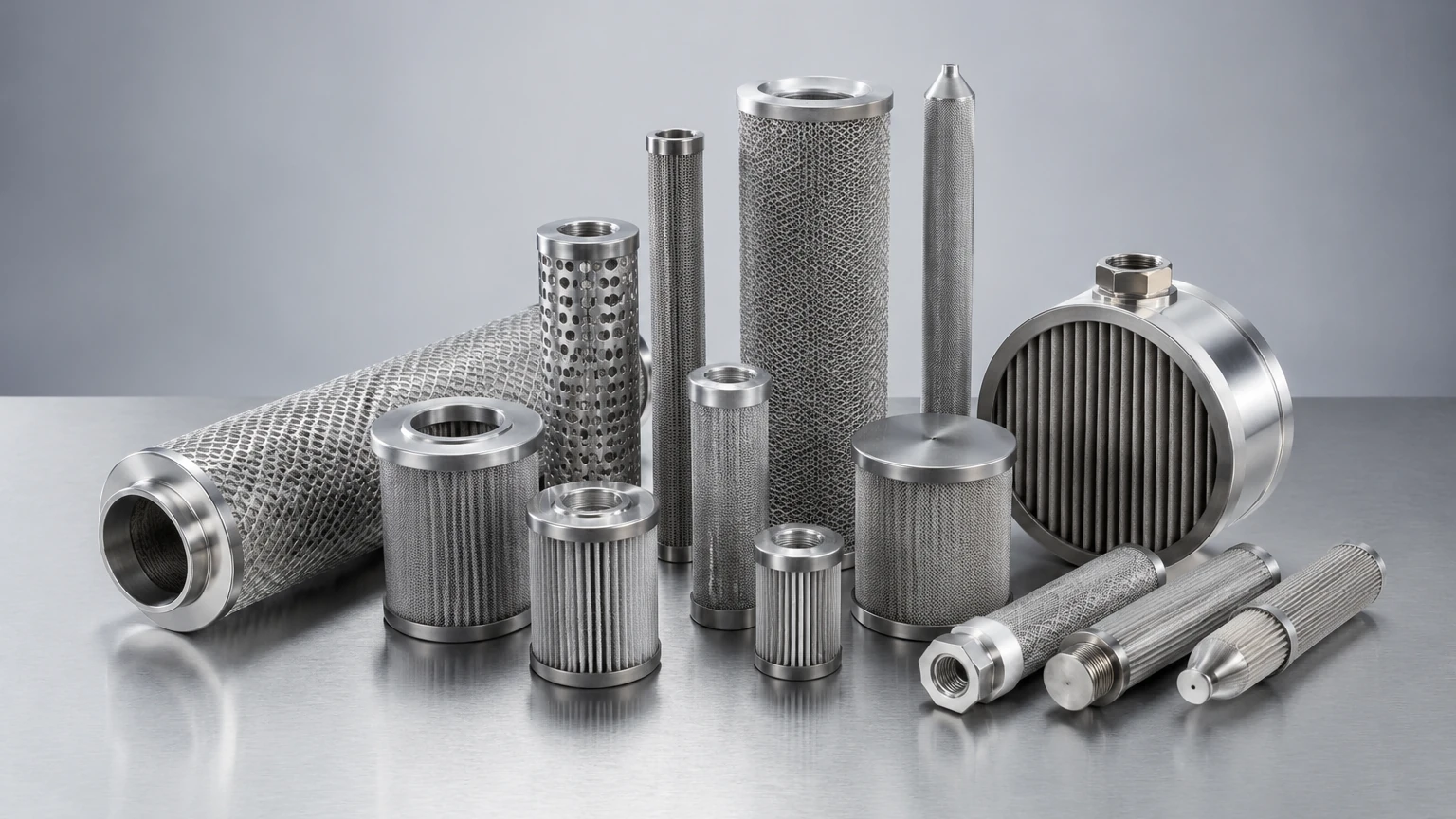
Customization and OEM Solutions
Every industrial facility has unique spatial and process requirements. Standard off-the-shelf filter housings may not always fit into existing pipework or meet specific flow requirements. This is where customized filtration solutions become essential.
Customization options for sterile air systems include:
* Tailored Port Configurations: Matching existing flange or thread standards (NPT, BSP, Tri-Clamp) to simplify installation.
* Custom Micron Ratings: Adjusting the density of the filter media to balance filtration efficiency with the required service life.
* Specialized Materials: Utilizing specific alloys for environments involving highly corrosive gases.
By working with a manufacturer that understands the nuances of precision metal fabrication, engineering teams can develop filtration components that are optimized for their specific equipment, reducing the need for costly adapters and minimizing potential leak points.
Maintenance and Total Cost of Ownership (TCO)
While the initial purchase price of a sterile air filter is a factor, the Total Cost of Ownership (TCO) is a more accurate metric for B2B decision-making. TCO includes the cost of replacement elements, the energy cost associated with pressure drop, and the labor costs for sterilization and testing.
Replacement Cycles
Sterile air filters do not have an infinite lifespan. Over time, the accumulation of fine particulates and the mechanical stress of repeated SIP cycles will degrade the filter media. Monitoring the differential pressure across the filter is the most effective way to determine when a replacement is necessary. Typically, a sterile filter should be replaced when the differential pressure reaches a pre-defined limit (e.g., 0.7 to 1.0 bar) or after a specific number of sterilization cycles, whichever comes first.
Preventing Breakthrough
If a filter is left in service too long, the risk of "breakthrough" increases. This occurs when the accumulated contaminants or the degradation of the fibers allows microorganisms to pass through the filter. A single breakthrough event can contaminate an entire production batch, leading to significant financial losses and potential regulatory penalties. Therefore, a proactive maintenance schedule, backed by regular integrity testing, is essential.
Conclusion
Sterile air filtration is a sophisticated engineering discipline that requires a deep understanding of fluid dynamics, microbiology, and material science. By selecting robust stainless steel housings and high-efficiency filter media, and by adhering to strict sterilization and validation protocols, industrial facilities can ensure the integrity of their processes and the safety of their products.
When evaluating filtration partners, it is vital to choose a manufacturer with the technical expertise to provide not just a product, but a solution. From material selection to custom design, the right filtration component can significantly impact the efficiency and reliability of a sterile air system. For engineers looking to optimize their filtration performance, reviewing technical specifications and application support on the Main Page is a recommended next step in the procurement process.
