


Protein Separator
In the landscape of industrial processing, the separation and recovery of proteins represent some of the most technically demanding filtration challenges. Whether in the production of whey protein concentrates, the purification of pharmaceutical enzymes, or the management of wastewater in meat processing, a protein separator serves as a critical component in maintaining product purity and operational efficiency. For engineers and procurement specialists, selecting the right filtration media and structural components for these systems requires a deep understanding of fluid dynamics, material science, and the specific behavior of organic molecules under pressure.
Industrial protein separation typically involves the isolation of proteins from a liquid medium based on differences in size, density, or surface chemistry. While various technologies exist—including centrifugation, chromatography, and foam fractionation—mechanical filtration remains a cornerstone of the process. In these applications, the durability and precision of the filter media directly impact the yield and quality of the final output.
Technical Principles of Mechanical Protein Separation
Mechanical protein separation relies on the physical barrier provided by a filter medium to retain protein solids while allowing the solvent or smaller solutes to pass through. This process is governed by several factors, including the micron rating of the filter, the flow velocity, and the viscosity of the fluid.
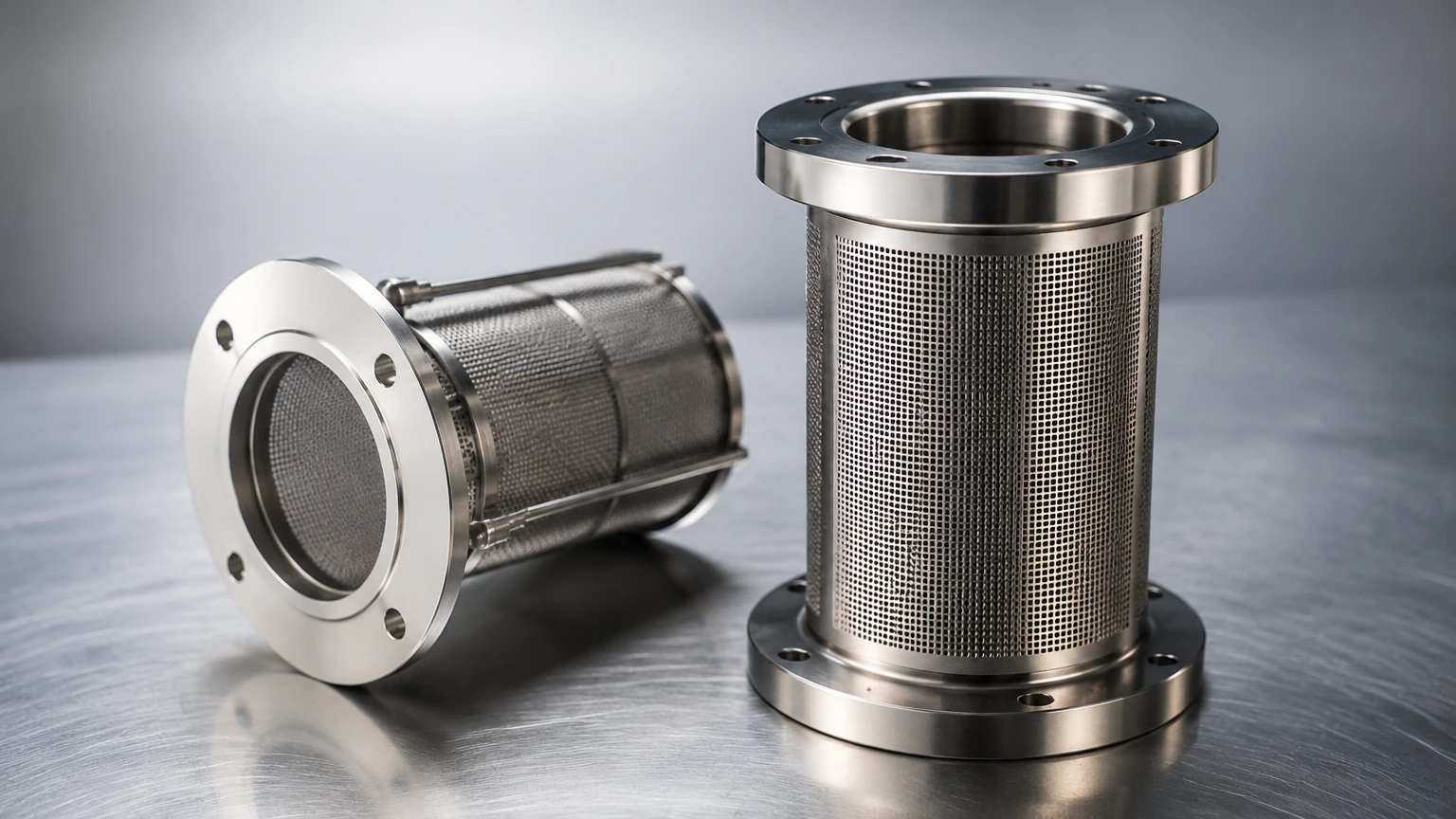
In many industrial settings, the protein separator operates within a high-pressure environment to overcome the osmotic pressure and resistance of the filter cake. Stainless steel wire mesh filters are often preferred in these scenarios due to their rigid structure. Unlike synthetic membranes, which may compress or deform under high differential pressure, precision-engineered metal filters maintain a consistent pore size. This consistency is vital for achieving a repeatable "cut-off" point, ensuring that the target protein molecules are captured efficiently without clogging the system prematurely.
Furthermore, the surface characteristics of the filter media play a significant role. Proteins are notorious for "fouling" or adhering to surfaces. In an industrial protein separator, the use of electropolished stainless steel components can reduce surface roughness, thereby minimizing the mechanical anchoring of proteins and making the cleaning process more effective.
Material Selection: The Role of Stainless Steel in Protein Recovery
The choice of material for a protein separator is dictated by the chemical environment and the required hygiene standards. In the food, beverage, and pharmaceutical industries, 316L stainless steel is the industry standard. This alloy provides superior corrosion resistance compared to 304 stainless steel, particularly in the presence of chlorides and organic acids often found in protein-rich streams.
Engineers must also consider the thermal requirements of the process. Many protein separation workflows involve high-temperature sterilization or Cleaning-in-Place (CIP) cycles using caustic chemicals. Stainless steel filter cartridges and wire mesh components can withstand these aggressive cleaning protocols without losing structural integrity. This durability offers a significant advantage over disposable plastic filters, which may leach extractables or fail under thermal stress.
When evaluating a protein separator for a new facility, technical teams should confirm the material certifications (such as FDA or 3A standards) to ensure that the filtration components do not introduce contaminants into the process stream. The longevity of stainless steel also contributes to a lower total cost of ownership by extending the replacement cycle and reducing downtime associated with filter failures.
Key Components of Industrial Protein Separator Systems
A high-performance protein separator is rarely a single piece of equipment; rather, it is a system of integrated components designed to handle specific stages of the filtration process. Common components include:
1. Sintered Wire Mesh Filters: These provide high mechanical strength and precise filtration accuracy. They are often used in the final stages of protein recovery where high pressure is required to push the liquid through dense protein cakes.
2. Stainless Steel Filter Cartridges: These are used for both pre-filtration and fine filtration. Their pleated design increases the surface area, allowing for higher flow rates and longer service life before cleaning is required.
3. Wedge Wire Screens: Often used in the initial stages of a protein separator system to remove larger debris and coagulated proteins, these screens are highly resistant to plugging and are easy to clean.
4. Perforated Metal Supports: These provide the necessary structural backing for finer mesh layers, ensuring the filter does not collapse under the weight of the accumulated protein solids.
By integrating these components, manufacturers can tailor the filtration process to the specific molecular weight and concentration of the protein being processed. For those looking to optimize their current systems, reviewing the latest developments in filter geometry and media density on the Main Page can provide insights into improving throughput.
Evaluating Filtration Efficiency and Flux Rates
For an engineer, the two most important metrics for a protein separator are filtration efficiency and flux rate. Efficiency refers to the percentage of target proteins retained by the filter, while flux rate measures the volume of fluid passing through a unit area of the filter per unit of time.
In protein applications, these two metrics are often in conflict. As the filter retains more protein, a "boundary layer" or filter cake builds up on the surface, which increases resistance and decreases the flux rate. To manage this, many industrial separators utilize cross-flow filtration (also known as tangential flow filtration). In this configuration, the fluid flows parallel to the filter surface, which helps to "sweep" away the accumulated proteins and maintain a higher flux rate for longer periods.
When selecting a protein separator, it is crucial to perform a pilot test to determine the optimal micron rating. A filter that is too fine will clog rapidly, while one that is too coarse will allow valuable protein to be lost in the permeate. Precision-manufactured wire mesh allows for very tight tolerances in pore size, enabling engineers to fine-tune the separation process with a high degree of accuracy.
Customization and OEM Solutions for Specialized Applications
No two protein separation tasks are exactly alike. The physical properties of soy protein differ vastly from those of bovine serum albumin or fungal enzymes. Consequently, off-the-shelf filtration solutions often fall short of the efficiency required for large-scale industrial production. This is where customization and OEM (Original Equipment Manufacturer) capabilities become essential.
Customized protein separator components can be engineered to fit existing housing units while optimizing the internal flow patterns. For instance, the pleat density of a stainless steel cartridge can be adjusted to balance the need for surface area against the risk of "bridging" between pleats in high-solids applications. Additionally, custom end-cap configurations (such as DOE, 222, or 226) ensure a leak-proof seal, which is critical for maintaining the integrity of the separation process.
Working with a manufacturer that understands the nuances of metal fabrication and filtration science allows for the development of bespoke solutions that address specific pain points, such as premature fouling or difficult-to-clean geometries. By focusing on the specific requirements of the application, engineers can achieve a more reliable and cost-effective protein recovery process.
Maintenance, Cleaning, and Operational Longevity
The operational success of a protein separator depends heavily on the maintenance strategy. Because proteins are biological molecules, they can harbor bacterial growth if the filtration system is not cleaned thoroughly. This makes the "cleanability" of the filter media a primary engineering consideration.
Stainless steel filters are ideally suited for rigorous cleaning protocols. They can be back-pulsed (reversing the flow of fluid to dislodge particles) or subjected to ultrasonic cleaning to remove deeply embedded proteins. In many B2B environments, the ability to reuse filter components multiple times significantly reduces the environmental footprint and the recurring costs associated with consumable filters.
To ensure the longevity of a protein separator, operators should monitor the differential pressure (the difference in pressure between the inlet and the outlet). A sudden rise in differential pressure usually indicates that the filter is reaching its capacity and needs to be cleaned. Establishing a regular maintenance schedule based on these readings will prevent membrane rupture and ensure consistent product quality.
Conclusion: Selecting the Right Partner for Filtration Solutions
Selecting a protein separator involves more than just picking a micron rating; it requires a comprehensive evaluation of material compatibility, structural integrity, and the long-term operational costs. For industries where purity and yield are paramount, stainless steel filtration components offer the durability and precision necessary to succeed in demanding environments.
As processing requirements become more stringent, the need for high-quality, customized filtration solutions continues to grow. By focusing on engineering excellence and material performance, companies can optimize their protein recovery processes and maintain a competitive edge in the global market. For further technical specifications and to explore a wide range of industrial filtration products, please visit the Main Page.
