


Strainer
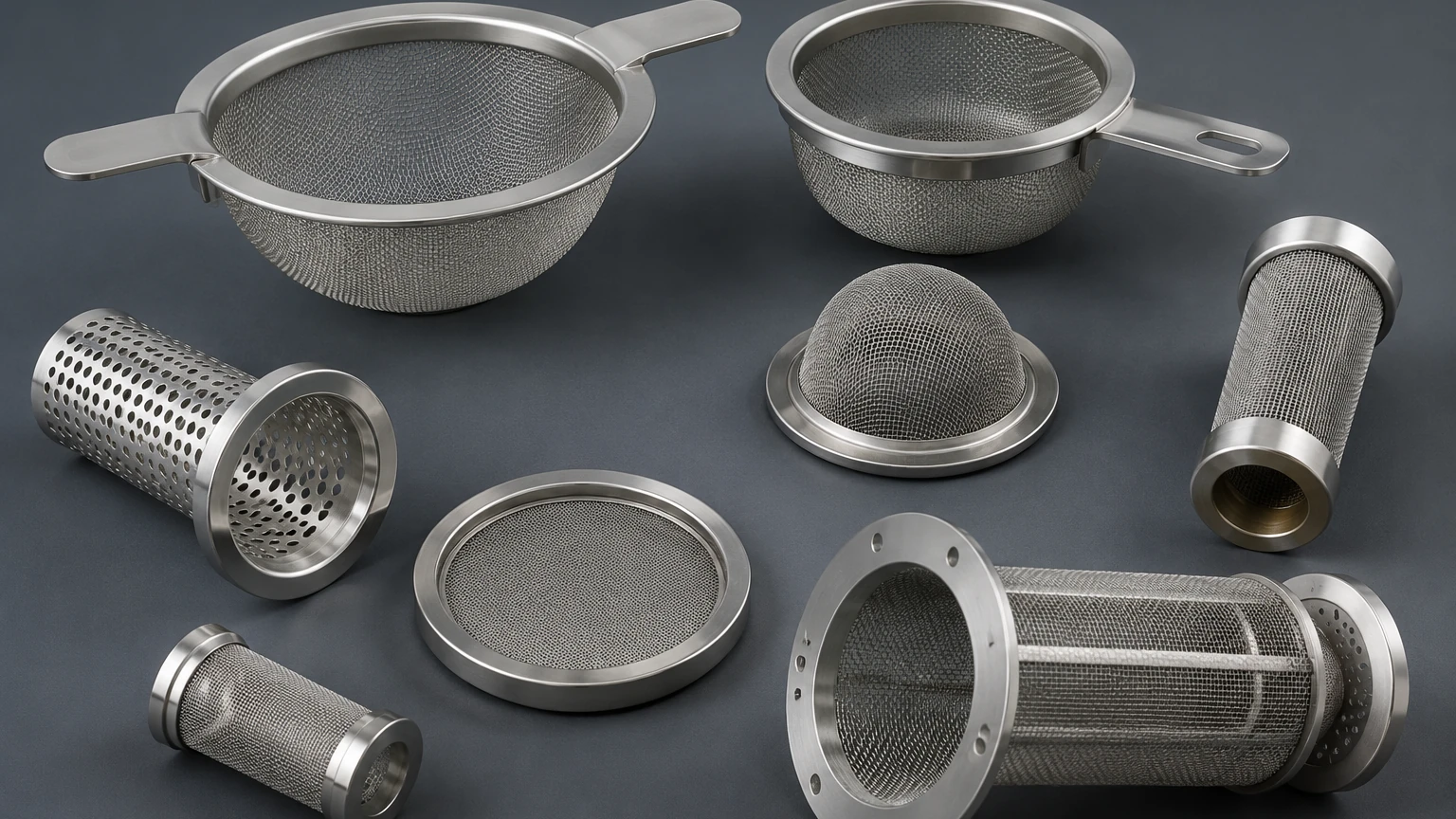
In industrial fluid handling and process engineering, a strainer is a critical component designed to remove unwanted solids from liquid, gas, or steam lines by means of a perforated or wire mesh straining element. Unlike fine filters that target microscopic contaminants, industrial strainers are primarily utilized to protect downstream equipment—such as pumps, control valves, meters, and heat exchangers—from damage caused by scale, rust, jointing compound, or other large foreign particles.
For engineers and procurement teams, selecting the correct strainer involves more than matching pipe sizes. It requires a deep understanding of fluid dynamics, material compatibility, and the specific mechanical demands of the application. As a specialized manufacturer of stainless steel filtration solutions, Kaifil provides high-performance components that ensure system integrity across various industrial sectors. Detailed technical support and product ranges can be explored on our Main Page.
The Role of Industrial Strainers in Process Protection
The primary function of an industrial strainer is to act as a mechanical barrier. While the terms "filter" and "strainer" are often used interchangeably, the industry generally distinguishes them by the size of the particles removed. A strainer is typically used for coarser filtration, often measured in mesh sizes or millimeters, whereas filters handle finer particles measured in microns.
In a typical process loop, the strainer is the first line of defense. For instance, in a hydraulic system, a suction strainer prevents large debris from entering the pump, which could otherwise cause catastrophic mechanical failure. In the food and beverage industry, stainless steel strainers ensure that no particulate matter enters the final packaging stages, maintaining product purity and compliance with safety standards. The choice of a strainer directly impacts the "Total Cost of Ownership" (TCO) of a system by reducing emergency maintenance and extending the lifespan of expensive downstream hardware.
Core Configurations: Y-Strainers, Basket Strainers, and Duplex Systems
Industrial strainers are categorized by their physical configuration, each offering distinct advantages depending on the installation environment and the required frequency of cleaning.
Y-Strainers
Named for their shape, Y-strainers are the most common choice for pressurized lines, whether liquid or gas. Their compact design makes them ideal for installations where space is limited. They can be installed in either a horizontal or vertical position (provided the "leg" points downward to collect debris). Y-strainers are generally used in applications where the amount of material to be removed is relatively small, meaning the strainer requires less frequent cleaning.
Basket (Simplex) Strainers
Basket strainers, or Simplex strainers, feature a vertical chamber that houses a large-capacity basket. This design allows for a higher volume of debris collection and a lower pressure drop compared to Y-strainers. Because the basket is accessed from the top, cleaning is often simpler and faster. These are preferred for high-flow liquid applications where the system can be shut down briefly for maintenance.
Duplex Strainers
For critical processes that cannot be interrupted, Duplex strainers are the engineering standard. A Duplex system consists of two separate strainer baskets connected by a diversion valve. When one basket becomes clogged, the flow is diverted to the second chamber, allowing the first basket to be cleaned and replaced without stopping the process. This is essential in chemical processing and oil lubrication systems where continuous flow is mandatory.
Material Engineering: The Importance of Stainless Steel Construction
Material selection is perhaps the most vital decision in strainer procurement. While cast iron or carbon steel may suffice for simple water applications, demanding industrial environments require the durability and corrosion resistance of stainless steel.
Kaifil specializes in custom stainless steel filtration solutions, utilizing grades such as 304, 316, and 316L.
* Grade 304: Offers excellent durability and cost-effectiveness for general industrial use and standard water treatment.
* Grade 316: Contains molybdenum, providing superior resistance to chlorides and pitting, making it the standard for chemical processing and marine environments.
* Grade 316L: The low-carbon version of 316, preferred for pharmaceutical and food-grade applications where welding is required, as it minimizes carbide precipitation and ensures maximum corrosion resistance at weld points.
Stainless steel is not only resistant to chemical attack but also withstands extreme temperatures and high-pressure differentials that would cause plastic or lower-grade metal components to fail. Furthermore, the smooth surface finish of stainless steel prevents bacterial growth, a non-negotiable requirement in the pharmaceutical and food sectors.
Technical Specifications: Understanding Mesh, Microns, and Open Area Ratios
To specify a strainer correctly, engineers must define the required filtration accuracy. This is typically expressed in mesh count or micron rating.
1. Mesh Count: Refers to the number of openings per linear inch. A higher mesh count indicates a finer screen. For example, a 20-mesh screen has 20 openings per inch, while a 100-mesh screen has 100.
2. Micron Rating: A more precise measurement indicating the size of the particle that can pass through the mesh. 100 mesh is approximately equivalent to 149 microns.
3. Wire Diameter: The thickness of the wire used to create the mesh. Thicker wire increases the strength of the element but reduces the "Open Area."
The Open Area Ratio (OAR) is a critical engineering metric. It is the ratio of the total area of the holes in the straining element to the internal cross-sectional area of the pipe. A standard industrial strainer should have an OAR of at least 4:1. This ensures that even as the strainer begins to fill with debris, the flow is not significantly restricted, and the pressure drop remains within manageable limits.
Hydraulic Performance and Pressure Drop Considerations
Every component added to a piping system introduces a pressure drop (Delta P). In strainer selection, the goal is to balance filtration efficiency with hydraulic performance. A strainer that is too fine will clog rapidly, leading to excessive pressure drops that can starve pumps or trigger system alarms.
Engineers use the Flow Coefficient (Cv) to calculate the expected pressure drop. The Cv value represents the volume of water (in GPM) that will flow through the strainer with a 1 psi pressure drop. A higher Cv indicates less resistance to flow.
When calculating the pressure drop, the viscosity of the fluid must be considered. Higher viscosity fluids (such as heavy oils or syrups) require larger strainers or coarser mesh to maintain the same flow rate as water. It is a best practice to design a system where the "clean" pressure drop across the strainer does not exceed 2 psi.
Selection Criteria for Industrial Procurement and Engineering
When evaluating a strainer for a specific project, the following checklist should be confirmed by the engineering team:
* Fluid Properties: What is the chemical composition, viscosity, and specific gravity of the fluid? This determines material selection and sizing.
* Operating Conditions: What are the maximum operating pressures and temperatures? This dictates the wall thickness and flange rating (e.g., ANSI Class 150 vs. Class 300).
* Particle Load: How much debris is expected? High loads may require a larger basket or a Duplex configuration.
* Particle Size: What is the smallest particle that must be removed to protect downstream equipment? This determines the mesh or perforated plate specification.
* Maintenance Access: Is there enough clearance to remove the basket or the Y-leg? In vertical installations, ensure the flow direction is downward through the strainer.
By addressing these factors during the design phase, purchasing teams can avoid the common pitfall of undersizing a strainer, which leads to high operational costs and frequent downtime.
Maintenance, Cleaning, and Replacement Protocols
A strainer is a maintenance-intensive component. If left uncleaned, the accumulated debris will eventually create a blockage, leading to a high-pressure differential that could collapse the internal mesh element.
Most industrial strainers are equipped with a "blow-down" connection in the cover or the leg. This allows for the removal of loose debris without opening the strainer body. However, periodic manual cleaning of the basket or screen is necessary to remove wedged particles.
Signs that a strainer element needs replacement include:
* Visible deformation or "crushing" of the mesh.
* Broken wires or holes in the perforated metal.
* A permanent increase in the baseline pressure drop even after cleaning.
Standardizing on high-quality stainless steel elements from a reliable manufacturer like Kaifil ensures that replacement parts fit perfectly and maintain the original performance specifications of the system.
Custom OEM Solutions for Complex Filtration Challenges
Many industrial applications fall outside the scope of standard catalog items. High-pressure hydraulic systems, corrosive chemical lines, and high-purity pharmaceutical processes often require customized filtration components.
Kaifil’s manufacturing capabilities allow for the production of bespoke strainer elements, including reinforced baskets, multi-layered sintered mesh for high-strength applications, and custom-sized housings. Our engineering team works closely with global customers to transition from technical requirements to physical prototypes and full-scale production.
Whether you are designing a new system or looking to optimize an existing process, selecting the right strainer is a fundamental step in ensuring industrial efficiency. For more information on our custom manufacturing capabilities and to view our full range of stainless steel filter cartridges and wire mesh solutions, please visit the Kaifil Main Page.
