


Filter Bag Cages
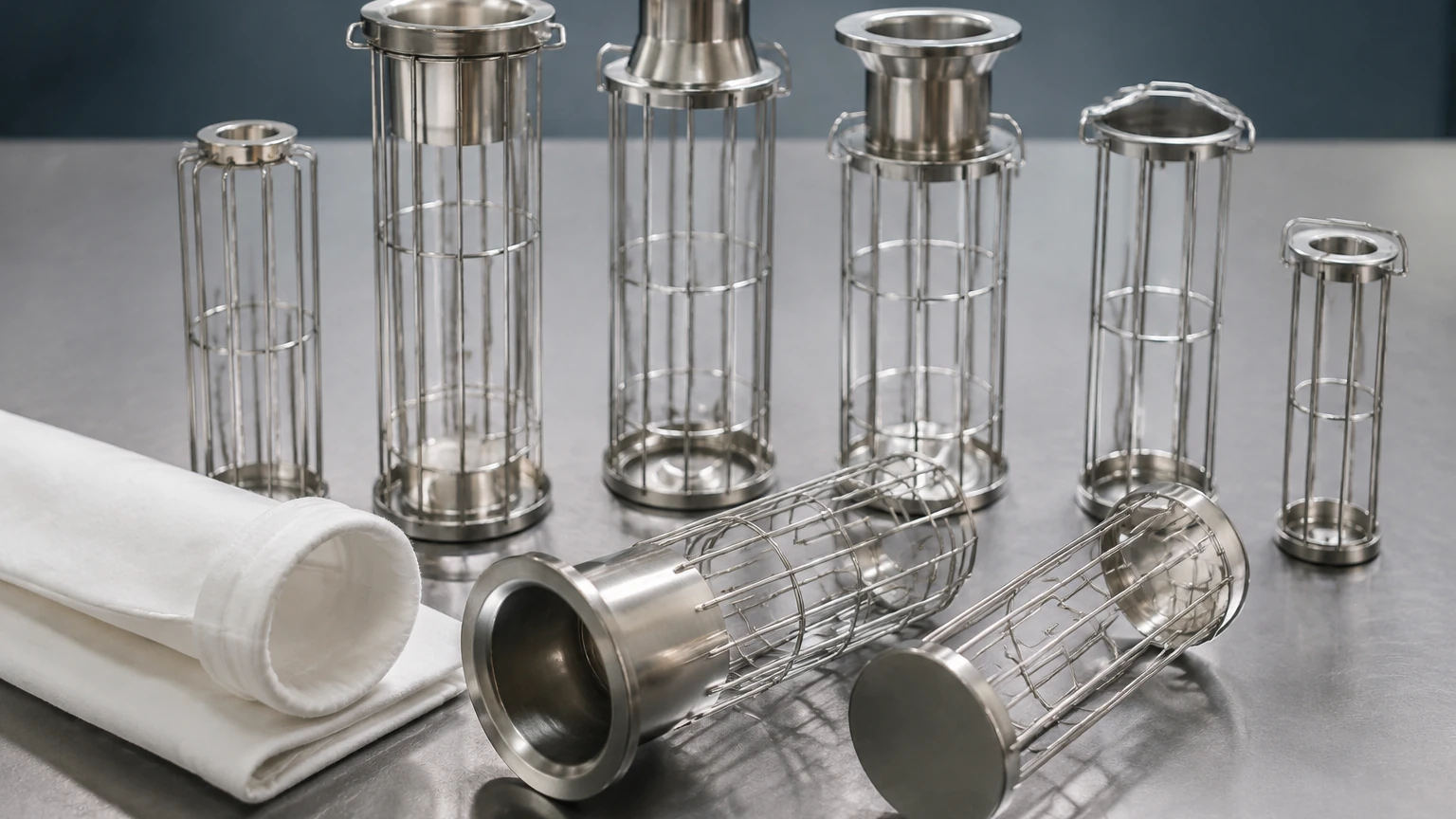
In industrial dust collection and air pollution control systems, the filter bag cage serves as the essential structural skeleton for fabric filter bags. Primarily utilized in pulse-jet baghouses, these components are engineered to provide continuous support to the filter media, preventing it from collapsing under the intense pressure of the exhaust stream. While often perceived as a simple wire frame, the engineering precision behind filter bag cages directly influences the efficiency of the filtration system, the longevity of the filter bags, and the overall operational cost of the facility.
For engineers and procurement teams, selecting the correct cage involves more than matching dimensions. It requires a technical understanding of material compatibility, structural integrity, and the physical interaction between the metal support and the flexible filter media. As a manufacturer specializing in precision metal filtration components, Kaifil emphasizes the importance of high-quality construction in ensuring reliable performance in demanding industrial environments.
The Functional Role of Cages in Pulse-Jet Systems
The primary function of filter bag cages is to maintain the open shape of the filter bag during the filtration cycle. In a pulse-jet baghouse, air flows from the outside of the bag to the inside. This creates a pressure differential that would instantly flatten an unsupported bag, cutting off airflow and halting the process.
During the cleaning cycle, a high-pressure pulse of compressed air is shot down into the bag. This causes the bag to expand rapidly and then snap back against the cage. This repetitive mechanical stress means the cage must not only be rigid enough to resist collapse but also smooth enough to prevent the fabric from tearing or wearing prematurely. A poorly manufactured cage with sharp edges or burrs at the weld points can significantly shorten the lifespan of expensive filter bags, leading to frequent downtime and increased maintenance costs.
Engineering Specifications and Material Selection
Material selection is the most critical factor in determining the service life of a filter bag cage. The choice depends heavily on the operating temperature, the chemical composition of the gas stream, and the presence of moisture.
Stainless Steel Solutions
In environments involving corrosive chemicals, high humidity, or extreme temperatures, stainless steel is the industry standard. Grade 304 stainless steel offers excellent resistance to many industrial chemicals and organic solvents, making it suitable for food processing and general chemical applications. For more aggressive environments, such as those found in pharmaceutical manufacturing or specialized chemical processing, Grade 316L stainless steel provides superior resistance to chlorides and pitting corrosion.
Carbon Steel and Coatings
For less demanding applications, carbon steel is often used due to its cost-effectiveness. However, carbon steel requires surface treatment to prevent oxidation. Common treatments include:
- Galvanization: Provides a sacrificial zinc layer to protect against moisture.
- Epoxy Coating: Offers better chemical resistance than galvanization and creates a very smooth surface that reduces friction between the bag and the cage.
- PTFE/Teflon Coatings: Used in specialized applications where high heat and chemical resistance are required simultaneously.
Structural Design and Wire Configuration
The structural design of a cage is defined by the number of vertical wires and the spacing of the horizontal support rings. These specifications are determined by the type of filter media being used and the pressure drop within the system.
Wire Count
Standard cages typically feature 8, 10, 12, 16, 20, or 24 vertical wires. A higher wire count provides more uniform support for the filter bag, which is particularly important for heavy or felted media. By increasing the number of wires, the "sag" of the fabric between the wires is minimized, which reduces the mechanical strain on the fibers during the pulse-cleaning cycle. This can extend the life of the bag by distributing the stress more evenly.
Ring Spacing
Horizontal rings are welded to the vertical wires to provide hoop strength. Standard ring spacing usually ranges from 150mm to 200mm. In high-pressure applications or for very long bags (exceeding 6 meters), closer ring spacing may be required to prevent the vertical wires from bowing inward.
Welding Integrity
At Kaifil, the focus on precision manufacturing ensures that every weld point is smooth and secure. Automated resistance welding is the preferred method for constructing filter bag cages, as it creates a strong bond without leaving behind excess slag or sharp protrusions. Any imperfection in the weld can act as an abrasive point, leading to localized failure of the filter bag.
Top and Bottom Configurations
The interface between the cage and the baghouse tubesheet is a critical sealing point. The top of the cage must be designed to match the specific baghouse model and the method of bag installation.
1. Venturi Tops: Integrated venturis are used to optimize the pulse-jet cleaning air. By shaping the airflow, the venturi increases the efficiency of the pressure wave, ensuring that the entire length of the bag is cleaned effectively. Venturis can be permanently attached or removable.
2. Flange Tops: A simple flat flange that rests on the tubesheet. These are common in top-load baghouses.
3. Split Cages: For facilities with low overhead clearance, cages are manufactured in two or more sections. These sections are joined during installation using specialized joints, such as claw couplings, slide-on joints, or threaded connections. The integrity of these joints is vital; they must remain rigid and aligned throughout the life of the filter.
Selection Criteria for Industrial Applications
When specifying filter bag cages for a project, engineers should evaluate the following criteria to ensure system compatibility and performance:
- Operating Temperature: High-temperature applications (above 250°C) may require specialized alloys or heavy-duty stainless steel to prevent thermal deformation.
- Gas Stream Chemistry: If the gas contains acidic or alkaline components, the cage material must be inert to these substances to prevent structural failure due to corrosion.
- Bag Material: Thinner, more delicate fabrics require cages with higher wire counts and extremely smooth finishes to prevent abrasion.
- Dimensional Tolerances: The outer diameter of the cage must be precisely matched to the inner diameter of the filter bag. If the fit is too tight, the bag may tear during installation; if it is too loose, the bag will flex excessively during cleaning, leading to premature fatigue of the fabric.
For those seeking technical support or customized designs, it is advisable to Review product options and application support to ensure the selected components meet the specific demands of the industrial environment.
Common Risks and Maintenance Considerations
Neglecting the condition of filter bag cages can lead to catastrophic system failures. The most common risk is corrosion. Once a cage begins to rust, the rough surface acts like sandpaper against the filter bag. Furthermore, if a vertical wire breaks due to corrosion or poor weld quality, it can puncture the bag, leading to immediate dust leakage and potential environmental compliance violations.
Regular inspections should include:
- Checking for Corrosion: Especially at the bottom of the cage where moisture may accumulate.
- Inspecting Weld Points: Ensuring no wires have detached from the rings.
- Verifying Alignment: Ensuring the cage is straight; a bowed cage will cause the bag to rub against neighboring bags, leading to wear.
In many cases, the total cost of ownership is reduced by investing in higher-quality stainless steel cages initially. While the upfront cost is higher than galvanized carbon steel, the extended lifespan of both the cage and the filter bags often results in significant long-term savings.
Customization and OEM Capabilities
Many industrial systems require non-standard filtration components due to unique equipment footprints or specialized processing requirements. Kaifil provides extensive OEM capabilities, allowing for the production of custom filter bag cages that meet exact engineering drawings. This includes variations in wire gauge, specialized top and bottom caps, and custom lengths.
By working closely with a manufacturer that understands the nuances of metal fabrication and filtration physics, purchasing teams can ensure they receive components that are optimized for their specific baghouse configuration. Whether the application is in water treatment, chemical processing, or pharmaceutical manufacturing, the structural integrity of the cage remains a cornerstone of efficient filtration.
Conclusion
Filter bag cages are a vital component of industrial air filtration systems, providing the necessary support for pulse-jet filter bags. Through careful consideration of material selection, wire configuration, and manufacturing quality, engineers can optimize the performance of their baghouses and extend the service life of their filter media. For reliable, high-precision filtration solutions, technical professionals should focus on components that offer durability and compatibility with their specific operational challenges. Understanding these technical boundaries allows for more informed purchasing decisions and more efficient industrial operations.
