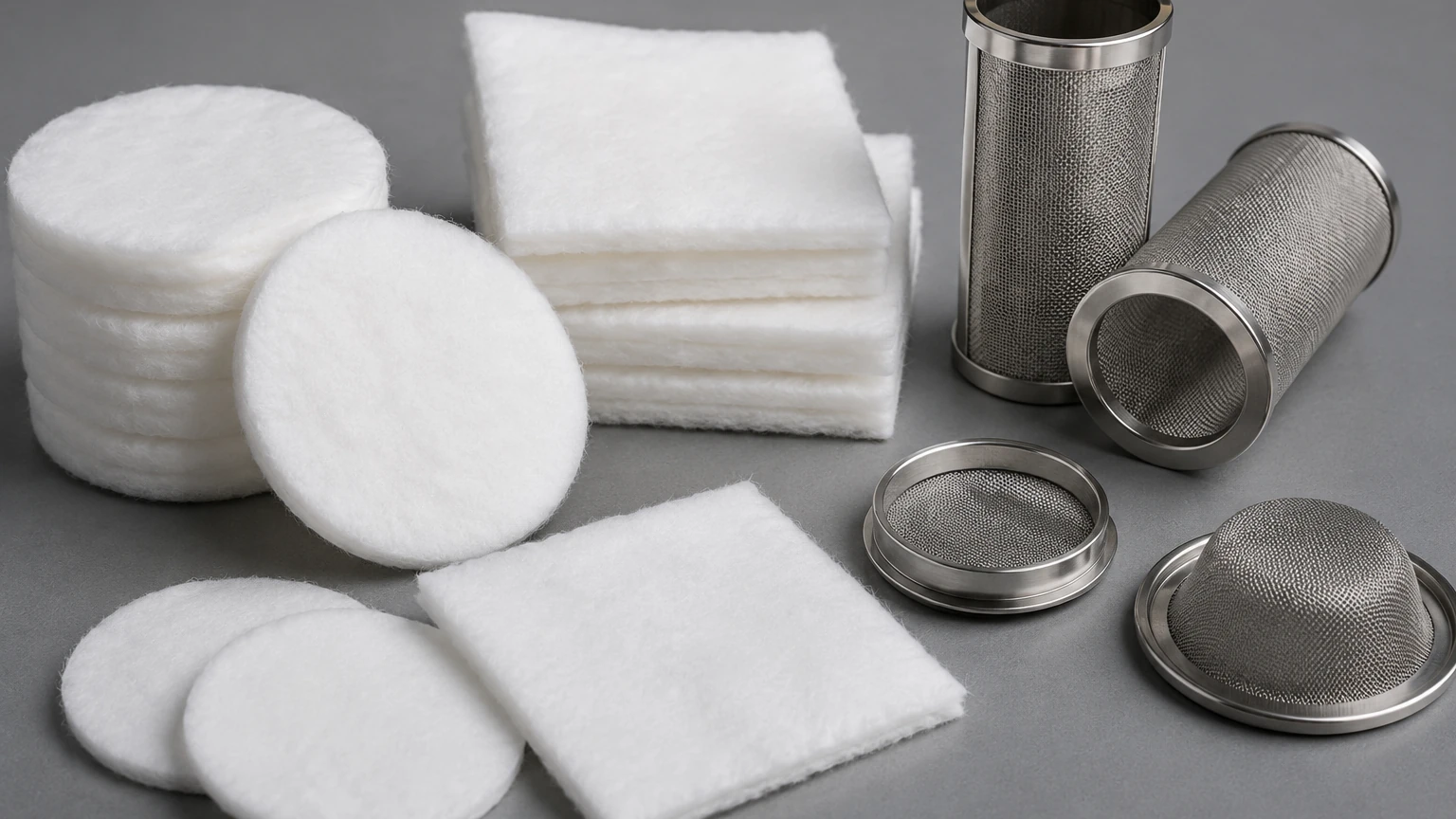
Filter Cotton
In the landscape of industrial filtration, filter cotton serves as a fundamental component for primary and secondary separation processes. Often referred to as synthetic fiber filter media or non-woven filter matting, this material is engineered to capture particulate matter from air and liquid streams through depth filtration mechanisms. For engineers and procurement specialists, understanding the technical nuances of filter cotton—ranging from material composition to efficiency ratings—is essential for optimizing system performance and protecting downstream equipment like high-precision stainless steel filter cartridges.
The Role of Filter Cotton in Industrial Filtration Systems
Filter cotton is primarily utilized as a pre-filtration medium. Its structure consists of a disordered arrangement of fibers that create a tortuous path for the fluid or gas stream. As the medium flows through the cotton, particles are trapped throughout the depth of the material rather than just on the surface. This depth-loading characteristic allows for a high dust-holding capacity, which is critical in environments with high particulate concentrations.
In many industrial setups, filter cotton acts as the first line of defense. By capturing larger contaminants, it prevents the premature clogging of more expensive, high-efficiency filtration components. For instance, in a multi-stage air handling unit, a layer of G4-rated filter cotton might protect a HEPA filter, significantly extending the latter's service life. Similarly, in liquid processing, fiber-based pads or rolls are often used to remove bulk solids before the fluid reaches precision metal mesh filters. For those looking to integrate these systems into a broader filtration strategy, exploring the Main Page of a specialized manufacturer can provide insights into how different media types complement one another.
Material Composition and Technical Classifications
The performance of filter cotton is dictated by its base material and the manufacturing process used to create the fiber web. The most common materials include:
1. Polyester (PET) Fibers: These are the most widely used synthetic fibers due to their mechanical strength, chemical resistance to most acids and alkalis, and cost-effectiveness. Polyester filter cotton is often thermally bonded or needle-punched to achieve specific densities.
2. Polypropylene (PP) Fibers: Preferred in liquid filtration applications where moisture resistance and chemical inertness are paramount. PP fibers are hydrophobic and perform well in acidic or basic environments where polyester might degrade.
3. Glass Fiber: Used in high-temperature applications or where high fire resistance is required. Glass fiber mats can handle significantly higher thermal loads than synthetic polymers but are more brittle and require careful handling to prevent fiber shedding.
4. Activated Carbon Cotton: This is a composite material where filter cotton is impregnated with activated carbon powder. It is used for dual-purpose filtration: removing physical particles while simultaneously adsorbing volatile organic compounds (VOCs) and odors.
Classification of filter cotton typically follows international standards such as EN 779 (now largely superseded by ISO 16890) for air filtration. Common grades include G2, G3, and G4, which represent coarse filtration capabilities. A G4 filter, for example, is designed to capture over 90% of synthetic dust, making it an ideal pre-filter for industrial HVAC and spray booth applications.
Key Performance Indicators for Engineering Selection
When specifying filter cotton for an industrial application, engineers must evaluate several technical parameters to ensure the media meets the operational requirements of the system.
Filtration Efficiency and Micron Rating
Unlike precision-woven stainless steel wire mesh, which has a defined pore size, filter cotton has a nominal micron rating. This rating indicates the size of particles that the media can capture with a certain percentage of efficiency. In air filtration, this is often expressed via the MERV (Minimum Efficiency Reporting Value) scale or the ISO 16890 categories (e.g., ISO Coarse, ePM10).
Pressure Drop (Resistance)
Initial pressure drop is the resistance the filter media offers to the flow of air or liquid when it is clean. A lower initial pressure drop is desirable as it reduces the energy consumption of fans or pumps. However, as the filter cotton loads with contaminants, the pressure drop increases. Engineers must determine the "final pressure drop"—the point at which the filter is considered exhausted and must be replaced to prevent system strain or bypass.
Dust-Holding Capacity (DHC)
This metric defines the total mass of a specific test dust that the filter cotton can retain before reaching its final pressure drop. High DHC is a hallmark of quality filter cotton, as it directly correlates to longer maintenance intervals and lower total cost of ownership.
Temperature and Chemical Resistance
The operating environment significantly influences material choice. Standard polyester filter cotton can typically withstand continuous temperatures up to 100°C–120°C. For higher temperature ranges, specialized glass fiber or aramid fibers are necessary. Chemical compatibility must also be verified, especially in liquid filtration where the cotton may be exposed to solvents or corrosive fluids.
Primary Applications Across Industrial Sectors
Filter cotton's versatility allows it to be used across a broad spectrum of industries, often serving as a sacrificial layer to protect high-value assets.
* Surface Finishing and Spray Booths: In automotive and industrial painting, filter cotton is used in both the ceiling (for air intake) and the floor (for overspray collection). The media ensures that the air entering the booth is free of dust that could ruin the finish, while also protecting exhaust fans from paint buildup.
* HVAC and Cleanrooms: Large-scale ventilation systems use rolls or cut pads of filter cotton as primary filters. In cleanroom environments, these serve as pre-filters for HEPA and ULPA systems, capturing the bulk of atmospheric dust.
* Food and Beverage Processing: While stainless steel filters are the standard for direct product contact, filter cotton is frequently used in the facility's air filtration systems to maintain a sanitary environment and in utility water filtration stages.
* Metalworking and Machinery: In CNC machining and grinding, filter cotton is used in coolant filtration systems. It helps remove metal fines and chips from the coolant, which protects the high-pressure pumps and improves the surface finish of the machined parts.
Comparing Synthetic Fiber Media with Stainless Steel Filtration
It is important for technical professionals to distinguish when to use filter cotton versus permanent metal filtration solutions like those found on the Main Page of Kaifil.
Filter cotton is a disposable medium. Its primary advantage is low upfront cost and ease of replacement. However, it generates waste and requires a constant supply chain for replacements. In contrast, stainless steel wire mesh and sintered metal cartridges are cleanable and reusable. They offer much higher structural integrity, making them suitable for high-pressure applications where fiber media would collapse or shed.
In many advanced systems, the two are used in tandem. A coarse grade of filter cotton might be used to remove the majority of the solids load, followed by a precision stainless steel filter cartridge for final polishing. This hybrid approach optimizes both the cost-effectiveness of the disposable media and the high-precision capabilities of the metal filter.
Operational Risks and Maintenance Protocols
While filter cotton is a relatively simple technology, improper use can lead to significant operational risks.
Fiber Shedding (Migration): In low-quality filter cotton, individual fibers may break loose and enter the downstream flow. This is a critical failure in pharmaceutical or food processing. Specifying "non-shedding" or "surface-treated" cotton can mitigate this risk.
Bypass and Sealing: If the filter cotton is not properly fitted within its frame or housing, the fluid or air will take the path of least resistance around the media. This "bypass" renders the filtration ineffective. Ensuring a tight mechanical seal is as important as the quality of the cotton itself.
Clogging and Pressure Spikes: If maintenance schedules are ignored, the pressure drop across the filter cotton can rise rapidly. This can lead to the media rupturing or the collapse of the support structure. Implementing differential pressure gauges with alarms is the industry standard for monitoring these conditions.
Replacement Cycles: The frequency of replacement depends on the contaminant load and the flow rate. In a clean environment, a pre-filter might last three to six months, whereas in a heavy industrial grinding application, it might need replacement every few days. Monitoring the $\Delta P$ (differential pressure) is the only reliable way to determine the optimal replacement point.
Procurement Considerations and Technical Validation
Before finalizing a purchase of filter cotton, procurement teams and engineers should confirm several factors with their supplier. It is not enough to simply buy "filter cotton"; the specifications must align with the application's demands.
1. Certification and Compliance: Does the media meet ISO 16890 or EN 779 standards? For food-grade applications, is the material FDA-compliant?
2. Dimensional Stability: Will the cotton maintain its thickness and shape under the expected flow velocity, or will it compress and lose its filtration properties?
3. Customization Requirements: Does the application require bulk rolls, or would pre-cut pads and stitched bags be more efficient for the maintenance team?
4. Total Cost of Ownership: While a cheaper roll of cotton might save money initially, if it has a lower dust-holding capacity, the increased labor costs for more frequent replacements will quickly offset the initial savings.
For organizations looking to optimize their entire filtration process, from coarse pre-filtration to high-precision metal components, consulting with a manufacturer that understands the full spectrum of industrial filtration is beneficial. By visiting the Main Page, technical teams can access resources on custom stainless steel solutions that often work in conjunction with fiber-based media to provide a complete, high-performance filtration system.
In conclusion, while filter cotton is a consumable item, its role in industrial processes is vital. By selecting the correct material, density, and efficiency rating, and by understanding how it interacts with permanent filtration components like stainless steel mesh, engineers can ensure a reliable, cost-effective, and efficient production environment.