


Turbine Filter
In high-speed rotating machinery, the integrity of the lubrication and fuel systems is paramount to operational uptime and equipment longevity. A turbine filter serves as the primary defense mechanism against particulate contamination, moisture, and chemical degradation products that can lead to catastrophic component failure. Whether utilized in gas turbines for power generation or steam turbines in industrial processing, the selection of filtration media and housing design directly impacts the Total Cost of Ownership (TCO) and the Mean Time Between Failures (MTBF).
For engineers and procurement teams, understanding the technical nuances of turbine filtration is not merely about replacing a consumable part; it is about maintaining the precise tolerances required by bearings, seals, and control valves. As industrial environments become more demanding, the transition toward robust, high-performance filtration solutions—particularly those utilizing stainless steel components—has become a standard for ensuring reliability.
The Critical Function of a Turbine Filter in Industrial Systems
Turbines operate under extreme conditions, including high rotational speeds, elevated temperatures, and varying load cycles. These conditions place immense stress on the fluids circulating through the system. A turbine filter is designed to remove contaminants from three primary streams: lubrication oil, fuel, and, in some cases, the air intake or hydraulic control fluid.
In lubrication systems, the filter must remove metallic wear particles, dust, and soot that can cause abrasive wear on bearing surfaces. In fuel systems, the filter prevents nozzle clogging and combustion instability by removing solids and separating water. Without effective filtration, even microscopic particles can cause "sandblasting" effects on turbine blades or lead to the sticking of sensitive hydraulic governors. By maintaining fluid cleanliness to specific ISO 4406 standards, a high-quality filter prevents the chain reaction of wear that leads to unplanned outages.
Key Evaluation Criteria for High-Performance Turbine Filtration
When selecting a turbine filter, technical professionals must look beyond simple dimensions. The performance of a filter is defined by its ability to capture and retain contaminants under dynamic flow conditions. The following criteria are essential for evaluating filter effectiveness:
Filtration Efficiency and Beta Ratio
The efficiency of a filter is often expressed through its Beta ratio (β). For turbine applications, a high Beta ratio (such as βx(c) ≥ 1000) indicates that the filter is highly efficient at capturing particles of a specific micron size. Engineers should confirm whether the rating is nominal or absolute, as absolute ratings provide a more reliable guarantee of fluid cleanliness.
Dirt Holding Capacity (DHC)
Dirt holding capacity refers to the total amount of contaminant a filter can retain before the pressure drop reaches a critical limit. A higher DHC extends the service interval, reducing the frequency of maintenance shutdowns. This is particularly important in remote power plants or continuous process industries where downtime is exceptionally costly.
Differential Pressure (ΔP)
The clean pressure drop across the filter media must be minimized to ensure adequate flow to critical components. However, as the filter loads with contaminants, the differential pressure increases. A well-engineered turbine filter balances high filtration fineness with a structural design that maintains low resistance to flow throughout its service life.
Material Engineering: Why Stainless Steel is Essential for Turbine Filters
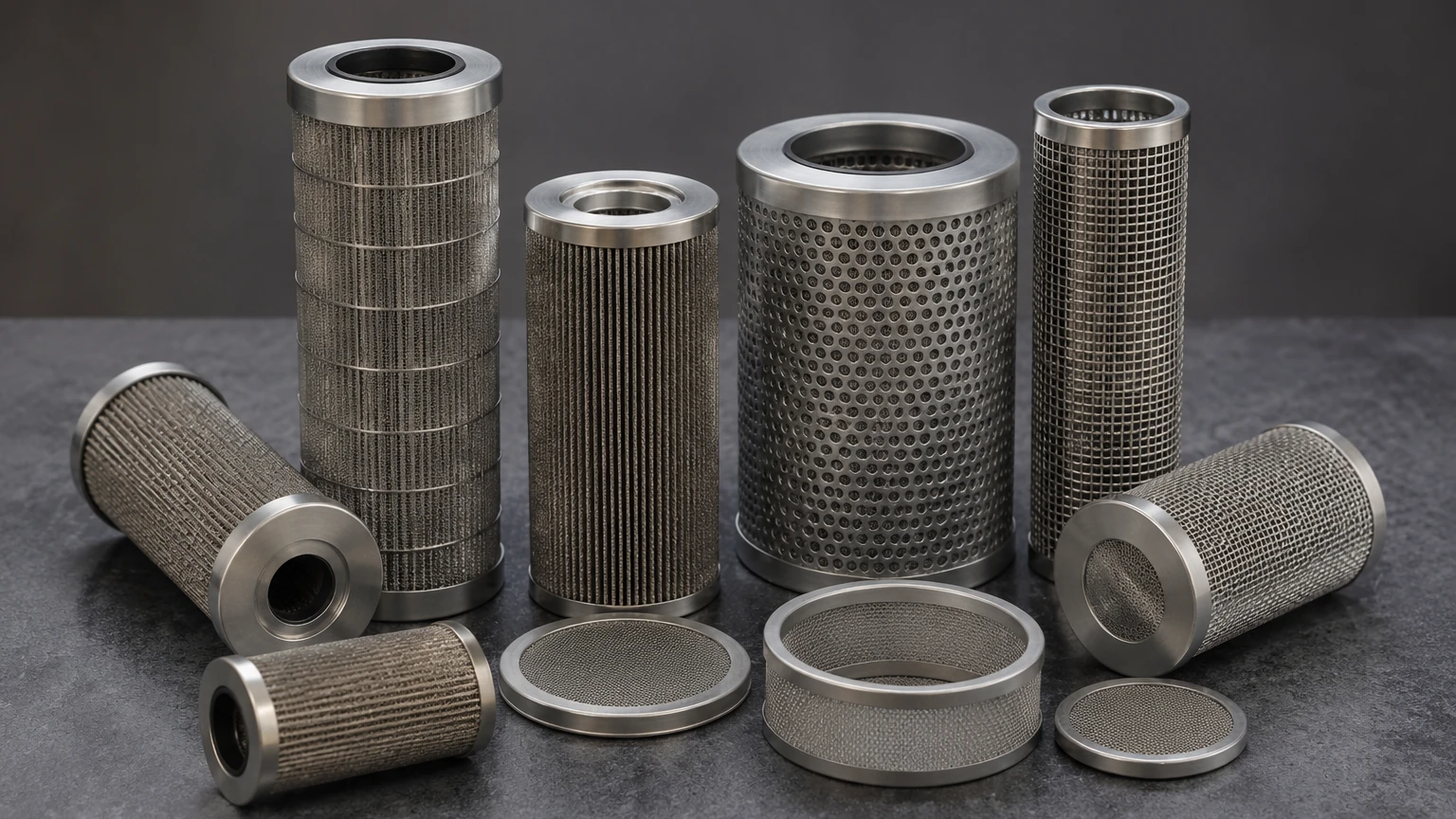
While cellulose and synthetic glass fibers are common in many filtration applications, stainless steel remains the material of choice for demanding turbine environments. Manufacturers like Kaifil specialize in custom stainless steel filtration solutions that address the specific weaknesses of disposable media.
Stainless steel wire mesh and sintered metal fibers offer several advantages:
1. Thermal Stability: Turbines often operate at temperatures that would degrade polymer-based filters. Stainless steel maintains its structural integrity and filtration accuracy across a wide temperature range.
2. Chemical Compatibility: Turbine oils often contain complex additive packages. Stainless steel is inert to these chemicals, preventing media migration or breakdown that could contaminate the downstream system.
3. Mechanical Strength: High-pressure hydraulic control systems in turbines require filters that can withstand significant pressure spikes without collapsing. Sintered stainless steel provides the necessary rigidity.
4. Cleanability: Unlike disposable cartridges, many stainless steel filters can be cleaned and reused, providing a sustainable long-term solution for specific industrial processes.
For those seeking comprehensive information on material selection and custom designs, visiting the Main Page of a specialized manufacturer can provide deeper insights into how these materials are engineered for specific industrial challenges.
Addressing Varnish and Particulate Contamination
One of the most significant challenges in modern turbine maintenance is the formation of varnish. Varnish is a soft, insoluble contaminant that results from the thermal and oxidative degradation of turbine oil. While traditional mechanical filters are excellent at removing hard particles, they often struggle with these sub-micron, polar compounds.
Advanced turbine filter systems often combine mechanical filtration with specialized technologies to address varnish. However, the mechanical filter remains the last line of defense. If a filter has a low capture efficiency, hard particles can act as catalysts for further oil oxidation, accelerating varnish formation. By utilizing precision-engineered metal mesh, operators can ensure that the primary particulate load is managed effectively, allowing secondary varnish removal systems to operate more efficiently.
Customization and OEM Considerations for Turbine Filtration
No two turbine installations are identical. Factors such as local environmental conditions (e.g., high humidity or dust), the specific type of fuel used, and the age of the equipment necessitate customized filtration approaches. OEM (Original Equipment Manufacturer) solutions are often required when standard off-the-shelf filters fail to meet specific flow rates or spatial constraints within the turbine skid.
Customization options typically include:
* Custom Micron Ratings: Tailoring the pore size to the specific sensitivity of the turbine’s bearings.
* Specialized End Caps and Seals: Ensuring bypass-free performance using Viton or PTFE seals that can withstand high temperatures.
* Reinforced Support Cores: For applications involving high-viscosity oils or rapid start-up cycles where cold-start pressure surges are a risk.
Working with a manufacturer that understands these engineering requirements allows for the development of a turbine filter that is optimized for the specific machinery it protects, rather than a generic compromise.
Optimizing Maintenance and Filter Service Life
Effective filtration management extends beyond the initial purchase. To maximize the life of a turbine filter and the equipment it protects, a proactive maintenance strategy is required.
Monitoring Pressure Differential
Most turbine filter housings are equipped with differential pressure indicators or transducers. These should be monitored closely. A sudden rise in ΔP may indicate a slug of contamination or a change in oil chemistry, while a sudden drop could indicate a ruptured element or a leaking seal.
Oil Analysis
Regular oil analysis is the best way to verify that the turbine filter is performing as expected. By tracking the ISO cleanliness code and the presence of wear metals, engineers can determine if the current filtration strategy is adequate or if a higher-efficiency media is required.
Replacement Cycles
Filters should be replaced based on pressure drop or at fixed intervals determined by the OEM, whichever comes first. In systems using stainless steel elements, the cleaning protocol must be strictly followed to ensure that the media is not damaged during the ultrasonic or chemical cleaning process.
Conclusion: Selecting a Reliable Filtration Partner
The turbine filter is a small component with a massive impact on the reliability of power and industrial infrastructure. Choosing the right filter requires a deep understanding of fluid dynamics, material science, and the specific operational profile of the turbine. By focusing on high-quality materials like stainless steel and insisting on rigorous performance specifications, engineers can significantly reduce the risk of catastrophic failure and optimize the efficiency of their systems.
For organizations looking to upgrade their filtration capabilities or develop custom OEM components, it is essential to partner with manufacturers who possess advanced manufacturing capabilities and extensive experience in industrial filtration. To explore the full range of custom stainless steel filtration solutions and technical support, you can Review product options and application support to find the right fit for your specific turbine requirements. Investing in precision filtration today is the most effective way to ensure the continuous, trouble-free operation of your most critical assets.
