


Hydrocyclone Filter
In the landscape of industrial solid-liquid separation, the hydrocyclone filter stands as a critical component for high-volume processing and pre-filtration. Unlike traditional barrier-based filtration systems that rely solely on a physical mesh or membrane to intercept particles, a hydrocyclone utilizes centrifugal force and fluid dynamics to achieve separation. This method is particularly effective for removing heavy solids from liquid streams, protecting downstream equipment, and extending the service life of fine filtration media.
For engineers and procurement specialists, understanding the technical nuances of hydrocyclone filters is essential for optimizing process efficiency. This guide explores the mechanical principles, engineering considerations, and integration strategies necessary for selecting the right filtration solution for demanding industrial environments.
Understanding the Mechanics of Hydrocyclone Filtration
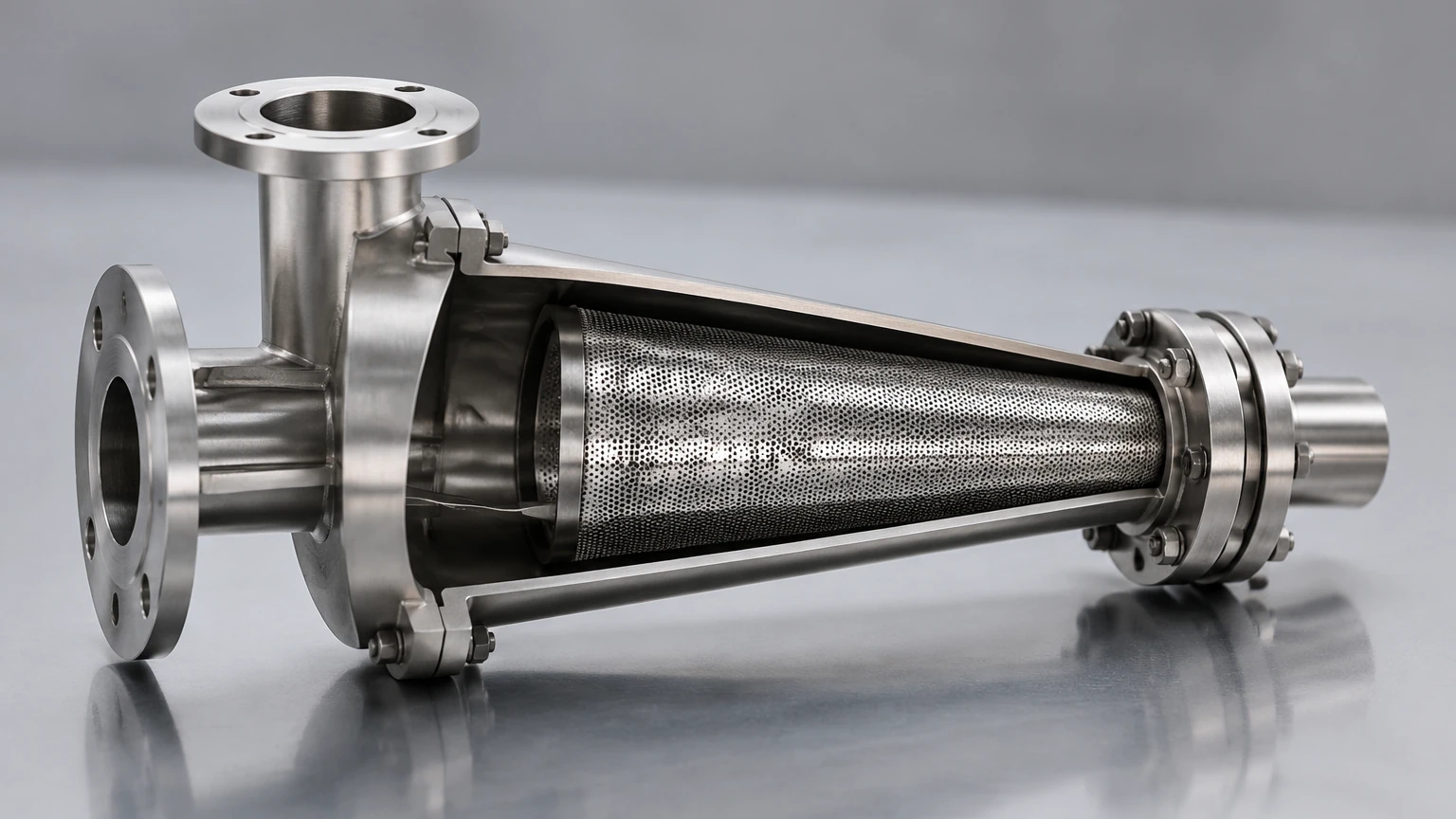
The fundamental operation of a hydrocyclone filter is based on the principle of centrifugal separation. The device typically consists of a cylindrical section at the top, where the liquid enters tangentially, and a conical section that tapers toward the bottom.
When the feed slurry enters the chamber under pressure, it is forced into a high-velocity spiral motion. This creates a powerful centrifugal field. Particles with a higher density than the carrier fluid are flung toward the outer wall of the cone. Due to the combination of gravity and the downward flow of the outer vortex, these solids migrate toward the bottom opening, known as the apex or underflow nozzle.
Simultaneously, a low-pressure zone is created along the vertical axis of the cyclone. This causes the clarified liquid to reverse its downward path and move upward in a tighter inner vortex. This clean fluid exits through a tube at the top called the vortex finder, often referred to as the overflow. Because this process relies on density differentials and velocity rather than a physical screen, the hydrocyclone filter can handle high solids loading without the immediate risk of blinding or clogging that characterizes traditional filters.
Engineering Design and Performance Parameters
When evaluating a hydrocyclone filter for an industrial application, several engineering parameters dictate the efficiency of the separation. These factors must be balanced to achieve the desired "cut point"—the particle size at which 50% of the solids are reportable to the underflow.
Pressure Drop and Flow Rate
The relationship between pressure drop ($ΔP$) and flow rate ($Q$) is the most critical operational variable. A hydrocyclone requires a specific pressure differential to generate the centrifugal forces necessary for separation. Generally, increasing the inlet pressure increases the centrifugal force, which improves the separation efficiency for finer particles. However, higher pressures also lead to increased energy consumption and accelerated wear on the internal surfaces.
Diameter of the Cyclone
The diameter of the cylindrical section is a primary determinant of the separation grain size. Smaller diameter cyclones generate higher centrifugal forces and are capable of capturing much finer particles than larger units. In applications requiring high flow rates alongside fine separation, engineers often employ a "multicyclone" arrangement, where multiple small-diameter cyclones operate in parallel within a single housing.
Fluid Viscosity and Solids Concentration
The viscosity of the carrier liquid significantly impacts the settling velocity of the particles. Higher viscosity fluids resist the centrifugal movement of solids, often necessitating a larger pressure drop or a smaller cyclone diameter to maintain efficiency. Similarly, high concentrations of solids can lead to "hindered settling," where particles interfere with each other's movement, potentially reducing the sharpness of the separation.
Material Selection and Durability in Industrial Environments
The longevity of a hydrocyclone filter is largely dependent on the materials used in its construction, especially considering the abrasive nature of the solids being separated. In many chemical processing and water treatment applications, stainless steel is the preferred material due to its balance of mechanical strength and chemical resistance.
At Kaifil, the focus is on providing robust filtration components that withstand the rigors of industrial use. For hydrocyclone bodies and internal components, 304 and 316L stainless steel are standard choices. 316L, in particular, offers superior resistance to pitting and crevice corrosion in chloride-rich environments, making it ideal for saltwater filtration or aggressive chemical streams.
In high-wear areas, such as the apex nozzle or the lower portion of the cone, specialized coatings or hardened inserts may be used. However, for many precision applications in the food and beverage or pharmaceutical sectors, the smooth surface finish of electropolished stainless steel is required to prevent bacterial growth and ensure compliance with sanitary standards.
Integrating Hydrocyclones with Secondary Filtration Systems
A hydrocyclone filter is rarely used in isolation. In most industrial process chains, it serves as a primary separation stage designed to remove the bulk of heavy contaminants (typically 50 microns and larger). By removing these solids upstream, the hydrocyclone significantly reduces the load on secondary, high-precision filters.
For instance, in a hydraulic system or a cooling water loop, a hydrocyclone may remove sand and scale, while a secondary stainless steel wire mesh filter or a pleated filter cartridge captures the remaining fine particulates. This staged approach is highly cost-effective; the hydrocyclone handles the "heavy lifting" with minimal maintenance, allowing the more expensive, high-precision Main Page components to operate for much longer intervals before requiring cleaning or replacement.
When designing these systems, engineers must ensure that the overflow from the hydrocyclone is compatible with the flux rates of the secondary filters. If the hydrocyclone is undersized or improperly tuned, an excess of fine solids may bypass the overflow and cause premature fouling of the downstream cartridges.
Maintenance, Wear Management, and Operational Efficiency
One of the primary advantages of the hydrocyclone filter is the absence of moving parts. This simplicity translates to high reliability and lower maintenance requirements compared to centrifuges or vibrating screens. However, "low maintenance" does not mean "no maintenance."
Monitoring Wear
The high-velocity movement of abrasive solids creates localized wear zones. The apex nozzle is the most vulnerable component, as it experiences the highest concentration of solids. As the apex wears and its diameter increases, the separation efficiency drops, and more liquid is lost to the underflow. Regular inspection of the apex and the internal cone geometry is essential to maintain performance.
Managing the Underflow
The discharge from a hydrocyclone can be managed in two ways: through a continuous bleed or a batch collection chamber. A continuous bleed is common in large-scale water treatment, where the underflow is sent to a thickener or a dewatering press. In closed-loop industrial systems, a collection pot (often called a grit pot) is attached to the apex. This pot collects the solids, which are then purged periodically. Automating this purge cycle based on time or pressure differential is a common strategy for optimizing operational efficiency.
Selection Criteria: Confirming Specifications Before Procurement
Before finalizing the design or purchase of a hydrocyclone filter system, technical teams should confirm several key data points to ensure the equipment is fit for purpose:
1. Particle Size Distribution (PSD): What is the specific size range of the contaminants? A hydrocyclone is most effective when there is a significant density difference between the solid and the liquid.
2. Specific Gravity: Confirm the density of both the liquid and the solid particles. If the densities are too close, centrifugal separation will be inefficient.
3. Flow Dynamics: Determine the minimum and maximum flow rates. Hydrocyclones have a relatively narrow optimal operating range; if the flow drops too low, the vortex will collapse and separation will cease.
4. Chemical Compatibility: Ensure the housing and seal materials are compatible with the process fluid, especially in high-temperature or acidic environments.
5. Downstream Requirements: Define the required cleanliness level for the effluent. This determines whether the hydrocyclone overflow can go directly to the process or if it requires further polishing through precision metal filters.
By addressing these factors early in the engineering phase, companies can avoid the common pitfalls of improper sizing and material failure. For customized filtration solutions that require precision-engineered stainless steel components, consulting with a manufacturer like Kaifil can provide the technical clarity needed to integrate hydrocyclone technology into a broader filtration strategy.
Conclusion
The hydrocyclone filter remains a cornerstone of industrial separation due to its efficiency, simplicity, and ability to handle high-volume streams. Whether used for protecting high-pressure pumps, clarifying process water, or as a pre-filter for delicate membrane systems, its role in modern manufacturing is indispensable. By selecting the appropriate materials and engineering parameters, and by integrating these units effectively with secondary filtration, industrial operators can achieve a balance of high performance and low total cost of ownership. For more information on high-performance stainless steel filtration components, visit the Main Page to explore technical specifications and customization options.
