


Tanks and Pressure Vessels
In the landscape of industrial manufacturing, tanks and pressure vessels serve as the fundamental containment units for fluids, gases, and chemicals. Whether used for storage, mixing, or complex chemical reactions, these structures are rarely isolated components; they are integrated systems that require precise control over purity and flow. For engineers and procurement specialists, understanding the interplay between the vessel's structural integrity and the internal filtration components is essential for maintaining process efficiency and safety.
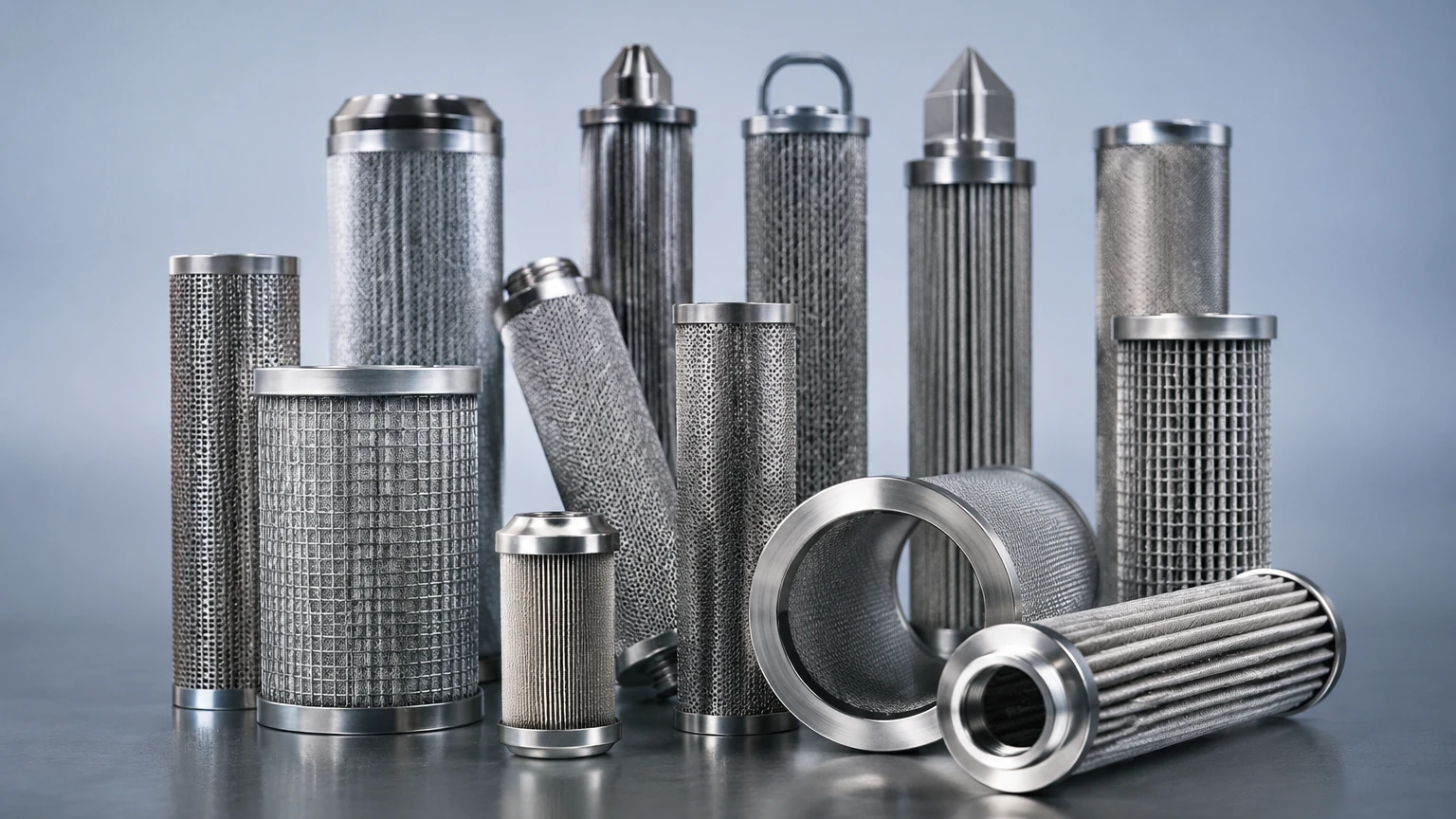
Industrial filtration solutions, such as those found on the Kaifil Main Page, are critical to the operation of these systems. From protecting downstream equipment to ensuring the purity of the final product, the selection of filter cartridges and wire mesh components must align with the specific mechanical and thermal demands of the tanks and pressure vessels they inhabit.
Engineering Fundamentals: Tanks vs. Pressure Vessels
While the terms are often used interchangeably in casual conversation, engineering standards draw a sharp distinction between atmospheric tanks and pressure vessels based on their design pressure and intended application.
Atmospheric and Low-Pressure Storage Tanks
Atmospheric tanks are typically designed to operate at pressures ranging from atmospheric pressure to approximately 0.5 psi (pounds per square inch). These are governed by standards such as API 650 or API 620. In these environments, filtration is often focused on "tank breathing." As a tank is filled or emptied, air must enter or exit to equalize pressure. Without high-quality vent filters, contaminants from the ambient environment can enter the vessel, compromising the stored material. Conversely, if the material is hazardous, the vent filter must prevent the escape of particulate matter into the atmosphere.
Pressure Vessels
Pressure vessels are designed to operate at pressures significantly higher than atmospheric pressure, often exceeding 15 psi. These units are engineered according to strict codes, such as the ASME Boiler and Pressure Vessel Code (BPVC) Section VIII. Because these vessels handle high-energy states, every internal component—including filter housings, support grids, and the filter media itself—must be rated to withstand the maximum allowable working pressure (MAWP) and the associated differential pressures during filtration cycles.
The Role of Filtration in Pressurized Systems
Filtration within tanks and pressure vessels is not merely about removing debris; it is about managing the fluid dynamics of a pressurized environment. In many B2B applications, such as chemical processing or hydraulic power units, the filter is the primary line of defense against system failure.
Protecting Downstream Assets
In a pressurized loop, a single failure of a pump or valve can introduce metallic shards or seal fragments into the system. High-strength stainless steel filter cartridges installed within the pressure vessel act as a barrier, ensuring that any internal degradation within the vessel does not migrate to sensitive downstream components like high-pressure nozzles or turbines.
Maintaining Process Purity
In the pharmaceutical and food and beverage industries, tanks and pressure vessels are often used for batch processing. Here, the filtration media must provide precise micron ratings to ensure consistency. Sintered wire mesh and pleated stainless steel elements are preferred in these applications because they offer a fixed pore structure that does not migrate or shed fibers under the high-pressure flows typical of these systems.
Material Selection and Engineering Considerations
When specifying filtration components for tanks and pressure vessels, material science is the primary driver of longevity and performance. The harsh environments found in chemical reactors or high-temperature steam systems require materials that go beyond standard polymers.
Stainless Steel: The Industrial Standard
Stainless steel (primarily grades 304, 316, and 316L) is the material of choice for industrial filtration. Its selection is based on several factors:
1. Corrosion Resistance: 316L stainless steel, with its molybdenum content, provides superior resistance to chlorides and acidic environments, which is vital for chemical storage tanks.
2. Thermal Stability: Pressure vessels often operate at elevated temperatures. Unlike synthetic filters that may soften or degrade, stainless steel maintains its structural integrity and filtration accuracy across a wide temperature gradient.
3. Cleanability: For B2B operations focused on total cost of ownership (TCO), the ability to clean and reuse filter elements is a significant advantage. Stainless steel wire mesh can be backwashed or ultrasonically cleaned, extending the replacement cycle compared to disposable alternatives.
Structural Integrity and Differential Pressure
In a pressure vessel, the filter element is subjected to differential pressure ($ΔP$)—the difference between the pressure upstream and downstream of the filter. As the filter captures contaminants, $ΔP$ increases. If the filter element is not engineered with a robust inner core or support cage, the pressure can cause the media to collapse. Engineers must confirm that the collapse pressure rating of the filter exceeds the maximum possible $ΔP$ the system's pumps can generate.
Customization and OEM Integration
Standard off-the-shelf filtration products often fall short when integrated into specialized tanks and pressure vessels. Customization is frequently required to meet unique flow patterns, space constraints, or connection types.
Tailored Filtration Geometry
Pressure vessels come in various orientations—horizontal, vertical, or spherical. The internal filtration assembly must be designed to maximize surface area while minimizing the footprint. Custom-length filter cartridges or uniquely shaped wire mesh strainers allow for optimized flow distribution, preventing "dead zones" within the vessel where stagnant fluid could lead to bacterial growth or chemical precipitation.
Connection and Sealing Interfaces
The interface between the filter and the vessel is a critical failure point. Custom OEM solutions often involve specialized flange connections, NPT threads, or O-ring grooves (using materials like Viton, EPDM, or PTFE) to ensure a leak-proof seal that can withstand the vessel's vibration and thermal expansion cycles.
Performance Evaluation and Maintenance
To ensure the long-term reliability of tanks and pressure vessels, a proactive approach to filtration performance is required. Engineers should focus on three key metrics: filtration efficiency, flow capacity, and dirt-holding capacity.
Calculating Replacement Cycles
While stainless steel filters are durable, they are not infinite. The replacement or cleaning cycle should be determined by monitoring the $ΔP$ across the vessel. A common industry standard is to initiate a cleaning cycle when the pressure drop reaches a predetermined set point (e.g., 15-25 psi), well before the bypass valve opens or the element reaches its collapse pressure.
Impact of Fluid Viscosity
In many industrial tanks, the viscosity of the fluid changes with temperature. A filter that performs well at operating temperature may cause an excessive pressure drop during a cold start. When selecting filtration for pressure vessels, engineers must account for the highest possible viscosity the system will encounter to prevent premature filter fatigue or system cavitation.
Technical Checklist for Engineers and Purchasing Teams
Before finalizing a procurement order for filtration components intended for tanks and pressure vessels, the following technical parameters should be confirmed with the manufacturer:
* Design Pressure and Temperature: Does the filter element's material and construction align with the vessel's ASME or API rating?
* Chemical Compatibility: Is the filter media, support structure, and sealing material compatible with the process fluid and any cleaning agents used (e.g., CIP – Clean In Place)?
* Micron Rating (Absolute vs. Nominal): Does the application require an absolute rating (where 99.9% of particles at that size are captured) or is a nominal rating sufficient?
* Flow Rate Requirements: What is the maximum flow rate the vessel will handle, and what is the clean pressure drop at that flow?
* Cleaning Protocols: Is the filter designed for backpulsing, ultrasonic cleaning, or chemical soaking?
Conclusion
Tanks and pressure vessels are the heart of industrial processing, but their effectiveness is inextricably linked to the quality of their internal filtration systems. By selecting high-performance stainless steel wire mesh and filter cartridges that are specifically engineered for pressurized environments, manufacturers can reduce downtime, protect expensive machinery, and ensure consistent product quality.
For those seeking reliable, custom-engineered filtration components designed to meet the rigorous demands of modern industrial vessels, exploring professional manufacturing capabilities is the first step toward system optimization. Detailed technical specifications and application support can be found by visiting the Main Page to review available filtration solutions and engineering expertise.
