


Pressure Leaf Filtration
Pressure leaf filtration is a critical process in industrial solid-liquid separation, widely utilized across the chemical, food and beverage, pharmaceutical, and mining industries. This method is characterized by its ability to handle high solids loading while maintaining a relatively small footprint compared to traditional plate and frame presses. For engineers and procurement specialists, understanding the technical nuances of pressure leaf filtration is essential for optimizing process efficiency, reducing downtime, and ensuring the longevity of filtration hardware.
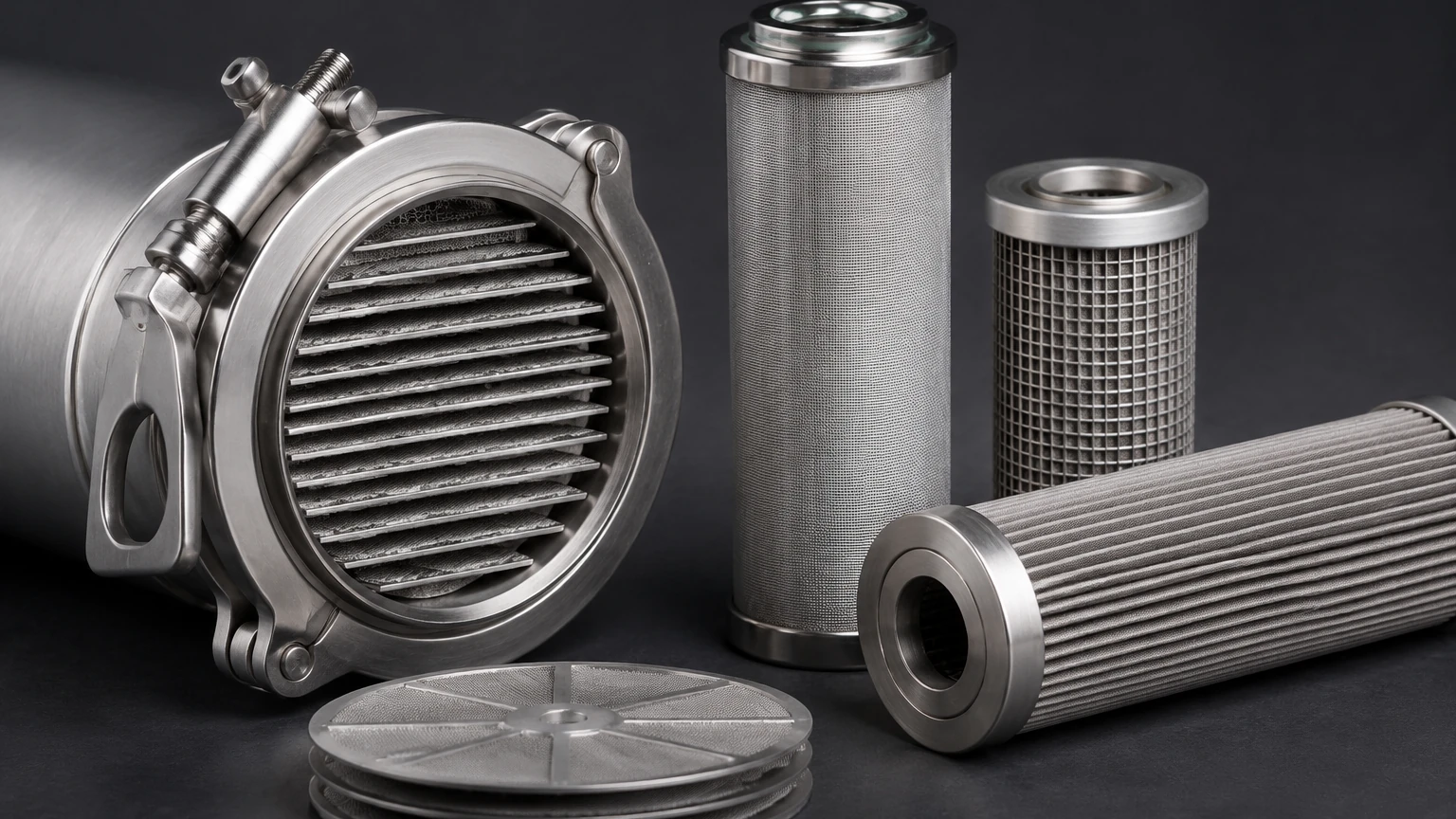
At its core, a pressure leaf filter consists of a series of vertical or horizontal filter leaves housed within a pressure vessel. These leaves serve as the primary support for the filter media, which is typically a multi-layered stainless steel wire mesh. As the slurry is pumped into the vessel under pressure, the liquid passes through the mesh while the solids are retained, forming a "filter cake." This cake itself eventually becomes the primary filtering medium, often achieving higher clarity than the mesh alone could provide.
The Mechanics of the Filtration Cycle
To evaluate the performance of a pressure leaf filtration system, one must first understand the distinct phases of its operation. Unlike continuous filtration methods, pressure leaf systems operate in batches. Each cycle typically follows a specific sequence:
1. Pre-coating: In many applications, a filter aid such as diatomaceous earth or perlite is mixed with a clean liquid and circulated through the system. This forms a thin, protective layer on the stainless steel mesh of the filter leaves. Pre-coating prevents fine particles from blinding the mesh and facilitates easier cake discharge at the end of the cycle.
2. Filtration: The slurry is introduced into the vessel. The pressure differential—the difference between the internal vessel pressure and the pressure at the leaf outlet—drives the liquid through the cake and the mesh. As the cake grows, the resistance increases, requiring higher pressure to maintain flow.
3. Cake Washing (Optional): If the goal is to recover the liquid trapped within the solids or to remove impurities from the cake, a washing solvent is passed through the cake.
4. Drying: Compressed air or steam is often blown through the cake to reduce moisture content before discharge. This is particularly important in "dry cake discharge" systems where the solids are the final product or must be disposed of economically.
5. Discharge: The vessel is depressurized. In vertical systems, the leaves are often vibrated to shake the cake loose into a hopper. In horizontal systems, the leaf bundle may be retracted, and the cake is removed manually or via mechanical scrapers.
Engineering Considerations for Filter Leaves
The filter leaf is the most critical component of the system. Its design directly impacts the flow rate, the clarity of the filtrate, and the mechanical durability of the equipment. High-quality leaves are typically constructed from five to seven layers of stainless steel wire mesh.
Material Selection
For most industrial applications, Stainless Steel 304 or 316L is the standard. SS316L is preferred in chemical processing and food production due to its superior resistance to pitting and crevice corrosion, especially in the presence of chlorides. In highly aggressive environments, specialty alloys like 904L or Hastelloy may be required.
Mesh Configuration
The outer layers of the leaf, known as the filtration mesh, are usually a fine Dutch weave or a reverse Dutch weave. These weaves provide a precise pore size and high mechanical strength. Beneath the filtration mesh are support and drainage layers. These coarser meshes provide a path for the filtrate to flow toward the central collection manifold while ensuring the fine outer mesh does not collapse under high pressure.
Structural Integrity
Pressure leaf filtration involves significant mechanical stresses. During the filtration phase, the leaves must withstand high differential pressures. During discharge, vertical leaves are subjected to high-frequency vibrations. If the leaf frame is not robustly engineered, it can warp or crack, leading to "bypass"—where unfiltered slurry leaks into the clean filtrate stream. For those seeking specialized components, exploring the Main Page of a dedicated manufacturer can provide insights into customized leaf designs tailored for specific pressure and temperature requirements.
Key Evaluation Criteria for System Selection
When selecting or upgrading a pressure leaf filtration system, engineers should focus on several technical parameters to ensure the equipment aligns with their specific process requirements.
1. Filtration Area vs. Solids Loading
The total filtration area must be sufficient to accommodate the expected volume of solids without the cake becoming so thick that it touches the adjacent leaf. If the cake "bridges" between leaves, it becomes nearly impossible to discharge and can cause permanent mechanical damage to the leaf frames.
2. Flux Rate and Pressure Drop
Flux is defined as the volume of filtrate passing through a unit area of filter medium per unit of time (e.g., GPM/sq. ft.). A higher flux rate allows for smaller equipment but increases the rate of pressure rise. Engineers must balance the initial capital expenditure (CAPEX) of a larger filter against the operational expenditure (OPEX) of frequent cleaning cycles and higher pumping energy.
3. Cake Discharge Method
Choosing between wet and dry discharge depends on the downstream processing of the solids. Wet discharge is generally faster and involves sluicing the cake off the leaves with high-pressure nozzles. Dry discharge is necessary if the solids must be reclaimed as a dry powder or if water usage must be minimized.
Common Risks and Operational Challenges
Even a well-designed pressure leaf filtration system can encounter issues if not operated correctly. Identifying these risks early is vital for maintaining process stability.
* Mesh Blinding: This occurs when fine particles become lodged within the pores of the wire mesh. Blinding is often caused by improper pre-coating or by exceeding the recommended pressure differential. Once blinded, the leaves must be chemically cleaned or ultrasonically treated to restore flow.
* Cake Bridging: As mentioned previously, if the filtration cycle is too long, the cake on adjacent leaves will meet. This prevents the cake from falling off during the discharge cycle and can bend the internal drainage plates of the leaves.
* Seal and Gasket Failure: The pressure vessel and the leaf connections rely on high-performance seals (often EPDM, Viton, or PTFE). Incompatible chemicals or extreme temperature fluctuations can cause these seals to degrade, leading to leaks or bypass.
* Inconsistent Pre-coat: If the pre-coat is not uniform across the entire surface of the leaf, the slurry will follow the path of least resistance. This leads to uneven cake formation and localized high-velocity zones that can erode the wire mesh.
Maintenance and Replacement Cycles
To ensure consistent performance, a proactive maintenance schedule is required. Unlike disposable cartridge filters, stainless steel filter leaves are designed for long-term use, but they are not indefinite.
Regular inspections should focus on the tension of the wire mesh. If the mesh becomes baggy, it will flex during every pressure cycle, leading to work-hardening and eventual fatigue failure. Furthermore, the manifold connections should be checked for bypass. A simple way to monitor this is by tracking the turbidity of the filtrate; a sudden spike in turbidity usually indicates a hole in the mesh or a failed O-ring at the leaf base.
In many industrial environments, leaves are expected to last 3 to 5 years, depending on the abrasiveness of the solids and the frequency of the cycles. However, improper cleaning—such as using high-pressure washers too close to the fine mesh—can significantly shorten this lifespan.
Customization and Engineering Support
Industrial filtration is rarely a one-size-fits-all solution. Each slurry has unique characteristics, including particle size distribution, viscosity, and chemical reactivity. Working with a manufacturer that offers OEM and customized filtration solutions allows for the optimization of the leaf structure itself. This might include varying the mesh weave to handle gelatinous solids or reinforcing the frame for high-vibration discharge systems.
When consulting with a filtration partner, engineers should be prepared to provide:
* Slurry concentration (percentage of solids by weight).
* Particle size analysis.
* Operating temperature and pressure.
* Chemical composition of both the liquid and solid phases.
* Required filtrate clarity (measured in PPM or NTU).
By confirming these details, technical teams can ensure that the pressure leaf filtration system is not only functional but optimized for the total cost of ownership. For further technical specifications and to review product options for industrial filtration components, visiting the Main Page can assist in the initial selection process.
Conclusion
Pressure leaf filtration remains a cornerstone of industrial separation technology due to its efficiency and versatility. By focusing on the structural integrity of the filter leaves, selecting the appropriate materials, and adhering to rigorous operational protocols, facilities can achieve high-purity results with manageable operating costs. As processes become more demanding, the role of precision-engineered stainless steel components becomes even more critical in ensuring that these systems perform reliably under pressure.
