


Woven Wire Mesh Panels: A Technical Guide for Industrial Filtration and Separation
In the landscape of industrial processing, the efficiency of filtration and separation systems often depends on the precision and durability of the media used. Woven wire mesh panels represent a critical component in these systems, providing a structured, rigid, and highly customizable solution for fluid and gas filtration, particle sizing, and mechanical protection. Unlike flexible mesh rolls, panels are engineered to specific dimensions and often integrated with framing or support structures to ensure stability under high-pressure or high-flow conditions.
For engineers and procurement professionals, selecting the right Woven Wire Mesh involves more than simply choosing a material. It requires a deep understanding of weave patterns, wire diameters, aperture sizes, and the mechanical stresses the panels will face in the field. This guide explores the technical parameters, material considerations, and engineering criteria essential for specifying high-performance mesh panels.
Understanding the Anatomy of Woven Wire Mesh Panels
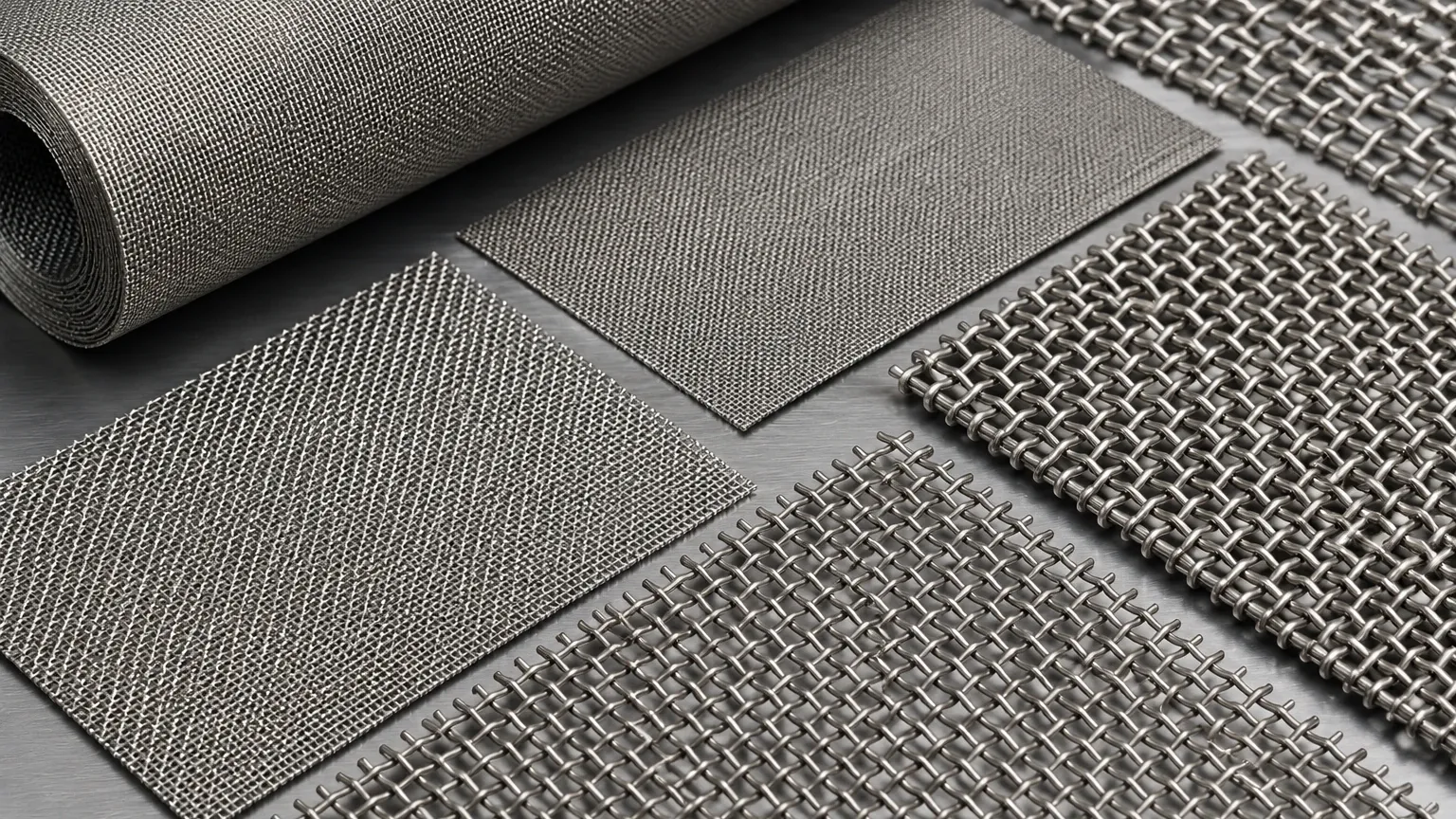
A woven wire mesh panel is essentially a precision-engineered fabric made of metallic wires. The "weave" refers to the method by which the warp wires (running lengthwise) and shute wires (running crosswise) intersect. When these materials are cut to size and potentially framed, they become woven wire mesh panels.
Key Geometric Parameters
1. Mesh Count: This is the number of openings per linear inch. A higher mesh count indicates a finer filtration capability but typically involves thinner wires, which can affect the structural integrity of the panel.
2. Wire Diameter: The thickness of the wire before weaving. This parameter is crucial because it determines both the mechanical strength of the panel and the resulting "Open Area."
3. Aperture (Opening Size): The clear distance between two adjacent parallel wires. This is the most critical dimension for filtration, as it determines the maximum particle size that can pass through the mesh.
4. Open Area Percentage: Calculated as $(Aperture / (Aperture + Wire Diameter))^2 \times 100$. This percentage dictates the flow capacity and pressure drop across the panel.
Weave Patterns and Their Functional Impact
The choice of weave pattern significantly influences the performance characteristics of woven wire mesh panels. Depending on the application—whether it is simple straining or high-precision pharmaceutical filtration—different weaves offer distinct advantages.
Plain Weave
The most common and straightforward pattern, where each shute wire passes over and under one warp wire. Plain weave panels offer high flow rates and are easy to clean, making them ideal for standard separation tasks and protective screens.
Twill Weave
In a twill weave, each shute wire passes over and under two warp wires in a staggered pattern. This allows for the use of heavier wires in a given mesh count, providing greater strength and the ability to produce finer meshes that would be impossible in a plain weave due to wire crimping limits.
Dutch Weave (Plain and Twill)
Dutch weaves utilize different diameters for warp and shute wires. The shute wires are driven close together, creating a dense, "zero-aperture" mesh where the openings are not visible when looking directly through the panel. Instead, the fluid follows a tortuous path through the mesh. This is the preferred choice for high-pressure filtration and fine micron ratings.
* Plain Dutch Weave: Offers high mechanical strength and is often used for heavy-duty filtration.
* Twill Dutch Weave: Provides the finest filtration levels, often down to 5-10 microns, and is used in critical applications like hydraulic systems and chemical processing.
Material Selection for Industrial Environments
Industrial filtration often occurs in aggressive environments involving corrosive chemicals, high temperatures, or high-pressure differentials. Consequently, the material of the woven wire mesh panels is a primary factor in the total cost of ownership and replacement cycles.
Stainless Steel 304
SS304 is the standard industrial grade. It offers excellent resistance to atmospheric corrosion and many organic and inorganic chemicals. It is widely used in food processing and general industrial applications where extreme acid resistance is not required.
Stainless Steel 316L
For more demanding environments, SS316L (low carbon) is the preferred choice. The addition of molybdenum provides superior resistance to chlorides and pitting corrosion. This makes 316L panels essential for marine environments, pharmaceutical production, and chemical processing involving brine or acidic solutions.
Specialty Alloys
In specific cases, such as high-temperature oxidation or extreme chemical exposure, alloys like Monel, Inconel, or Hastelloy may be required. These materials ensure that the mesh maintains its structural integrity and filtration accuracy when standard stainless steels would fail.
Engineering Considerations for Panel Design
When specifying woven wire mesh panels, engineers must look beyond the mesh itself and consider how the panel will be integrated into the equipment. The mechanical design of the panel affects its lifespan and ease of maintenance.
Framing and Edging
Raw cut mesh can be difficult to handle and prone to fraying. Industrial panels are typically finished with specific edging options:
* U-Binding/Framing: A metal channel is crimped or welded around the perimeter. This provides a rigid edge for sealing and mounting.
* Flat Bar Frames: Heavier steel bars are welded to the mesh, often used for large-scale vibrating screens or heavy-duty strainers.
* Hemmed Edges: The mesh is folded over itself to create a safe, blunt edge without adding extra material.
Support and Reinforcement
In high-pressure applications, a fine filtration mesh may lack the structural strength to resist deformation. Engineers often specify multi-layer panels where a fine mesh is diffusion-bonded or mechanically layered with a coarser, heavy-duty support mesh. This configuration allows for high-precision filtration while maintaining the rigidity required to withstand significant pressure drops.
Calculating Pressure Drop
Pressure drop (ΔP) is a critical metric. It is influenced by fluid viscosity, flow velocity, and the open area of the mesh. A panel with a low open area will cause a higher pressure drop, potentially leading to pump strain or system failure. When designing a system, it is vital to balance the required filtration micron rating with the available open area to ensure efficient flow.
Applications Across Key Industries
Woven wire mesh panels are versatile components found in nearly every sector of modern manufacturing. Their ability to be customized for specific micron ratings makes them indispensable.
* Chemical Processing: Used for catalyst recovery, filtration of aggressive solvents, and separation of chemical intermediates. The corrosion resistance of SS316L is particularly valued here.
* Food and Beverage: Mesh panels are used in juice straining, sugar refining, and dairy processing. They must meet stringent hygiene standards, and the smooth surface of stainless steel mesh allows for effective Clean-in-Place (CIP) procedures.
* Pharmaceuticals: Precision is paramount. Twill Dutch weave panels are used for active pharmaceutical ingredient (API) filtration, ensuring that contaminants are removed without leaching material from the filter itself.
* Hydraulics and Oil/Gas: High-pressure filters utilize mesh panels to protect sensitive valves and components from particulate matter. These panels must be able to withstand high burst pressures.
Maintenance, Cleaning, and Replacement
One of the primary advantages of stainless steel woven wire mesh panels over disposable media is their cleanability. However, the lifespan of a panel depends on the cleaning protocol and the nature of the contaminants.
Cleaning Methods
* Backwashing: Reversing the flow of the fluid to dislodge particles trapped on the surface. This is most effective with plain weave meshes.
* Ultrasonic Cleaning: Using high-frequency sound waves in a cleaning solvent to remove fine particles from deep within the weave (especially effective for Dutch weaves).
* Chemical Cleaning: Using specific solvents or acids to dissolve accumulated scale or organic matter, provided the mesh material is compatible with the cleaning agent.
Determining Replacement Cycles
While durable, mesh panels eventually suffer from mechanical fatigue or "blinding" (permanent clogging). Indicators for replacement include:
* A permanent increase in the baseline pressure drop that cannot be resolved by cleaning.
* Visible deformation or "bowing" of the mesh surface.
* Breakage of individual wires, which compromises the filtration accuracy.
Conclusion: Selecting a Reliable Filtration Partner
Specifying the correct woven wire mesh panels is a technical process that requires balancing filtration precision, mechanical strength, and chemical compatibility. For engineers, the goal is to achieve the lowest possible total cost of ownership by selecting a panel that offers a long service life and consistent performance.
Working with a manufacturer like Kaifil provides access to technical expertise in material selection and custom fabrication. Whether your application requires a simple SS304 plain weave panel or a complex, framed SS316L Dutch weave assembly, understanding the engineering fundamentals ensures that the final product will meet the rigorous demands of industrial operation. By confirming micron requirements, flow rates, and environmental conditions early in the design phase, purchasing teams can secure filtration solutions that optimize process efficiency and minimize downtime.
