


Filtration Bag
In industrial liquid processing, the filtration bag remains one of the most versatile and cost-effective solutions for removing particulate matter from process streams. Whether utilized in chemical processing, water treatment, or the food and beverage industry, selecting the correct filtration media is critical to ensuring product purity and protecting downstream equipment. While many standard applications rely on disposable fabric media, demanding industrial environments often require the structural integrity and thermal resistance found in advanced metal mesh configurations.
Understanding the technical nuances of filtration bag design, material compatibility, and performance metrics is essential for engineers and procurement teams tasked with optimizing filtration efficiency and minimizing operational downtime.
The Role of the Filtration Bag in Industrial Liquid Processing
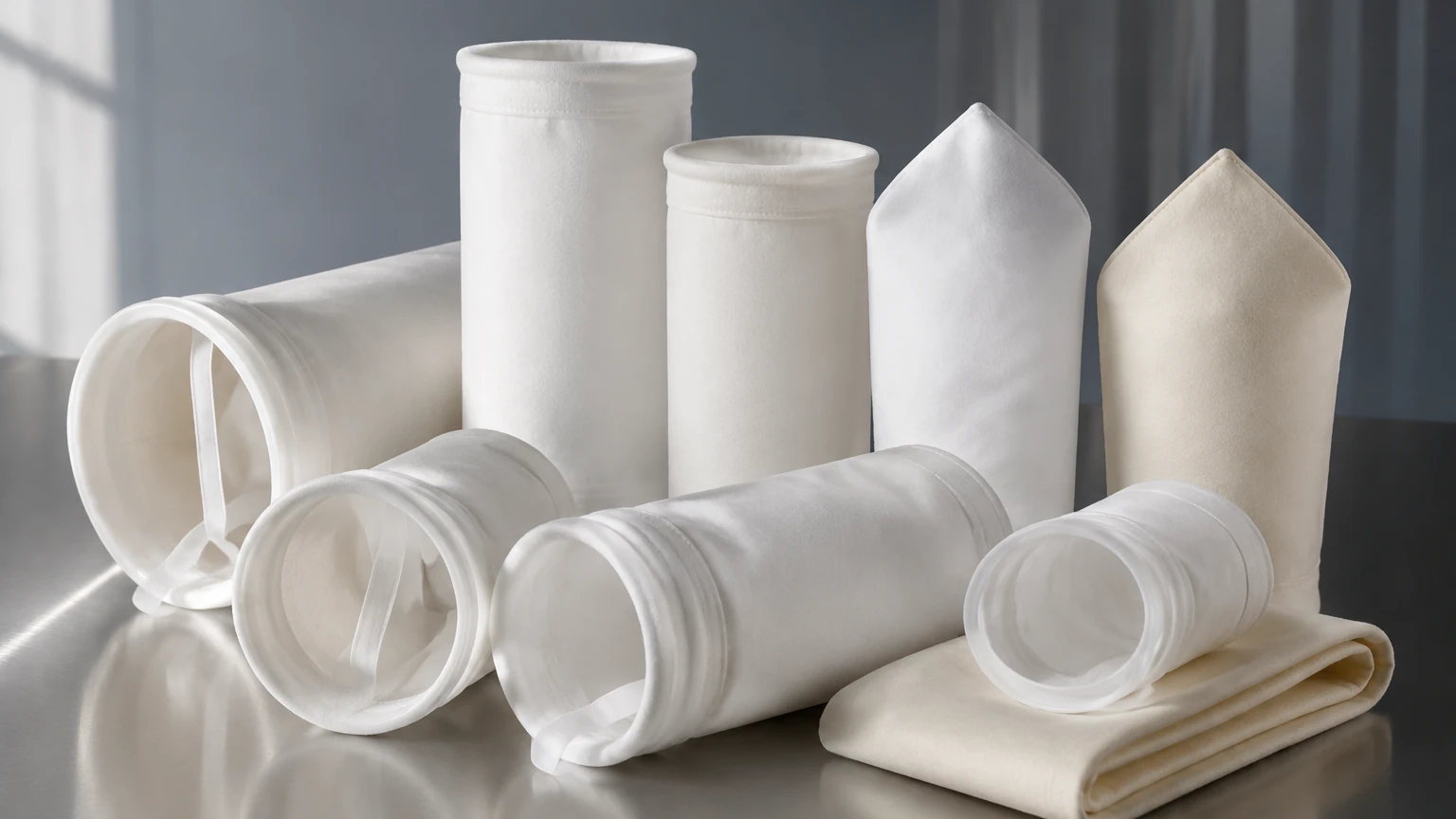
A filtration bag operates as the primary media within a pressure vessel, designed to trap solids while allowing the clarified liquid to pass through. This method is generally preferred for batch processing or applications where high flow rates must be balanced with a relatively small footprint. Unlike cartridge filters, which are often used for fine polishing, bag filters are typically employed for primary or secondary filtration stages where higher solids loading is expected.
From a mechanical perspective, the filtration bag must withstand significant differential pressure ($ΔP$) as it accumulates debris. If the bag fails or the seal is bypassed, the entire filtration process is compromised. Consequently, the choice of bag is not merely about the micron rating but about the structural synergy between the bag, the internal support basket, and the housing seal.
Technical Classification: Depth vs. Surface Filtration Media
To select the appropriate filtration bag, it is necessary to distinguish between the two primary methods of particle capture: depth filtration and surface filtration.
Depth Filtration (Felt Media)
Depth filtration bags are typically constructed from needle-punched felts, such as polypropylene or polyester. These materials create a complex, three-dimensional matrix of fibers. As the fluid passes through the thickness of the felt, particles are trapped throughout the depth of the media. This provides a high dirt-holding capacity, making felt bags ideal for removing deformable or gelatinous particles. However, depth media are generally "nominal" in their rating, meaning they trap a high percentage of particles at a specific size but may allow some bypass under fluctuating pressures.
Surface Filtration (Monofilament and Metal Mesh)
Surface filtration occurs on a single plane. Monofilament meshes—and specifically stainless steel wire mesh—are the primary examples of surface media. In this configuration, the pore size is precisely defined by the weaving process. Particles larger than the pore size are retained on the surface of the bag. This provides an "absolute" filtration rating, which is critical for applications requiring strict quality control. Stainless steel mesh bags are particularly valued for their ability to be cleaned and reused, offering a sustainable alternative to disposable felt bags in high-temperature or high-viscosity applications.
Engineering Parameters: Micron Ratings and Flow Dynamics
When evaluating a filtration bag for a specific system, engineers must prioritize three core parameters: micron rating, flow rate, and pressure drop.
1. Micron Rating: This defines the size of the particles the bag is intended to remove. Ratings can range from 1 micron to over 1,000 microns. It is vital to distinguish between nominal ratings (common in felt) and absolute ratings (standard in precision metal mesh). For critical applications, an absolute-rated stainless steel mesh bag ensures that no particles above the specified threshold pass through the system.
2. Flow Rate: The volume of liquid passing through the bag per unit of time (e.g., GPM or m³/h). Increasing the flow rate beyond the manufacturer’s recommendation increases the velocity of particles, which can lead to "blinding" the media prematurely or causing particle bypass through the media pores.
3. Differential Pressure (ΔP): This is the difference in pressure between the upstream and downstream sides of the filter. A clean filtration bag should have a very low initial pressure drop. As the bag loads with contaminants, the ΔP increases. Most industrial systems require a bag change-out or cleaning when the ΔP reaches 15–25 psi to prevent bag rupture or housing damage.
Material Compatibility and Selection for Corrosive Environments
The chemical and thermal profile of the process fluid dictates the material of the filtration bag. While polymers like polypropylene are excellent for low-temperature acid and alkali filtration, they fail in high-temperature or solvent-heavy environments.
* Polypropylene: Best for aqueous solutions and acids up to 90°C.
* Polyester: Suitable for higher temperatures (up to 150°C) and offers good resistance to most oxidizing agents.
* Nylon Monofilament: Excellent for solvents and paints but sensitive to high temperatures and certain acids.
* Stainless Steel (304/316L): The gold standard for demanding industrial applications. Stainless steel wire mesh bags can withstand temperatures exceeding 250°C and are resistant to a vast array of chemicals, including organic solvents and high-pressure steam. For engineers looking for long-term reliability, reviewing technical specifications on the Main Page of a specialist manufacturer like Kaifil can provide insights into specific alloy performance.
Structural Components: Rings, Seals, and Support Baskets
The efficiency of a filtration bag is only as good as its seal. If fluid can bypass the bag at the top of the housing, the micron rating of the media becomes irrelevant. There are three common sealing mechanisms used in industrial bag filtration:
* Steel/Stainless Steel Rings: These are sewn into the top of the bag and rely on the downward pressure of the housing lid to create a seal against the basket flange. While effective, they are susceptible to bypass if the ring is slightly deformed.
* Plastic Flanges (Sentinel/Snap-Collar): These molded plastic tops feature a groove that snaps into the housing. They provide a more consistent, bypass-free seal and are often used in high-purity applications.
* Custom Metal Collars: For heavy-duty or high-pressure systems, custom-machined metal collars ensure a rigid, airtight fit that prevents bypass even under extreme pressure surges.
Furthermore, every filtration bag must be supported by a perforated or mesh support basket. The basket prevents the bag from stretching or bursting under the weight of the liquid and the accumulated solids. In high-precision environments, the interface between the bag and the basket must be perfectly aligned to prevent mechanical wear on the filtration media.
Total Cost of Ownership: Disposable vs. Cleanable Metal Mesh Bags
When calculating the cost of a filtration system, purchasing teams often focus on the unit price of the bag. However, a Total Cost of Ownership (TCO) analysis frequently reveals that high-quality, reusable metal mesh bags are more economical than disposable felt bags in the long run.
Disposable Bags:
* Low initial unit cost.
* High recurring costs (frequent purchases).
* Significant waste disposal costs (especially if the waste is hazardous).
* Labor costs associated with frequent change-outs.
Reusable Stainless Steel Bags:
* Higher initial investment.
* Zero or minimal recurring material costs.
* Reduced environmental impact and waste disposal fees.
* Ability to be cleaned via ultrasonic baths, backwashing, or chemical cleaning.
For processes with high solids loading or those operating in remote locations where supply chain consistency is a risk, the durability of a stainless steel filtration bag provides a significant operational advantage.
Custom OEM Solutions for Specialized Filtration Requirements
Standard off-the-shelf filtration bags do not always meet the rigorous demands of specialized industrial machinery. Factors such as non-standard housing dimensions, extreme viscosity, or the need for specific flow patterns require customized filtration solutions.
Customization options typically include:
* Variable Geometry: Tailoring the length, diameter, and bottom shape (conical vs. flat) to fit unique vessel designs.
* Reinforced Seams: Using ultrasonic welding or specialized stitching to ensure seam integrity in high-pressure applications.
* Hybrid Media: Combining different layers of mesh or felt to achieve multi-stage filtration within a single bag.
* Handle and Hanger Modifications: Adding specialized lifting handles or internal supports for easier removal in hazardous environments.
As a manufacturer specializing in stainless steel filtration, Kaifil works closely with engineering teams to develop these bespoke solutions. By focusing on the specific hydraulic and chemical requirements of an application, it is possible to design a filtration bag that maximizes service life and maintains consistent permeate quality.
Conclusion: Optimizing Your Filtration Strategy
Selecting the right filtration bag is a balance of material science, mechanical engineering, and economic strategy. While felt and fabric bags serve a purpose in many general-purpose applications, the move toward precision stainless steel mesh bags is driven by the need for higher reliability, better chemical resistance, and long-term cost savings.
Before finalizing a procurement decision, engineers should confirm the chemical compatibility of the media, the required absolute vs. nominal micron rating, and the structural requirements of the housing seal. For those seeking durable, high-performance filtration components tailored to specific industrial needs, visiting the Main Page of an experienced manufacturer is the first step toward achieving optimized process outcomes.
