


Teflon Cartridge Filter on Hold
In industrial filtration procurement and system design, encountering a status where a "teflon cartridge filter on hold" is common during the technical validation phase. Teflon, or Polytetrafluoroethylene (PTFE), is a high-performance fluoropolymer used extensively in aggressive chemical environments, pharmaceutical manufacturing, and semiconductor processing. However, because of its unique physical properties and the specific engineering requirements of the housings it inhabits, projects often pause to resolve compatibility, thermal, or structural concerns.
For engineers and procurement specialists, a hold on a filtration project usually indicates a gap between the process requirements and the filter's documented capabilities. Resolving these issues requires a deep dive into material science, differential pressure limits, and the potential advantages of alternative materials such as stainless steel wire mesh or sintered metal components.
Understanding the Technical Role of PTFE in Industrial Filtration
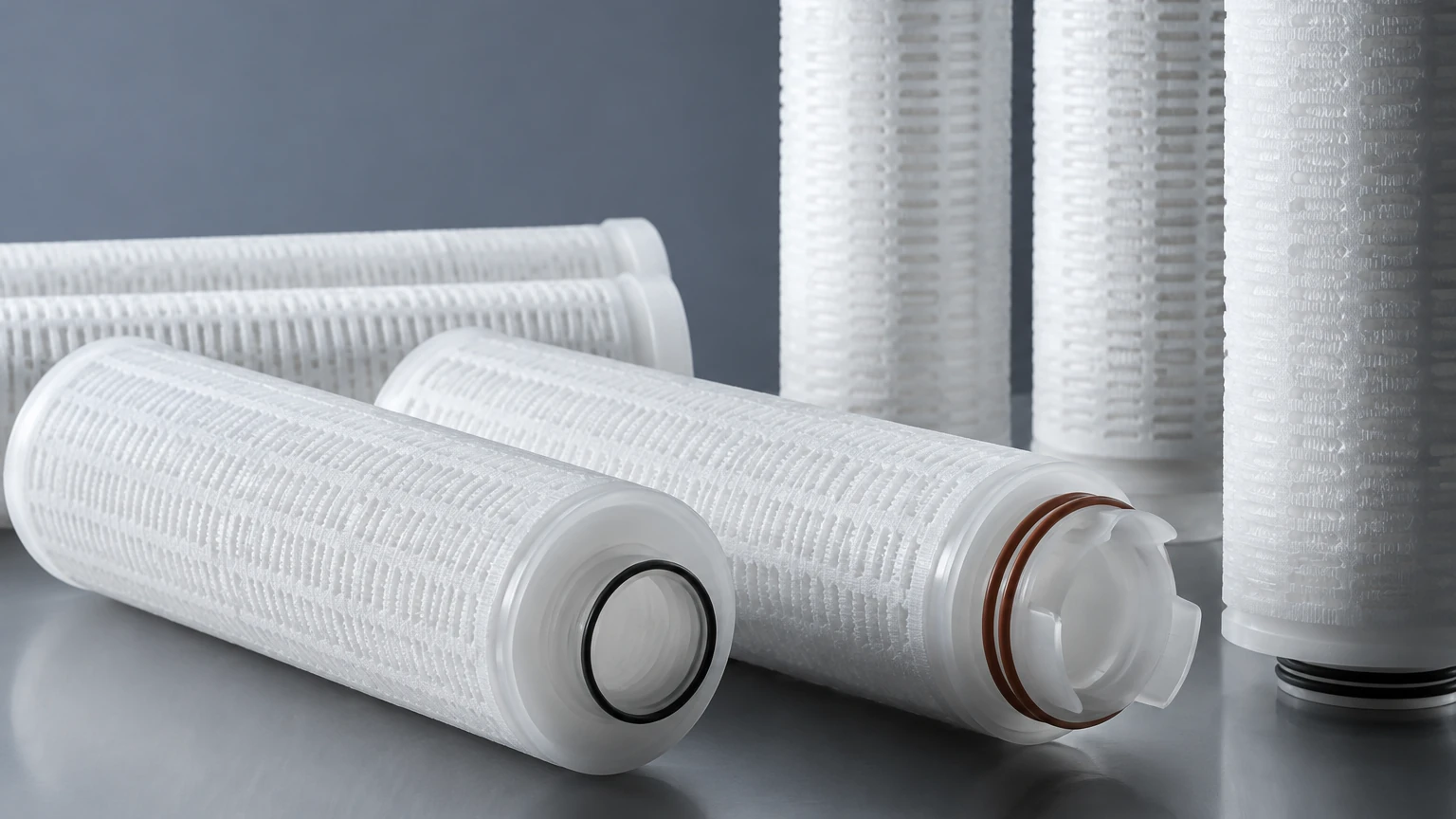
PTFE is prized for its near-total chemical inertness and its hydrophobic nature. In cartridge form, it is typically used as a membrane or a pleated medium supported by a core and cage. The primary reason for selecting PTFE is its ability to withstand highly corrosive acids, bases, and solvents that would degrade standard polymers like polypropylene or polyester.
When a project involving a teflon cartridge filter is on hold, it is often due to the hydrophobic nature of the material. In aqueous applications, PTFE membranes require pre-wetting with a low-surface-tension fluid (like alcohol) before they will allow water-based liquids to pass at low pressures. If the system design does not account for this pre-wetting step, the filter will appear to be blocked, leading to a technical hold while the process flow is re-evaluated.
Furthermore, PTFE filters are frequently used in gas filtration and tank venting because they repel moisture, preventing the filter from "blinding" with water droplets. If the application involves high humidity or steam sterilization, engineers must verify that the support structure (the cage and core) can withstand the same thermal stresses as the PTFE media itself.
Critical Factors Leading to a Technical Hold
Several engineering variables can cause a teflon cartridge filter to be placed on hold during the specification phase. Understanding these variables is essential for moving a project toward completion.
1. Thermal Expansion and Structural Integrity
PTFE has a significantly higher coefficient of thermal expansion than the stainless steel housings often used to contain them. In high-temperature applications, the cartridge may expand at a different rate than the housing or the internal support core. If the design does not allow for this expansion, the cartridge can warp, leading to bypass—where unfiltered fluid escapes around the seals. Engineers must confirm the maximum operating temperature and ensure the cartridge length remains stable under those conditions.
2. Chemical Compatibility of Secondary Materials
While the PTFE membrane itself is inert, a cartridge filter is a composite assembly. It includes end caps, a core, a cage, and O-rings. Often, a project is put on hold because while the PTFE is compatible with the process fluid, the polypropylene cage or the Viton O-ring is not. For truly aggressive environments, engineers may need to look toward all-fluoropolymer constructions or transition to stainless steel filtration solutions that eliminate the need for plastic supports entirely.
3. Differential Pressure Limits
PTFE membranes are delicate. They are often pleated to increase surface area, but the pleats must be supported to prevent collapse under high differential pressure (ΔP). If a process expects high solids loading or sudden pressure surges, a standard PTFE cartridge might be deemed insufficient. In these cases, the project remains on hold until a more robust reinforcement method is identified or a pre-filtration stage is added to protect the membrane.
Evaluating Material Compatibility: PTFE vs. Stainless Steel
One of the most frequent reasons a teflon cartridge filter is on hold is the realization that a metal-based solution might provide better long-term reliability. As a professional manufacturer, Kaifil provides insights into when stainless steel should replace or augment synthetic fluoropolymers.
Stainless steel filters, particularly those utilizing multi-layer wire mesh or sintered metal fibers, offer several advantages over PTFE in demanding B2B environments:
* Temperature Resistance: While PTFE is generally limited to 260°C (and often much lower when supported by plastic components), stainless steel filters can operate at temperatures exceeding 500°C.
* Mechanical Strength: Stainless steel cartridges are self-supporting and can withstand significantly higher backpressure and differential pressure without the risk of media migration or structural failure.
* Cleanability: Unlike many PTFE cartridges which are treated as consumables, stainless steel filters can be cleaned via ultrasonic baths, back-pulsing, or chemical solvents and reused multiple times, reducing the total cost of ownership.
* Static Dissipation: In solvent filtration, the build-up of static electricity can be a safety hazard. Stainless steel is naturally conductive, whereas PTFE is an insulator. If a project is on hold due to ATEX or safety concerns regarding static discharge, switching to a metal filter is often the required solution.
Engineers can Review product options and application support to determine if a custom stainless steel component is a more viable path forward than a standard PTFE cartridge.
Technical Specifications to Verify Before Resuming a Project
To move a project off "hold" status, the following technical parameters must be documented and verified against the filter's data sheet:
Micron Rating and Efficiency
Is the filter rated as "nominal" or "absolute"? In critical pharmaceutical or semiconductor applications, a 0.2-micron absolute rating is often required. If the current teflon cartridge filter on hold only offers nominal retention, it will fail to meet the validation standards of the process.
Effective Filtration Area (EFA)
The EFA determines the flow velocity through the media. If the velocity is too high, it can lead to premature fouling or even "strike-through," where particles are forced through the membrane. Increasing the number of pleats or the length of the cartridge can resolve this, but it requires verifying the housing dimensions.
Extractables and Purity
In high-purity water or chemical applications, the filter must not leach any chemicals into the fluid. PTFE is excellent for low extractables, but the bonding agents used to attach the end caps must be checked. Thermally bonded cartridges (where no adhesives are used) are the industry standard for high-purity tasks.
Total Cost of Ownership and Performance Longevity
When a teflon cartridge filter is on hold, the purchasing department is often looking at the long-term budget. PTFE filters have a high initial cost compared to polypropylene. If the replacement cycle is too frequent due to fouling, the operational expenditure (OPEX) can become unsustainable.
In these scenarios, the engineering team should evaluate the "Total Cost of Filtration." This includes:
1. Initial Purchase Price: The cost of the cartridge and any specialized housings.
2. Labor Costs: The time required for technicians to change out filters, especially in systems that require sterile breaks.
3. Disposal Costs: Hazardous waste disposal for contaminated plastic cartridges.
4. Downtime: The cost of lost production during filter changes.
Often, a project on hold is redirected toward a stainless steel solution because the ability to clean and reuse the filter reduces the long-term financial burden, despite a higher initial capital investment.
Transitioning to Custom Filtration Solutions
If the evaluation of a teflon cartridge filter on hold reveals that standard off-the-shelf products cannot meet the pressure, temperature, or chemical requirements of the application, customization becomes necessary. Customization might involve:
* Hybrid Designs: Using a stainless steel support cage with a PTFE media for added rigidity.
* Custom End-Caps: Modifying the fitting (e.g., Code 7, 222, or 226) to ensure a bypass-free seal in existing non-standard housings.
* Sintered Metal Media: For applications where PTFE is chosen for its chemical resistance but fails due to pressure, sintered 316L stainless steel provides comparable resistance to many organic solvents while offering far superior structural integrity.
Kaifil specializes in these types of high-performance adjustments, ensuring that the filtration component is engineered specifically for the environment it will serve. By focusing on the precise needs of the industrial process, the causes of the "on hold" status can be systematically addressed and resolved.
Conclusion
A "teflon cartridge filter on hold" is a signal to re-examine the technical boundaries of a filtration system. Whether the hold is caused by concerns over chemical compatibility, thermal expansion, or mechanical durability, the solution lies in a rigorous comparison of material properties and a clear understanding of the process environment. By evaluating the benefits of PTFE against the robust performance of stainless steel wire mesh and sintered components, engineers can select the most reliable and cost-effective filtration path. For more information on navigating these technical choices, visit the Main Page to explore professional manufacturing capabilities and engineering support.
