


Hastelloy Reactors
In the demanding landscape of chemical processing and pharmaceutical manufacturing, the integrity of pressure vessels is paramount. Hastelloy reactors represent the pinnacle of corrosion-resistant engineering, designed to facilitate complex chemical reactions under conditions that would rapidly degrade standard industrial materials. These nickel-based alloy vessels are essential for processes involving aggressive acids, high temperatures, and high-pressure environments where safety and longevity are non-negotiable.
For engineers and procurement specialists, understanding the technical nuances of Hastelloy reactors—and the filtration systems that support them—is critical for optimizing plant performance. While the reactor vessel provides the environment for the reaction, the internal components, including precision filtration elements, ensure the purity of the final product and the protection of downstream equipment. To explore high-performance filtration components compatible with advanced reactor designs, professionals often consult the Main Page for technical specifications and custom engineering support.
Material Science and Grade Selection in Reactor Design
Hastelloy is a trademarked name for a series of high-performance nickel-based alloys. The primary reason for utilizing hastelloy reactors over standard stainless steel (such as 316L) is the superior resistance to localized corrosion, including pitting, crevice corrosion, and stress corrosion cracking. The selection of a specific Hastelloy grade depends entirely on the chemical composition of the process fluid and the operating temperature.
Hastelloy C-276
This is perhaps the most versatile grade used in reactor construction. It contains high levels of nickel, molybdenum, and chromium. C-276 is exceptionally resistant to a wide range of chemical process environments, including strong oxidizers such as ferric and cupric chlorides, hot contaminated media (organic and inorganic), chlorine, formic and acetic acids, and brine solutions. In reactor applications, it is the go-to material for multi-purpose chemical processing plants.
Hastelloy B-3
Unlike the C-series, Hastelloy B-3 is specifically engineered to handle hydrochloric acid at all concentrations and temperatures. It also withstands hydrogen chloride, sulfuric, acetic, and phosphoric acids. Engineers specify B-3 for reactors where reducing chemicals are the primary concern, as it offers significantly better thermal stability than its predecessors.
Hastelloy C-22
C-22 provides even better overall corrosion resistance than C-276 in certain oxidizing environments. It is often used in pharmaceutical reactors where the prevention of metallic contamination is critical. Its ability to resist the formation of grain-boundary precipitates in the weld heat-affected zone makes it suitable for most chemical process applications in the as-welded condition.
The Role of Filtration within Hastelloy Reactors
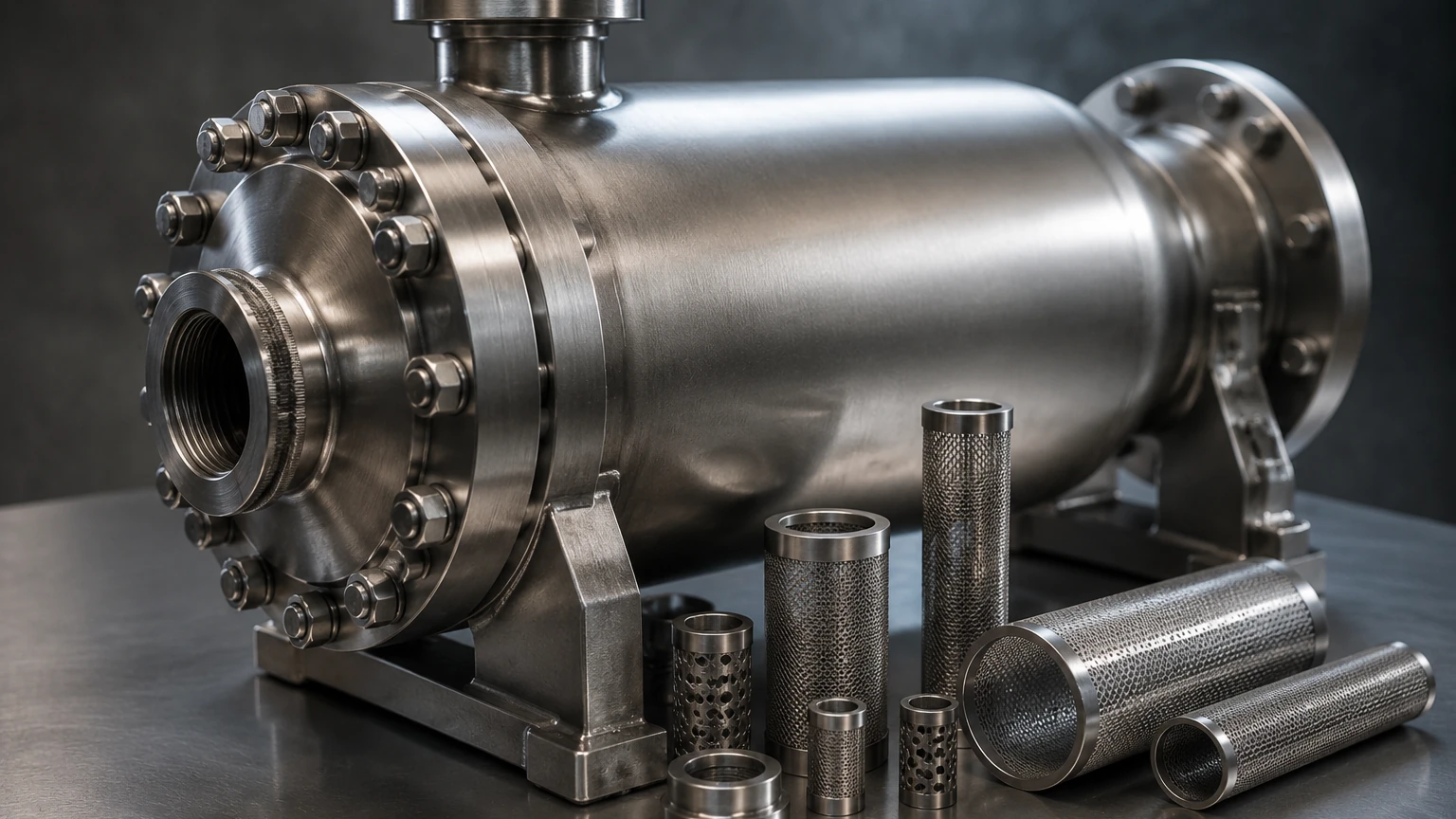
A reactor is rarely a standalone vessel; it is a part of a complex system that often requires the separation of catalysts, the removal of impurities, or the recovery of solid products. The filtration components used within or immediately following hastelloy reactors must match the vessel's durability and chemical compatibility.
In many catalytic reactions, the catalyst is a high-value precious metal. Efficient recovery is essential for the economic viability of the process. This requires precision-engineered wire mesh filters or sintered metal cartridges that can withstand the same corrosive environment as the reactor walls. If a filter fails due to chemical attack, it not only compromises the product purity but can also lead to catastrophic pump failure or downstream contamination.
When designing filtration for these environments, engineers must consider the "galvanic compatibility." Using a lower-grade stainless steel filter inside a Hastelloy reactor can lead to accelerated corrosion of the filter element due to the potential difference between the materials. Consequently, custom filtration solutions often utilize the same high-nickel alloys or specialized stainless steel grades to ensure system-wide integrity.
Engineering Considerations for Custom Filtration Components
Integrating filtration into hastelloy reactors involves more than just selecting a material. It requires a deep understanding of fluid dynamics, pressure differentials, and mechanical stress. Custom-manufactured filter cartridges and wire mesh components are often the preferred choice for these applications.
Filtration Accuracy and Micron Ratings
In pharmaceutical and fine chemical reactors, the required filtration accuracy can range from sub-micron levels to several hundred microns. The choice of weave—such as plain Dutch weave, twilled Dutch weave, or sintered multi-layer mesh—determines the particle retention efficiency and the flow capacity. Sintered mesh is particularly valued in reactor environments because the diffusion-bonding process locks the wires in place, preventing media migration even under high-pressure pulses.
Structural Integrity and Pressure Drop
Reactors often operate under significant pressure. Filtration elements must be designed to withstand high differential pressures (Delta P) without collapsing or deforming. This is achieved through the use of perforated inner cores and outer guards made from heavy-gauge materials. Engineers must calculate the maximum allowable pressure drop to determine the appropriate surface area for the filter, ensuring that the filtration process does not become a bottleneck in the production cycle.
Thermal Expansion
Hastelloy reactors frequently operate at elevated temperatures. Because different metals expand at different rates, the filtration assembly must account for thermal expansion to prevent seal failure or mechanical binding. Precision machining of end caps and the use of high-temperature gaskets or metal-to-metal seals are standard practices in high-temperature reactor filtration.
Performance Evaluation and Reliability in Harsh Environments
The reliability of a reactor system is measured by its uptime and the consistency of its output. In the context of filtration within hastelloy reactors, performance evaluation focuses on three primary metrics: retention efficiency, cleanability, and service life.
Retention Efficiency
This is the ability of the filter to remove particles of a specific size. In B2B industrial applications, this is often expressed as a Beta ratio. For critical reactor processes, absolute-rated filters are required to ensure that 99.9% of particles above the specified micron rating are captured. This is vital when the solids being filtered are either hazardous by-products or valuable catalysts.
Cleanability and Regenerability
Unlike disposable polymer filters, the metal filtration components used in Hastelloy environments are typically designed to be cleaned and reused. This is a significant factor in the total cost of ownership. Methods such as backpulsing (using gas or liquid to blow particles off the filter surface), ultrasonic cleaning, or chemical CIP (Clean-in-Place) cycles are used to restore the filter’s permeability. The filter media must be robust enough to withstand these cleaning processes repeatedly without losing its structural or filtration characteristics.
Service Life and Fatigue Resistance
Industrial reactors often run in batches or continuous cycles that involve pressure cycling. This can lead to mechanical fatigue in filtration components. High-quality manufacturing, including TIG (Tungsten Inert Gas) welding and plasma welding, ensures that the joints of the filter cartridges are as strong as the base material, extending the service life of the components and reducing the frequency of replacements.
Maintenance and Replacement Cycles for Reactor Filtration
Even the most robust Hastelloy reactors and their associated filtration systems require a structured maintenance program. For engineers, the goal is to move from reactive maintenance to predictive or scheduled maintenance to avoid unplanned downtime.
Monitoring Differential Pressure
The most effective way to monitor filter health is through differential pressure sensors. A gradual increase in Delta P indicates the accumulation of solids (cake building), while a sudden drop could indicate a breach in the filter media. By logging these trends, operators can determine the optimal time for a cleaning cycle or a complete filter replacement.
Inspection Protocols
During reactor turnarounds, filtration components should be visually and mechanically inspected. This includes checking for signs of erosion (common in high-velocity slurry lines), chemical pitting, and the integrity of seals. In some cases, bubble point testing is performed to verify that the micron rating of the filter has not been compromised by wear or damage.
Replacement Strategy
While Hastelloy and high-grade stainless steel components have long lifespans, they are not infinite. Purchasing teams should maintain a stock of critical filtration spares. Because these components are often custom-engineered for specific reactors, lead times can be significant. Partnering with a manufacturer that understands OEM specifications and can provide documented material certifications is essential for maintaining plant compliance and safety standards.
Selecting the Right Filtration Partner for Reactor Applications
When dealing with the complexities of hastelloy reactors, the choice of a filtration partner is as important as the choice of the reactor manufacturer. A professional manufacturer should offer more than just a product; they should provide engineering expertise that aligns with the specific demands of the chemical or pharmaceutical industry.
Key criteria for selection include:
* Material Traceability: Ensuring that every component, from the wire mesh to the end caps, is accompanied by Mill Test Reports (MTRs) to verify the alloy composition.
* Customization Capabilities: The ability to design filters that fit existing reactor housings or meet unique flow and pressure requirements.
* Technical Support: Access to engineers who can assist with filtration calculations, material selection, and troubleshooting performance issues.
* Quality Standards: Adherence to international quality management systems (such as ISO 9001) to ensure consistency across production batches.
By focusing on these technical and operational factors, engineers can ensure that their hastelloy reactors operate at peak efficiency, with filtration systems that provide the necessary protection and performance for even the most aggressive chemical processes. For more information on specialized filtration solutions and material options, visiting the Main Page can provide further technical insights into the capabilities of modern industrial filtration manufacturing.
