


Breathing Air Filter
In industrial environments where air quality is a matter of life safety, the breathing air filter stands as a critical line of defense. Unlike standard industrial compressed air filters designed to protect pneumatic tools or machinery, breathing air filtration systems are engineered to purify compressed air to a level safe for human consumption. This process involves the removal of a wide range of contaminants, including solid particulates, water aerosols, oil mists, and toxic gases such as carbon monoxide.
For engineers and safety managers, selecting the correct filtration components is not merely a technical choice but a regulatory necessity. This guide examines the technical architecture, material considerations, and engineering standards that define high-performance breathing air filtration, with a focus on the role of precision-engineered metal components in ensuring system reliability.
The Architecture of a Breathing Air Filter System
A functional breathing air filter is rarely a single component; rather, it is a multi-stage system designed to progressively eliminate contaminants. The complexity of these systems is dictated by the source of the air—typically a high-pressure or low-pressure compressor—and the specific environmental hazards present in the workspace.
Multi-Stage Purification
1. Particulate Pre-filtration: The first stage usually involves a high-efficiency particulate filter. This stage utilizes stainless steel wire mesh or pleated cartridges to capture larger debris and liquid water droplets. By removing these bulk contaminants early, the system protects more sensitive downstream stages from premature clogging.
2. Coalescing Filtration: This stage is designed to remove oil aerosols and sub-micron particles. Coalescing filters force the air through a dense matrix where small oil droplets collide and merge into larger drops, which then drain away.
3. Adsorption (Activated Carbon): To remove oil vapors and odors that can cause nausea or long-term health issues for the user, an activated carbon stage is employed. This is critical for ensuring the air is "taste-free" and odorless.
4. Catalytic Conversion: In environments where carbon monoxide (CO) is a risk, a catalyst stage (often using Hopcalite) is used to convert CO into carbon dioxide (CO2) at room temperature.
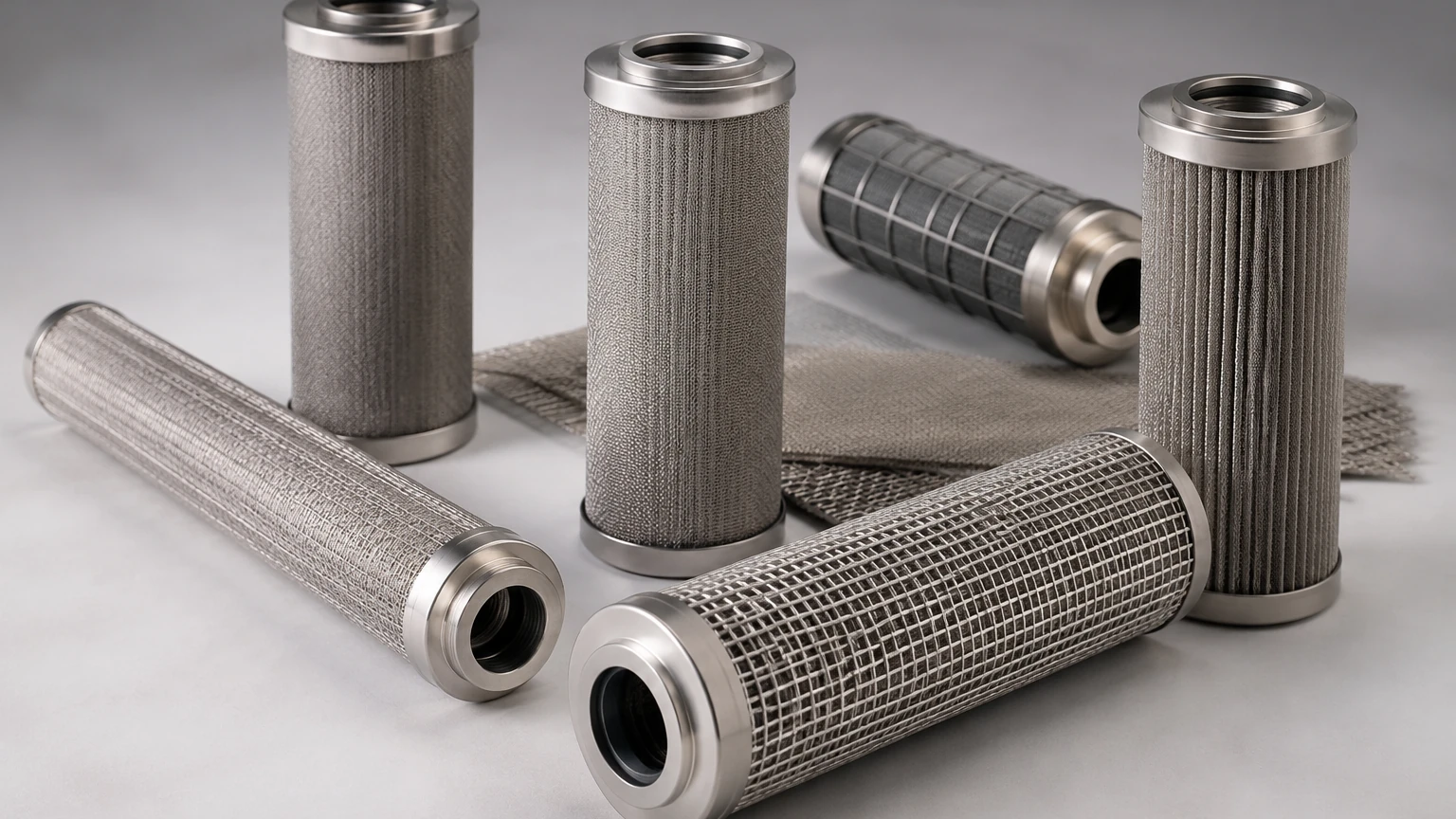
5. Final Particulate Filter: A final precision filter ensures that no desiccant dust or carbon fines from the previous stages enter the user's air supply. This is often where high-precision stainless steel filter cartridges are utilized due to their ability to maintain structural integrity under varying pressures.
For a comprehensive look at the various stainless steel components that support these stages, technical professionals can refer to the Main Page of Kaifil’s product directory.
Material Science in High-Pressure Filtration
The choice of materials in a breathing air filter is governed by the need for corrosion resistance, pressure handling, and chemical compatibility. In many industrial applications, particularly in marine, chemical, or pharmaceutical sectors, the environment itself can be as corrosive as the contaminants being filtered.
The Advantages of Stainless Steel
Stainless steel, particularly grades 304 and 316L, is the industry standard for high-performance filtration components.
* Corrosion Resistance: Breathing air systems often handle moist air before it reaches the desiccant stages. Stainless steel prevents the formation of rust, which could otherwise become a particulate contaminant itself.
* Structural Integrity: Breathing air is often stored or delivered at high pressures (up to 300 bar or more in SCBA systems). Sintered metal filters and reinforced wire mesh cartridges provide the mechanical strength necessary to withstand these pressures without deforming or bypassing.
* Thermal Stability: Industrial compressors generate significant heat. Metal filtration elements maintain their pore structure and filtration efficiency at temperatures that might compromise polymer-based filters.
* Cleanability: Unlike disposable synthetic filters, stainless steel mesh filters can often be cleaned and reused in certain pre-filtration stages, reducing the total cost of ownership and environmental impact.
Technical Specifications: Micron Ratings and Efficiency
When specifying a breathing air filter, engineers must balance filtration efficiency with pressure drop. A filter with excessively high resistance will force the compressor to work harder, increasing energy costs and heat generation, while a filter that is too coarse will fail to meet safety standards.
Understanding Micron Ratings
In the context of breathing air, filtration accuracy is typically measured in microns (µm).
* Primary Filtration: Usually ranges from 5 to 25 microns to catch bulk scale and dust.
* High-Efficiency Filtration: For breathing air, the final stages often require filtration levels as low as 0.01 microns to ensure the removal of the smallest oil mists and bacteria.
Pressure Drop (Delta P)
Pressure drop is the difference in pressure between the inlet and the outlet of the filter. A high-quality breathing air filter is designed to have a low initial pressure drop. As the filter accumulates contaminants, the pressure drop increases. Monitoring this "Delta P" is the primary method for determining when a filter element requires replacement. In safety-critical breathing air applications, maintaining a low pressure drop is essential to ensure a consistent flow of air to the respirator or hood.
Regulatory Compliance and Air Quality Standards
Breathing air is subject to strict international standards that define the maximum allowable concentrations of contaminants. Any breathing air filter integrated into an industrial system must help the output air meet these criteria.
Key Standards
* EN 12021: The European standard for "Respiratory protective devices – Compressed gases for breathing apparatus." It specifies limits for lubricants, water content, CO, CO2, and oxygen levels.
* ISO 8573-1: While primarily for general compressed air, this standard provides the classification system for contaminants that many breathing air systems use as a baseline.
* OSHA Grade D: In the United States, the Occupational Safety and Health Administration (OSHA) requires that breathing air meet at least Grade D specifications, which limits carbon monoxide to 10 ppm and carbon dioxide to 1,000 ppm.
Engineering a system that consistently meets these standards requires precise control over the filtration media. This is why many manufacturers opt for custom-designed wire mesh and sintered components that can be certified to specific performance levels.
Maintenance, Monitoring, and Filter Life
The reliability of a breathing air filter is entirely dependent on its maintenance schedule. Because these filters are used in life-support capacities, the "run-to-failure" model is inapplicable.
Replacement Indicators
1. Differential Pressure Gauges: These are the most common indicators. When the gauge reaches a red zone (typically between 5-10 psi drop), the element must be changed.
2. Air Quality Monitors: Real-time sensors for CO and moisture are often integrated into the filtration manifold. If moisture levels rise, it indicates that the desiccant or filter media is saturated.
3. Scheduled Intervals: Many facilities mandate filter changes every 3 to 6 months, regardless of the pressure drop, to prevent the risk of biological growth or chemical breakthrough in the adsorption stages.
For engineers designing these systems, selecting durable internal components is vital. Using high-quality stainless steel cartridges ensures that the housing and support structures do not become the weak point of the maintenance cycle.
Custom Engineering and OEM Capabilities
Every industrial application has unique constraints, whether it is the physical footprint of the filtration unit, the extreme pressure of the system, or the specific chemical nature of the ambient air. Standard off-the-shelf solutions may not always suffice for specialized equipment manufacturers.
Tailored Filtration Solutions
Customization in breathing air filtration often involves:
* Bespoke Micron Ratings: Engineering wire mesh with specific weave patterns to achieve exact filtration targets.
* Custom Dimensions: Designing filter cartridges that fit into proprietary housings or compact portable breathing air units.
* Material Upgrades: Utilizing exotic alloys for filters used in highly acidic or offshore environments where standard 304 stainless steel might fail.
As a professional manufacturer, Kaifil specializes in these types of custom stainless steel filtration solutions. By working closely with OEM partners, Kaifil develops precision metal components that serve as the backbone of reliable breathing air systems across various industries, from pharmaceutical cleanrooms to heavy chemical processing plants.
Conclusion: Prioritizing Precision in Breathing Air
The selection of a breathing air filter is a decision that impacts both operational efficiency and human safety. By understanding the multi-stage nature of air purification, the importance of material selection, and the necessity of adhering to international standards, engineers can specify systems that provide long-term reliability. Stainless steel components, known for their durability and precision, remain the preferred choice for the demanding environments where breathing air is required.
When evaluating filtration components for your next project, consider the technical expertise and manufacturing capabilities required to produce high-performance elements. For more information on custom wire mesh and filter cartridge options, you can explore the Main Page of our technical resource center to find the right solution for your industrial filtration needs.
