Ulpa
In the landscape of industrial contamination control, the requirement for ultra-clean environments has driven the evolution of air filtration technology beyond standard high-efficiency particulate air (HEPA) systems. The Ultra-Low Particulate Air (ULPA) filter represents the current pinnacle of mechanical air filtration, designed to capture sub-micron particles with extreme precision. For engineers and facility managers operating in semiconductor fabrication, pharmaceutical manufacturing, and aerospace assembly, understanding the technical nuances of ULPA filtration is essential for maintaining process integrity and regulatory compliance.
While HEPA filters are widely recognized for their ability to remove 99.97% of particles at 0.3 micrometers (µm), ULPA filters provide a significantly higher level of protection. By definition, an ULPA filter must remove at least 99.999% of dust, pollen, mold, bacteria, and any airborne particles with a size of 0.12 µm or larger. This leap in efficiency is not merely a marginal improvement; it represents a critical threshold for industries where even a single microscopic particle can cause catastrophic failure in high-density integrated circuits or compromise the sterility of a biological sample.
Technical Specifications: ULPA vs. HEPA Standards
To properly evaluate ULPA technology, technical professionals must look to the international standards that define performance metrics. The most common standards are EN 1822 and ISO 29463. These standards categorize filters based on their efficiency at the Most Penetrating Particle Size (MPPS).
For a standard HEPA filter (typically H13 or H14 under EN 1822), the efficiency ranges from 99.95% to 99.995%. In contrast, ULPA filters (classified as U15, U16, and U17) start at 99.9995% efficiency and can reach up to 99.999995%. The transition from HEPA to ULPA involves a shift in the focus of filtration from 0.3 µm particles to those in the 0.1 to 0.2 µm range.
This increased efficiency is achieved through a higher density of filter media, typically composed of borosilicate glass microfibers or expanded polytetrafluoroethylene (ePTFE) membranes. The tighter weave and smaller fiber diameters increase the probability of particle capture but also introduce specific engineering challenges, most notably regarding airflow resistance and system pressure requirements.
The Physics of Particle Capture in ULPA Media
Understanding how an ULPA filter functions requires a look at the three primary mechanisms of mechanical filtration: diffusion, interception, and inertial impaction.
1. Diffusion: This mechanism affects the smallest particles (typically below 0.1 µm). These particles do not follow the streamlines of the airflow but instead move in a random, Brownian motion due to collisions with gas molecules. This erratic path increases the likelihood that they will strike and adhere to a filter fiber.
2. Interception: This occurs when a particle following a streamline of air comes within one particle radius of a fiber and is captured. This is the primary mechanism for mid-sized particles.
3. Inertial Impaction: Larger, heavier particles possess enough inertia that they cannot adjust to the rapid changes in airflow direction around a fiber. Instead, they continue on a straight path and collide directly with the fiber.
ULPA filters are engineered to optimize the intersection of these three mechanisms. Because ULPA media is denser than HEPA media, the "gap" in the MPPS range is significantly narrowed, ensuring that even the most elusive particles are trapped within the media matrix.
Engineering Considerations for ULPA System Integration
Integrating ULPA filtration into an industrial HVAC or cleanroom system requires more than simply swapping out a HEPA filter. The increased density of ULPA media results in a higher initial pressure drop. For example, while a HEPA filter might have an initial resistance of 250 Pascals (Pa), an ULPA filter of the same dimensions could start at 300 to 450 Pa.
This higher resistance has several implications for system design:
* Fan Power and Energy Consumption: To maintain the required air change rates (ACR) and laminar flow velocities (typically 0.45 m/s or 90 fpm), fans must work harder to overcome the resistance of the ULPA media. This leads to higher energy costs and may necessitate the use of larger, more powerful motor-blower units.
* Structural Integrity of Housings: The increased pressure differential places greater mechanical stress on the filter frames and the housings. If the housing is not precisely manufactured, the higher pressure can force air through bypass routes—gaps between the filter and the frame—rendering the high-efficiency media useless. This is where the quality of stainless steel filtration components becomes paramount.
* Seal Integrity: ULPA systems often utilize gel seals rather than traditional gaskets. A gel seal provides a leak-proof, airtight connection by submerging a knife-edge flange into a channel filled with specialized silicone or polyurethane gel. This ensures that 100% of the air is forced through the ULPA media.
For engineers seeking to integrate high-efficiency filtration into robust industrial frameworks, consulting a Main Page for custom component manufacturing is a critical step in the design phase. Precision-engineered stainless steel housings and support structures are necessary to withstand the operational demands of ULPA-level filtration.
The Role of Pre-Filtration in ULPA Lifecycles
ULPA filters are expensive components, both in terms of initial procurement and the energy required to operate them. Because the media is so dense, it is highly susceptible to premature loading if exposed to large particulate matter. To protect the investment in ULPA technology, a multi-stage filtration strategy is mandatory.
In a typical industrial cleanroom, the air passes through several stages:
1. Pre-filters (G4 to M6): These capture large dust and debris.
2. Secondary Filters (F7 to F9): These remove the majority of atmospheric dust and protect the high-efficiency stages.
3. Final Stage (ULPA): This stage is reserved exclusively for the removal of sub-micron particles.
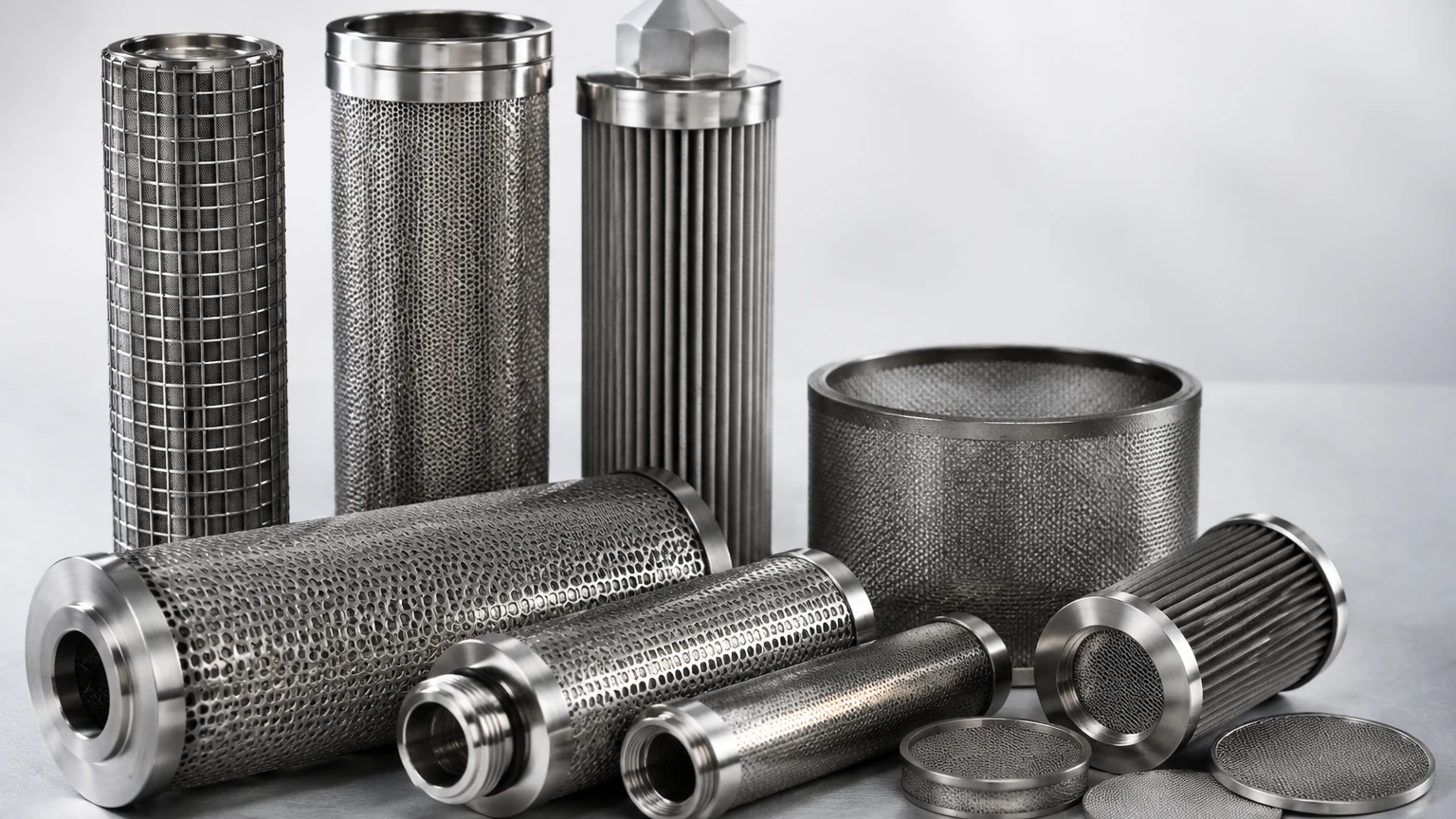
Using stainless steel wire mesh filters or custom metal filter cartridges as part of the pre-filtration or secondary stage can be highly effective in industrial settings. Metal filters offer durability and cleanability that synthetic or paper media cannot match, especially in environments involving high temperatures, moisture, or chemical vapors. By ensuring that only the smallest particles reach the ULPA stage, engineers can significantly extend the replacement cycle of the ULPA filters, thereby reducing the Total Cost of Ownership (TCO).
Performance Evaluation and Testing Protocols
Once installed, ULPA filters must be rigorously tested to ensure they are performing to their specified efficiency. The most common field test is the Dispersed Oil Particulate (DOP) or Polyalphaolefin (PAO) leak test. In this procedure, a known concentration of aerosolized oil particles is introduced upstream of the filter. A technician then uses an aerosol photometer or a discrete particle counter to scan the downstream face of the filter and the seals for any leaks.
In ULPA applications, where the tolerance for leakage is virtually zero, the sensitivity of the testing equipment is critical. Any detected leak exceeding 0.001% of the upstream concentration typically requires repair or replacement of the filter. Furthermore, airflow velocity uniformity must be measured across the face of the filter to ensure that laminar flow is maintained, as turbulence can re-entrain particles and compromise the clean zone.
Material Selection and Structural Integrity
In demanding industrial environments, the materials surrounding the ULPA media are as important as the media itself. Standard aluminum or galvanized steel frames may not be suitable for applications involving corrosive chemicals, high humidity, or stringent sterilization protocols (such as VHP – Vaporized Hydrogen Peroxide) used in the pharmaceutical industry.
Stainless steel (specifically Grades 304 and 316L) is the preferred material for ULPA filter frames and housings in these contexts. Stainless steel provides:
* Corrosion Resistance: Essential for chemical processing and pharmaceutical environments.
* Structural Rigidity: Prevents frame deformation under high pressure, ensuring the seal remains intact.
* Cleanability: Non-porous surfaces that do not harbor microbial growth and can withstand aggressive cleaning agents.
Kaifil specializes in providing these types of durable, precision-engineered filtration components. From custom stainless steel wire mesh that can serve as protective screens for ULPA media to specialized cartridges used in the broader filtration train, high-quality metal components ensure that the entire system operates at peak efficiency.
Customization and OEM Solutions
Not every industrial application fits into the standard dimensions of commercial ULPA modules. Custom machinery, specialized laboratory equipment, and unique cleanroom layouts often require bespoke filtration solutions.
When designing custom ULPA systems, engineers must confirm several factors before moving to production:
* Face Velocity Requirements: Will the system provide the necessary airflow without exceeding the media's maximum pressure drop?
* Space Constraints: Can the housing accommodate the necessary depth of the ULPA pleats while maintaining a small footprint?
* Environmental Compatibility: Are the gaskets, gels, and frame materials compatible with the process gases or cleaning chemicals used in the facility?
* Maintenance Access: How will the filters be accessed for testing and replacement without contaminating the clean zone?
Working with a manufacturer that understands the complexities of industrial filtration allows for the development of OEM components that meet these specific needs. Whether it is a custom-sized stainless steel frame or a specialized pre-filtration assembly, the goal is to create a seamless integration that protects the ULPA stage and ensures long-term performance.
Conclusion: The Strategic Value of ULPA Filtration
Implementing ULPA filtration is a significant technical and financial commitment. However, for industries where the cost of contamination—be it a ruined batch of pharmaceuticals or a failed semiconductor wafer—far outweighs the cost of the filtration system, ULPA is an indispensable tool.
By focusing on the engineering fundamentals of pressure drop, structural integrity, and multi-stage filtration, technical professionals can design systems that provide the highest levels of air purity while remaining cost-effective over their operational lifespan. The integration of precision metal components, such as those provided by Kaifil, ensures that the high-efficiency media is supported by a robust and reliable framework, capable of meeting the most demanding industrial standards. For more information on custom filtration components that support high-efficiency systems, visit the Main Page to explore technical capabilities and application-specific solutions.