


Industrial Filter System
In the landscape of modern process engineering, an industrial filter system is more than a secondary component; it is a critical safeguard for equipment longevity, product purity, and environmental compliance. From chemical processing and pharmaceutical manufacturing to hydraulic systems and food production, the efficiency of a filtration setup directly impacts the bottom line. For engineers and procurement specialists, understanding the technical nuances of these systems—ranging from material science to fluid dynamics—is essential for optimizing operational uptime and reducing the total cost of ownership.
Kaifil, a professional manufacturer specializing in custom stainless steel filtration solutions, provides the engineering expertise required to navigate these complex requirements. By focusing on durable, precision-engineered metal components, the company supports industries where standard plastic or fabric filters fail to meet the demands of high temperature, high pressure, or corrosive environments.
Understanding the Architecture of an Industrial Filter System
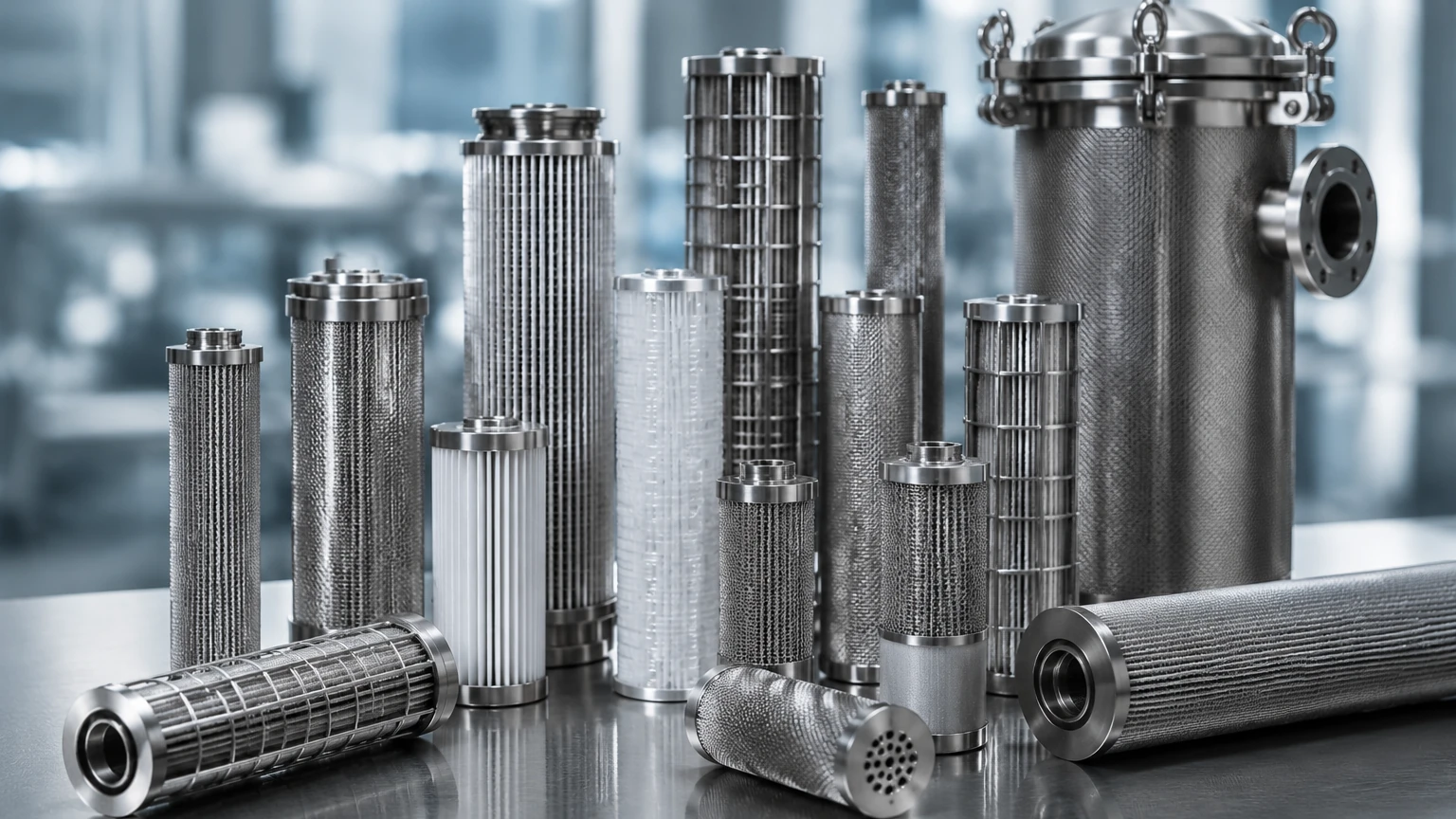
An industrial filter system is typically composed of three primary elements: the filter housing (or vessel), the filter media (the element), and the sealing mechanism. Each component must be engineered to work in harmony with the specific fluid or gas being processed.
The Filter Housing
The housing is the pressure vessel that contains the filter element. In heavy-duty industrial applications, these are almost exclusively constructed from stainless steel (SS304 or SS316L) to withstand mechanical stress and chemical erosion. The design of the housing must account for the inlet and outlet configurations, venting requirements, and the ease of access for element replacement or cleaning.
The Filter Media
The media is the functional heart of the system. In a stainless steel-based industrial filter system, this often takes the form of wire mesh, sintered metal felt, or sintered powder. Unlike disposable polymer filters, metal media offer structural integrity that prevents "media migration"—the shedding of filter material into the downstream flow—and allows for repeated cleaning and reuse.
Sealing and Gaskets
To prevent bypass, where unfiltered fluid escapes around the edges of the media, high-performance seals are required. Depending on the chemical compatibility and temperature of the process, materials such as Viton, EPDM, PTFE, or metallic O-rings are utilized to ensure a hermetic seal within the housing.
Material Engineering: Why Stainless Steel Dominates Industrial Filtration
When selecting a material for an industrial filter system, engineers must evaluate the operating environment. While synthetic fibers and plastics are suitable for low-temperature, non-corrosive water treatment, industrial processes often demand more robust materials. Stainless steel is the industry standard for several technical reasons:
1. Thermal Stability: Stainless steel filters can operate at temperatures exceeding 500°C (932°F), far beyond the melting points of most polymers. This is vital in steam filtration and high-temperature chemical reactions.
2. Corrosion Resistance: The addition of molybdenum in SS316L provides superior resistance to chlorides and acids, making it indispensable in the pharmaceutical and marine industries.
3. Mechanical Strength: Industrial systems often face high differential pressures. Metal mesh and sintered structures maintain their pore geometry under pressure, ensuring consistent filtration accuracy where softer materials might deform or burst.
4. Cleanability: One of the most significant advantages of a stainless steel industrial filter system is its ability to be cleaned via backwashing, ultrasonic baths, or chemical solvents, significantly extending the service life of the component compared to single-use cartridges.
Filtration Accuracy and Media Selection
Selecting the correct filtration rating is a balance between achieving the required purity and managing the pressure drop across the system. Filtration accuracy is generally categorized into two types: nominal and absolute.
Nominal vs. Absolute Ratings
A nominal rating indicates the ability of the filter to retain a major percentage (usually 60% to 90%) of particles of a specific size. This is often sufficient for pre-filtration stages. An absolute rating refers to the diameter of the largest hard spherical particle that will pass through the filter under specified test conditions. For critical applications, such as protecting high-pressure nozzles or ensuring pharmaceutical sterility, absolute-rated stainless steel mesh is mandatory.
Woven Wire Mesh vs. Sintered Metal
* Woven Wire Mesh: Ideal for surface filtration where particles are trapped on the plane of the media. It offers high flow rates and is easy to clean.
* Sintered Metal: Created by bonding multiple layers of mesh or metal fibers through heat and pressure without melting them. This creates a porous, high-strength structure capable of depth filtration, which provides a higher dirt-holding capacity and finer filtration levels (down to sub-micron ranges).
Designing for Flow Dynamics and Pressure Constraints
An improperly sized industrial filter system can lead to excessive "pressure drop" (delta P), which forces pumps to work harder, increasing energy consumption and potentially leading to system failure. Engineers must calculate the clean pressure drop and establish a maximum allowable pressure drop before the filter must be cleaned or replaced.
Viscosity and Flow Rate
The viscosity of the fluid is a primary driver of system design. High-viscosity liquids, such as polymers or heavy oils, require a larger filtration surface area to maintain a reasonable flow rate without exceeding pressure limits. By utilizing pleated stainless steel cartridges, manufacturers can significantly increase the surface area within the same housing footprint, optimizing the flow-to-space ratio.
Particle Loading
The concentration and nature of the contaminants (hard particles vs. deformable gels) dictate the choice between surface and depth filtration. If the particle load is high, a multi-stage industrial filter system—incorporating a coarse pre-filter followed by a fine polisher—is often the most cost-effective approach to prevent the fine filter from clogging prematurely.
Maintenance and Reusability in High-Performance Systems
In a B2B manufacturing context, downtime is the single greatest hidden cost. A well-designed industrial filter system facilitates rapid maintenance. For reusable stainless steel elements, several cleaning protocols are standard:
* Backpulsing/Backwashing: Reversing the flow of the fluid to dislodge accumulated cake from the surface of the filter. This can often be automated within the system.
* Ultrasonic Cleaning: Using high-frequency sound waves in a cleaning solution to remove fine particles embedded deep within sintered media.
* Chemical Cleaning (CIP): Utilizing acids, alkalis, or solvents to dissolve organic or inorganic deposits without disassembling the filter housing.
Because stainless steel filters can be restored to near-original differential pressure levels, they represent a sustainable choice that reduces the waste stream associated with disposable filters.
Strategic Procurement: Evaluating Total Cost of Ownership
When evaluating an industrial filter system, the initial purchase price is only one part of the equation. Procurement teams should work closely with engineers to assess the Total Cost of Ownership (TCO), which includes:
1. Replacement Frequency: How often must the media be replaced? (High for disposables, low for stainless steel).
2. Labor Costs: The time required for technicians to change out filters.
3. Disposal Costs: The expense of treating and disposing of contaminated filter elements, especially in hazardous chemical applications.
4. Energy Consumption: The cost of power required to overcome the pressure drop of a clogged or undersized filter.
By partnering with an experienced manufacturer like Kaifil, companies can access customized filtration components tailored to their specific flow rates and chemical environments. Customization ensures that the filter housing and elements are not "over-engineered" (leading to unnecessary costs) or "under-engineered" (leading to frequent failures). For more information on tailored filtration components, you can visit the Main Page to review product options and application support.
Conclusion
The implementation of a robust industrial filter system is a foundational requirement for modern industrial efficiency. By prioritizing high-quality materials like stainless steel and focusing on precise engineering specifications—such as micron ratings, pressure tolerances, and cleanability—manufacturers can ensure consistent product quality and protect their most valuable machinery. Whether the application involves delicate food processing or rigorous hydraulic power, the right filtration strategy transforms a simple utility into a competitive advantage.
