


Oil Filter Lube
In industrial filtration, the integrity of a system often depends on the smallest details of the installation process. One such detail is the application of oil filter lube—the practice of lubricating the sealing gasket or O-ring of a filter before it is mounted onto a housing or baseplate. While frequently associated with automotive maintenance, the technical requirements for lubrication in industrial, hydraulic, and chemical processing environments are significantly more complex. For engineers and maintenance professionals, understanding the mechanical and chemical interactions involved in filter sealing is essential for preventing leaks, ensuring ease of maintenance, and protecting high-value equipment.
Industrial filtration systems, particularly those utilizing stainless steel components or high-pressure hydraulic fluids, operate under conditions that demand precise sealing. Whether a system uses a spin-on canister or a heavy-duty stainless steel cartridge, the interface between the filter and the housing must remain airtight and fluid-tight throughout thousands of pressure cycles. Proper lubrication of the seal is the primary defense against installation-related failures.
The Role of Lubrication in Industrial Filtration Systems
The primary purpose of applying oil filter lube to a gasket is to reduce friction during the installation process. When a filter is threaded onto a mounting head, the gasket eventually makes contact with the metal baseplate. As the filter is tightened to its final torque specification, the gasket must slide against the metal surface to achieve the necessary compression. Without adequate lubrication, the friction between the dry elastomer and the metal surface can cause several mechanical issues.
First, a dry gasket is prone to "bunching" or "rolling." Instead of sliding smoothly into its seated position, the friction causes the rubber or synthetic material to bind and twist. This leads to uneven compression, which creates micro-gaps where high-pressure fluid can eventually bypass the seal. Second, friction increases the torque required to reach the seating position, which can lead to false torque readings. An installer may believe the filter is tight because the resistance is high, when in reality, the gasket has not yet reached the required depth of compression.
In industrial applications where Main Page solutions are utilized for high-viscosity fluids or chemical processing, the seal must also withstand thermal expansion and contraction. A lubricated seal allows the gasket to shift slightly as temperatures fluctuate without tearing or losing its seat.
Engineering Considerations for Gasket Lubrication
When selecting or applying oil filter lube, engineers must consider the mechanical properties of the seal and the environment in which it operates. The lubrication serves as a temporary assembly aid, but its chemical interaction with the gasket material has long-term implications.
Friction Coefficients and Sealing Performance
Elastomers like Nitrile (NBR) or Viton (FKM) have relatively high coefficients of friction when dry. In a B2B context, where filters may be installed in hard-to-reach manifolds or large-scale hydraulic power units, ensuring a smooth glide is critical for consistent sealing. Lubrication lowers the friction coefficient, allowing the gasket to deform predictably under axial load. This predictable deformation ensures that the internal surface area of the gasket remains in contact with the sealing flange, providing a robust barrier against hydrostatic pressure.
Compression Set and Seal Memory
Industrial filters are often designed for long service intervals. Over months of operation, heat and pressure can cause a gasket to take a "set," meaning it loses its ability to return to its original shape. If a gasket was installed dry and twisted, the compression set will lock that twist into place. When the system undergoes a pressure spike or a cold start, the unevenly set gasket is much more likely to fail than one that was installed flat and lubricated.
Material Compatibility and Chemical Resistance
One of the most critical aspects of industrial oil filter lube is chemical compatibility. Using the wrong lubricant can lead to the degradation of the sealing element, resulting in catastrophic system failure. In many industrial environments, the lubricant used on the gasket should be the same fluid that the system is filtering, or a compatible synthetic grease.
Elastomer Compatibility
Common gasket materials used in stainless steel filtration include:
* Buna-N (Nitrile): Highly compatible with petroleum-based oils but can be damaged by certain synthetic esters or high temperatures.
* Viton (FKM): Preferred for high-temperature and chemical applications. It requires specific fluorinated lubricants if the process fluid is not suitable for lubrication.
* EPDM: Often used in water treatment or food and beverage applications. EPDM is highly sensitive to petroleum; using a standard mineral oil as a filter lube on an EPDM gasket will cause it to swell and disintegrate.
Stainless Steel and Thread Galling
For systems utilizing stainless steel filter housings and cartridges, such as those manufactured by Kaifil, another factor comes into play: thread galling. When two stainless steel surfaces are rubbed together under pressure, they can cold-weld, making it nearly impossible to remove the filter later. Applying a small amount of oil filter lube or a specialized anti-seize compound to the threads (in addition to the gasket) is a standard engineering practice to prevent this destructive phenomenon.
Best Practices for Applying Oil Filter Lube
To ensure optimal performance in demanding industrial environments, maintenance teams should follow a standardized protocol for filter installation. This process goes beyond simply "wetting" the gasket.
1. Clean the Sealing Surface: Before installation, the mounting baseplate must be wiped clean of old oil, debris, and fragments of the previous gasket. Any particulate matter trapped under the new seal will create a leak path.
2. Inspect the New Gasket: Ensure the gasket is properly seated in its groove on the filter. Check for nicks, cuts, or manufacturing defects.
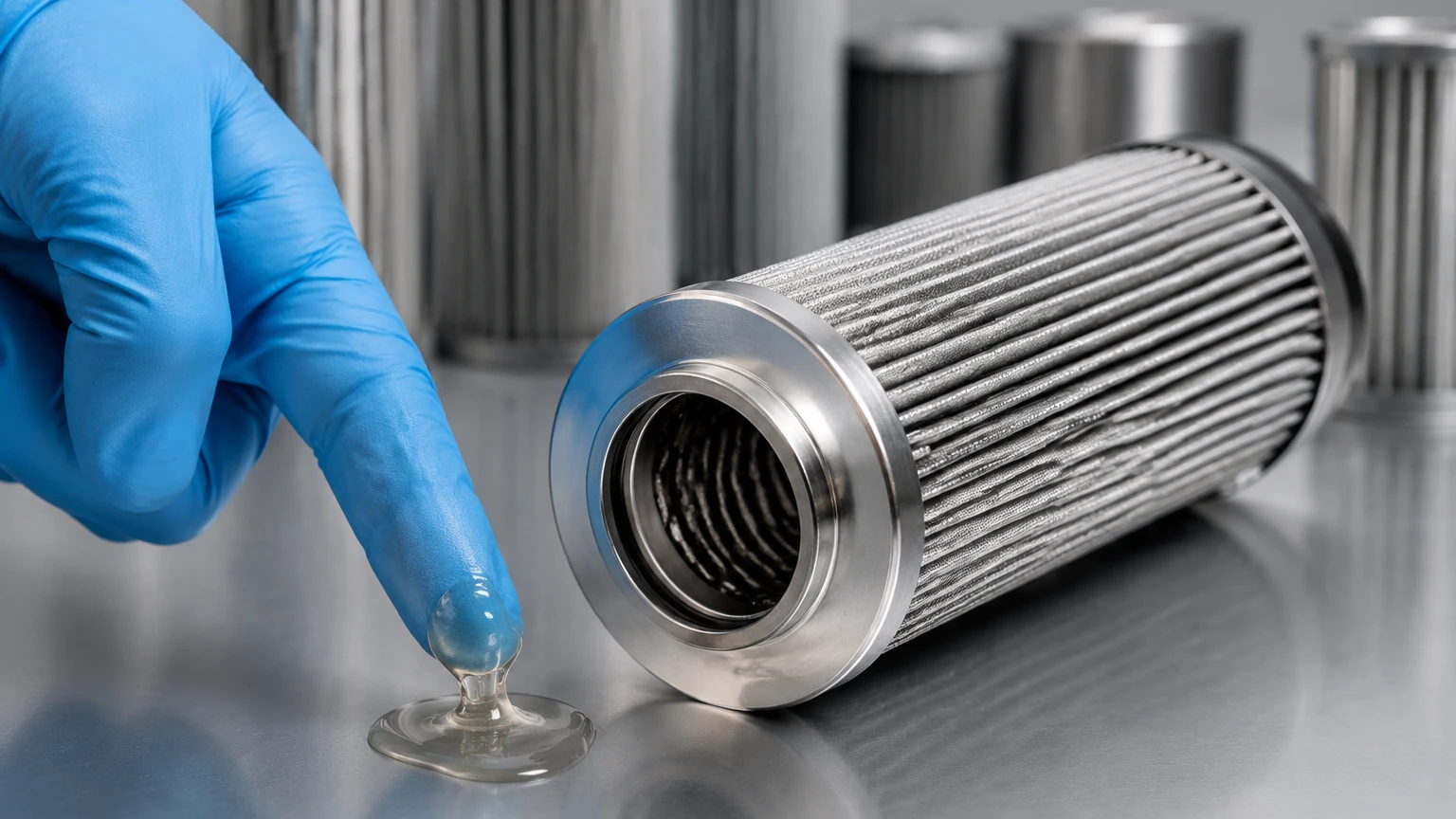
3. Apply a Uniform Film: Using a clean finger or a lint-free applicator, apply a thin, uniform film of the specified oil filter lube to the entire exposed surface of the gasket. It is not necessary to soak the gasket; a light coating is sufficient to reduce friction.
4. Lubricate the Threads: Especially in stainless steel systems, a light coating of lubricant on the threads helps ensure smooth engagement and prevents galling.
5. Hand-Tighten and Torque: Follow the manufacturer’s specifications. Most industrial filters require the gasket to make contact, followed by a specific number of turns (e.g., 3/4 turn or 1 full turn) to achieve the correct compression. Relying solely on hand strength is often insufficient for high-pressure industrial applications.
Impact on Maintenance Cycles and Total Cost of Ownership (TCO)
The use of proper oil filter lube has a direct impact on the Total Cost of Ownership of industrial equipment. While the lubricant itself is a negligible expense, its absence can lead to significant costs.
Prevention of "Dry Starts"
In some systems, pre-filling the filter with oil (and using that oil to lube the gasket) helps prevent a dry start. A dry start occurs when the pump must fill the empty filter volume before oil reaches the critical bearings or hydraulic actuators. By ensuring the filter is properly sealed and primed, the risk of component wear during the first few seconds of operation is minimized.
Ease of Removal and Reduced Downtime
A common problem in industrial maintenance is the "stuck filter." If a gasket was installed dry, the heat of operation can cause it to bond to the metal baseplate. Removing such a filter often requires destructive methods, which can damage the housing or lead to debris falling into the clean side of the system. Properly lubricated gaskets release easily, significantly reducing the time required for routine filter changes and ensuring that maintenance windows are met.
Custom Stainless Steel Solutions for High-Performance Systems
At Kaifil, we understand that filtration is not just about the media, but the entire assembly's performance. Our custom stainless steel filtration solutions are engineered to meet the rigorous demands of chemical processing, pharmaceuticals, and hydraulic systems. When designing custom wire mesh filters or stainless steel cartridges, we pay close attention to the sealing interface.
Our products are designed to accommodate a variety of O-ring and gasket configurations, ensuring compatibility with the specific fluids and lubricants used in your facility. By providing precision-machined surfaces and high-quality stainless steel components, we help engineers achieve a reliable seal every time. For organizations looking to optimize their filtration processes, exploring our Main Page provides insights into our manufacturing capabilities and how we support complex OEM requirements.
Troubleshooting Common Filtration Sealing Issues
If a system experiences leaks despite the use of oil filter lube, engineers should investigate the following potential causes:
* Gasket Displacement: If the lubricant was too viscous or applied too heavily, it might have caused the gasket to slip out of its groove during high-torque installation.
* Chemical Swelling: If the lube was incompatible with the elastomer, the gasket may have swollen, leading to a loss of structural integrity.
* Over-Torquing: Excessive force can crush the gasket, causing it to split or "extrude" out of the sealing area. Lubrication makes it easier to over-torque, so adhering to rotation counts is vital.
* Surface Imperfections: Even with the best lube, a scratched or pitted baseplate will not seal. Regular inspection of the mounting hardware is necessary.
In conclusion, the application of oil filter lube is a fundamental technical requirement for industrial filtration. It ensures that the elastomeric seals perform as designed, protects threads from damage, and facilitates efficient maintenance. By combining proper installation techniques with high-quality filtration components from manufacturers like Kaifil, industrial operators can ensure the longevity and reliability of their critical fluid systems.
