


Johnsonwedgewire.com
In the landscape of industrial filtration, wedge wire technology represents a pinnacle of mechanical separation efficiency. For engineers and procurement specialists navigating resources like johnsonwedgewire.com, understanding the technical nuances of these components is critical for optimizing process performance. Wedge wire, characterized by its V-shaped profile wire and longitudinal support rods, offers a unique combination of structural strength and high open-area ratios that standard woven wire mesh often cannot match in high-pressure or high-viscosity applications.
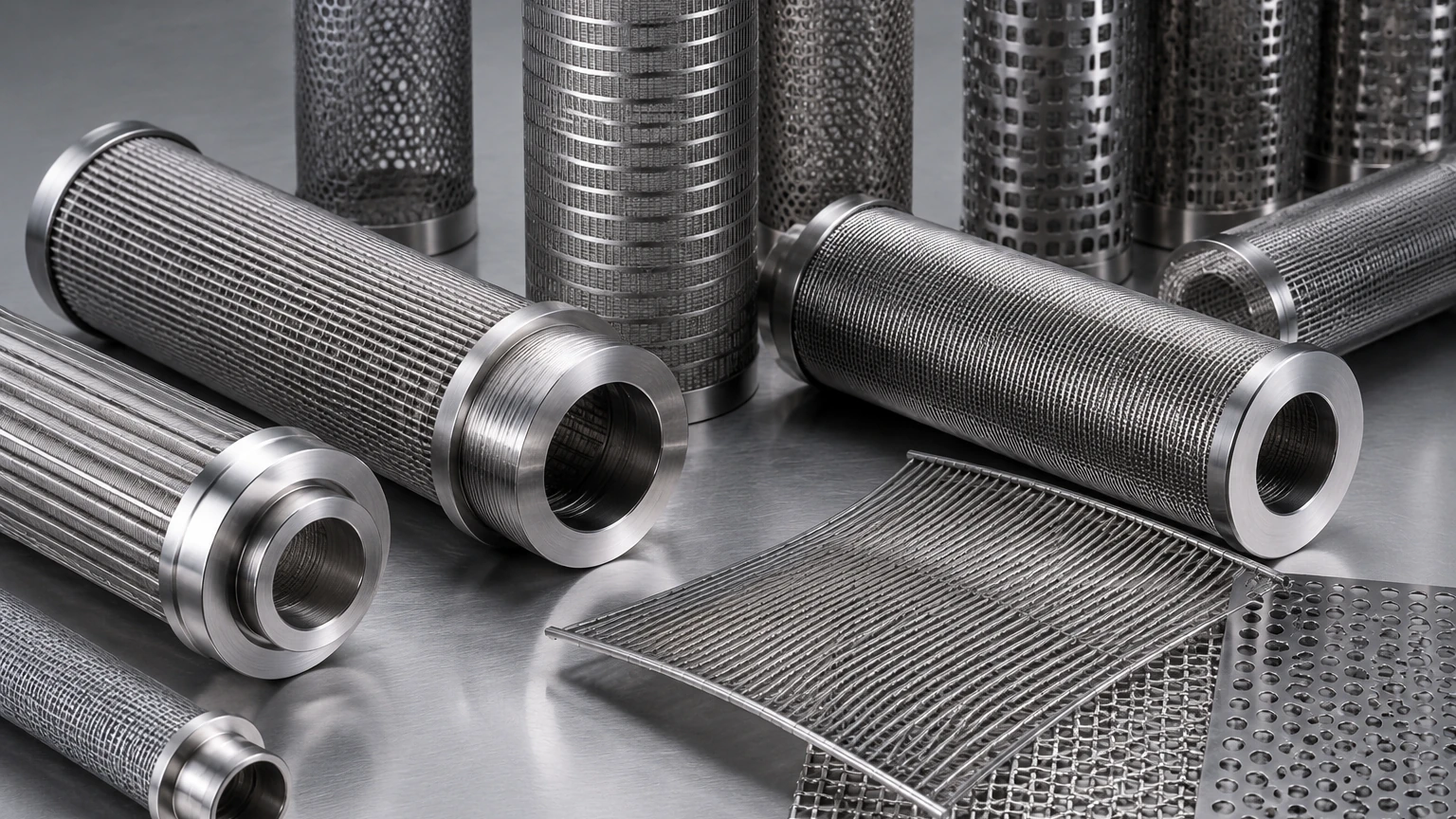
As a professional manufacturer of custom stainless steel filtration solutions, Kaifil recognizes that selecting the right filtration media involves more than just identifying a part number. It requires a deep dive into fluid dynamics, material science, and the specific mechanical stresses of the application environment. This guide explores the technical foundations of wedge wire screens, the evaluation criteria for industrial procurement, and the strategic advantages of customized filtration components.
Understanding Wedge Wire Technology and Industrial Standards
The fundamental advantage of wedge wire technology lies in its geometry. Unlike traditional square mesh, wedge wire utilizes a triangular or "wedge" shaped wire. This design creates a continuous slot that widens inwardly. From a technical perspective, this geometry ensures that particles only make contact at two points on the leading edges of the slot. If a particle passes through the initial opening, it is unlikely to become lodged deeper in the screen, significantly reducing the risk of blinding or clogging.
When researching solutions on platforms such as johnsonwedgewire.com, technical professionals prioritize the structural integrity of the screen. The wires are typically resistance-welded to support rods at every intersection, creating a robust, single-piece construction. This rigidity is essential in applications involving high differential pressures, such as deep-well water intake or high-flow hydraulic systems. Furthermore, the precision of the slot width—often measured in microns—determines the filtration rating. Maintaining these tolerances across large surface areas is a hallmark of high-quality manufacturing.
Evaluating Technical Specifications for Wedge Wire Screens
Selecting a filtration solution requires a rigorous assessment of several key specifications. Engineers must look beyond the basic dimensions to ensure the component will survive the intended lifecycle.
Slot Size and Open Area
The slot size is the most critical parameter for filtration accuracy. However, there is a direct trade-off between slot size and the total open area. A larger open area reduces the approach velocity of the fluid, which lowers the pressure drop across the screen and minimizes the potential for particle impingement. For precise applications, such as those found in the pharmaceutical or food and beverage industries, slot tolerances must be strictly controlled to ensure consistent product quality.
Material Selection and Corrosion Resistance
Stainless steel is the industry standard for wedge wire due to its mechanical properties and chemical resistance. Common grades include:
- Grade 304: Suitable for general industrial use where mild corrosion resistance is required.
- Grade 316L: The preferred choice for chemical processing and marine environments due to its superior resistance to pitting and crevice corrosion, especially in the presence of chlorides.
- Duplex Stainless Steels: Utilized in highly aggressive environments where both high strength and extreme corrosion resistance are mandatory.
Profile Wire and Support Rod Configuration
The choice of profile wire (the surface wire) and the support rod spacing determines the burst strength and collapse pressure of the filter element. In heavy-duty mining or petrochemical applications, larger support rods and tighter spacing are necessary to withstand the mechanical loads of heavy slurries.
Comparing Standardized vs. Custom Filtration Solutions
While industrial catalogs and websites like johnsonwedgewire.com provide an excellent baseline for standard sizes, many modern industrial processes require bespoke configurations. Standardized components often force engineers to compromise on flow rates or housing compatibility.
Customization, as provided by specialized manufacturers like Kaifil, allows for the integration of filtration media into existing infrastructure without the need for costly system redesigns. Customization options often include:
- Variable Slot Openings: Designing a single screen with different slot sizes to manage graduated filtration.
- Specific End Fittings: Machining custom flanges, threaded connections, or reinforced end caps to match proprietary housing designs.
- Reinforcement Wraps: Adding external or internal support cages for extreme pressure environments.
By focusing on the specific needs of the application, customized solutions can often achieve a lower total cost of ownership (TCO) by extending the interval between maintenance cycles and reducing the energy required to pump fluid through the system. For more information on tailored engineering support, you can Review product options and application support.
Critical Performance Factors in Demanding Applications
In sectors such as oil and gas, chemical processing, and large-scale water treatment, the performance of a wedge wire screen is measured by its reliability under stress. Several factors influence this performance:
Backwashing and Cleaning Efficiency
One of the primary reasons engineers choose wedge wire over other media is its compatibility with automated backwashing systems. The smooth surface and widening slots allow for the efficient release of filter cake during reverse flow. In systems where downtime is prohibitively expensive, the ability of a filter to self-clean effectively is a major operational advantage.
Flow Distribution and Turbulence
Non-uniform flow can lead to localized wear and premature failure of the filter media. Advanced filtration design involves calculating the flow distribution across the entire surface of the screen. High-velocity "hot spots" can cause erosion of the wire profiles, leading to an increase in slot size and a loss of filtration accuracy over time.
Mechanical Fatigue
In applications with pulsating flows or frequent pressure cycles, such as hydraulic return lines, mechanical fatigue becomes a concern. The quality of the resistance welds between the profile wire and the support rods is the determining factor in the screen's fatigue life. Poorly executed welds can fail under vibration, leading to catastrophic structural collapse.
Procurement and Quality Verification Guidelines
When sourcing industrial filters, the procurement team must establish a verification process to ensure the delivered product meets the engineering specifications. Information found on johnsonwedgewire.com or similar technical sites should be used to build a comprehensive Request for Quote (RFQ).
Key verification steps include:
1. Material Certification: Requesting Mill Test Reports (MTRs) to verify the chemical composition of the stainless steel.
2. Dimensional Inspection: Using optical comparators or feeler gauges to verify slot width accuracy across multiple points on the screen.
3. Pressure Testing: For filter cartridges and pressurized vessels, hydrostatic testing confirms the integrity of the welds and seals.
4. Surface Finish Requirements: In the food and pharmaceutical industries, the surface roughness (Ra) must be controlled to prevent bacterial growth and ensure clean-in-place (CIP) effectiveness.
Working with a manufacturer that provides transparent documentation and technical support is essential for mitigating the risks associated with industrial procurement.
Maintenance and Longevity of Stainless Steel Filters
The longevity of a stainless steel wedge wire filter is significantly higher than that of disposable polymer filters, but it is not infinite. A proactive maintenance schedule is required to maximize the return on investment.
Cleaning Protocols
Depending on the contaminant, cleaning may involve ultrasonic baths, chemical soaking, or high-pressure steam. It is vital to ensure that the cleaning agents used are compatible with the specific grade of stainless steel to avoid stress corrosion cracking.
Monitoring Differential Pressure
Installing differential pressure sensors upstream and downstream of the filter provides real-time data on the loading state of the screen. A sudden drop in differential pressure may indicate a breach in the filter media, while a steady increase that does not respond to backwashing suggests deep-seated fouling that requires intensive cleaning.
Inspection for Physical Damage
Regular visual inspections should look for signs of wire displacement, erosion, or mechanical impact. Even small gaps in a wedge wire screen can allow bypass, compromising the purity of the downstream fluid.
Conclusion: Strategic Selection for Industrial Success
Whether an engineer is consulting johnsonwedgewire.com for standard specifications or seeking a highly specialized OEM component, the goal remains the same: achieving reliable, efficient, and cost-effective filtration. Wedge wire technology offers a robust solution for the most challenging separation tasks, provided the material selection, slot geometry, and structural design are perfectly aligned with the application's demands.
As industrial processes become more complex and environmental regulations more stringent, the role of high-performance filtration continues to grow. By understanding the engineering principles behind these components and partnering with experienced manufacturers, organizations can ensure their systems operate at peak efficiency with minimal interruption. For those seeking to optimize their filtration processes with custom-engineered stainless steel solutions, visiting the Main Page of a dedicated manufacturer provides the technical resources and product depth necessary to make informed decisions.
