


Pleated Filter Manufacturers
In industrial filtration, the selection of a component is rarely about the part itself and more about the integrity of the entire process. Pleated filters represent a critical engineering solution for applications requiring high flow rates, low pressure drops, and extended service life. For engineers and procurement professionals, identifying competent pleated filter manufacturers involves more than comparing price lists; it requires a deep dive into material science, structural engineering, and manufacturing precision.
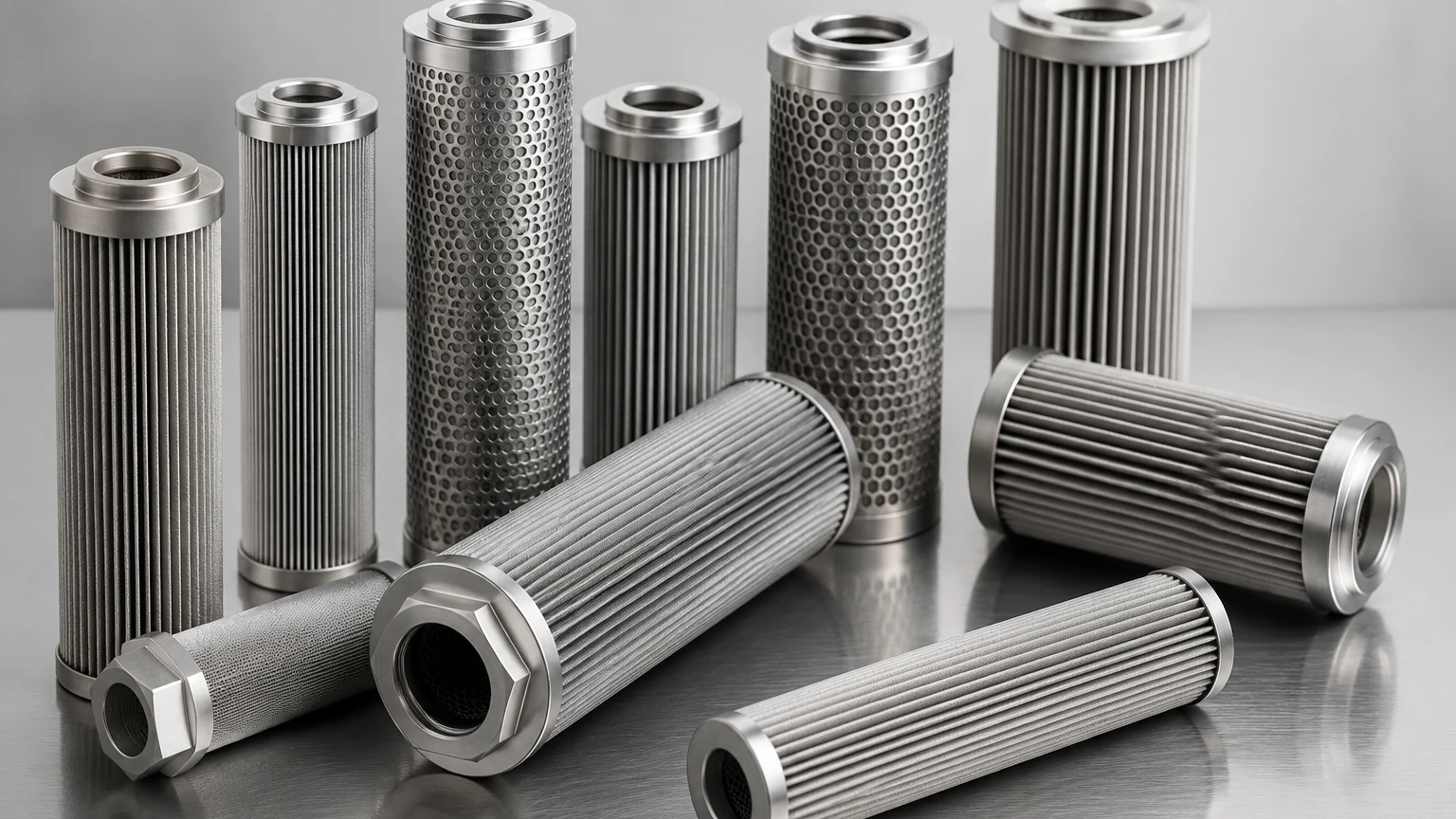
Industrial pleated filters are designed to maximize the effective filtration area within a confined footprint. By folding the filter media, manufacturers can provide significantly more surface area than a standard cylindrical or flat-sheet filter. This increased area directly translates to a higher dirt-holding capacity and a longer interval between maintenance cycles. However, the performance of these filters is heavily dependent on the manufacturer’s ability to maintain pleat uniformity, structural stability under pressure, and material purity.
The Engineering Logic Behind Pleated Filtration
The primary advantage of working with specialized pleated filter manufacturers is the optimization of the surface-area-to-volume ratio. In a hydraulic or chemical processing system, space is often at a premium. A pleated design allows for a compact cartridge that can handle the same particulate load as a much larger traditional filter.
From an engineering perspective, the "pleat pack" must be carefully calculated. If the pleats are too dense, the fluid cannot easily access the base of the fold, leading to "masking" where a portion of the filter media becomes redundant. Conversely, if the pleats are too sparse, the filter loses its surface area advantage and may suffer from pleat collapse under high differential pressure. Leading manufacturers utilize mechanical pleating equipment that ensures consistent pleat height and spacing, often incorporating support layers of coarser mesh to prevent the pleats from pinching shut during operation.
Material Selection and Chemical Compatibility
Material selection is the foundation of filtration performance. While many pleated filter manufacturers focus on polymer-based media, industrial applications often demand the durability of metal. Stainless steel pleated filters, particularly those using 304 or 316L grades, are the standard for high-temperature, high-pressure, or chemically aggressive environments.
When evaluating a manufacturer, it is essential to confirm their expertise in various media types:
* Stainless Steel Wire Mesh: Best for surface filtration and easy cleaning. It offers precise pore sizes and high mechanical strength.
* Sintered Metal Fiber Felt: Provides depth filtration characteristics with high porosity, allowing for excellent flow rates and high dirt-holding capacity in a metallic format.
* Support Layers: In high-pressure applications, the primary filtration media is often sandwiched between layers of coarser mesh to provide structural reinforcement without significantly impeding flow.
For technical teams, the Main Page of a manufacturer's site should provide clear data on chemical compatibility and temperature thresholds to ensure the filter will not degrade or leach contaminants into the process stream.
Evaluating Technical Capabilities of Pleated Filter Manufacturers
Not all pleated filter manufacturers possess the same level of technical rigor. In the B2B sector, reliability is verified through manufacturing standards and testing protocols. When vetting a potential partner, engineers should look for specific indicators of quality control.
Precision Welding and Assembly
One of the most common failure points in a pleated filter is the longitudinal seam or the bond between the pleat pack and the end caps. High-quality manufacturers utilize advanced welding techniques, such as TIG (Tungsten Inert Gas) welding or plasma welding, to create a seamless, leak-proof bond. This is particularly important in the food, beverage, and pharmaceutical industries, where adhesives or resins could introduce unwanted extractables.
Testing and Validation
Reliable manufacturers perform rigorous testing to validate their products. This includes:
* Bubble Point Test (ISO 2942): Used to verify the integrity of the filter and ensure there are no pores larger than the specified micron rating.
* Differential Pressure Testing: Determining the "clean" pressure drop and the point at which the filter reaches its terminal pressure drop.
* Multi-pass Testing (ISO 16889): Evaluating the filtration efficiency and dirt-holding capacity under simulated operating conditions.
Customization and OEM Integration
In many industrial settings, off-the-shelf filters are insufficient. Customization is where professional pleated filter manufacturers provide the most value. Whether it is a unique housing requirement, a specific micron rating, or a specialized end-cap configuration, the ability to produce custom components is vital.
Customization options typically include:
* End-Cap Configurations: Options such as DOE (Double Open End), 222, 226, or threaded connections to match existing filter housings.
* Micron Ratings: Precision tuning from 1 micron up to 200 microns or more, depending on whether the application is for fine polishing or coarse pre-filtration.
* Dimensions: Adjusting the length and diameter to fit legacy equipment or specialized high-flow housings.
For OEM clients, the manufacturer acts as an engineering partner, helping to design filtration components that integrate seamlessly into larger machinery or systems. This collaborative approach ensures that the filtration stage does not become a bottleneck in the overall system performance.
Total Cost of Ownership and Replacement Cycles
While the initial purchase price is a factor, the total cost of ownership (TCO) is a more accurate metric for industrial filtration. Pleated filter manufacturers who specialize in stainless steel solutions offer a significant TCO advantage through cleanability. Unlike disposable synthetic filters, stainless steel pleated cartridges can often be cleaned via ultrasonic baths, backwashing, or chemical cleaning and returned to service.
When calculating TCO, engineers must consider:
1. Service Life: How long the filter operates before reaching terminal pressure drop.
2. Downtime Costs: The labor and lost production time associated with filter changes.
3. Disposal Costs: The expense of disposing of contaminated single-use filters, which can be high in chemical or pharmaceutical applications.
4. Energy Consumption: A filter with a lower initial pressure drop requires less pump energy to maintain the required flow rate.
By choosing a manufacturer that prioritizes low-pressure-drop designs and high dirt-holding capacity, facilities can significantly reduce their annual filtration spend.
Critical Questions for Procurement and Engineering Teams
Before finalizing a partnership with pleated filter manufacturers, it is prudent to confirm several technical and operational details. These questions help bridge the gap between a sales quote and actual field performance:
* What is the absolute vs. nominal rating? Ensure the manufacturer clarifies whether their micron rating refers to a 99% or 99.9% efficiency (absolute) or a less stringent average (nominal).
* What is the maximum allowable differential pressure? Knowing the structural limit of the pleat pack prevents catastrophic failures in the field.
* Are material certificates available? For regulated industries, 3.1 material certificates are necessary to prove the origin and composition of the stainless steel used.
* What is the lead time for custom prototypes? For OEM projects, the speed of the R&D phase is often as important as the production capacity.
Conclusion
Selecting from the available pool of pleated filter manufacturers requires a focus on engineering integrity and application-specific knowledge. A pleated filter is not merely a commodity; it is a precision-engineered component that protects expensive downstream equipment and ensures the purity of the final product. By focusing on material quality, pleat geometry, and rigorous testing standards, purchasing teams can secure filtration solutions that offer both high performance and long-term cost-effectiveness. Whether the application involves hydraulic fluids, steam filtration, or aggressive chemical processing, the right manufacturing partner will provide the technical support and customization necessary to optimize the process.
