


Dust+collector+filter+bags
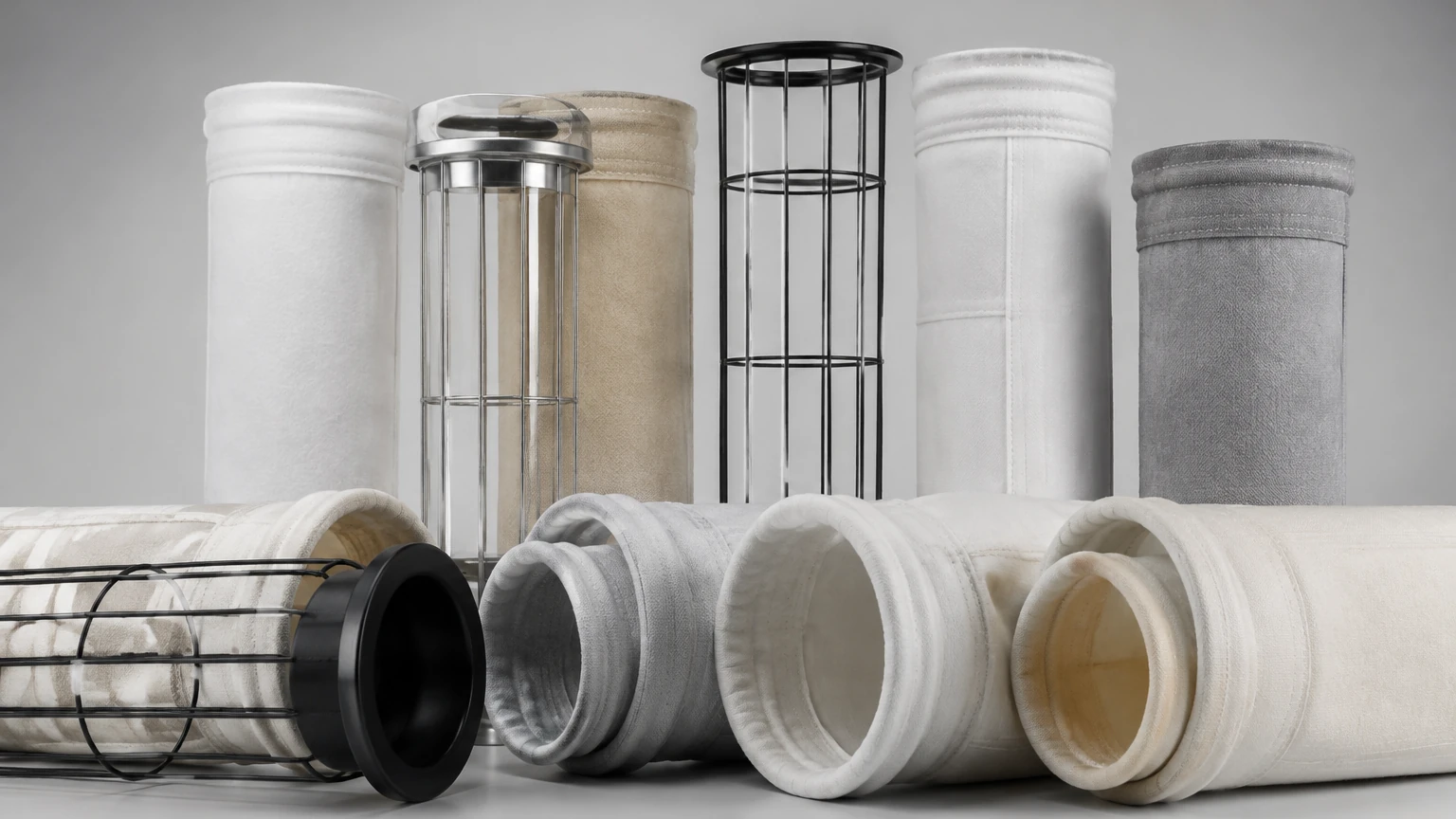
Industrial dust collection systems are essential for maintaining air quality, ensuring regulatory compliance, and protecting downstream equipment in manufacturing environments. At the heart of these systems are dust collector filter bags, which serve as the primary media for separating particulate matter from industrial gas streams. Selecting the appropriate filter bag involves a complex evaluation of gas chemistry, thermal conditions, and particle characteristics. For engineers and procurement professionals, understanding the technical nuances of fabric media and structural support is critical to optimizing filtration efficiency and extending the service life of the system.
Technical Fundamentals of Dust Collector Filter Bags
Dust collector filter bags operate within a baghouse—a large-scale industrial fabric filter. The performance of these bags is defined by their ability to capture dust while allowing air to pass through with minimal resistance. This balance is achieved through specific material selections and construction techniques tailored to the industrial application.
Fabric Construction: Felted vs. Woven Media
Most modern pulse-jet dust collectors utilize needle-punched felt. This non-woven media is created by mechanically interlocking fibers using barbed needles, resulting in a thick, three-dimensional matrix. Felted media provides high filtration efficiency because the dust is captured throughout the depth of the fabric rather than just on the surface. This structure allows for higher air-to-cloth ratios compared to woven materials.
Woven filter bags, often used in shaker or reverse-air systems, are constructed by weaving yarns in specific patterns (such as twill or sateen). While woven bags generally have lower permeability than felts, they offer high tensile strength and are often preferred in applications where the cleaning mechanism is less aggressive than a high-pressure pulse-jet.
Material Science and Chemical Compatibility
The choice of fiber is the most significant factor in determining a filter bag's resistance to temperature and chemical attack. Common industrial fibers include:
* Polyester: The most common material for ambient temperature applications (up to 275°F/135°C). It offers good dry heat resistance and excellent dimensional stability but is susceptible to hydrolysis in high-moisture environments.
* Polypropylene: Used primarily in low-temperature applications where chemical resistance to acids and alkalis is paramount. It is limited to temperatures below 190°F (90°C).
* PPS (Polyphenylene Sulfide): Often referred to by the brand name Ryton, PPS is ideal for coal-fired boilers and incinerators. It handles temperatures up to 375°F (190°C) and offers excellent resistance to acids and alkalis, though it is sensitive to high oxygen levels.
* Aramid (Nomex): High-temperature fibers capable of withstanding up to 400°F (204°C). Aramids are commonly used in the cement and asphalt industries due to their abrasion resistance and thermal stability.
* PTFE (Teflon): The gold standard for chemical resistance and high-temperature performance (up to 500°F/260°C). PTFE is often used as a membrane laminated to other fabrics to enhance surface filtration and dust cake release.
Engineering Selection Criteria for Industrial Filtration
Selecting dust collector filter bags is not a one-size-fits-all process. Engineers must conduct a thorough analysis of the operating environment to prevent premature bag failure and ensure the system meets emission standards.
Gas Stream Analysis
The chemical composition of the gas stream dictates the fiber requirements. For instance, if the gas contains high levels of sulfur oxides (SOx), the filter media must be resistant to acid dew point corrosion. Similarly, the presence of moisture can cause "blinding"—a condition where the dust turns into a mud-like paste on the bag surface, permanently blocking airflow. In such cases, oleophobic or hydrophobic treatments are necessary.
Temperature Fluctuations
It is vital to distinguish between continuous operating temperatures and excursion temperatures. While a material might survive a brief spike in temperature, prolonged exposure above its rated limit will lead to fiber degradation, loss of tensile strength, and eventual rupture. Engineers must also account for the acid dew point; if the gas temperature drops too low, acids may condense and destroy the fabric or the metal support cages.
Particle Characteristics
The size, shape, and abrasiveness of the dust particles influence both the media choice and the air-to-cloth ratio. Sub-micron particles may require a PTFE membrane to prevent "bleeding" (particles passing through the fabric). Conversely, highly abrasive dusts, such as silica or metal fines, require bags with reinforced wear strips at the bottom to prevent holes caused by the turbulence of the incoming gas.
The Role of Structural Support and Metal Components
A dust collector filter bag cannot function effectively without proper internal support. In pulse-jet systems, the bag is fitted over a metal filter cage. The interaction between the bag and the cage is a frequent point of failure if not engineered correctly.
Filter Cages and Wire Mesh Supports
Filter cages must provide rigid support to prevent the bag from collapsing during the filtration cycle. The number of vertical wires in a cage (typically 10, 12, or 20) affects the tension of the fabric. Too few wires can cause excessive flexing of the fabric during the pulse-cleaning cycle, leading to mechanical fatigue and "cuff" failure.
For demanding industrial environments, such as chemical processing or pharmaceutical manufacturing, stainless steel cages (Grade 304 or 316) are preferred over galvanized steel to prevent corrosion. In specialized applications where standard fabric bags are insufficient due to extreme heat or aggressive chemical environments, engineers often turn to precision metal filtration components. Main Page resources provide insights into how custom stainless steel filtration solutions, including wire mesh and sintered metal elements, offer a more durable alternative to traditional fabric media in high-stress applications.
Performance Monitoring and Maintenance
The efficiency of a dust collection system is typically monitored via the differential pressure (Delta P) across the filter bags. A healthy system maintains a stable pressure drop, indicating that the cleaning cycle is effectively removing the dust cake.
Pressure Drop and Pulse-Jet Cleaning
As the dust cake builds up on the exterior of the bag, the resistance to airflow increases. When the pressure drop reaches a predetermined setpoint, the system initiates a cleaning cycle—usually a burst of compressed air shot down the center of the bag. This pulse causes the bag to expand rapidly and then snap back against the cage, dislodging the dust cake into the hopper below.
If the pulse pressure is too high, it can drive dust particles deep into the fabric (interstitial blinding) or cause mechanical damage to the fibers. If it is too low, the dust cake will not be fully removed, leading to a permanent increase in operating pressure and reduced suction at the source.
Leak Detection and Replacement Cycles
Routine inspections are necessary to identify leaking bags. Even a single hole can significantly increase stack emissions. Fluorescent leak detection powders can be introduced into the system; these powders pass through any holes and accumulate on the clean side of the baghouse, where they can be identified using a UV light.
Replacement cycles vary by industry. In stable environments, bags may last three to five years. However, in abrasive or high-temperature chemical applications, the lifespan may be less than a year. Planning for these cycles is essential for budgeting and minimizing unscheduled downtime.
Customization and Procurement Considerations
When sourcing dust collector filter bags, technical specifications must be precise. Small deviations in dimensions can lead to bypass leakage or installation difficulties.
Dimensional Accuracy
The fit between the bag and the tubesheet (the metal plate that separates the clean and dirty sides of the baghouse) is critical. Most bags use a "snap-band" top, which requires a precise diameter to create a dust-tight seal. Procurement teams should confirm the exact thickness of the tubesheet and the diameter of the holes before ordering replacements.
Enhancing Performance with Coatings and Membranes
To improve the performance of standard needle felts, various surface treatments can be applied:
1. Singeing: Burning off loose surface fibers to improve dust cake release.
2. Glazing: Using high-pressure rollers to flatten the fibers, creating a smoother surface.
3. PTFE Membrane: Lamination of a microporous film that provides near-zero emissions and excellent cake release, though at a higher initial cost.
4. Anti-static (Epitropic) Fibers: Incorporating conductive fibers (such as carbon or stainless steel) into the felt to dissipate static charges, which is vital in applications involving explosive dusts.
Total Cost of Ownership in Industrial Filtration
While the initial purchase price of dust collector filter bags is a factor, the total cost of ownership (TCO) is a more accurate metric for B2B decision-making. TCO includes the cost of the bags, the labor for installation, the compressed air consumed during cleaning, and the energy required to pull air through the system.
A higher-quality bag with a PTFE membrane might cost more upfront but can lead to significant savings by allowing the system to operate at a lower pressure drop, thereby reducing fan energy consumption and extending the time between replacement cycles.
In many high-precision industries, the move toward customized metal filtration components reflects a desire for even greater durability. Manufacturers like Kaifil specialize in these types of high-performance solutions. By integrating advanced manufacturing capabilities with engineering expertise, Kaifil provides the stainless steel wire mesh and precision filter cartridges required for the most demanding industrial environments. For technical professionals looking to optimize their filtration processes beyond standard fabric bags, reviewing specialized metal options on the Main Page can provide a pathway to more reliable and cost-effective operations.
Conclusion
Dust collector filter bags are more than simple consumables; they are engineered components that must be matched to the specific rigors of an industrial process. By carefully considering material science, structural support through metal cages, and the long-term benefits of surface treatments, engineers can ensure their dust collection systems operate at peak efficiency. Whether utilizing traditional fabric media or transitioning to precision metal filtration solutions, the focus remains on achieving reliable, durable, and compliant air quality control.
