


Coalescer Filters
In industrial fluid processing, the separation of immiscible liquids or the removal of entrained moisture from gas streams is a critical requirement for protecting downstream equipment and ensuring product purity. Coalescer filters serve as the primary technology for these tasks, utilizing specialized media to aggregate fine droplets into larger masses that can be easily separated by gravity. Unlike standard particulate filters that simply trap solids, coalescer filters operate on the principles of fluid dynamics and surface chemistry to achieve phase separation.
For engineers and procurement teams, selecting the right coalescer system requires a deep understanding of fluid properties, flow velocities, and material compatibility. This guide explores the technical foundations of coalescing technology, its industrial applications, and the engineering considerations necessary for optimizing filtration performance.
The Mechanics of Coalescence in Industrial Systems
Coalescence is a multi-stage process designed to separate a discontinuous phase (the contaminant) from a continuous phase (the primary fluid). This is most commonly seen in liquid-liquid separation, such as removing water from fuel, or gas-liquid separation, such as removing oil mist from compressed air.
The Three-Stage Process
1. Particulate Pre-filtration: Before the coalescing process begins, solid contaminants must be removed. If solids reach the coalescing media, they can plug the pores and significantly reduce the service life of the element. Often, a dedicated particulate filter or a multi-stage coalescer element with an integrated pre-filter layer is utilized.
2. Droplet Growth (Coalescing): As the fluid passes through the depth-style media of the coalescer, small droplets (often sub-micron in size) are forced into a tortuous path. These droplets collide with the fibers of the media and with each other. Due to the surface tension and the specific wetting properties of the media, these tiny droplets merge into larger globules.
3. Gravity Separation: Once the droplets have grown to a sufficient size, they emerge on the downstream side of the media. Because of the density difference between the two phases, the larger droplets either sink to the bottom of the housing (if they are heavier, like water in oil) or rise to the top (if they are lighter). A secondary "separator" stage, often made of hydrophobic materials like Teflon-coated stainless steel mesh, may be used to block any remaining small droplets while allowing the continuous phase to pass through.
Material Selection and Engineering Specifications
The performance of coalescer filters is heavily dependent on the materials used in their construction. In demanding industrial environments, stainless steel is often the preferred choice for the structural components and, in some cases, the primary filtration media.
Stainless Steel and Precision Mesh
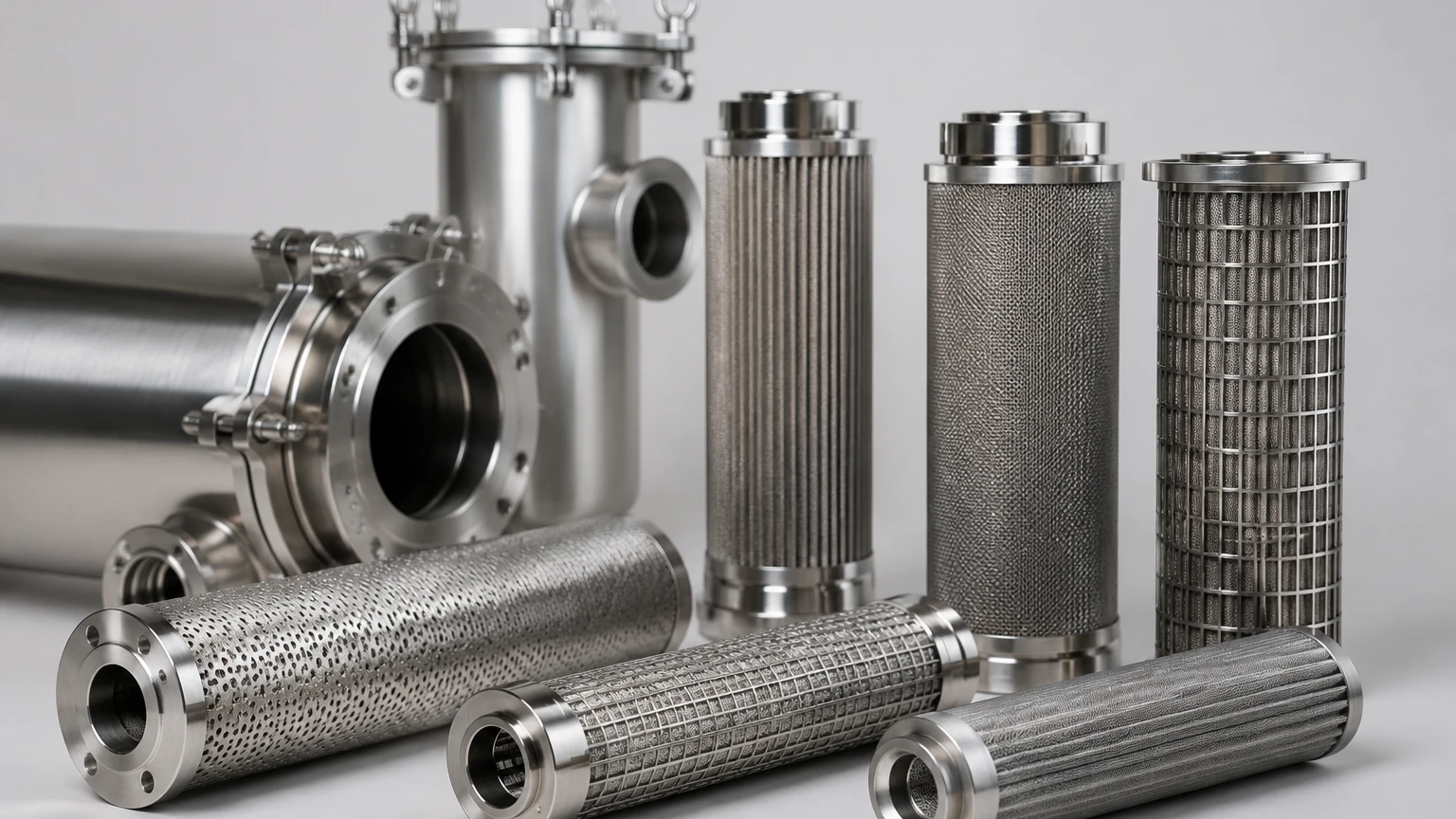
Stainless steel 304 and 316L are standard in chemical processing and pharmaceutical applications due to their exceptional corrosion resistance and ability to withstand high operating temperatures. In custom filtration solutions, stainless steel wire mesh can be engineered with specific weave patterns to provide the necessary surface area and mechanical strength required for high-pressure systems.
Media Wetting Properties
For effective coalescence, the media must be "wetted" by the discontinuous phase. In an oil-water separator, the media should ideally be hydrophilic (water-attracting) to encourage water droplets to adhere and grow. Conversely, the separator stage must be hydrophobic (water-repelling) to ensure only the clean oil passes through. Engineering these surface properties often involves a combination of material science and precision manufacturing to ensure the filter performs reliably under varying flow conditions.
Critical Applications Across Industrial Sectors
Coalescer filters are indispensable in industries where fluid purity directly impacts operational safety and efficiency. Their ability to handle high volumes of fluid while maintaining high separation efficiency makes them a staple in heavy industry.
Oil and Gas Refineries
In the petrochemical sector, water is a common contaminant in hydrocarbons. If not removed, water can cause corrosion in pipelines, damage turbine blades, and lead to microbial growth in storage tanks. Coalescer filters are used to treat diesel, jet fuel, and various process streams to meet stringent ASTM standards for moisture content.
Compressed Air and Gas Systems
Air compressors naturally generate oil mist and water vapor. If these contaminants enter a pneumatic system, they can cause valve failure and contaminate end-products. Coalescer filters are installed to remove these aerosols, ensuring the air is dry and oil-free for use in food packaging, electronics manufacturing, and laboratory environments.
Chemical and Pharmaceutical Processing
Maintaining the integrity of chemical reactions often requires the removal of trace moisture or secondary solvents. Stainless steel coalescer housings and elements are frequently specified here because they can be sterilized and are resistant to a wide range of aggressive solvents and acids.
Evaluating Filtration Efficiency and Performance Metrics
When specifying coalescer filters, engineers must look beyond simple micron ratings. Because coalescence is a dynamic process, several performance metrics must be evaluated to ensure the system meets the application's requirements.
* Separation Efficiency: This is typically expressed as the percentage of the discontinuous phase removed at a specific flow rate. For example, a high-performance jet fuel coalescer may be required to reduce water content from 5,000 ppm to less than 15 ppm.
* Pressure Drop (ΔP): As fluid passes through the coalescing media, a loss of pressure occurs. It is vital to balance high filtration efficiency with a manageable pressure drop to minimize energy consumption and prevent the collapse of the filter element.
* Flow Velocity: Coalescence is highly sensitive to velocity. If the flow is too fast, the droplets may be sheared back into smaller particles before they can grow and separate. Proper sizing of the filter housing is essential to maintain the optimal "face velocity" across the media.
* Saturation Levels: In gas-liquid applications, the media becomes "saturated" with liquid during operation. An engineered coalescer must be able to drain this liquid effectively to prevent re-entrainment, where the gas stream picks up the liquid again as it exits the filter.
Maintenance, Cleaning, and Replacement Cycles
The total cost of ownership (TCO) for a filtration system is largely determined by the frequency of element replacement and the ease of maintenance. While many synthetic coalescer elements are disposable, high-end industrial systems often utilize cleanable components where possible.
Monitoring Differential Pressure
Differential pressure gauges are the most reliable tool for determining when a coalescer filter requires attention. A sudden increase in ΔP usually indicates particulate loading in the pre-filter stage, while a decrease in separation efficiency without a change in ΔP might suggest media bypass or chemical degradation of the coalescing fibers.
Cleaning Stainless Steel Components
One of the primary advantages of stainless steel filtration components, such as those provided by specialized manufacturers, is their cleanability. Depending on the contaminant, stainless steel mesh can be cleaned using ultrasonic baths, back-flushing, or chemical solvents. This extends the life of the filter and reduces the environmental impact associated with disposable cartridges.
Strategic Procurement: Customization and OEM Support
Off-the-shelf filtration solutions often fail to meet the specific demands of specialized industrial processes. Factors such as unusual fluid viscosities, extreme temperatures, or space constraints in existing machinery necessitate a customized approach to filter design.
Engineering Considerations for Custom Filters
When working with a manufacturer like Kaifil, engineers should be prepared to provide detailed application data. This includes:
* Fluid Density and Viscosity: Both the continuous and discontinuous phases must be characterized at operating temperatures.
* Interfacial Tension: This determines how easily droplets will merge.
* Chemical Compatibility: Ensuring that gaskets, seals, and the media itself will not degrade when exposed to the process fluid.
* Regulatory Compliance: Many industries, such as food and beverage or pharmaceuticals, require materials that meet FDA or 3-A sanitary standards.
By collaborating with a manufacturer that understands the nuances of precision metal fabrication and industrial filtration principles, companies can develop OEM components that are tailored to their specific equipment. This not only improves filtration performance but also ensures that the replacement parts market remains controlled and consistent.
For those looking to optimize their industrial separation processes, it is essential to partner with a provider that offers both technical expertise and manufacturing flexibility. You can Review product options and application support on the Main Page to see how custom stainless steel solutions can be integrated into your existing infrastructure.
Conclusion
Coalescer filters represent a sophisticated intersection of mechanical engineering and fluid science. Whether the goal is to protect a multi-million dollar gas turbine from moisture or to ensure the purity of a pharmaceutical batch, the choice of coalescing technology is paramount. By focusing on high-quality materials like stainless steel and adhering to rigorous engineering standards for flow and efficiency, industrial operators can achieve reliable, long-term separation performance. Understanding the specific needs of your application—from the initial particulate pre-filtration to the final gravity separation—is the first step in selecting a system that delivers both technical excellence and economic value.
