


Best Sediment Filter Cartridge for Well Water
In industrial and large-scale commercial applications, well water serves as a primary resource for cooling, processing, and sanitation. However, raw groundwater is rarely free of contaminants. Suspended solids—ranging from coarse sand and grit to fine silt and precipitated minerals—can wreak havoc on downstream equipment. Selecting the best sediment filter cartridge for well water is not merely a matter of choosing a high micron rating; it requires a deep understanding of fluid dynamics, material science, and the specific geological profile of the water source.
For engineers and facility managers, the goal is to achieve a balance between filtration efficiency, flow rate maintenance, and total cost of ownership (TCO). While disposable polymer filters are common in residential settings, industrial environments often demand the durability and reusability of stainless steel filtration media. This guide explores the technical parameters and engineering considerations necessary to optimize sediment removal in well water systems.
The Role of Sediment Filtration in Industrial Well Water Systems
Sediment filtration acts as the first line of defense in any water treatment train. When drawing from a well, the water may contain various types of particulate matter, including inorganic sand, clay, and silt, as well as organic debris or oxidized metals like iron and manganese. If these particles are not effectively removed, they lead to several systemic failures:
1. Mechanical Wear: Abrasive particles like sand can erode pump impellers, valve seats, and seals, leading to premature mechanical failure and increased maintenance downtime.
2. Fouling of Downstream Membranes: In systems utilizing Reverse Osmosis (RO) or Ultrafiltration (UF), even small amounts of silt can cause rapid membrane fouling, necessitating frequent chemical cleanings and reducing membrane lifespan.
3. Heat Exchanger Inefficiency: Sediment accumulation within heat exchanger plates or tubes creates an insulating layer that significantly reduces thermal transfer efficiency and can lead to localized corrosion.
4. Product Contamination: In industries such as food and beverage or pharmaceuticals, any particulate carryover can compromise batch quality and regulatory compliance.
Identifying the best sediment filter cartridge for well water involves analyzing the Particle Size Distribution (PSD) of the source water to ensure the filter can handle the specific solids loading of the site.
Key Performance Indicators for Well Water Cartridges
When evaluating filtration components, engineers must look beyond marketing claims and focus on quantifiable performance metrics. The following indicators are critical for selecting a cartridge that performs reliably under industrial loads.
Micron Rating: Absolute vs. Nominal
A nominal micron rating indicates the filter's ability to retain a major percentage of particles of a certain size (typically 60% to 80%). In contrast, an absolute rating implies that 99.9% of particles at that size or larger will be captured. For well water with consistent sand issues, a nominal filter may suffice for pre-filtration. However, if the goal is to protect sensitive downstream components, an absolute-rated stainless steel mesh filter is often the superior choice.
Flow Velocity and Pressure Drop (ΔP)
Every filter cartridge introduces a degree of resistance to the flow. The initial pressure drop across a clean filter should be minimized to conserve pumping energy. As sediment builds up on the filter surface, the differential pressure increases. The best sediment filter cartridge for well water is one that provides a high effective filtration area, allowing for higher flow velocities without reaching the terminal pressure drop too quickly.
Dirt Holding Capacity
This refers to the total mass of contaminants a filter can retain before it must be cleaned or replaced. Depth filters (like melt-blown polypropylene) have high dirt-holding capacities but are disposable. Surface filters (like stainless steel wire mesh) have lower initial holding capacities but can be cleaned and returned to service indefinitely, making them more suitable for high-sediment well water where replacement costs would otherwise be prohibitive.
Material Selection: Stainless Steel vs. Polymer Cartridges
The choice of material is perhaps the most significant factor in determining the longevity of a filtration system. For well water applications, the primary contenders are synthetic polymers and stainless steel alloys.
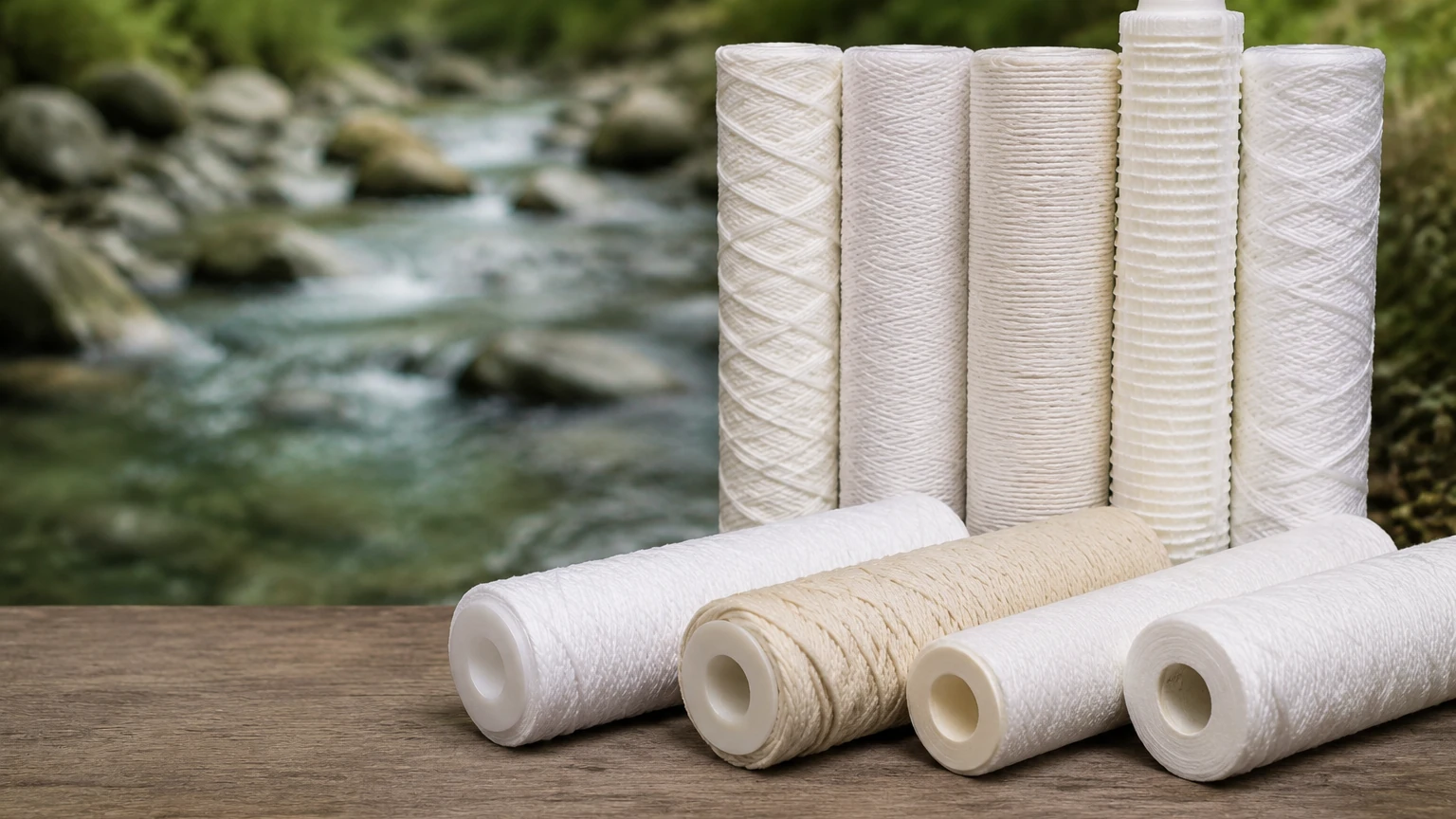
Polypropylene and Polyester
These materials are cost-effective for low-volume or temporary applications. They utilize depth filtration to trap particles throughout the media. However, they are susceptible to chemical degradation if the well water has high chlorine levels or extreme pH variations. Furthermore, they cannot be cleaned; once fouled, they must be disposed of, contributing to environmental waste and ongoing operational expenses.
Stainless Steel (304 and 316L)
Stainless steel wire mesh and sintered metal cartridges represent the gold standard for industrial well water filtration. These materials offer several distinct advantages:
* Corrosion Resistance: Well water often contains dissolved gases (CO2, H2S) or high chloride concentrations. 316L stainless steel provides excellent resistance to pitting and crevice corrosion in these environments.
* Structural Integrity: Unlike polymer filters, stainless steel cartridges can withstand high differential pressures without collapsing or bypassing particles.
* Thermal Stability: If the well water is used in a process involving high temperatures, stainless steel remains stable where polymers might soften or leach contaminants.
* Reusability: Stainless steel filters can be cleaned via backwashing, ultrasonic cleaning, or chemical soaking. This reusability is a key factor in why many engineers consider stainless steel the best sediment filter cartridge for well water in long-term industrial projects.
For more information on material specifications and engineering support, you can visit our Main Page to review our full range of metal filtration solutions.
Engineering Considerations for High-Silt Environments
In regions where the water table is low or the geology is prone to shifting, well water can suddenly become laden with heavy silt. Engineering a system to handle these fluctuations requires more than just a standard cartridge.
Backwashing Capabilities
Automated backwashing systems use a portion of the filtered water (or an external air/water source) to flush accumulated sediment off the surface of the filter. Stainless steel mesh filters are ideal for this because their rigid structure allows for high-pressure reverse flow. This capability ensures that the system can maintain continuous operation even during periods of high turbidity.
Staged Filtration Strategies
In many cases, the "best" solution is not a single filter but a staged approach. A coarse 100-micron stainless steel strainer can remove large sand particles, followed by a 5-micron to 20-micron precision wire mesh cartridge. This prevents the fine filter from being overwhelmed by large debris, extending the maintenance interval for the entire system.
Compatibility with Housing Standards
Industrial filters must fit into existing infrastructure. Most high-performance stainless steel cartridges are designed to be compatible with standard DOE (Double Open End) or Code 7 (226/Fin) housings. Ensuring a proper seal is vital; even a minor bypass can allow enough sediment through to damage a high-pressure pump downstream.
Maintenance and Longevity: Optimizing Replacement Cycles
One of the most common questions engineers ask is: "How often should I clean or replace my well water filter?" The answer depends on the sediment load and the filter medium.
With disposable cartridges, the replacement cycle is dictated by the pressure gauge. Once the differential pressure reaches a pre-set limit (usually 15-20 psi), the cartridge is discarded. In a high-sediment well, this could happen weekly or even daily, leading to significant labor costs and inventory management challenges.
In contrast, a high-quality stainless steel filter from a manufacturer like Kaifil is designed for years of service. Maintenance involves periodic cleaning rather than replacement. By monitoring the rate of pressure increase, facilities can move from reactive maintenance to a predictive schedule, cleaning the filters during planned outages rather than responding to emergency flow reductions.
Custom Filtration Solutions for Complex Water Profiles
Every well is unique. A well in a coastal area may deal with fine sand and high salinity, while a well in a volcanic region might contain abrasive volcanic ash. Off-the-shelf solutions often fail to address these specific challenges.
Custom manufacturing allows for the optimization of the filter's physical dimensions, mesh weave patterns, and reinforcement structures. For example, a pleated stainless steel design can be used to dramatically increase the surface area within a standard housing, allowing for higher flow rates in a compact footprint.
Kaifil specializes in these custom configurations, working with global customers to develop filtration components that meet specific industrial requirements. Whether it is a unique micron rating for a pharmaceutical intake or a reinforced cartridge for high-pressure hydraulic water systems, customized engineering ensures that the filtration system is a perfect match for the application's demands.
Conclusion: Making an Informed Decision
Selecting the best sediment filter cartridge for well water requires a transition from a "commodity" mindset to an "engineering" mindset. While the initial cost of a precision stainless steel filter is higher than a disposable polymer equivalent, the long-term benefits—including reduced downtime, lower waste, and superior protection of downstream equipment—make it the more economical choice for industrial applications.
When specifying a filtration solution, confirm the chemical compatibility of the water, the expected flow rates, and the particle size distribution. By choosing high-performance materials and working with experienced manufacturers, you can ensure that your well water system remains efficient and reliable for years to come. For technical guidance and a review of our manufacturing capabilities, please refer to the resources available on our Main Page.
Download Best Sediment Filter Cartridge for Well Water as a PDF
