


Filter Screen Mesh
In industrial filtration, the selection of the correct filter screen mesh is a critical engineering decision that directly impacts process efficiency, equipment longevity, and final product quality. Whether utilized in chemical processing, food and beverage production, or hydraulic systems, the filter screen mesh serves as the primary barrier against contaminants. Understanding the technical nuances of mesh specifications, material properties, and weave structures is essential for engineers and purchasing teams tasked with optimizing filtration performance.
As a professional manufacturer specializing in custom stainless steel filtration solutions, Kaifil provides high-performance components designed to meet the rigorous demands of industrial environments. This guide explores the technical considerations necessary for selecting and implementing filter screen mesh effectively.
Technical Specifications of Filter Screen Mesh
To specify a filter screen mesh accurately, engineers must look beyond simple dimensions and evaluate several interdependent technical parameters. These specifications determine how the mesh will behave under specific flow conditions and pressure loads.
Mesh Count vs. Micron Rating
The terms "mesh count" and "micron rating" are often used interchangeably, but they describe different characteristics. Mesh count refers to the number of openings per linear inch. A higher mesh count generally indicates smaller openings. However, the micron rating (or aperture size) is the actual measurement of the space between the wires.
The relationship between these two is influenced by the wire diameter. For example, two meshes with the same mesh count can have different micron ratings if they use different wire thicknesses. Engineers must prioritize the micron rating when the goal is precise particle retention, while mesh count is more relevant for structural and flow calculations.
Wire Diameter and Open Area
Wire diameter is the thickness of the individual wires before weaving. It significantly affects the mechanical strength of the filter screen mesh. A thicker wire provides greater durability and resistance to high-pressure differentials but reduces the "open area."
The open area is the percentage of the total mesh surface that is unobstructed, allowing fluid or gas to pass through. A higher open area results in a lower initial pressure drop and higher flow rates. In high-viscosity applications, maximizing the open area is crucial to prevent premature clogging and excessive energy consumption by pumps.
Material Selection for Industrial Environments
The environment in which the filter screen mesh operates dictates the choice of material. While various metals can be used, stainless steel remains the industry standard due to its versatility and resistance to extreme conditions.
Stainless Steel 304
Grade 304 is the most common stainless steel used in filtration. It offers excellent corrosion resistance in most atmospheric conditions and is suitable for many food-grade applications. It provides a cost-effective solution for general industrial use where extreme chemical exposure is not a primary concern.
Stainless Steel 316 and 316L
For more demanding environments, such as marine applications or chemical processing involving chlorides and acids, Stainless Steel 316 is preferred. It contains molybdenum, which enhances its resistance to pitting and crevice corrosion. 316L (low carbon) is often specified for components that require welding, as it minimizes carbide precipitation that can lead to intergranular corrosion in the heat-affected zone.
Specialty Alloys
In specific high-temperature or highly corrosive environments, specialty alloys like Monel, Inconel, or Hastelloy may be required. Kaifil works closely with global customers to select the optimal material based on the chemical compatibility and thermal requirements of the specific application.
Weave Types and Their Functional Impact
The method by which the wires are interlaced—the weave—determines the filtration characteristics and the physical integrity of the mesh. Different weaves are suited for different filtration tasks.
Plain Weave
The most straightforward design, where each warp wire crosses over and under each shute wire. Plain weave filter screen mesh provides a consistent aperture size and is ideal for general-purpose filtration where high flow rates and moderate filtration accuracy are required.
Twill Weave
In a twill weave, each warp wire passes over and under two shute wires. This allows for the use of heavier wires than a plain weave of the same mesh count, resulting in a stronger mesh. It is often used for fine filtration where the mesh must withstand significant mechanical stress.
Dutch Weave (Plain and Twill)
Dutch weaves use different diameters for the warp and shute wires. The shute wires are driven closely together, creating a dense, wedge-shaped opening. This structure offers superior strength and is capable of very fine filtration (down to a few microns) while maintaining the ability to withstand high pressure. Dutch weave is the standard for high-pressure hydraulic filters and fuel filtration.
Engineering Considerations for Filter Design
When integrating filter screen mesh into an industrial system, several engineering factors must be evaluated to ensure the component performs reliably throughout its service life.
Pressure Drop (Delta P)
Pressure drop is the difference in pressure between the upstream and downstream sides of the filter. An optimized filter design minimizes the initial pressure drop to reduce the load on the system's pumps. Engineers must balance the need for fine filtration (which increases resistance) with the available system pressure. As the mesh captures particles, the pressure drop will increase, eventually reaching a point where cleaning or replacement is necessary.
Mechanical Strength and Support
Fine mesh is often delicate. In high-pressure applications, the filter screen mesh must be supported by a coarser "backing mesh" or a perforated metal core to prevent deformation or bursting. Kaifil specializes in manufacturing multi-layered sintered mesh and reinforced filter cartridges that combine fine filtration layers with robust structural supports.
Flow Velocity and Turbulence
High flow velocities can cause erosion of the mesh wires or lead to "media migration," where particles are forced through the mesh. Designing the filter housing to ensure uniform flow distribution across the entire surface of the mesh is essential for maximizing the effective filtration area and extending the life of the component.
Customization and OEM Solutions
Standard off-the-shelf filters rarely meet the precise requirements of complex industrial processes. Customization allows engineers to specify the exact dimensions, materials, and performance characteristics needed for their equipment.
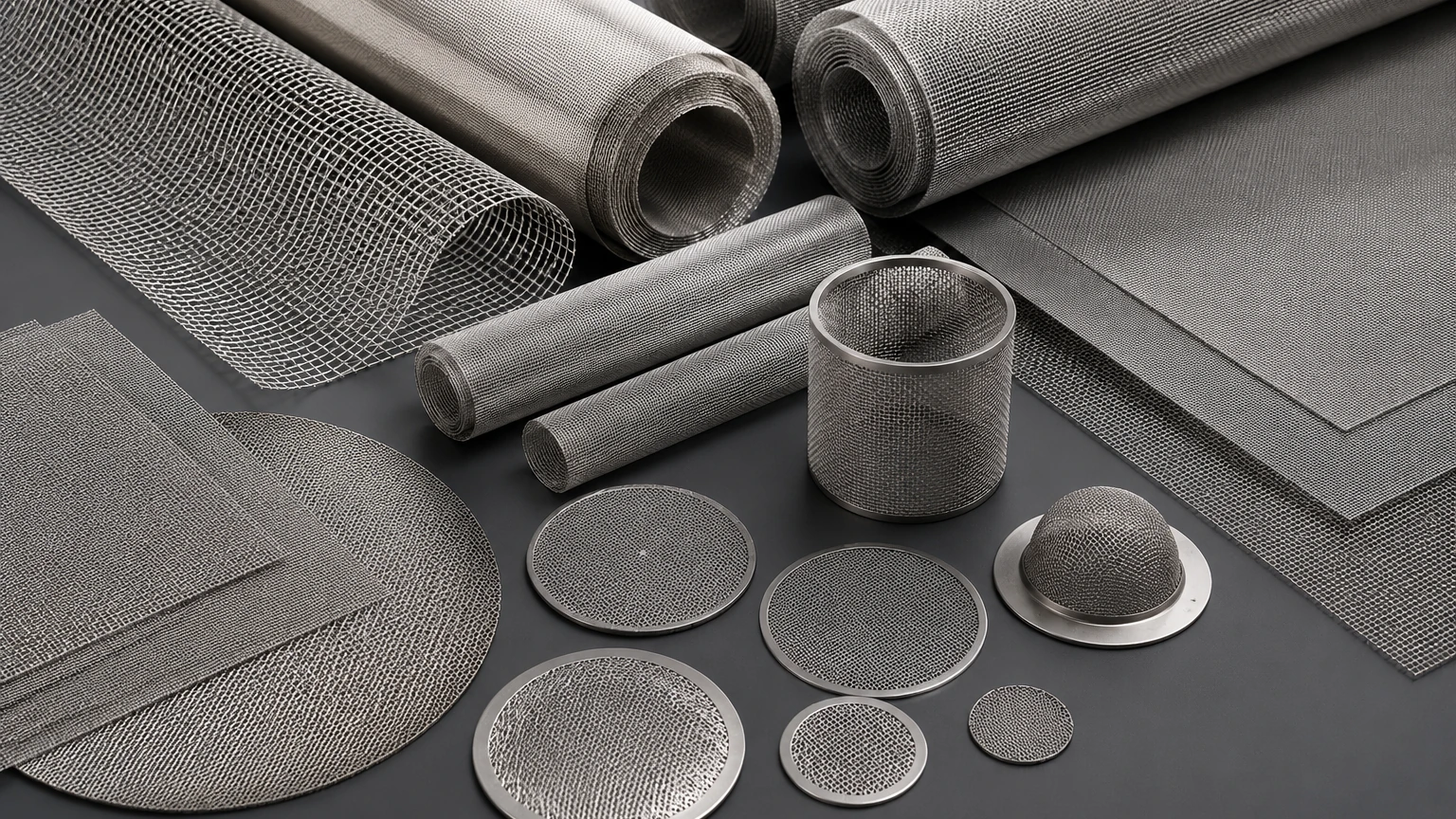
Kaifil provides comprehensive OEM services, transforming raw filter screen mesh into finished components such as:
* Custom Wire Mesh Filters: Tailored shapes and sizes for specific machinery.
* Stainless Steel Filter Cartridges: Designed for high-capacity liquid and gas filtration.
* Precision Metal Components: Integrating mesh into complex assemblies for pharmaceutical or laboratory use.
By working with a manufacturer that understands both the material science and the application engineering, purchasing teams can ensure they receive components that are optimized for their specific total cost of ownership (TCO) goals.
Maintenance, Cleaning, and Replacement Cycles
The longevity of a filter screen mesh depends heavily on the nature of the contaminants and the cleaning protocols in place. Unlike disposable synthetic filters, stainless steel mesh is often cleanable and reusable, which significantly reduces long-term operational costs.
Cleaning Methods
* Backwashing: Reversing the flow of the fluid to dislodge particles from the surface of the mesh.
* Ultrasonic Cleaning: Using high-frequency sound waves in a cleaning solution to remove fine particles trapped deep within the weave, particularly in Dutch weave structures.
* Chemical Cleaning: Using solvents or acids (compatible with the mesh material) to dissolve organic or mineral deposits.
Identifying Replacement Needs
Despite the durability of stainless steel, mesh will eventually require replacement. Signs that a filter screen mesh has reached the end of its life include:
* Permanent Deformation: Visible sagging or stretching that alters the aperture size.
* Work Hardening/Brittleness: Cracks in the wire caused by repeated pressure cycling.
* Irreversible Clogging: When the pressure drop remains high even after thorough cleaning.
Establishing a scheduled inspection and replacement cycle prevents unexpected downtime and protects downstream equipment from potential contamination caused by a compromised filter.
Selecting the Right Partner for Filtration Solutions
Choosing a filter screen mesh is not merely a procurement task; it is a technical partnership. Engineers must confirm that their supplier can provide material certifications, precise manufacturing tolerances, and the engineering support necessary to solve complex filtration challenges.
For organizations seeking reliable, high-performance filtration components, Kaifil offers the expertise and manufacturing capabilities required to deliver custom solutions. From initial material selection to the production of complex filter assemblies, our focus remains on providing durable and precise filtration performance for the most demanding industrial environments.
To explore how customized filtration solutions can optimize your specific application, visit the Main Page for detailed product specifications and technical support. Whether you are designing a new system or looking to improve the efficiency of an existing process, selecting the right filter screen mesh is the first step toward operational excellence.
