


What Does a Coalescing Filter Do
In industrial process engineering, the separation of contaminants is rarely limited to the removal of solid particulates. Many high-stakes applications—ranging from compressed air systems to petrochemical refining—require the removal of liquid aerosols and oil mists that are suspended within a gas or another liquid. This is where the coalescing filter becomes an essential component. Understanding what does a coalescing filter do requires a technical look at the physics of phase separation and the engineering requirements of modern industrial systems.
Unlike a standard particulate filter, which acts as a sieve to trap solid debris, a coalescing filter is designed to merge small liquid droplets into larger ones. This process, known as coalescence, allows the liquid to be separated from the primary flow via gravity. For engineers and procurement teams, selecting the right coalescing solution is critical for protecting downstream equipment, ensuring product purity, and maintaining system efficiency. To explore specific hardware options for these demanding environments, technical professionals often refer to the Main Page of specialized manufacturers like Kaifil.
The Fundamental Function: Beyond Simple Filtration
To answer the question of what does a coalescing filter do, one must distinguish between filtration and separation. In a gas stream, liquid contaminants often exist as sub-micron aerosols. These droplets are so small that they behave similarly to gas molecules, following the streamlines of the flow and remaining suspended indefinitely. A standard mechanical filter might trap larger droplets through simple impaction, but it will allow the finest mists to pass through.
A coalescing filter functions as a three-stage separation device:
1. Capture: The fine droplets are captured by the filter media (often a borosilicate glass fiber or a specialized stainless steel mesh).
2. Coalescence: As the droplets are held within the media, they collide with other droplets, merging into larger, heavier masses.
3. Drainage: Once the droplets reach a sufficient size and weight, gravity pulls them down the outer surface of the filter element into a collection sump, where they can be drained without re-entering the flow.
This process is vital because liquid carryover can lead to catastrophic failures in downstream components such as pneumatic tools, analytical instruments, and chemical reactors.
The Physics of Coalescence: How Droplets Merge
The efficiency of a coalescing filter is determined by how effectively it utilizes three physical mechanisms: direct interception, inertial impaction, and Brownian diffusion.
Direct Interception
This occurs when a droplet follows a gas streamline but comes close enough to a fiber in the filter media to touch it and become attached. This is most effective for droplets in the mid-range of the micron scale.
Inertial Impaction
Inertial impaction targets larger droplets. Because these droplets have more mass, they cannot navigate the sharp turns the gas makes as it flows through the dense filter media. Their momentum carries them straight into the fibers, where they stick and begin the coalescing process.
Brownian Diffusion
For the smallest aerosols (typically less than 0.1 microns), the droplets do not follow streamlines. Instead, they move erratically due to collisions with gas molecules—a phenomenon known as Brownian motion. This erratic path increases the probability that the droplet will eventually collide with a fiber in the filter matrix. This is why high-quality coalescing filters are remarkably efficient at removing even the finest sub-micron oil mists.
Critical Applications in Industrial Environments
Understanding what does a coalescing filter do helps engineers identify where these units are non-negotiable. In many industrial sectors, the presence of liquid in a gas stream is not just an efficiency issue; it is a safety and quality risk.
Compressed Air Systems
In compressed air applications, oil from the compressor's lubrication system often enters the air stream as a vapor or mist. If this oil reaches the point of use, it can contaminate food products, ruin paint finishes, or cause pneumatic valves to stick. Coalescing filters are the primary defense against this oil carryover.
Natural Gas Processing
In the oil and gas industry, coalescing filters are used to remove liquid hydrocarbons and water from natural gas. This prevents liquid "slugs" from damaging turbines and ensures the gas meets pipeline quality specifications. Given the corrosive nature of some gas streams, stainless steel filter components are often required for their chemical resistance.
Refrigeration and HVAC
Large-scale industrial refrigeration systems use coalescing oil separators to ensure that lubricant oil stays within the compressor circuit and does not migrate into the evaporator coils, where it would reduce heat transfer efficiency.
Engineering Selection: Key Performance Indicators
When specifying a coalescing filter, engineers must look beyond the initial purchase price. The performance of the filter has a direct impact on the total cost of ownership (TCO) of the system. Key metrics include:
* Micron Rating: Most high-efficiency coalescing filters are rated to 0.3 or 0.01 microns. It is essential to match the rating to the sensitivity of the downstream equipment.
* Pressure Drop (Delta P): A filter is a restriction in the flow. A high pressure drop means the compressor or pump must work harder, increasing energy costs. Engineers should select filters that offer high efficiency with minimal differential pressure.
* Flow Capacity: The filter must be sized to handle the maximum flow rate of the system without causing excessive velocity, which could "re-entrain" (pick up) the liquid droplets after they have coalesced.
* Compatibility: The housing and media materials must be compatible with the fluids being filtered. In the chemical and pharmaceutical industries, stainless steel 316L is the standard due to its durability and resistance to corrosion.
For those designing systems with unique flow requirements or aggressive chemical profiles, reviewing specialized manufacturing capabilities on a Main Page can provide insights into custom-engineered solutions that standard off-the-shelf filters cannot meet.
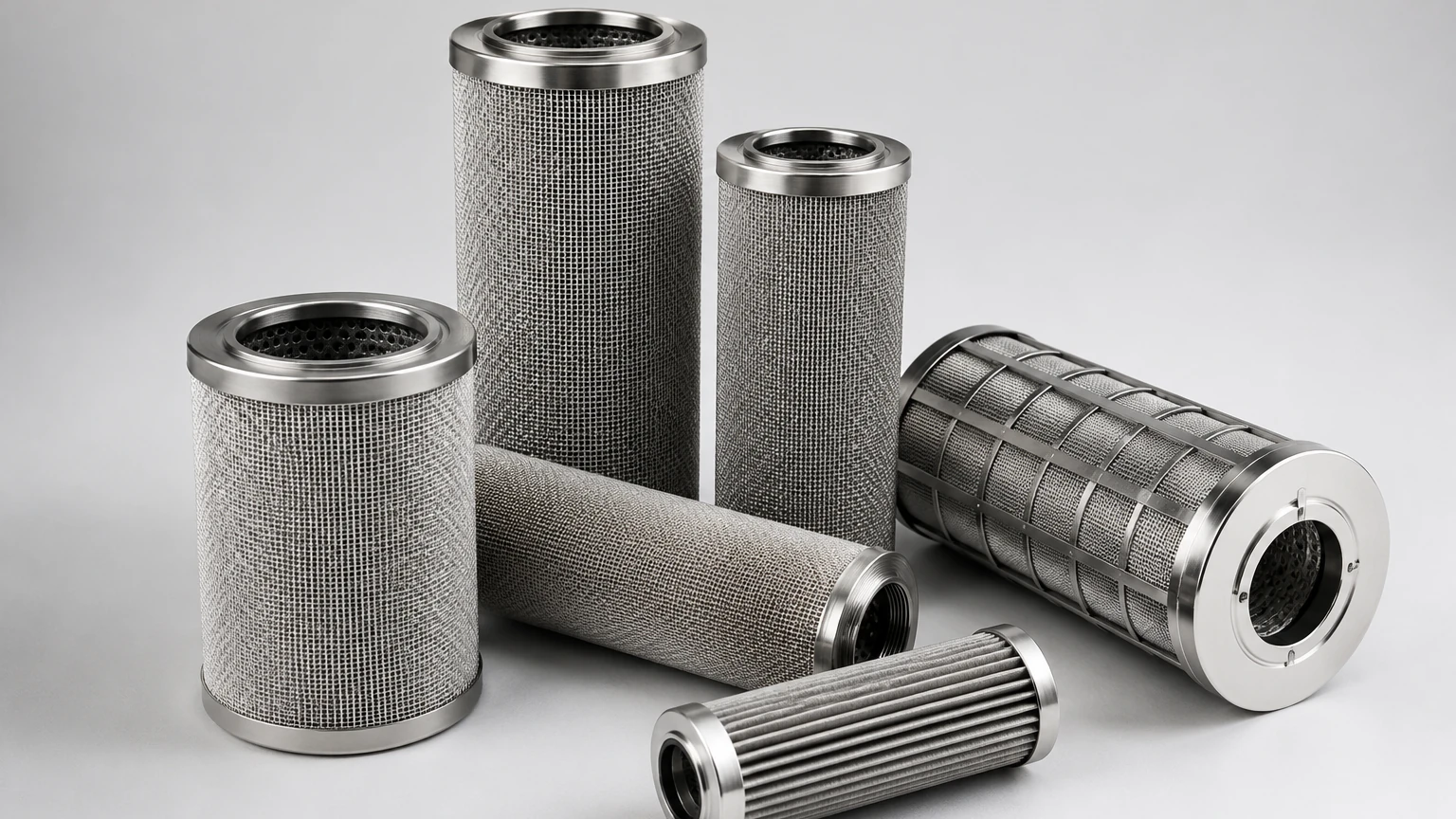
Material Science: Why Stainless Steel is Essential for Coalescing
While many disposable coalescing filters use glass fiber media, industrial applications often demand more robust materials. Stainless steel wire mesh and sintered metal filters are increasingly used in coalescing applications for several reasons:
1. Temperature Resistance: Many chemical processes operate at temperatures that would melt or degrade synthetic fibers. Stainless steel maintains structural integrity at extreme temperatures.
2. Cleanability: Unlike disposable elements, stainless steel coalescing components can often be cleaned and reused, reducing long-term waste and replacement costs.
3. Structural Strength: In high-pressure hydraulic or gas systems, the filter media must withstand significant mechanical stress. Sintered stainless steel provides the necessary rigidity to prevent media migration or collapse.
4. Customization: Stainless steel allows for precise engineering of the pore structure. Manufacturers like Kaifil can customize the weave and density of the mesh to optimize the coalescing effect for specific liquid viscosities and surface tensions.
Maintenance Strategies and Total Cost of Ownership
A common question following "what does a coalescing filter do" is "how long does it last?" The lifespan of a coalescing element is generally determined by the amount of solid particulate in the stream. While the filter is designed to handle liquids, solid dirt will eventually clog the media, increasing the pressure drop.
Differential Pressure Monitoring
Engineers should always install differential pressure gauges across coalescing filters. A rise in pressure indicates that the media is becoming saturated with solids. Most manufacturers recommend replacement or cleaning when the pressure drop reaches a specific threshold (e.g., 8-10 psi).
The Risk of Re-entrainment
If a coalescing filter is not maintained, or if the flow rate exceeds the design capacity, "re-entrainment" can occur. This is when the velocity of the gas is so high that it strips the large, coalesced droplets off the filter media and carries them back into the downstream flow. This effectively negates the purpose of the filter.
Total Cost Considerations
When evaluating filtration solutions, the initial cost of a stainless steel coalescing element may be higher than a disposable one. However, when factoring in the reduction in downtime, the elimination of frequent replacement labor, and the protection of expensive downstream catalysts or turbines, the long-term value of a high-quality metal filter is often superior.
Conclusion: Selecting the Right Solution
Coalescing filters are a critical line of defense in modern industrial processes. By effectively merging and removing liquid aerosols, they protect equipment, ensure product quality, and reduce operational costs. Whether you are managing a compressed air system, a chemical refinery, or a pharmaceutical production line, the choice of filtration hardware is a technical decision that requires careful consideration of flow dynamics, material compatibility, and maintenance requirements.
For engineers seeking reliable, high-performance filtration components, partnering with a manufacturer that understands the nuances of metal filtration is essential. For more detailed information on custom stainless steel filtration solutions and technical specifications, visiting the Main Page of a dedicated manufacturer like Kaifil is the best next step in optimizing your industrial filtration performance.
