


Plate Evaporator
In the landscape of industrial thermal processing, the plate evaporator stands as a critical component for concentration, separation, and solvent recovery. Engineered to handle heat-sensitive liquids with high efficiency, these systems are ubiquitous in the food and beverage, pharmaceutical, and chemical processing industries. For engineers and technical procurement teams, understanding the mechanical nuances of a plate evaporator—and the auxiliary filtration systems required to protect them—is essential for maintaining operational uptime and product purity.
As a manufacturer of precision filtration components, Kaifil recognizes that the performance of a plate evaporator is inextricably linked to the quality of the fluids entering the system. Particulate contamination can lead to rapid fouling, reduced heat transfer coefficients, and costly unscheduled maintenance. This guide examines the technical foundations of plate evaporation and the engineering considerations for integrating robust stainless steel filtration solutions to optimize these processes.
Engineering Principles of Plate Evaporator Systems
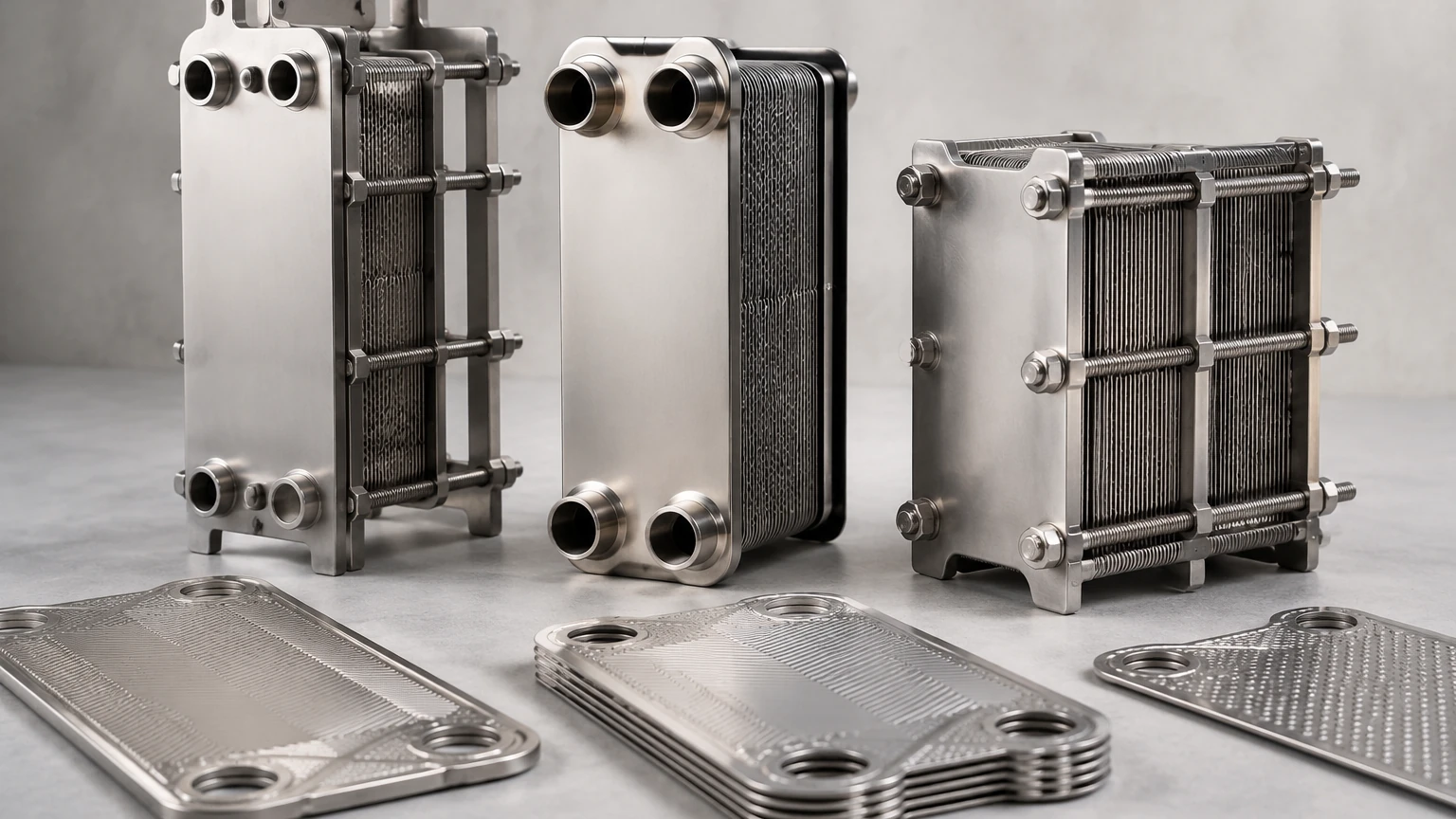
A plate evaporator operates on the principle of thin-film evaporation. Unlike traditional shell-and-tube designs, the plate evaporator utilizes a series of corrugated metal plates held together in a frame. The product and the heating medium (typically steam or hot water) flow in alternate channels created by these plates.
Heat Transfer Efficiency
The primary advantage of the plate design is its high heat transfer coefficient. The corrugations on the plates induce turbulence even at low flow rates, which significantly increases the Reynolds number and enhances the rate of heat exchange. This turbulence also helps to minimize the formation of stagnant zones where product might overheat or degrade.
Residence Time and Thermal Sensitivity
For industries such as dairy or pharmaceutical manufacturing, minimizing the thermal history of the product is vital. Plate evaporators provide a high surface-area-to-volume ratio, allowing for rapid evaporation with very short residence times. This ensures that heat-sensitive proteins, vitamins, or active pharmaceutical ingredients (APIs) are not denatured during the concentration process.
The Critical Role of Pre-Filtration in Evaporation
While the design of a plate evaporator promotes efficiency, its narrow flow channels make it highly susceptible to clogging and fouling. The gap between plates is often only a few millimeters wide. If suspended solids, fibers, or undissolved crystals enter the system, they can become lodged in the plate corrugations.
Preventing Macro-Fouling
Macro-fouling occurs when large particles block the entrance to the plate channels. This leads to uneven flow distribution, localized overheating, and a significant drop in pressure. To prevent this, industrial systems must employ high-precision wire mesh filters or stainless steel filter cartridges. These components act as a first line of defense, ensuring that only fluids within the specified micron range enter the evaporator.
Mitigating Scaling and Micro-Fouling
Even small particles can contribute to micro-fouling by acting as nucleation sites for scale formation. In chemical processing, where fluids may be near their saturation point, the presence of fine particulates can trigger premature crystallization on the heat transfer surfaces. By utilizing fine-mesh stainless steel filtration, engineers can significantly extend the interval between Clean-in-Place (CIP) cycles.
Material Selection and Compatibility
Material integrity is a non-negotiable factor when specifying components for a plate evaporator system. Both the evaporator plates and the protective filtration elements must be compatible with the process fluid and the cleaning chemicals used during maintenance.
Stainless Steel Alloys
Stainless steel is the standard material for these applications due to its corrosion resistance and thermal stability. Common grades include:
* AISI 304: Suitable for general food and beverage applications where corrosive stress is moderate.
* AISI 316L: The preferred choice for pharmaceutical and chemical applications involving chlorides or acidic environments. The low carbon content prevents sensitization during welding, which is critical for custom-fabricated filter housings and internal components.
* Duplex Steels: Utilized in high-salinity or high-temperature chemical processes where standard austenitic steels might suffer from stress corrosion cracking.
At Kaifil, we focus on the manufacturing of these high-grade stainless steel components, ensuring that every wire mesh filter and cartridge meets the rigorous standards required by global industrial sectors. Technical professionals can visit our Main Page to review specific material certifications and engineering data relevant to their application environments.
Filtration Integration in Evaporator Circuits
Integrating filtration into a plate evaporator circuit requires a balance between filtration fineness and system pressure drop. Engineers must consider the viscosity of the fluid, which typically increases as the product becomes more concentrated.
Suction-Side vs. Discharge-Side Filtration
In many evaporation loops, filtration is placed on the suction side of the feed pump to protect both the pump and the evaporator. However, if the product is being recirculated through the evaporator to achieve higher concentration levels, secondary filtration may be required to capture any precipitates that form during the process.
Micron Rating and Flow Rate
The selection of a micron rating for a stainless steel filter is a function of the plate gap in the evaporator. A common engineering rule of thumb is to select a filter with a micron rating that is at least one-third to one-fifth of the narrowest passage in the evaporator. This provides a safety margin that prevents bridging and blockage within the plate pack.
Maintenance, CIP, and Total Cost of Ownership
The total cost of ownership (TCO) for a plate evaporator is heavily influenced by maintenance requirements. Fouled plates require mechanical cleaning or intensive chemical soaking, both of which result in downtime.
Clean-in-Place (CIP) Compatibility
Modern plate evaporators and their associated filters are designed for CIP. Stainless steel filter cartridges are particularly advantageous here because they can withstand the high temperatures and caustic or acidic solutions used in CIP cycles without degrading. Unlike disposable polymer filters, stainless steel elements can be cleaned and reused, significantly reducing the long-term operational costs and environmental impact.
Monitoring Differential Pressure
To optimize the replacement or cleaning cycle of filtration components, engineers should monitor the differential pressure ($\\Delta P$) across the filter. A sudden increase in $\\Delta P$ indicates that the filter is successfully capturing contaminants that would otherwise have fouled the plate evaporator. By establishing a baseline $\\Delta P$ for clean elements, maintenance teams can implement predictive maintenance schedules rather than reacting to system failures.
Customization and Engineering Support
No two industrial processes are identical, and the filtration requirements for a plate evaporator in a fruit juice plant will differ significantly from those in a chemical solvent recovery unit. Customization is often necessary to ensure that the filtration hardware fits within existing piping constraints and meets specific flow dynamics.
Custom Filter Elements
Kaifil specializes in the production of custom-sized wire mesh filters and precision-engineered cartridges. Whether the requirement is for a specific flange connection, a non-standard length, or a reinforced core to withstand high pressure spikes, custom fabrication ensures that the filtration system complements the plate evaporator's performance rather than hindering it.
Technical Consultation
When selecting filtration for a plate evaporator, engineers should confirm the following data points with their supplier:
1. Maximum Operating Temperature: Ensuring the gaskets and mesh welds can withstand thermal cycling.
2. Chemical Concentration: Verifying alloy compatibility with both the product and cleaning agents.
3. Particulate Load: Estimating the volume of solids to determine the required filter surface area and cleaning frequency.
4. Regulatory Compliance: Ensuring materials meet FDA, 3A, or other industry-specific hygiene standards.
Conclusion
The plate evaporator remains one of the most efficient tools for industrial thermal separation, but its sensitivity to particulate matter necessitates a disciplined approach to filtration. By implementing high-quality stainless steel filtration solutions, operators can protect their capital equipment, maintain high heat transfer rates, and ensure consistent product quality.
For engineers and purchasing teams seeking to optimize their evaporation processes through precision filtration, Kaifil provides the technical expertise and manufacturing capability to deliver reliable, durable components. Understanding the relationship between fluid purity and evaporator performance is the first step toward achieving a more efficient and cost-effective industrial operation.
