


Filtre Presse
In the landscape of industrial solid-liquid separation, the filtre presse remains one of the most efficient and versatile pieces of equipment for dewatering and clarification. Designed to handle high-solids slurries and produce a clear filtrate alongside a dry filter cake, this batch-operation machine is a staple in chemical processing, mining, wastewater treatment, and food and beverage production. For engineers and technical procurement teams, understanding the mechanical nuances and material requirements of a filtre presse is essential for optimizing process efficiency and ensuring equipment longevity.
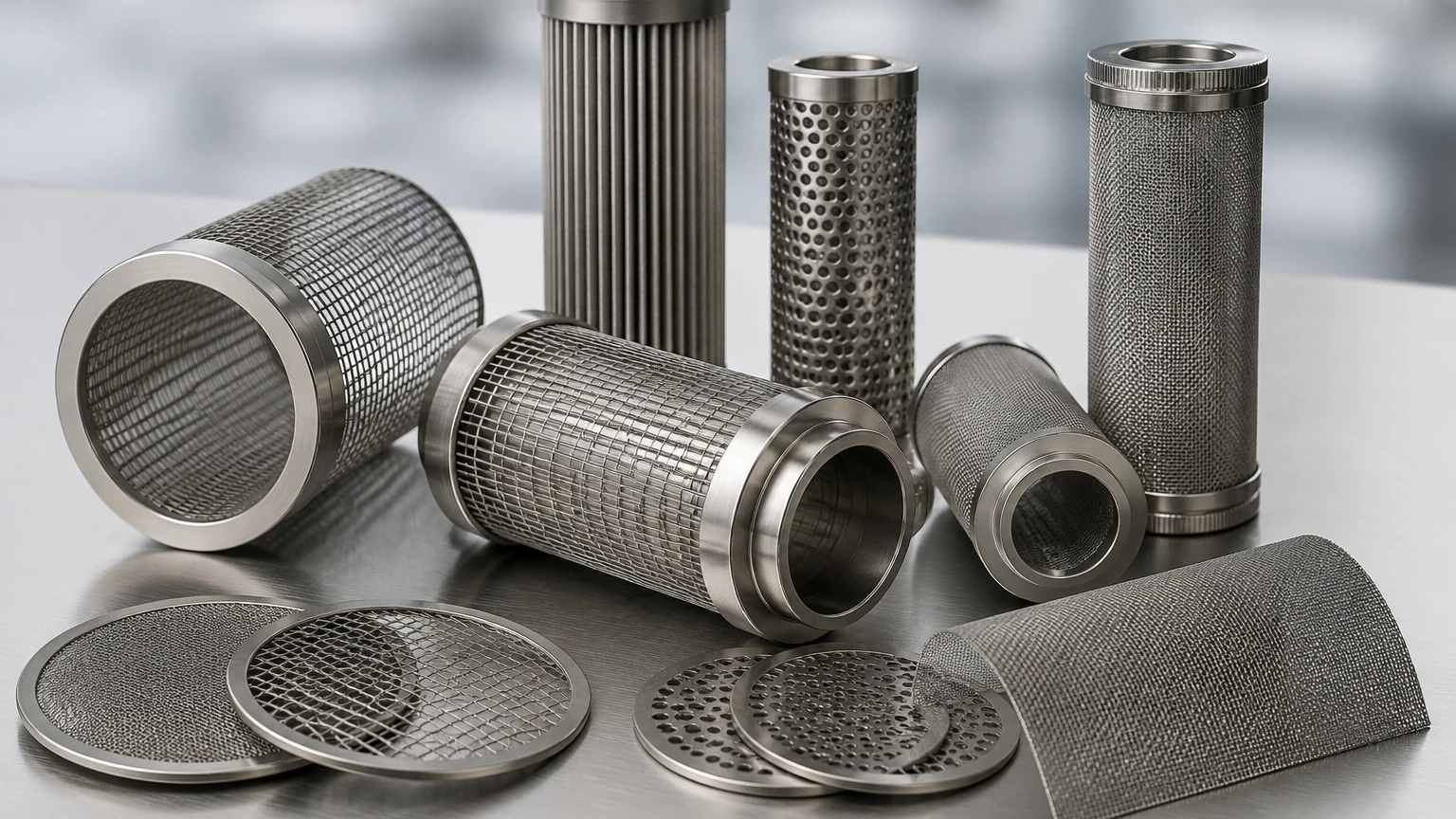
At the core of any high-performance filtration system are the components that interface directly with the process media. Kaifil specializes in the manufacture of precision stainless steel filtration solutions, including wire mesh and custom metal filter components that are integral to the reliability of industrial pressure filtration systems. By focusing on material integrity and filtration accuracy, Kaifil supports industries in achieving rigorous separation standards.
Understanding the Mechanics of the Filtre Presse in Industrial Filtration
The operation of a filtre presse is governed by the principle of pressure-driven separation. Unlike vacuum filters or gravity-fed systems, the filter press utilizes mechanical pressure—often generated by high-pressure pumps—to force a slurry through a series of filter chambers. Each chamber is formed by a sequence of filter plates covered with a filter medium, typically a cloth or a specialized metal mesh.
As the slurry is pumped into the chambers, the solid particles are trapped by the medium, forming a "cake." The liquid, or filtrate, passes through the medium and is discharged through internal manifolding. The process continues until the chambers are full of solids, at which point the pumping stops, and the plates are separated to discharge the dry cake.
From an engineering perspective, the efficiency of this cycle depends on several variables:
* Feed Pressure: Higher pressures generally lead to drier cakes but require more robust plate and media designs.
* Cycle Time: The duration required to fill the chambers and achieve the desired cake dryness.
* Filtration Area: The total surface area available for separation, which dictates the throughput capacity of the unit.
The Role of Stainless Steel Filter Media in High-Pressure Separation
While traditional textile filter cloths are common, many demanding industrial applications require the durability and precision of stainless steel filter media. In a filtre presse used for corrosive chemicals, high-temperature slurries, or pharmaceutical-grade clarification, stainless steel wire mesh offers distinct advantages over synthetic fibers.
Kaifil’s expertise in stainless steel filtration components is particularly relevant here. Precision-engineered wire mesh filters provide consistent pore sizes that do not stretch or deform under high pressure. This dimensional stability is critical for maintaining filtration accuracy throughout the entire batch cycle. Furthermore, stainless steel components are resistant to the mechanical abrasion caused by sharp or hard particles in the slurry, significantly extending the replacement interval compared to traditional cloths.
Key benefits of integrating stainless steel components into a filtre presse include:
1. Thermal Resistance: Ability to operate in environments exceeding 200°C where synthetic materials would fail.
2. Chemical Compatibility: Resistance to a wide range of pH levels, particularly when using 316L grade stainless steel.
3. Ease of Cleaning: Metal media can be subjected to rigorous backwashing or chemical CIP (Clean-In-Place) cycles without degrading the structural integrity of the mesh.
Technical Specifications and Material Compatibility
When specifying components for a filtre presse, engineers must evaluate the chemical and physical characteristics of the slurry. The choice of material for the filter plates and the media is the most critical decision in the procurement process.
Material Selection (304 vs. 316L)
For most industrial water treatment applications, Grade 304 stainless steel provides sufficient corrosion resistance. However, in chemical processing or food and beverage applications where chlorides or acidic cleaning agents are present, Grade 316L is the standard. The addition of molybdenum in 316L enhances its resistance to pitting and crevice corrosion, which is vital for the longevity of the internal components of a filter press.
Micron Rating and Permeability
The micron rating of the filter medium determines the clarity of the filtrate. In a filtre presse, the initial layer of solids (the "pre-coat" or the beginning of the cake) often acts as the primary filter medium. However, the supporting mesh must be sized correctly to prevent "blinding"—a condition where particles become lodged within the mesh pores, restricting flow. Kaifil provides customized wire mesh configurations that balance high permeability with precise particle retention to ensure optimal flow rates.
Optimizing Performance: Filtration Accuracy and Cake Quality
The ultimate goal of using a filtre presse is usually one of two things: recovering a valuable solid (the cake) or purifying a liquid (the filtrate). In both scenarios, the quality of the separation is paramount.
Achieving Cake Dryness
Cake dryness is a function of the pressure applied and the duration of the "squeeze" or air-blow phase. In many modern filter presses, membrane plates are used to physically compress the cake after the chambers are full. For these systems, the filtration media must be flexible enough to withstand the movement of the membrane while remaining rigid enough to support the solids. Stainless steel mesh components manufactured by Kaifil are designed with this mechanical stress in mind, ensuring they do not fatigue under repeated pressure cycles.
Filtrate Clarity
In applications such as pharmaceutical manufacturing or fine chemical synthesis, even trace amounts of solids in the filtrate can be unacceptable. Precision metal filter cartridges and mesh screens ensure that the "first pass" of the liquid meets the required clarity standards. By maintaining tight tolerances in the weaving process, Kaifil ensures that the filtration accuracy remains consistent across the entire surface of the filter plate.
Maintenance Protocols and Component Longevity
A filtre presse is a significant capital investment, and its total cost of ownership (TCO) is heavily influenced by maintenance requirements and the cost of consumables. Common issues that lead to downtime include blocked media, leaking plates, and mechanical wear of the closing mechanism.
Cleaning and Regeneration
Unlike disposable filter elements, stainless steel filtration components are designed for long-term reuse. To maintain high flow rates, regular cleaning is necessary. Ultrasonic cleaning, high-pressure water jetting, and chemical soaking are all effective methods for regenerating metal mesh. Because Kaifil’s products are built to withstand industrial cleaning processes, they offer a lower long-term cost compared to frequent replacements of synthetic cloths.
Monitoring Wear and Tear
Engineers should regularly inspect the edges of the filter media where they are clamped between the plates. This is the area most prone to mechanical damage. Using precision-cut metal components ensures a better fit and reduces the likelihood of bypass or leakage at the plate interface.
Engineering Custom Solutions for Demanding Applications
No two industrial processes are identical, and often, standard off-the-shelf filtration components are insufficient for specialized applications. Customization is where technical expertise becomes a competitive advantage. Whether it is a unique plate size, a specific alloy requirement for extreme environments, or a multi-layered sintered mesh for fine filtration, custom engineering ensures the filtre presse operates at peak efficiency.
Kaifil works closely with OEM partners and end-users to develop tailored filtration solutions. This collaborative approach involves:
* Application Analysis: Understanding the particle size distribution and slurry viscosity.
* Design Prototyping: Creating custom mesh configurations or filter cartridge designs that fit existing filter press frames.
* Quality Assurance: Rigorous testing to ensure that every component meets the specified filtration accuracy and pressure ratings.
By focusing on the specific needs of the hydraulic, water treatment, and chemical sectors, Kaifil provides the technical support necessary to solve complex separation challenges. For more information on our full range of stainless steel filtration products and custom manufacturing capabilities, please visit our Main Page.
Conclusion: Selecting the Right Partner for Filtration Success
The efficiency of a filtre presse is only as good as its weakest component. While the frame and hydraulic system provide the force, the filter media provides the results. Selecting high-quality stainless steel components is an investment in process stability, product quality, and reduced downtime.
For engineers and purchasing managers, the focus should remain on technical specifications, material durability, and the ability of the supplier to provide customized support. As a professional manufacturer specializing in custom stainless steel filtration, Kaifil is committed to delivering reliable, high-performance solutions that meet the demanding requirements of modern industry. Whether you are looking to upgrade an existing system or specify components for a new project, understanding the interaction between the filtre presse and its media is the first step toward optimized industrial filtration.
