


Breathable Compressed Air
In industrial environments, compressed air is a ubiquitous utility used for powering tools, cleaning surfaces, and driving pneumatic actuators. However, when that same air is intended for human consumption—whether for supplied-air respirators (SAR), self-contained breathing apparatus (SCBA), or pharmaceutical cleanroom ventilation—it must meet stringent purity requirements. The transformation of standard industrial-grade air into breathable compressed air requires a sophisticated, multi-stage filtration and treatment process designed to eliminate toxic gases, oil vapors, and particulate matter.
For engineers and facility managers, understanding the technical parameters of breathing air systems is critical. Failure to maintain air quality not only risks non-compliance with safety regulations but poses immediate health hazards to personnel. This guide examines the standards, filtration technologies, and engineering considerations necessary to produce and maintain reliable breathable compressed air.
Standards and Regulatory Requirements for Breathing Air
Breathable compressed air is governed by international standards that define the maximum allowable concentrations of various contaminants. The two most prominent standards are EN 12021 in Europe and the CGA (Compressed Gas Association) G-7.1 Grade D in the United States.
CGA Grade D Specifications
To be classified as Grade D breathing air, the following limits must be met:
- Oxygen Content: 19.5% to 23.5%.
- Carbon Monoxide (CO): Maximum 10 ppm (parts per million).
- Carbon Dioxide (CO2): Maximum 1,000 ppm.
- Oil (Hydrocarbons): Maximum 5 mg/m³.
- Odors: The air must be free from pronounced odors.
EN 12021 Specifications
The European standard is often more stringent regarding moisture content and specific contaminants, particularly for high-pressure systems. It emphasizes that the air must not contain any contaminant at a concentration that could cause toxic or harmful effects. For engineers, these standards dictate the selection of filtration media and the frequency of air quality testing.
The Multi-Stage Filtration Process
Generating breathable compressed air is not a single-step process. Because compressors introduce lubricants and atmospheric air contains dust and moisture, a series of specialized filters must be employed in a specific sequence.
1. Pre-Filtration and Water Separation
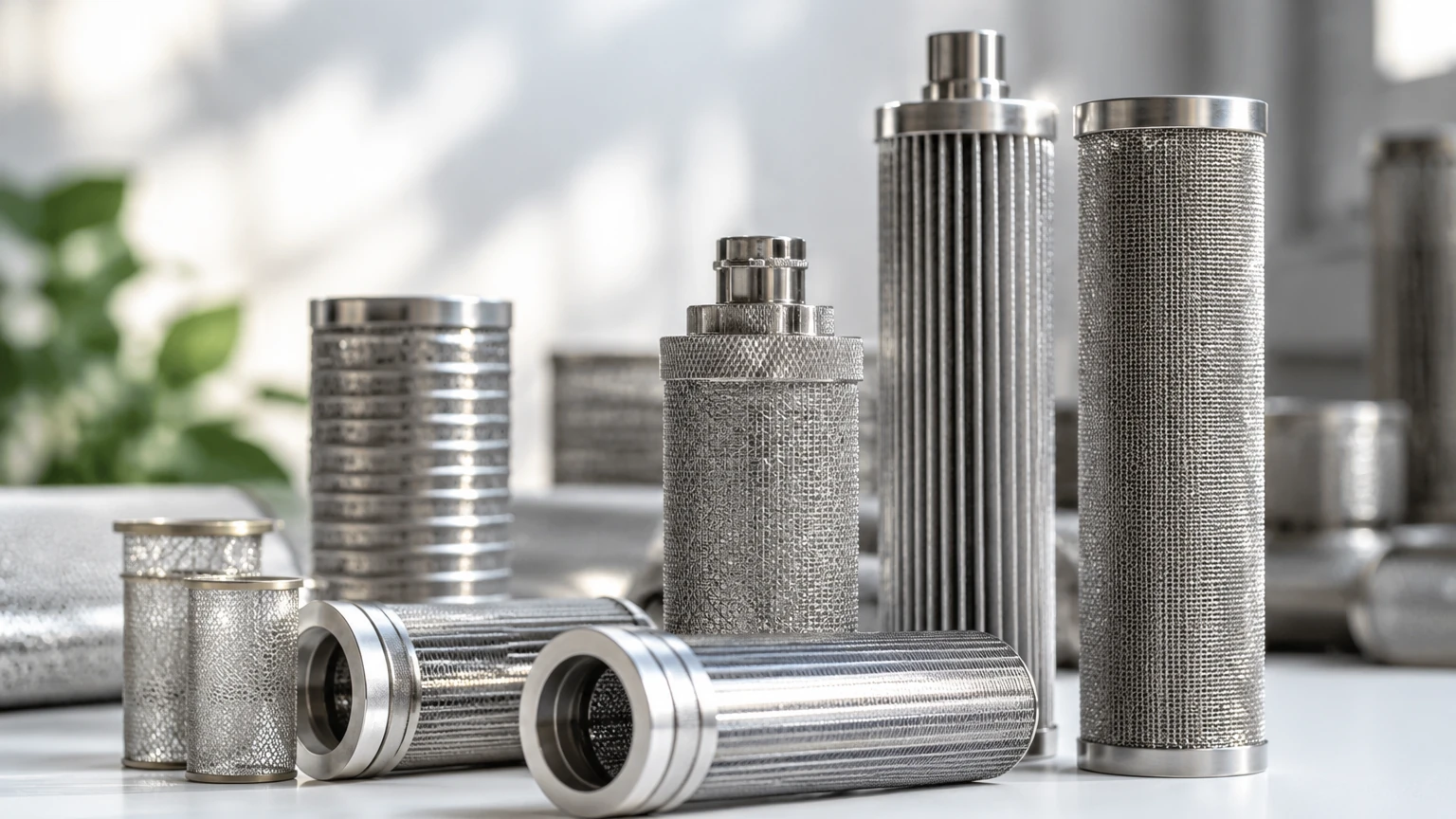
The first stage involves removing bulk liquids and large particulates. This is where high-durability components, such as those found on the Main Page of specialized manufacturers, play a vital role. Stainless steel wire mesh filters are often utilized here to capture particles down to 10–25 microns. These components must withstand high flow rates and potential pressure surges without deforming.
2. High-Efficiency Coalescing
After bulk removal, coalescing filters are used to eliminate fine oil mists and water aerosols. These filters work by forcing the air through a dense mat of fibers, causing small droplets to collide and form larger drops that drain away. In breathing air systems, sub-micron coalescing filters are essential to reduce oil content to levels below 0.01 mg/m³.
3. Adsorption (Activated Carbon)
Oil vapors and odors cannot be removed by mechanical filtration alone. An activated carbon stage is required to adsorb gaseous hydrocarbons. This stage is critical for ensuring the air is "sweet" and free from the "compressor smell" that can cause nausea or dizziness in workers using respirators.
4. Catalytic Conversion
Perhaps the most dangerous contaminant is carbon monoxide (CO), which can enter the system through the compressor intake or be generated by the partial combustion of lubricants in a failing compressor. Since standard filters do not stop CO, a catalytic converter (typically using Hopcalite) is used to oxidize CO into CO2. Note that this catalyst is highly sensitive to moisture, requiring a desiccant dryer upstream to maintain a low dew point.
Engineering Considerations for Stainless Steel Filter Components
In the design of breathing air purification sets, the material integrity of the filter housing and internal elements is paramount. Stainless steel (specifically Grades 304 and 316L) is the preferred material for several technical reasons:
* Corrosion Resistance: Breathing air systems often handle high levels of moisture before the drying stage. Stainless steel prevents the formation of rust, which could otherwise flake off and become a particulate contaminant.
* Pressure Integrity: SCBA charging stations operate at pressures up to 300-450 bar. Precision-engineered metal filter elements provide the structural rigidity necessary to maintain filtration accuracy under these extreme conditions.
* Thermal Stability: The process of compressing air generates significant heat. Unlike plastic or low-grade polymer components, stainless steel filter media maintain their pore structure and mechanical properties at elevated temperatures.
* Cleanability: In pharmaceutical or food-grade breathing air applications, the ability to sterilize or deep-clean filter components is essential. Stainless steel wire mesh can be ultrasonically cleaned or backflushed, extending the service life of the system.
Managing Pressure Drop and Flow Rates
A common challenge in breathable compressed air systems is balancing filtration efficiency with pressure drop. Every stage of filtration introduces a restriction to the airflow. For a worker at the end of a long hose line, a significant drop in pressure can result in insufficient air supply.
Engineers must calculate the Differential Pressure (ΔP) across the entire filter string. A high ΔP usually indicates that the filter elements are loaded with contaminants and require replacement. Using high-porosity stainless steel mesh as a pre-filter can help protect more expensive, high-efficiency downstream filters, thereby optimizing the overall pressure profile of the system and reducing energy consumption by the compressor.
Risks of Contamination and System Failure
The risks associated with poor-quality breathable compressed air are categorized into acute and chronic effects.
1. Carbon Monoxide Poisoning: CO binds to hemoglobin more effectively than oxygen, leading to chemical asphyxiation. This is the most critical risk in breathing air systems.
2. Oil Mist Inhalation: Long-term exposure to oil aerosols can lead to lipoid pneumonia and other respiratory complications.
3. Particulate Irritation: Fine dust or metal scales can irritate the lungs and damage the valves within the respirator or breathing mask.
4. Microbiological Growth: If moisture is not properly removed, the warm, dark environment of a receiver tank or filter housing can become a breeding ground for bacteria and mold.
To mitigate these risks, systems must include continuous monitoring for CO and moisture (dew point). If levels exceed the set threshold, an automated shut-off valve should trigger to prevent contaminated air from reaching the user.
Maintenance and Replacement Cycles
Maintaining a breathable compressed air system requires a proactive approach rather than reactive repair. Because the safety of personnel is at stake, maintenance schedules are often dictated by hours of operation or fixed calendar intervals.
* Filter Element Replacement: Coalescing and particulate filters should be replaced when the differential pressure reaches a specific limit (e.g., 0.5 to 0.7 bar) or at least annually.
* Adsorbent Media: Activated carbon and catalyst towers have a finite capacity. These must be replaced based on the manufacturer’s calculated life cycle, as they do not show a pressure drop when they are saturated.
* Air Quality Testing: Regular laboratory analysis of the air is required (typically every 3 to 6 months) to ensure compliance with CGA Grade D or EN 12021. This involves taking a sample at the point of use and sending it to an accredited lab for gas chromatography and gravimetric analysis.
Conclusion
Providing breathable compressed air is a significant technical responsibility that goes far beyond simple air compression. It requires a deep understanding of contaminant chemistry, filtration physics, and material science. By implementing a robust multi-stage treatment system—utilizing high-quality stainless steel filtration components for durability and precision—industrial operators can ensure the safety and productivity of their teams in hazardous environments. For those specifying components for these critical systems, focusing on filtration accuracy and material compatibility is the foundation of a reliable breathing air solution.
