


Polyester-based Foam
In the landscape of industrial filtration and material engineering, selecting the correct media requires a granular understanding of chemical compatibility, mechanical durability, and pore geometry. Among the various flexible cellular materials available to engineers, polyester-based foam stands out for its specific physical properties and resistance to hydrocarbons. Often utilized in pre-filtration, acoustic dampening, and fluid management, this material serves a distinct niche in industrial applications.
For technical professionals evaluating filtration systems, it is essential to distinguish between different types of polyurethane foams—specifically polyester and polyether—and to understand when a transition to more robust media, such as the stainless steel solutions found on our Main Page, is necessary for long-term operational efficiency.
Understanding the Chemistry and Structure of Polyester-based Foam
Polyester-based foam is a type of flexible polyurethane foam produced by the reaction of a polyester polyol with an isocyanate. The resulting molecular structure is characterized by ester linkages, which provide the material with its defining characteristics. Unlike its polyether counterpart, polyester foam typically exhibits a more uniform and regular cell structure.
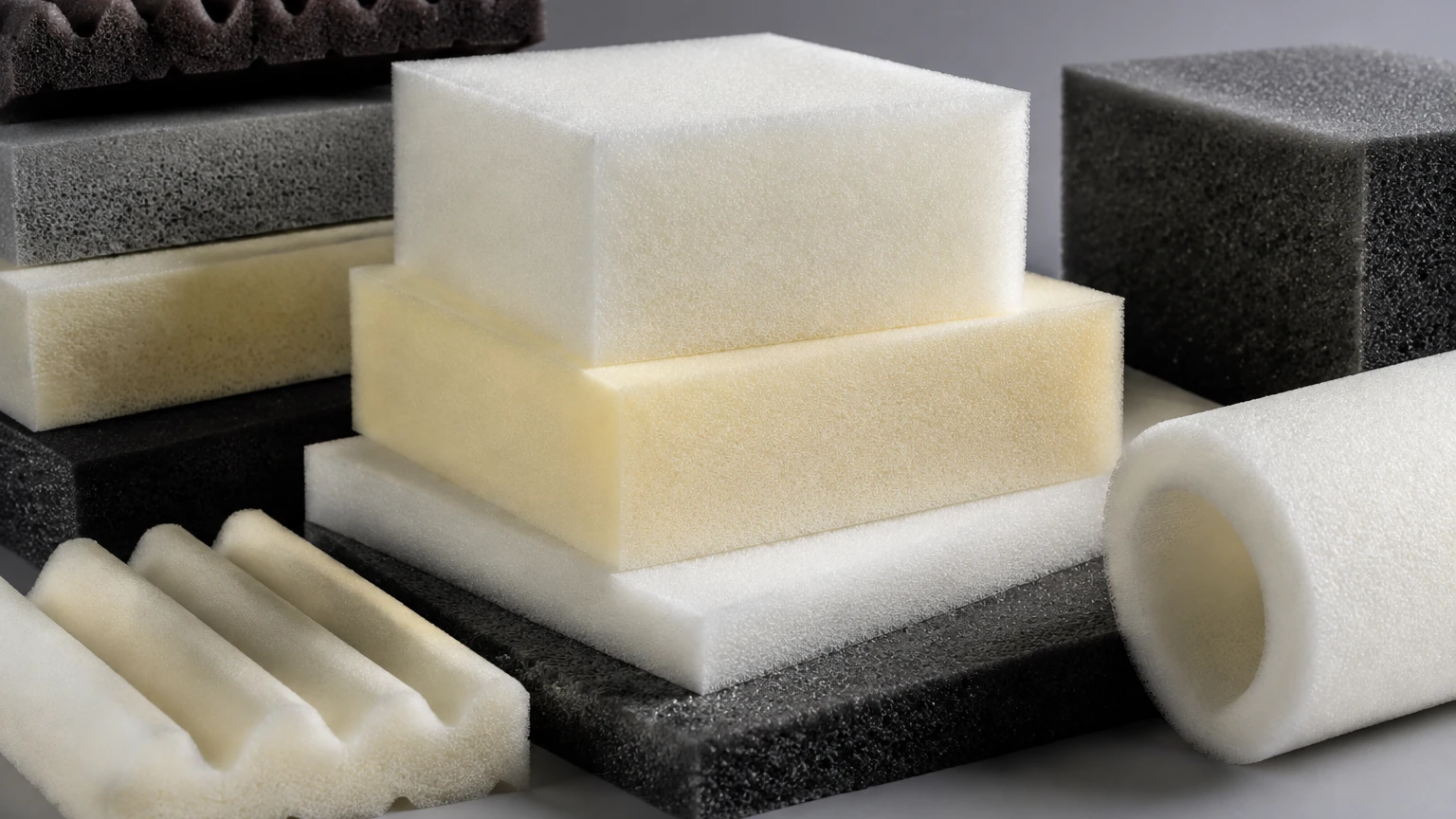
One of the most critical processes in preparing this foam for filtration is reticulation. In its raw state, polyurethane foam contains "windows" or membranes between the cell strands. Reticulation—either through thermal or chemical means—removes these membranes, leaving only the skeletal dodecahedron structure. This creates an open-cell material with high porosity and low resistance to airflow or liquid passage. For engineers, the primary metric for defining this structure is Pores Per Inch (PPI), which typically ranges from 10 PPI (very coarse) to 100 PPI (very fine).
Key Performance Advantages in Industrial Environments
The preference for polyester-based foam in specific B2B sectors stems from several inherent mechanical and chemical advantages:
1. Superior Mechanical Strength
Compared to polyether foams, polyester-based foam offers higher tensile strength, tear resistance, and elongation. This makes it suitable for applications where the material is subjected to physical stress, such as in gaskets, seals, or filtration elements that must withstand high-velocity air streams without shedding fibers or tearing.
2. Resistance to Hydrocarbons and Solvents
The ester linkage provides excellent resistance to petroleum-based products, including oils, fuels, and many common industrial solvents. This makes it a frequent choice for automotive filtration, small engine air cleaners, and industrial equipment where contact with lubricants is inevitable.
3. Uniformity and Precision
Because the manufacturing process allows for a very consistent cell size, polyester foam provides predictable pressure drop characteristics. This uniformity is vital for engineers designing systems that require specific flow rates and filtration efficiencies.
Common Applications and Industry Use Cases
While polyester-based foam is versatile, its application is generally focused on environments where its specific chemical resistances are required.
* HVAC and Air Pre-filtration: It is often used as a primary stage filter to capture large particulates before they reach more expensive secondary filters or precision metal components.
* Acoustic Management: Due to its open-cell structure, it effectively absorbs sound waves in industrial machinery enclosures and electronic housings.
* Fluid Management and Reservoirs: In the automotive and aerospace sectors, it is used in fuel tanks to prevent sloshing and as a medium for oil filtration in low-pressure systems.
* Gasketing and Sealing: Its high compression set resistance (the ability to return to its original shape after being squeezed) makes it an ideal material for industrial seals that must prevent dust and moisture ingress.
Evaluating Polyester-based Foam vs. Stainless Steel Filtration Media
For many engineering teams, the decision-making process eventually leads to a comparison between synthetic foams and metallic filtration media. While polyester-based foam is cost-effective for disposable or low-demand applications, it has clear physical boundaries that may necessitate a move toward stainless steel wire mesh or sintered metal cartridges.
Temperature Limitations
Polyester foam is generally limited to operating temperatures below 250°F (121°C). In high-temperature chemical processing or steam applications, the polymer will degrade rapidly. In contrast, stainless steel filters can operate at temperatures exceeding 800°F, depending on the alloy and housing design.
Hydrolysis Risks
A significant disadvantage of polyester-based foam is its susceptibility to hydrolysis. When exposed to high humidity, steam, or water for extended periods—especially at elevated temperatures—the ester bonds can break down, leading to a phenomenon known as "crumbling." For water treatment or aqueous chemical filtration, polyether foams or stainless steel mesh are usually preferred over polyester.
Cleaning and Reusability
Foam filters are often considered semi-disposable. While they can be rinsed or vacuumed, they eventually lose their structural integrity and filtration efficiency. Stainless steel filtration components, such as those manufactured by Kaifil, are designed for hundreds of cleaning cycles via ultrasonic baths or backwashing, offering a lower total cost of ownership (TCO) in high-volume industrial lines.
Critical Selection Criteria for Engineers
When specifying polyester-based foam for a project, procurement and engineering teams should confirm the following technical parameters with their suppliers:
1. PPI (Pores Per Inch): This determines the filtration rating. A higher PPI captures smaller particles but increases the initial pressure drop across the system.
2. Density: Measured in pounds per cubic foot (PCF), density affects the foam's durability and ability to withstand compression.
3. Chemical Compatibility: Beyond hydrocarbons, verify resistance to any specific cleaning agents or byproduct chemicals present in the process stream.
4. Environmental Exposure: Determine if the foam will be exposed to UV light or high humidity, as these factors accelerate the degradation of polyester-based polymers.
Maintenance, Replacement Cycles, and Total Cost of Ownership
In a B2B context, the "cheaper" material can often become the more expensive solution if replacement cycles are not optimized. Polyester-based foam requires regular inspection. Signs of failure include "set" (where the foam no longer rebounds after compression), surface cracking, or a change in color (often indicating UV or chemical damage).
For critical industrial equipment, engineers must weigh the labor costs of frequent foam replacement against the capital expenditure of a permanent stainless steel filtration system. In many hydraulic and chemical processing applications, the precision and durability of metal filters provide a more stable process environment, reducing the risk of downstream contamination that can occur if a foam filter begins to shed particles due to age or chemical stress.
Conclusion: Selecting the Right Path for Filtration
Polyester-based foam remains a staple in the industrial world due to its mechanical toughness and hydrocarbon resistance. It serves as an excellent solution for pre-filtration and low-temperature gas-phase applications. However, as process demands increase—whether through higher temperatures, more aggressive chemicals, or the need for absolute filtration ratings—the limitations of synthetic foams become apparent.
At Kaifil, we specialize in the next step of the filtration evolution. By providing precision-engineered stainless steel wire mesh, filter cartridges, and custom metal components, we help industries achieve levels of durability and performance that synthetic materials cannot match. For engineers looking to optimize their filtration systems for the long term, reviewing the technical specifications of metal media is a necessary step in the design process.
To explore our full range of professional filtration solutions and technical support, we invite you to visit our Main Page and consult with our engineering team regarding your specific application requirements. Whether you are transitioning from foam to metal or designing a new high-performance system, selecting the right material is the foundation of operational success.
