


Reactor Bed
In the landscape of industrial processing, the reactor bed stands as a critical component where chemical transformations, purification, and filtration occur. Whether utilized in petrochemical refining, pharmaceutical synthesis, or advanced water treatment, the integrity and efficiency of a reactor bed are directly dependent on the precision of its internal components. For engineers and procurement specialists, understanding the mechanics of bed stabilization, catalyst retention, and fluid dynamics is essential for optimizing production yield and ensuring equipment longevity.
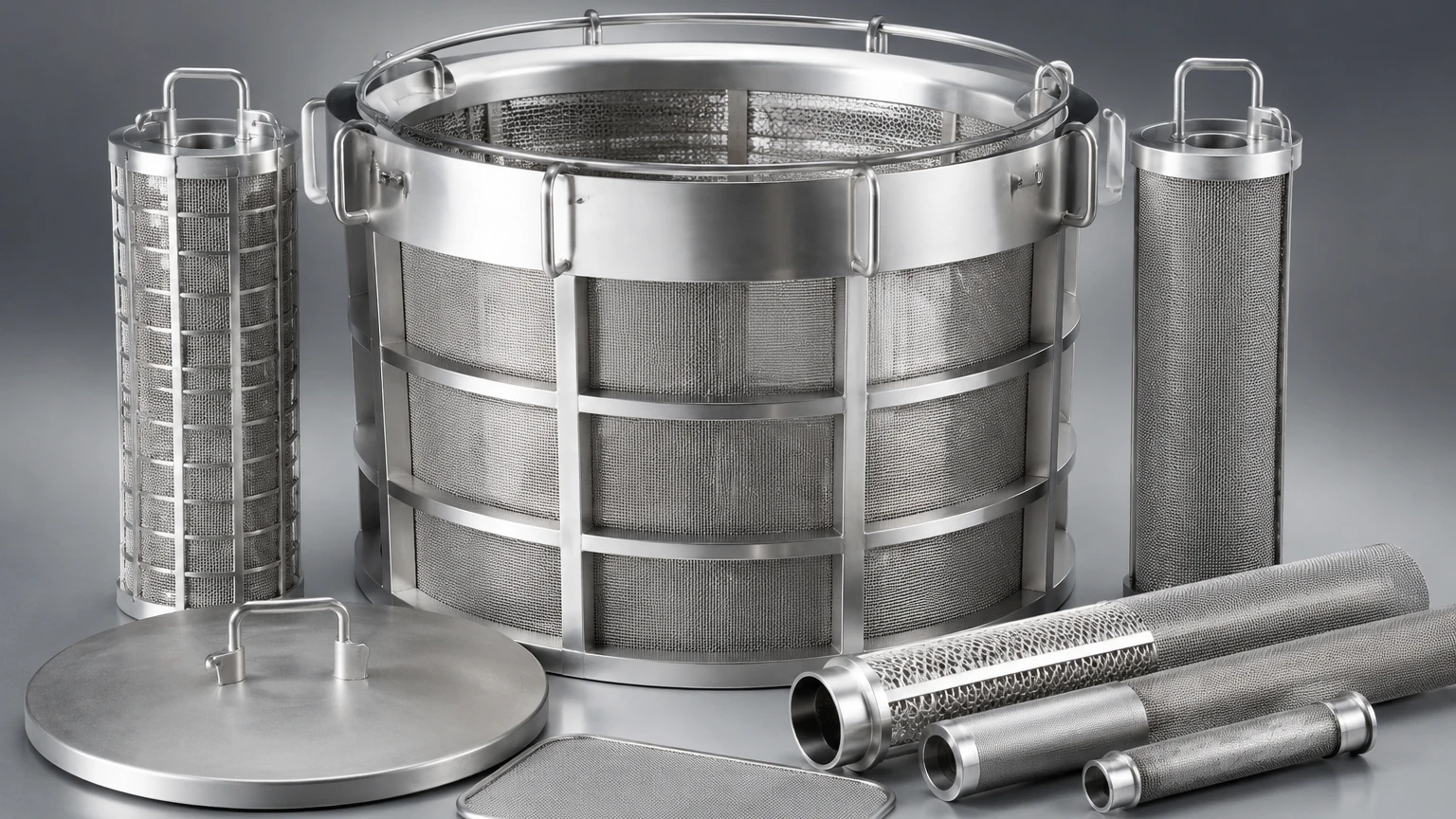
As a specialized manufacturer of stainless steel filtration solutions, Kaifil provides the technical components necessary to support these demanding environments. From the support grids that hold the weight of the media to the fine wire mesh screens that prevent catalyst migration, the engineering behind reactor internals is a discipline of precision and durability.
Fundamentals of Reactor Bed Design and Functionality
A reactor bed is essentially a vessel or a section of a vessel filled with solid particles, often catalysts, adsorbents, or ion-exchange resins. The primary function is to facilitate a reaction or a separation process as a fluid (liquid or gas) passes through the stationary or moving solids. There are several primary configurations used in modern industry:
Fixed-Bed Reactors
In a fixed-bed reactor, the solid particles are held in a stationary position. The fluid flows through the voids between the particles. This is the most common configuration for large-scale chemical synthesis. The primary challenge here is maintaining a uniform flow across the entire cross-section of the bed to prevent "channeling," where the fluid finds a path of least resistance, leaving large portions of the catalyst unused.
Fluidized-Bed Reactors
In these systems, the fluid is passed through the solid media at high enough velocities to suspend the particles, making the bed behave like a fluid. This enhances heat and mass transfer but introduces significant mechanical wear on the reactor internals due to the constant motion of the particles. Filtration components in fluidized beds must be exceptionally abrasion-resistant.
Moving-Bed Reactors
In moving-bed systems, the catalyst or media is continuously added at the top and removed from the bottom. This allows for continuous regeneration of the media without shutting down the process. The internal screens and support structures must be designed to facilitate the smooth flow of solids while maintaining effective filtration of the process fluid.
The Importance of High-Performance Filtration in Reactor Systems
The performance of any reactor bed is intrinsically linked to the quality of its filtration and retention systems. Without high-precision metal components, the operational risks increase exponentially. The role of stainless steel filtration in these systems covers several key areas:
Catalyst Retention and Recovery
Catalysts are often the most expensive component of a chemical process. Fine wire mesh filters and sintered metal cartridges are used at the outlet of the reactor bed to ensure that no catalyst particles escape into the downstream equipment. This is known as preventing "catalyst migration." Even small amounts of catalyst loss can lead to significant financial deficits and can contaminate the final product.
Support and Stability
The "bed" requires a physical floor. This support structure must be capable of bearing the combined weight of the media and the hydraulic pressure of the fluid flow. High-strength stainless steel support grids, often integrated with layers of wire mesh, provide the structural foundation. If the support fails, the entire reactor bed can collapse, leading to catastrophic system failure and extensive downtime.
Protection of Downstream Equipment
Beyond the reactor itself, downstream components such as pumps, heat exchangers, and sensitive instrumentation must be protected from particulate matter. Fine filtration at the reactor bed outlet serves as a primary defense mechanism, ensuring that the fluid entering the next stage of the process is free of debris and fines.
Engineering Challenges: Pressure Drop and Flow Distribution
When designing or specifying components for a reactor bed, engineers must balance two competing factors: filtration efficiency and pressure drop.
Managing Pressure Drop
Pressure drop is the loss of fluid pressure as it moves through the reactor bed and its associated filters. A high pressure drop requires more pumping power, increasing operational costs. It can also indicate that the filter is plugging or that the media is compacting. Precision-engineered wire mesh allows for high open-area ratios, which minimizes resistance to flow while still providing the necessary particle retention.
Ensuring Uniform Flow Distribution
If the fluid does not distribute evenly across the reactor bed, the efficiency of the reaction drops. Areas of low flow may result in underutilized catalyst, while areas of high flow can lead to local overheating or rapid catalyst deactivation. Internal distributors and specialized filter screens are designed to diffuse the incoming fluid, ensuring that every cubic centimeter of the reactor bed is involved in the process. For more information on how custom components support these goals, you can visit the Main Page.
Material Selection for Demanding Reactor Environments
The environment inside a reactor bed is often characterized by extreme temperatures, high pressures, and corrosive chemical agents. Consequently, the choice of material for filtration components is not merely a matter of cost, but of survival.
1. Stainless Steel 316L: The industry standard for most chemical and pharmaceutical applications due to its excellent corrosion resistance and mechanical strength.
2. Duplex and Super Duplex Steels: Utilized in environments with high chloride concentrations where stress corrosion cracking is a concern.
3. High-Nickel Alloys (Hastelloy, Inconel): Reserved for the most aggressive acidic environments or extremely high-temperature applications where standard stainless steels would oxidize or lose structural integrity.
4. 904L Stainless Steel: Often specified for sulfuric acid service and other specialized chemical processes.
Kaifil specializes in manufacturing components from these advanced alloys, ensuring that the filter cartridges and mesh screens can withstand the specific chemical profile of the reactor bed.
Common Failure Modes in Reactor Bed Internals
Identifying potential risks before they lead to failure is a hallmark of proactive engineering. In reactor bed systems, several common failure modes must be addressed during the design phase:
Catalyst Attrition and Fines Generation
Over time, the physical movement of fluid and particles can cause the catalyst to break down into smaller pieces, known as "fines." These fines can clog the retention screens, leading to a rapid increase in pressure drop. Selecting the correct micron rating for the filter mesh is vital to balance the retention of fines with the need to maintain flow.
Mechanical Deformation
Under the weight of the reactor bed and the force of the fluid, internal components can warp or buckle. This is especially common in high-temperature reactors where the metal becomes more ductile. Engineering the support structures with the correct thickness and reinforcement is critical to preventing this deformation.
Corrosion and Erosion
Chemical attack can thin the wires of a mesh screen, eventually leading to a breach. Simultaneously, high-velocity fluid carrying abrasive particles can erode the metal surface. Regular inspection cycles and the use of erosion-resistant coatings or specialized alloys are necessary to mitigate these risks.
Customization and Technical Specifications for Procurement
Standard off-the-shelf filtration products rarely meet the specific needs of a high-performance reactor bed. Customization is usually required to ensure a perfect fit and optimal performance. When consulting with a manufacturer like Kaifil, engineers should be prepared to provide the following technical specifications:
* Micron Rating: The exact size of the smallest particle that must be retained.
* Operating Temperature and Pressure: Both steady-state and peak conditions.
* Chemical Composition: A detailed list of the fluids and solids present in the reactor.
* Mechanical Load: The total weight of the catalyst bed and the expected differential pressure across the screen.
* Flow Rate: The volume of fluid passing through the system per unit of time.
* Dimensional Constraints: The internal diameter of the vessel and the required height of the support structures.
By providing these details, procurement teams can ensure that the custom stainless steel filter cartridges or wire mesh components are engineered to the exact requirements of the application.
Maintenance and Replacement Cycles
No reactor bed internal lasts forever. Establishing a clear maintenance and replacement cycle is essential for avoiding unplanned shutdowns.
* Monitoring Differential Pressure: Continuous monitoring of the pressure drop across the bed is the best indicator of filter health. A sudden spike usually indicates plugging, while a sudden drop may indicate a breach in the screen.
* Scheduled Inspections: During planned turnarounds, all internal screens and support grids should be cleaned and inspected for signs of thinning, cracking, or deformation.
* Cleaning Protocols: Depending on the process, filters may be cleaned via backwashing, ultrasonic cleaning, or chemical baths. The durability of stainless steel allows for multiple cleaning cycles, significantly reducing the total cost of ownership compared to disposable filters.
Conclusion
The reactor bed is a complex environment where mechanical engineering meets chemical processing. The success of the operation depends on the silent performance of internal filtration and support components. By selecting high-quality stainless steel solutions and focusing on precise engineering specifications, industrial operators can achieve higher yields, lower energy consumption, and extended equipment life. For technical support and to explore a wide range of custom filtration products, professionals are encouraged to Review product options and application support to find the ideal solution for their specific reactor requirements.
