


Filtration Industrielle
In the landscape of modern manufacturing, the precision and reliability of industrial processes often hinge on the efficiency of separation technologies. Industrial filtration, or filtration industrielle, serves as a critical safeguard for equipment longevity, product purity, and environmental compliance. Unlike standard commercial filtration, industrial-grade systems must withstand extreme pressures, corrosive chemicals, and fluctuating temperatures while maintaining consistent micron-level accuracy. For engineers and procurement specialists, selecting the right filtration component is not merely a purchase but a strategic engineering decision that impacts the entire production lifecycle.
Stainless steel filtration solutions have become the industry standard for demanding applications. Their inherent durability and resistance to thermal and mechanical stress make them indispensable in sectors ranging from chemical processing to food and beverage production. Understanding the technical nuances of these components—from material grades to weave patterns—is essential for optimizing system performance and minimizing downtime.
The Role of Filtration Industrielle in Modern Manufacturing
The primary objective of filtration industrielle is the removal of solid contaminants from liquid or gaseous streams. However, the complexity of industrial environments requires filters to do more than just trap particles. They must facilitate high flow rates, resist clogging (blinding), and be capable of thorough cleaning to ensure a long service life.
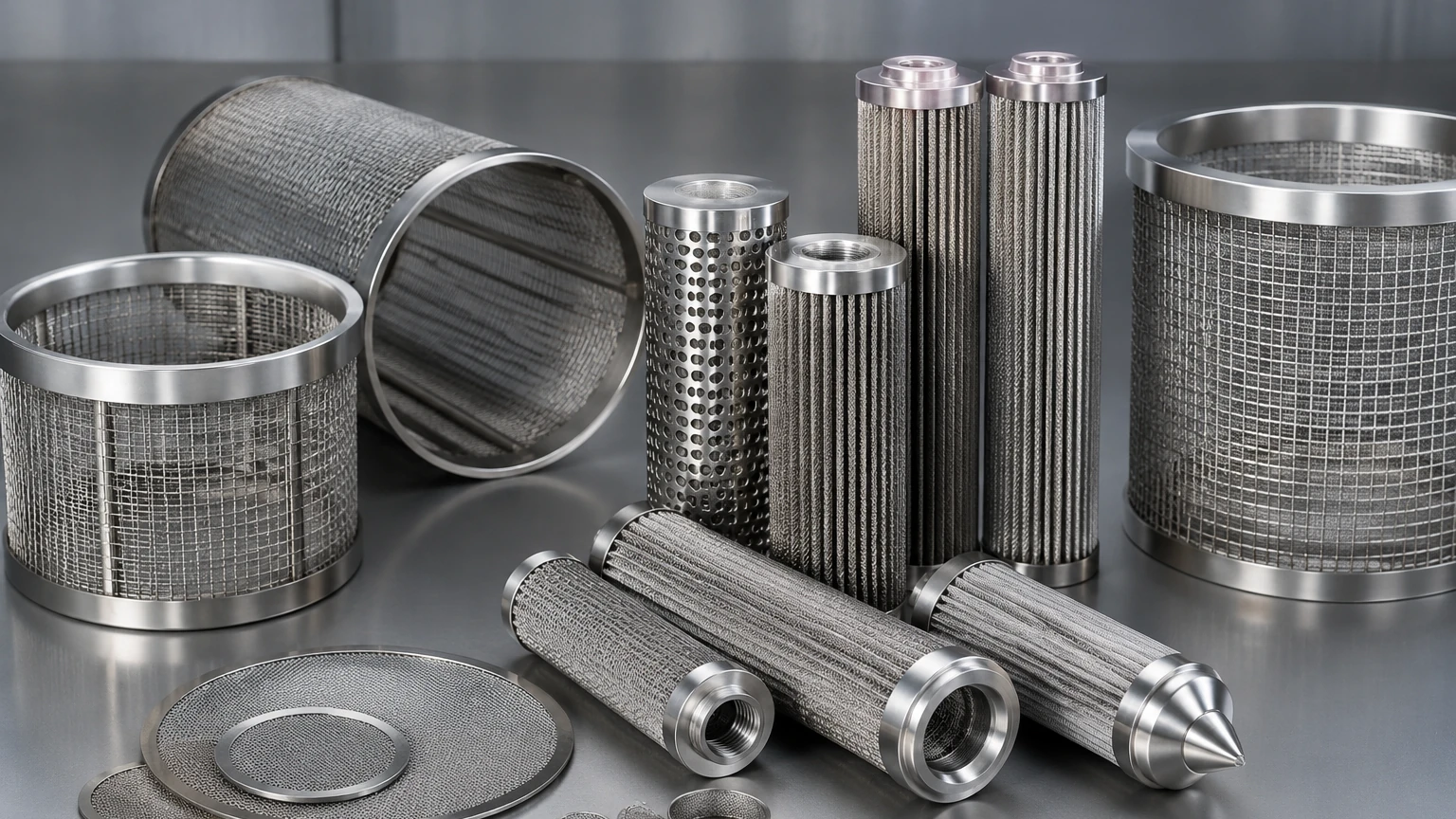
In hydraulic systems, for instance, even microscopic metallic debris can cause catastrophic pump failure. In the pharmaceutical sector, filtration must ensure sterile environments and precise chemical compositions. These diverse needs have led to the development of specialized metal filter components, such as pleated cartridges, wire mesh discs, and sintered metal elements. By utilizing stainless steel, manufacturers can provide solutions that do not shed fibers or react with the process media, ensuring that the filter itself does not become a source of contamination.
Material Selection: Engineering for Corrosive and High-Temperature Environments
The performance of an industrial filter begins with its metallurgy. Stainless steel is the preferred material due to its exceptional mechanical properties and corrosion resistance. However, the specific grade of steel must be matched to the operating environment.
304 Stainless Steel
Grade 304 is the most common stainless steel used in filtration. It offers excellent strength and good corrosion resistance for general industrial applications, such as water treatment and basic food processing. It is cost-effective but may be susceptible to chloride-induced pitting in highly saline or acidic environments.
316 and 316L Stainless Steel
For more aggressive environments, Grade 316 is the standard choice. The addition of molybdenum enhances its resistance to chlorides and industrial solvents. Grade 316L (low carbon) is specifically utilized in applications involving welding, as it prevents carbide precipitation that can lead to intergranular corrosion. This makes 316L the preferred material for pharmaceutical and high-purity chemical filtration.
Specialized Alloys
In extreme cases where standard stainless steel is insufficient—such as highly concentrated acids or temperatures exceeding 800°C—specialized alloys like Monel, Inconel, or Hastelloy may be employed. These materials ensure that the structural integrity of the filter remains intact under conditions that would cause standard metals to degrade rapidly.
Technical Specifications: Mesh Weaves and Sintered Structures
The geometry of the filter media determines its filtration efficiency and flow characteristics. In filtration industrielle, two primary structures dominate: woven wire mesh and sintered metal.
Woven Wire Mesh Patterns
Wire mesh is engineered through various weaving techniques, each offering different benefits:
* Plain Weave: The simplest pattern where wires cross over and under each other. It provides high flow rates and is easy to clean, typically used for coarse filtration.
* Twilled Weave: Allows for thicker wires and finer mesh counts by passing wires over and under two wires at a time. This increases the strength and durability of the filter.
* Dutch Weave (Plain and Twilled): These weaves use different diameters for warp and weft wires, resulting in a dense, strong mesh with very fine openings. Dutch weaves are ideal for high-pressure applications where precision is paramount.
Sintered Metal Media
Sintering is a process where multiple layers of wire mesh or metallic powders are fused together under high heat and pressure without melting the material. This creates a porous, rigid structure with exceptional mechanical strength. Sintered filters are highly resistant to pressure surges and can be engineered to achieve extremely fine absolute micron ratings, often used in gas filtration and polymer melt processing.
Evaluating Performance: Micron Ratings and Pressure Differentials
To select the appropriate filter, engineers must evaluate several key performance metrics. Misinterpreting these values can lead to either insufficient filtration or excessive energy consumption.
Nominal vs. Absolute Micron Ratings
A nominal rating indicates the filter's ability to retain a major percentage (usually 60% to 90%) of particles of a specific size. This is often used for non-critical applications. An absolute rating refers to the diameter of the largest hard spherical particle that will pass through the filter under specific test conditions. For critical processes, such as the protection of high-pressure nozzles or sterile filtration, absolute-rated filters are mandatory.
Pressure Drop (Delta P)
The pressure drop is the difference in pressure between the upstream and downstream sides of the filter. A high initial pressure drop indicates that the filter is either too restrictive for the required flow rate or that the media is improperly sized. In filtration industrielle, maintaining a low pressure drop is essential for reducing the energy load on pumps and compressors. As the filter accumulates debris, the pressure drop increases; monitoring this change is the most reliable way to determine when a filter requires cleaning or replacement.
Dirt-Holding Capacity
This metric defines the total mass of contaminants a filter can retain before reaching its terminal pressure drop. A higher dirt-holding capacity extends the intervals between maintenance cycles, thereby reducing labor costs and production downtime.
Custom OEM Solutions for Complex Industrial Systems
Standard off-the-shelf filters often fail to meet the specific spatial or performance requirements of specialized industrial machinery. This is where custom manufacturing becomes vital. Modern filtration providers focus on delivering bespoke components that integrate seamlessly into existing housings or unique equipment designs.
Customization options include:
* Bespoke Dimensions: Tailoring the diameter, length, and fitting types (such as NPT, BSP, or flange connections) to match specific equipment.
* Reinforced Structures: Adding internal support cores or external cages to prevent media collapse under high-vacuum or high-pressure conditions.
* Multi-Stage Filtration: Combining different mesh layers into a single cartridge to provide graduated filtration, which protects fine inner layers with coarser outer layers.
For organizations looking to optimize their filtration hardware, reviewing the technical capabilities on the Main Page of a specialist manufacturer like Kaifil can provide insights into the possibilities of customized metal filter design. OEM partnerships allow for the development of proprietary filtration components that enhance the competitive advantage of industrial equipment manufacturers.
Application-Specific Requirements: From Pharmaceuticals to Hydraulics
The challenges of filtration industrielle vary significantly across different sectors. A one-size-fits-all approach is rarely effective.
Chemical and Petrochemical Processing
In these industries, filters must handle aggressive solvents and high-temperature catalysts. Stainless steel cartridges are used to recover expensive catalysts and to protect downstream equipment from corrosion products. The ability of metal filters to withstand backpulsing (using gas or liquid to blow contaminants off the filter surface) is a major advantage in continuous chemical processes.
Food and Beverage Industry
Filtration in this sector is governed by strict hygiene standards. Filters must be made from FDA-approved materials and be capable of Clean-in-Place (CIP) procedures. Stainless steel wire mesh is widely used for straining juices, oils, and syrups, as it does not impart flavors or odors and can be easily sterilized using steam.
Hydraulic and Lubrication Systems
High-pressure hydraulic systems require filters that can handle rapid flow fluctuations and high viscosity fluids. Precision metal mesh filters ensure that wear particles from valves and cylinders are removed before they can cause system-wide damage. These filters often include magnetic inserts to capture fine ferrous particles that might otherwise pass through the mesh.
Water Treatment and Desalination
Industrial water treatment involves removing suspended solids from large volumes of water. Stainless steel wedge wire and mesh filters are used in pre-filtration for reverse osmosis (RO) systems, protecting delicate membranes from physical damage and fouling.
Total Cost of Ownership and Sustainable Filtration Practices
When evaluating filtration solutions, it is a mistake to focus solely on the initial purchase price. The Total Cost of Ownership (TCO) provides a more accurate picture of the economic impact. TCO includes the purchase price, installation costs, energy consumption (related to pressure drop), maintenance labor, and disposal costs.
Reusability vs. Disposable Filters
One of the primary advantages of stainless steel filtration industrielle is reusability. While polymer-based disposable filters have a lower upfront cost, they generate significant waste and require frequent replacement. In contrast, stainless steel filters can be cleaned via ultrasonic baths, chemical soaking, or backwashing. Over several years, the cost of maintaining a permanent stainless steel filter is often significantly lower than the cumulative cost of purchasing and disposing of thousands of plastic cartridges.
Environmental Impact
Sustainability is becoming a key driver in industrial procurement. By choosing durable, cleanable metal filters, companies can drastically reduce their environmental footprint. This aligns with global initiatives to reduce plastic waste and promote circular economy principles within the manufacturing sector.
Information Confirmation Before Procurement
Before finalizing a filtration specification, engineers should confirm several critical data points with their supplier:
1. Fluid Compatibility: Ensure the chosen stainless steel grade and seal materials (O-rings/gaskets) are compatible with the process fluid at operating temperatures.
2. Flow Velocity: Verify that the filter surface area is sufficient to keep flow velocity within limits that prevent media erosion or particle breakthrough.
3. Cleaning Protocols: Establish whether the filter can be cleaned using existing onsite facilities or if specialized external services are required.
4. Certification Requirements: Confirm if the application requires specific certifications, such as ISO, CE, or food-grade compliance documentation.
By addressing these factors during the design phase, technical teams can avoid costly retrofits and ensure that the filtration system performs reliably from the first day of operation.
Conclusion
Filtration industrielle is a sophisticated field where material science meets fluid dynamics. The shift toward stainless steel and precision-engineered metal components reflects a broader industrial trend toward durability, efficiency, and sustainability. Whether it is protecting a high-pressure hydraulic pump or ensuring the clarity of a pharmaceutical product, the right filtration solution is fundamental to operational success. For those seeking to explore advanced filtration components and customized OEM support, the Main Page serves as a gateway to technical resources and engineering expertise tailored for the most demanding industrial environments.
