


Aquarium Foam Filters
In the realm of aquatic life support systems and industrial water treatment, filtration media selection is a critical engineering decision. While often associated with hobbyist setups, aquarium foam filters—specifically reticulated polyurethane or polyether foams—represent a fundamental technology in mechanical and biological filtration. For engineers, facility managers in aquaculture, and B2B procurement teams, understanding the technical specifications, performance limitations, and industrial alternatives of foam media is essential for optimizing system longevity and water quality.
This guide examines the engineering principles of foam filtration, evaluates its role in large-scale aquatic systems, and compares it with high-performance alternatives like stainless steel mesh provided by manufacturers like Kaifil.
Understanding the Mechanics of Foam Filtration
Foam filters operate as depth filtration media. Unlike surface filtration, where particles are trapped on a single plane (such as a fine wire mesh), depth filtration utilizes the three-dimensional structure of the media to capture and retain solids.
The Reticulation Process
Industrial foam used in filtration is "reticulated." Standard foams often have "windows" or thin membranes between the cell struts. Reticulation is a manufacturing process—either thermal or chemical—that removes these membranes, leaving only the skeletal structure. This creates an open-cell architecture that allows fluid to pass through with minimal resistance while providing a vast internal surface area.
Mechanical vs. Biological Action
In an aquarium or aquaculture context, foam filters serve a dual purpose:
1. Mechanical Filtration: The physical entrapment of suspended solids, such as uneaten feed, waste, and plant detritus. The efficiency of this process is determined by the pore size and the tortuosity of the path the water must take through the foam.
2. Biological Filtration: The foam provides a substrate for nitrifying bacteria (*Nitrosomonas* and *Nitrobacter*). These bacteria colonize the internal struts of the foam, converting toxic ammonia into nitrite and then into relatively harmless nitrate. The high surface-area-to-volume ratio of reticulated foam makes it one of the most efficient biological media available.
Engineering Specifications: PPI and Porosity
When specifying aquarium foam filters for industrial or commercial applications, the most critical metric is Pores Per Inch (PPI). This measurement defines the density of the cell structure and directly influences the filter’s performance characteristics.
PPI Categories and Performance
* 10–20 PPI (Coarse): These foams have large pores and are primarily used for pre-filtration. They have low resistance to flow (low pressure drop) and are less prone to clogging. In B2B applications, these are often used to protect sensitive downstream components from large debris.
* 30–45 PPI (Medium): This is the standard for most biological filtration. It offers a balance between mechanical trapping efficiency and a high surface area for bacterial colonization.
* 60–100 PPI (Fine): These foams provide exceptional water clarity by trapping very small particulates. However, they have a high hydraulic resistance and require frequent maintenance or high-pressure pumps to maintain flow as they load with solids.
Hydraulic Conductivity and Pressure Drop
Engineers must calculate the pressure drop across the foam media to ensure pump compatibility. As the foam captures solids, the effective porosity decreases, leading to an increase in internal fluid velocity and a corresponding rise in pressure. In large-scale systems, failure to monitor this can lead to pump cavitation or structural failure of the filter housing.
Biological vs. Mechanical Filtration Efficiency
The efficiency of aquarium foam filters is not a static value; it evolves over the life of the filter.
Biofilm Development
In the initial stages of operation, a foam filter acts primarily as a mechanical strainer. As the system matures, a biofilm develops. While this biofilm is necessary for biological filtration, an overgrown biofilm can lead to "channeling." Channeling occurs when water takes the path of least resistance through large gaps in the foam, bypassing the fine pores and reducing the overall filtration efficiency.
Solids Loading Capacity
Compared to stainless steel cartridges or sand filters, foam has a high solids loading capacity. Because the particles are distributed throughout the depth of the media, the filter can operate for longer periods before reaching a critical pressure drop. However, once the foam is saturated, the cleaning process (typically mechanical agitation or squeezing) can be labor-intensive in industrial settings.
Material Science: Polyurethane vs. Polyether
Not all foam media is created equal. The chemical composition of the foam determines its suitability for specific environments.
1. Polyether Foams: These are generally preferred for aquatic and water treatment applications. They exhibit superior resistance to hydrolysis (breakdown in water) and are more stable in the presence of the mild acids and bases often found in biological systems.
2. Polyurethane Foams: While often cheaper, some polyurethane foams can degrade over time when continuously submerged, especially in systems using ozone or high levels of UV sterilization. Degradation leads to the release of microplastics or chemical byproducts into the water column.
For high-demand industrial environments where chemical resistance and structural integrity are paramount, engineers often look toward metallic alternatives. While foam is excellent for biological surface area, stainless steel wire mesh filters offer a level of precision and durability that polymers cannot match, particularly in high-temperature or high-pressure pre-filtration stages.
Industrial Scale Applications and Limitations
While aquarium foam filters are a staple in small-scale setups, their application in B2B sectors like commercial hatcheries, public aquaria, and hydroponics requires careful scaling.
Commercial Hatcheries
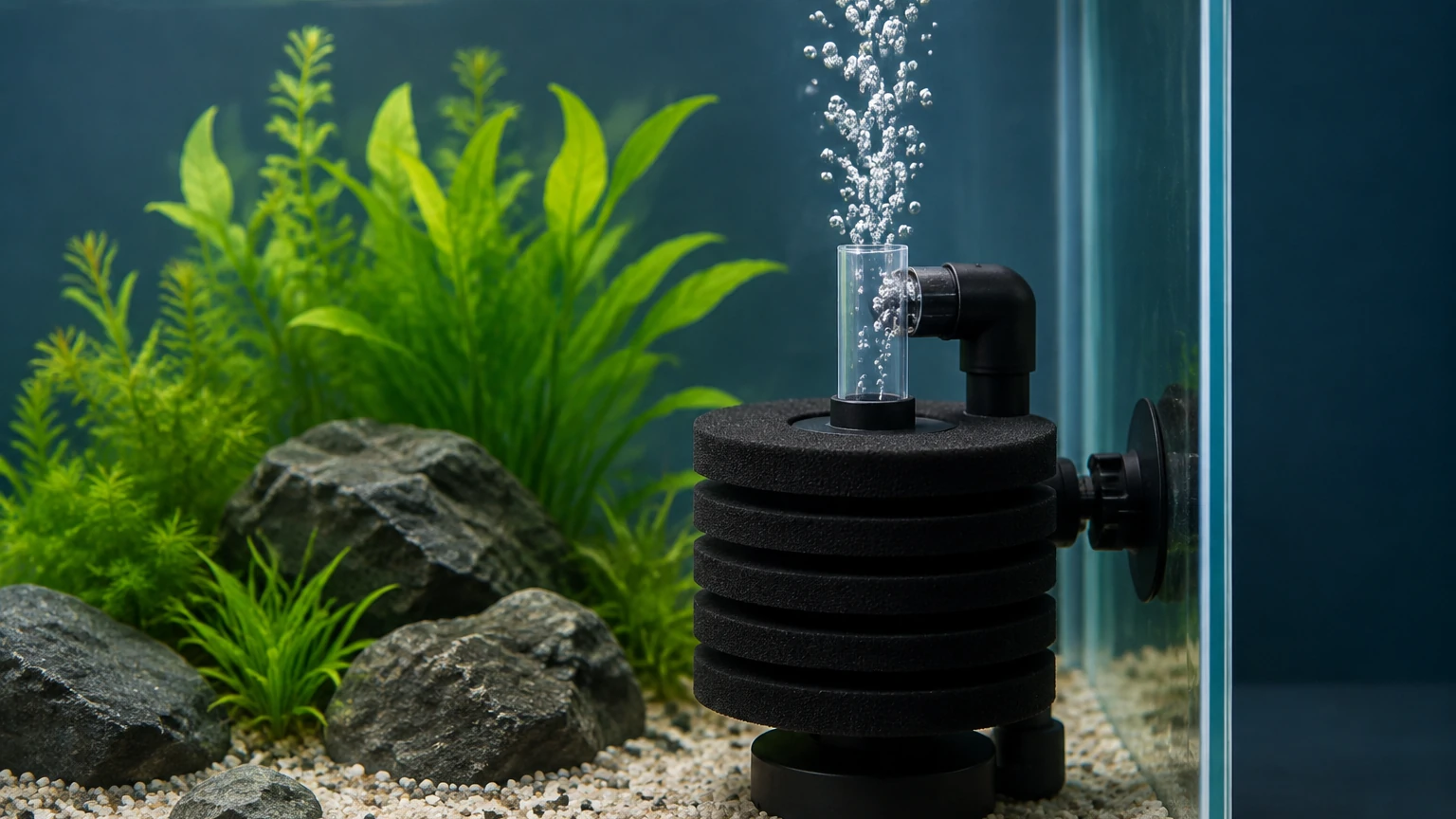
In larval rearing, foam filters are used because they provide gentle filtration. High-velocity mechanical filters can inadvertently trap and kill delicate larvae. Foam filters, particularly those powered by air (airlift filters), provide oxygenation and filtration without creating dangerous suction points.
Limitations in Large-Scale Systems
* Maintenance Labor: In a system with thousands of gallons, manually cleaning foam blocks is inefficient. Industrial systems often transition to automated backwashing filters or rotary drum filters for mechanical solids removal.
* Structural Rigidity: Foam is compressible. Under high flow rates, the media can compress, drastically reducing its porosity and causing system-wide flow issues.
* Sterilization Challenges: Foam is difficult to fully sterilize without damaging the material. In pharmaceutical or food-grade water treatment, stainless steel components are preferred because they can withstand autoclaving or aggressive CIP (Clean-In-Place) cycles.
Selection Criteria for Professional Filtration Systems
When designing or procuring a filtration system, engineers should evaluate the following criteria to determine if foam or a more robust metal solution is required:
1. Target Particle Size: If the goal is to remove particles larger than 50 microns with high precision, stainless steel mesh is often more reliable. If the goal is biological conversion, foam is superior.
2. Flow Rate and Flux: Calculate the flux (flow per unit area). High-flux applications may require the structural support of a metal filter cartridge to prevent media bypass.
3. Chemical Compatibility: Evaluate the presence of cleaning agents, ozone, or salt. While 316L stainless steel is the standard for corrosion resistance, certain polyether foams are suitable for saltwater if ozone is not used.
4. Total Cost of Ownership (TCO): Foam filters have a lower initial capital expenditure (CAPEX) but higher operational expenditure (OPEX) due to manual labor and the need for periodic replacement as the material loses elasticity.
The Role of Customization in Industrial Filtration
In many B2B scenarios, off-the-shelf foam filters do not meet the specific spatial or performance requirements of a custom-built life support system. This is where OEM manufacturing becomes vital. Manufacturers like Kaifil specialize in creating custom filtration components that bridge the gap between standard media and high-performance industrial needs.
Whether it is designing a stainless steel housing to hold foam media or replacing foam with precision-engineered wire mesh for a pre-filtration stage, customization ensures that the filtration system is tailored to the specific biological and mechanical load of the application. For those seeking to optimize their industrial filtration processes, it is advisable to Review product options and application support on the Kaifil Main Page to understand how custom metal components can enhance or replace traditional media.
Maintenance and Operational Longevity
To maintain the efficacy of foam filtration, a strict maintenance schedule must be followed. In professional settings, this involves:
* Differential Pressure Monitoring: Installing gauges before and after the filter to detect solids loading.
* Sequential Cleaning: In multi-stage systems, cleaning only a portion of the foam at a time to avoid "crashing" the biological filter (removing too many nitrifying bacteria at once).
* Media Replacement: Foam eventually loses its "spring" or ability to return to its original shape after cleaning. This indicates a loss of internal structure and a reduction in effective surface area.
Conclusion
Aquarium foam filters remain a versatile and effective tool for biological and mechanical filtration, provided they are applied within their engineering limits. For B2B applications requiring higher durability, precision, and ease of maintenance, integrating stainless steel filtration components is often the logical progression. By understanding the technical nuances of PPI, material stability, and hydraulic resistance, engineers can design more resilient and efficient water treatment systems. For more information on high-performance industrial filtration solutions and custom manufacturing, visit the Kaifil Main Page.
