


Hazardous Material Chemical Bulk Tank Storage
Managing hazardous material chemical bulk tank storage requires a rigorous approach to engineering, material selection, and process safety. In industrial environments such as chemical processing, pharmaceuticals, and water treatment, bulk storage systems are the backbone of production. However, the inherent risks associated with storing large volumes of corrosive, flammable, or toxic substances necessitate specialized infrastructure. Beyond the tanks themselves, the auxiliary systems—specifically filtration and venting components—play a critical role in maintaining fluid purity, protecting downstream equipment, and ensuring environmental compliance.
For engineers and facility managers, the challenge lies in balancing operational efficiency with stringent safety standards. This guide explores the technical requirements of hazardous material chemical bulk tank storage, with a focus on the filtration technologies essential for system integrity.
Engineering Considerations for Bulk Storage Systems
The design of a bulk storage facility begins with a comprehensive analysis of the chemical properties of the stored material. Hazardous materials are classified based on their toxicity, reactivity, flammability, and corrosivity. These factors dictate the choice of tank materials and the configuration of the piping network.
Material Compatibility
In the context of hazardous material chemical bulk tank storage, material compatibility is non-negotiable. While carbon steel may suffice for certain hydrocarbons, most aggressive chemicals require high-grade stainless steel (such as 304 or 316L) or specialized alloys. Stainless steel is preferred for its resistance to pitting and stress corrosion cracking, which are common failure modes in chemical environments. Furthermore, the internal surfaces of the tanks and the associated filtration components must be finished to specific standards to prevent sediment buildup and facilitate cleaning.
Structural Integrity and Pressure Management
Bulk tanks must be engineered to withstand both hydrostatic pressure and potential vacuum conditions during unloading. Vacuum relief and pressure management are critical; if a tank is emptied faster than air can enter, the resulting vacuum can cause structural collapse. Conversely, over-pressurization during filling can lead to catastrophic leaks. This necessitates the use of high-performance breather filters and pressure-vacuum relief valves (PVRVs) that incorporate precision metal mesh to prevent debris from entering the system while allowing for controlled gas exchange.
The Role of Filtration in Chemical Bulk Storage
Filtration is often the unsung hero of hazardous material chemical bulk tank storage. It serves two primary functions: protecting the stored product from external contamination and protecting the environment and downstream equipment from the product itself.
Protecting Product Purity
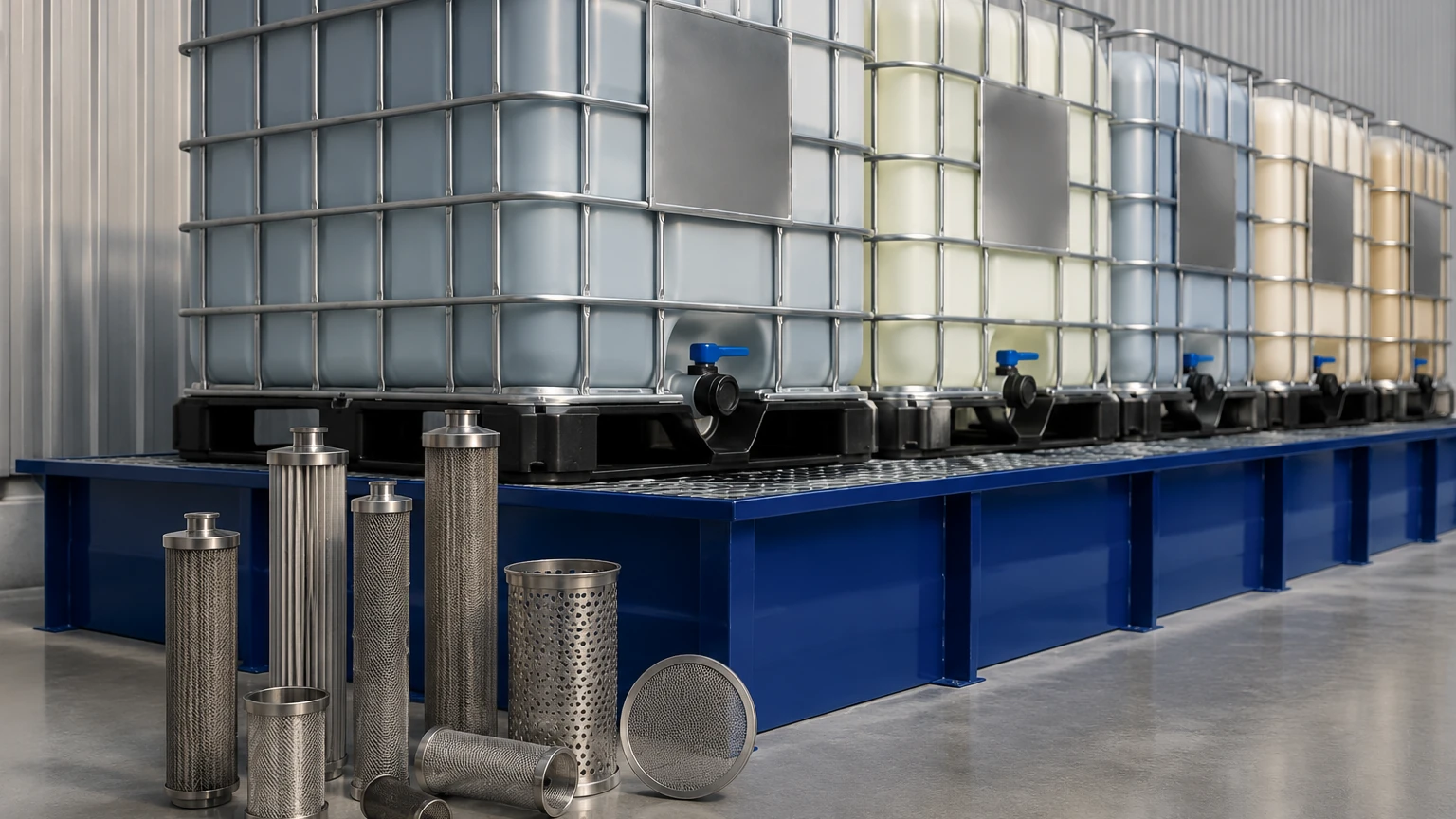
During the loading process, chemicals are often transferred from railcars or tanker trucks into the bulk storage tank. This transition point is a high-risk area for the introduction of particulates, scale, and moisture. Installing high-capacity stainless steel filter cartridges at the inlet ensures that only clean material enters the storage system. This is particularly vital in the pharmaceutical and food-grade chemical sectors, where even microscopic contaminants can ruin an entire batch.
Venting and Breather Filtration
As liquid levels fluctuate within a tank, air is either expelled or drawn in. Without proper filtration at the vent, atmospheric moisture, dust, and microbial contaminants can enter the tank, leading to chemical degradation or the formation of hazardous byproducts. Stainless steel wire mesh filters are ideal for this application because they offer high permeability with precise micron ratings, ensuring that the air entering the tank is free of particulates without creating excessive backpressure.
Technical Specifications for Industrial Filter Selection
When selecting filtration components for hazardous material chemical bulk tank storage, engineers must evaluate several technical parameters to ensure long-term reliability and performance.
Micron Ratings and Filtration Efficiency
The micron rating defines the size of particles the filter can effectively remove. In bulk storage, a dual-stage filtration approach is often employed. A coarse mesh (typically 50 to 100 microns) acts as a pre-filter to remove large debris, while a fine stainless steel sintered mesh or pleated cartridge (ranging from 1 to 20 microns) provides the final polishing. Understanding the difference between nominal and absolute ratings is essential for achieving the required purity levels.
Flow Rate and Differential Pressure
The filtration system must be sized to handle the maximum flow rate of the transfer pumps without causing a significant pressure drop. A high differential pressure indicates that the filter is becoming clogged, which can strain pumps and slow down operations. By utilizing pleated stainless steel designs, the surface area is maximized, allowing for higher flow rates and a higher dirt-holding capacity compared to standard cylindrical filters.
Temperature and Chemical Resistance
Hazardous materials are often stored or processed at elevated temperatures to maintain viscosity or stability. Filtration components must be able to withstand these thermal loads without losing structural integrity. Unlike plastic or fabric filters, stainless steel components can operate in extreme temperature ranges and are resistant to the chemical degradation caused by solvents, acids, and bases.
Safety and Risk Mitigation in Bulk Storage
The storage of hazardous materials is governed by strict regulatory frameworks, such as those established by OSHA and the EPA. Compliance requires not only robust tank construction but also the implementation of secondary containment and leak detection systems.
Preventing Environmental Contamination
In the event of an equipment failure, secondary containment systems (such as bunds or dikes) must be capable of holding the entire volume of the largest tank. Filtration plays a role here as well; drainage systems for containment areas often require specialized oil-water separators or particulate filters to ensure that any runoff treated for disposal meets environmental discharge standards.
Flame Arrestors and Explosion Protection
For flammable hazardous materials, the tank vents must be equipped with flame arrestors. These components typically utilize layers of precision-engineered stainless steel wire mesh to dissipate heat and extinguish flames before they can enter the tank. The mesh must be precisely manufactured to ensure the "maximum experimental safe gap" (MESG) is maintained for the specific gas or vapor being stored.
Maintenance and Replacement Cycles
To ensure the continued safety of hazardous material chemical bulk tank storage, a proactive maintenance schedule is required. Filtration components are wear items that must be monitored and replaced based on performance data rather than arbitrary timelines.
1. Differential Pressure Monitoring: Installing pressure gauges upstream and downstream of the filter housing allows operators to track the buildup of contaminants. A clear protocol should be in place for when a filter reaches its terminal pressure drop.
2. Cleaning vs. Replacement: One of the primary advantages of stainless steel filters is their cleanability. Depending on the contaminant, filters can be backwashed, ultrasonically cleaned, or chemically treated, significantly reducing the total cost of ownership compared to disposable alternatives.
3. Integrity Testing: For critical applications, filters should undergo regular integrity testing (such as bubble point testing) to ensure that the mesh has not been compromised by corrosion or mechanical stress.
Customization and OEM Solutions
No two chemical storage facilities are identical. Factors such as site-specific piping layouts, unique chemical blends, and varying flow requirements often necessitate customized filtration solutions. Working with a manufacturer that understands the nuances of stainless steel fabrication allows for the development of bespoke filter housings, custom micron ratings, and specialized fittings that integrate seamlessly into existing hazardous material chemical bulk tank storage infrastructure.
Customization also extends to material selection. For example, in highly saline or acidic environments, upgrading from 316L to a duplex stainless steel or a nickel-based alloy for the filter media can prevent premature failure and extend the service life of the equipment.
Conclusion
Effective hazardous material chemical bulk tank storage is a complex discipline that requires a deep understanding of fluid dynamics, material science, and safety engineering. By prioritizing high-quality filtration and venting components, operators can significantly reduce the risks of contamination, equipment failure, and environmental incidents. Stainless steel filtration solutions provide the durability and precision necessary to handle the most demanding industrial chemicals, ensuring that bulk storage systems remain efficient and compliant over their entire operational lifespan.
For engineers looking to optimize their filtration processes or source high-performance components for chemical storage, it is essential to partner with a manufacturer that offers both technical expertise and robust manufacturing capabilities. Review product options and application support to find the right filtration solutions for your specific industrial requirements and ensure the long-term integrity of your bulk storage operations.
Download Hazardous Material Chemical Bulk Tank Storage as a PDF
