


Plastic Filter Housings
In industrial filtration, the selection of a filter housing is as critical as the selection of the filter media itself. While stainless steel is often the default choice for high-pressure and high-temperature applications, plastic filter housings serve as a vital alternative for specific chemical environments, high-purity requirements, and cost-sensitive projects. Understanding the mechanical limitations, chemical compatibility, and engineering trade-offs of plastic housings is essential for any technical professional tasked with designing or maintaining a filtration system.
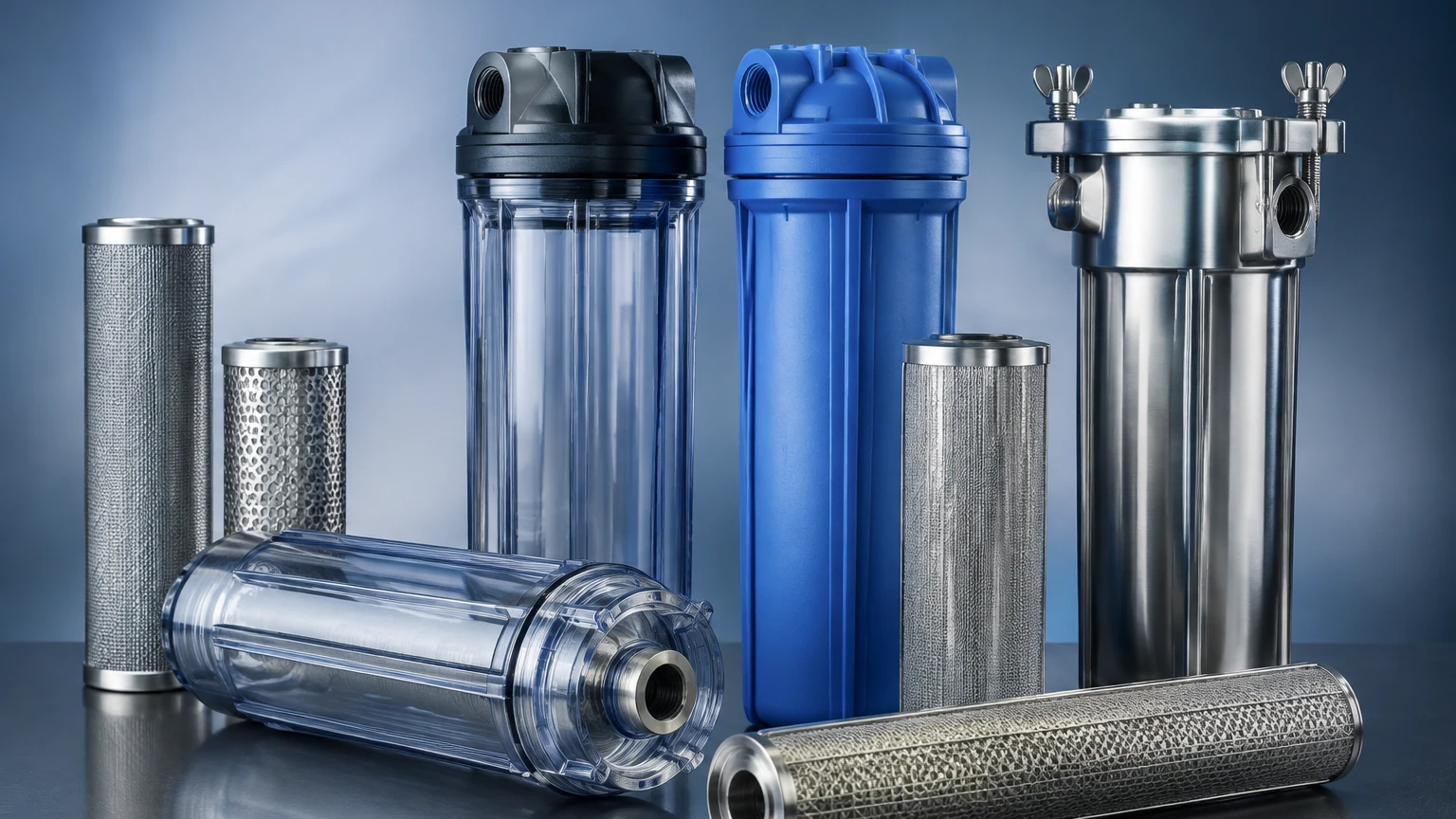
Plastic filter housings are pressure vessels designed to encapsulate filter cartridges or bags, directing the flow of fluid through the media to remove contaminants. Unlike their metallic counterparts, plastic housings offer unique advantages in corrosion resistance but require a more nuanced approach to pressure and temperature management.
Materials of Construction and Chemical Compatibility
The performance of a plastic filter housing is primarily dictated by its base polymer. Engineers must match the housing material to the chemical properties of the process fluid to prevent premature failure due to chemical degradation or stress cracking.
Polypropylene (PP)
Polypropylene is the most common material for industrial plastic housings due to its wide range of chemical compatibility and relatively low cost. It is resistant to many acids, bases, and organic solvents. However, it is susceptible to oxidative attack and is not suitable for strong oxidizing agents or high-temperature hydrocarbons. Most standard "Blue" or "Clear" housings found in water treatment are constructed from reinforced polypropylene.
Polyvinyl Chloride (PVC) and CPVC
PVC and Chlorinated Polyvinyl Chloride (CPVC) are frequently used in industrial plumbing and filtration. PVC offers excellent resistance to many corrosive fluids but has a limited temperature range (typically up to 140°F). CPVC extends this range to approximately 200°F and provides enhanced mechanical strength, making it a preferred choice for corrosive chemical processing where temperatures fluctuate.
Polyvinylidene Fluoride (PVDF)
For high-purity applications, such as those in the semiconductor or pharmaceutical industries, PVDF (often known by the brand name Kynar) is the gold standard. It is chemically inert to almost all acids and solvents and can withstand higher temperatures than PP or PVC. PVDF housings are also characterized by extremely low extractables, ensuring that the housing itself does not leach contaminants into the process stream.
Styrene Acrylonitrile (SAN) and Polycarbonate
These materials are typically used for "clear" housings, allowing operators to visually inspect the condition of the filter element without opening the vessel. While convenient, these materials are more brittle than polypropylene and have more limited chemical resistance, particularly against alcohols and certain oils.
Engineering Specifications: Pressure and Temperature Limits
The most significant technical challenge when using plastic filter housings is the relationship between temperature and pressure. Unlike stainless steel, which maintains its structural integrity across a wide temperature spectrum, the mechanical strength of plastic degrades significantly as temperature increases.
Temperature Derating
A plastic housing rated for 125 PSI at 70°F (21°C) may only be rated for 50 PSI at 125°F (52°C). Engineers must consult the manufacturer’s derating curves before installation. Operating a plastic housing near its maximum temperature and pressure simultaneously is a common cause of catastrophic failure.
Pressure Spikes and Water Hammer
Plastics are viscoelastic materials, meaning they deform under stress. While they can handle steady-state pressure, they are vulnerable to sudden pressure spikes or "water hammer" caused by fast-acting valves or pump starts. In systems prone to hydraulic shock, plastic housings should be protected by pressure relief valves or shock absorbers, or the design should pivot toward more robust materials like stainless steel.
Design Features and Configuration Options
When evaluating plastic filter housings, several design features impact both the ease of maintenance and the long-term reliability of the system.
Connection Types
* NPT/BSP Threaded: Common for smaller, single-cartridge housings. Care must be taken not to overtighten fittings, which can crack the plastic head.
* Flanged: Preferred for larger, multi-cartridge housings or high-flow systems. Flanges provide a more secure, leak-proof connection that is less susceptible to vibration.
* Socket Weld: Common in PVC and CPVC systems to ensure a permanent, leak-free joint.
Sealing Mechanisms
The seal between the housing head and the sump is typically achieved via an O-ring. The material of this O-ring (EPDM, Viton, or Nitrile) must be as carefully selected as the housing material itself. A common failure point in plastic housings is the deformation of the O-ring groove or the "squish" of the O-ring under high pressure, leading to bypass or external leaks.
Single vs. Multi-Round Housings
Single-cartridge housings are used for low-flow applications or point-of-use filtration. Multi-round plastic housings, which can hold several cartridges at once, are used for higher flow rates. However, as the size of the plastic vessel increases, the engineering challenges regarding wall thickness and structural reinforcement become more complex, often making stainless steel a more compact and durable alternative for high-capacity needs.
Comparing Plastic and Stainless Steel Filter Housings
For many industrial buyers, the choice between plastic and stainless steel involves balancing initial capital expenditure against total cost of ownership. Manufacturers like Kaifil specialize in high-performance stainless steel solutions, which provide a benchmark for comparison.
When to Choose Plastic
* Highly Corrosive Environments: In applications involving hydrochloric acid or seawater, even 316L stainless steel can suffer from pitting or stress corrosion cracking. In these cases, a plastic housing (specifically PVDF or CPVC) may offer a longer service life.
* Cost Sensitivity: For low-pressure, ambient-temperature water filtration, plastic housings are significantly more affordable than metal.
* Weight Constraints: Plastic housings are much lighter, making them easier to install in mobile systems or on plastic piping skids.
0
When to Choose Stainless Steel
* High Pressure/Temperature: If the process exceeds 150 PSI or 200°F, stainless steel is generally required for safety and durability.
* Mechanical Durability: In heavy industrial environments where the housing might be bumped or subjected to external stress, metal is far superior.
* Sanitary Requirements: While PVDF is high-purity, stainless steel allows for steam-in-place (SIP) and high-temperature sterilization that would melt or deform most plastics.
* Longevity: Stainless steel housings do not suffer from UV degradation or the long-term "creep" that can affect plastic vessels over decades of use.
Common Risks and Failure Modes
Engineers should be aware of specific risks associated with plastic housings that do not apply to metal vessels:
1. UV Degradation: Many plastics become brittle when exposed to direct sunlight. If a plastic housing is installed outdoors, it must be UV-stabilized or shielded to prevent cracking.
2. Chemical Fatigue: Some chemicals do not cause immediate failure but slowly leach plasticizers or weaken the polymer chain over time, leading to sudden failure after months of operation.
3. Thread Galling and Overtightening: Using metal fittings in plastic threads is a frequent cause of leaks. The difference in thermal expansion coefficients can cause the plastic to crack as the system heats up.
4. Creep: Under constant pressure, plastic can slowly deform. This can eventually lead to the housing sump becoming stuck in the head or the O-ring seat losing its tolerance.
Selection Checklist for Procurement and Engineering
Before finalizing a purchase of plastic filter housings, technical teams should confirm the following data points with their supplier:
* Fluid Compatibility: Has the specific concentration and temperature of the chemical been checked against a compatibility chart?
* Maximum Operating Pressure at Temperature: What is the derated pressure limit at the maximum expected process temperature?
* Flow Rate and Pressure Drop: Does the housing port size allow for the required flow without excessive differential pressure (ΔP)?
* Cartridge Compatibility: Does the housing accept standard DOE (Double Open End) or SOE (Single Open End) cartridges? Does it require specific adapters?
* Compliance: Does the housing meet FDA, NSF, or ASME Section VIII requirements if applicable?
Conclusion
Plastic filter housings are an essential component of the industrial filtration landscape, offering unmatched corrosion resistance for specific chemical applications. However, their use requires a disciplined engineering approach to ensure that pressure, temperature, and chemical variables remain within safe operating limits. For applications where these limits are exceeded, or where long-term mechanical reliability is the primary concern, pivoting to precision-engineered stainless steel components is the recommended path.
For technical professionals seeking to optimize their filtration systems with durable and high-performance components, exploring a wider range of industrial solutions is the next step. You can Review product options and application support on the Kaifil Main Page to find the right balance of material science and engineering for your specific filtration challenges.
