


What Size Cartridge Filter for My Pool
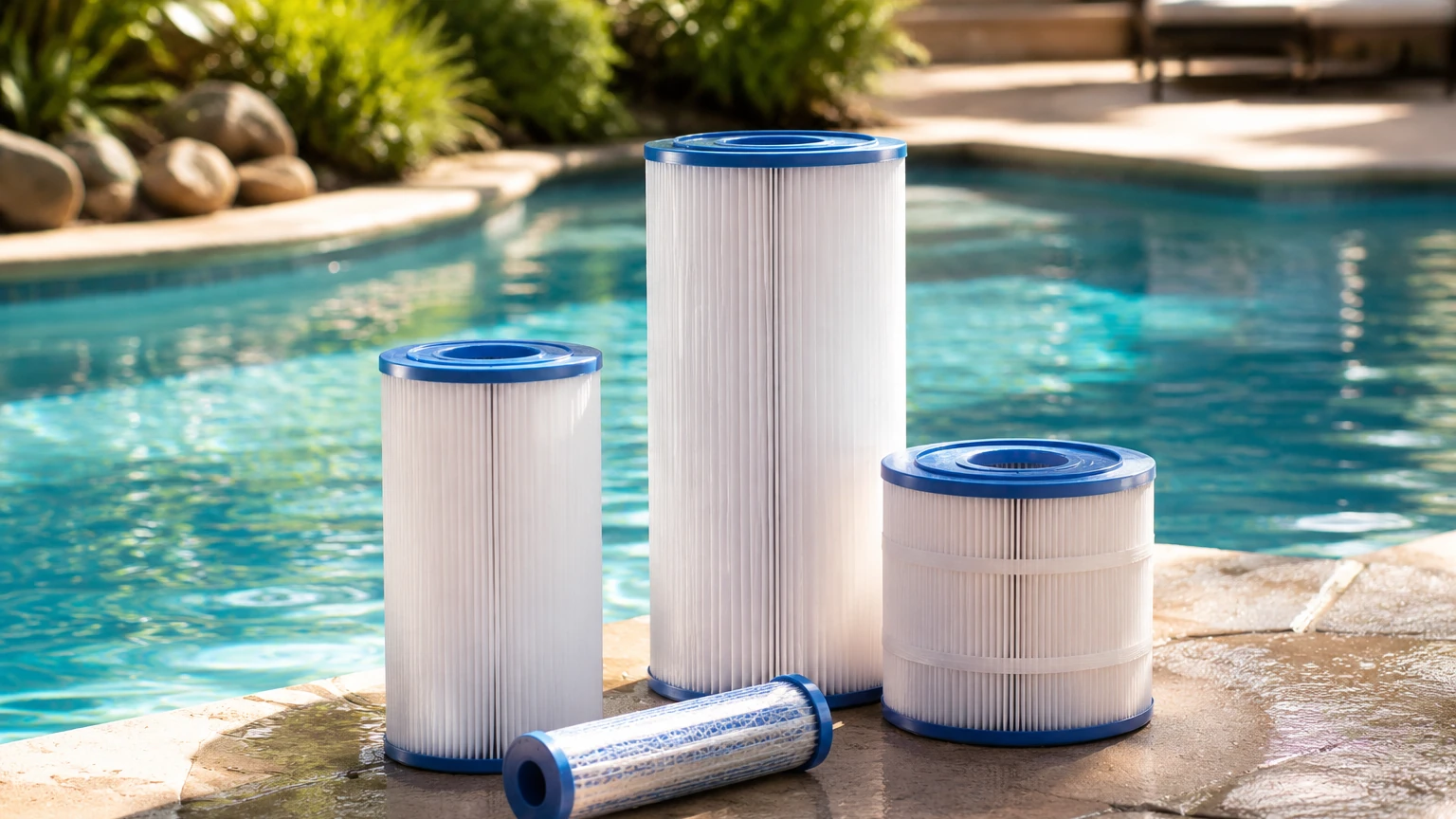
Selecting the appropriate filtration system for large-scale aquatic facilities, industrial process water pools, or commercial swimming environments requires a rigorous engineering approach. While residential users may rely on simple rules of thumb, engineers and facility managers must evaluate hydraulic loads, turnover requirements, and the physical properties of the media. Determining what size cartridge filter for my pool—or more accurately, for a specific industrial or commercial aquatic application—is a matter of balancing flow velocity against the effective filtration area (EFA) to ensure water clarity and system longevity.
At Kaifil, we specialize in high-performance stainless steel and custom filtration components designed to withstand the rigors of industrial environments. Understanding the technical nuances of sizing is the first step in optimizing a system that minimizes maintenance and maximizes operational efficiency.
The Fundamental Relationship Between Flow Rate and Filter Area
The primary metric in pool filtration sizing is the relationship between the pump's flow rate and the filter's surface area. In a cartridge system, the "size" refers to the square footage of the filtration media. For industrial-grade applications, this is often calculated based on the maximum flow rate the system will encounter, measured in gallons per minute (GPM).
Hydraulic Loading Rates
For standard pleated cartridges, the industry standard for hydraulic loading is typically 0.375 GPM per square foot of filter area for commercial applications. However, for systems utilizing high-durability materials like stainless steel wire mesh or precision-engineered cartridges, these rates may vary based on the micron rating and the nature of the suspended solids.
If the flow rate exceeds the recommended loading rate, several technical failures can occur:
1. Particle Breakthrough: High velocity forces contaminants through the media that would otherwise be captured.
2. Compaction: Excessive pressure can compress the pleats or mesh, reducing the available surface area and increasing the pressure drop.
3. Shortened Service Life: The media becomes saturated much faster, leading to frequent cleaning cycles and premature material fatigue.
Calculating Turnover Rates for Commercial and Industrial Pools
Before determining the filter size, one must establish the required turnover rate. The turnover rate is the time it takes for the entire volume of water in the pool or tank to pass through the filtration system once.
In commercial settings, local health codes or industrial process requirements often dictate these rates. A common standard for public or commercial pools is a 6-hour turnover. For industrial cooling pools or specialized aquatic displays, the requirement might be as frequent as a 1-hour or 2-hour turnover to maintain specific water chemistry and clarity standards.
The Formula
To find the required GPM, use the following calculation:
[Total Volume (Gallons) / Turnover Time (Minutes)] = Required GPM
For example, a 60,000-gallon commercial pool requiring a 6-hour (360-minute) turnover would need a flow rate of 166.6 GPM. Once this flow rate is established, it becomes the baseline for determining the necessary filter square footage.
Why Sizing Matters: Pressure Drop and Pump Efficiency
One of the most critical engineering considerations in filtration is the clean pressure drop ($ΔP$). This represents the resistance to flow created by the filter housing and the media itself. When asking "what size cartridge filter for my pool," it is essential to consider the Total Dynamic Head (TDH) of the system.
An undersized filter increases the TDH, which forces the pump to work harder to maintain the required flow rate. This leads to increased energy consumption and accelerated wear on the pump motor. Conversely, an oversized filter provides a lower $ΔP$, which allows the pump to operate more efficiently on its performance curve.
In industrial filtration, we often recommend "over-sizing" the effective filtration area by 20% to 50% beyond the minimum requirement. This strategy provides several benefits:
* Extended Cleaning Cycles: More surface area means more capacity for debris before the pressure rises to the cleaning threshold.
* Improved Particle Capture: Lower velocity through the media allows for more efficient depth filtration and surface cake formation.
* Reduced Energy Costs: Lower resistance allows for the use of variable frequency drives (VFDs) to run pumps at lower speeds while still meeting GPM targets.
Material Selection: When to Upgrade to Stainless Steel Filtration
While traditional polymer-based cartridges are common in light commercial use, demanding industrial environments often require more robust solutions. Stainless steel wire mesh filters and sintered metal cartridges offer distinct advantages in specific "pool" or large-scale water treatment applications.
Durability and Chemical Compatibility
In industrial process pools where water may contain aggressive chemicals, high temperatures, or abrasive solids, standard cartridges may degrade. Stainless steel (304 or 316L) provides superior corrosion resistance and structural integrity. These filters can withstand high-pressure differentials without collapsing, a common failure point in oversized pump systems.
Reusability and Sustainability
Unlike disposable cartridges, stainless steel filtration elements can be cleaned and reused indefinitely. In a B2B context, this significantly reduces the total cost of ownership (TCO) by eliminating the recurring expense of replacement media and the labor associated with frequent disposal. Engineers looking for long-term solutions often look toward the Main Page of specialized manufacturers to find custom metal mesh configurations that fit existing housings while providing upgraded performance.
Step-by-Step Guide to Determining the Correct Filter Size
To ensure precision in your specification, follow this technical workflow:
1. Determine Total Water Volume: Measure the exact capacity of the pool, tank, or reservoir in gallons.
2. Define the Required Turnover: Consult local regulations or process engineers to determine the required turnover time (e.g., 6 hours for public pools, 4 hours for high-load aquatic centers).
3. Calculate Required GPM: Divide volume by turnover minutes.
4. Select a Design Filtration Rate: Choose a flux rate (GPM/sq. ft.) based on the media type. For pleated cartridges, 0.375 is standard; for stainless steel mesh, consult the manufacturer's flow curves.
5. Calculate Minimum Square Footage: Divide the Required GPM by the Design Filtration Rate.
6. Apply a Safety Factor: Multiply the result by 1.2 or 1.5 to account for peak loading and to extend maintenance intervals.
Example Calculation:
* Volume: 100,000 Gallons
* Turnover: 6 Hours (360 Minutes)
* Required GPM: 277.7 GPM
* Design Rate: 0.375 GPM/sq. ft.
* Minimum Area: 740.5 sq. ft.
* Recommended Area (with 25% safety factor): ~925 sq. ft.
In this scenario, a facility manager would look for a multi-cartridge housing capable of holding enough elements to meet or exceed 925 square feet of media.
Maintenance and Longevity: The Cost of Undersizing
The initial purchase price of a filtration system is only a fraction of its lifetime cost. Undersizing a cartridge filter is a common mistake that leads to high operational expenses. When a filter is too small for the hydraulic load, the debris is driven deep into the media fibers, making it difficult to clean effectively. This results in "short cycling," where the time between cleanings becomes progressively shorter.
Furthermore, frequent cleaning—especially if high-pressure washing is required—physically degrades the media. For facilities managing large-scale water systems, the labor cost of pulling, cleaning, and reinstalling undersized cartridges can quickly exceed the cost of a larger, more efficient system. By investing in the correct size and potentially upgrading to durable metal media, organizations can achieve a more stable filtration process with predictable maintenance schedules.
Engineering Custom Filtration Solutions with Kaifil
Standard off-the-shelf solutions do not always meet the specific needs of complex industrial aquatic systems. Whether you are dealing with unique flow requirements, high-temperature process water, or specific footprint constraints, customization is often necessary.
Kaifil provides professional OEM and customized filtration solutions, specializing in stainless steel filter cartridges and wire mesh filters that offer precision and durability. Our engineering team works closely with global customers to develop components that meet exact filtration accuracies and structural requirements. When the question of what size cartridge filter for my pool arises in a professional or industrial context, we provide the technical data and manufacturing capability to ensure the solution is perfectly matched to the application.
For engineers and purchasing teams, selecting the right filter involves more than just picking a model from a catalog. It requires an understanding of fluid dynamics, material science, and long-term operational goals. By focusing on high-quality materials and accurate sizing, you can ensure that your water treatment system remains a reliable asset rather than a maintenance burden.
To explore our full range of custom stainless steel filtration components and technical specifications, please visit our Main Page and consult with our technical team for your next project.
