


Screening in Wastewater Treatment
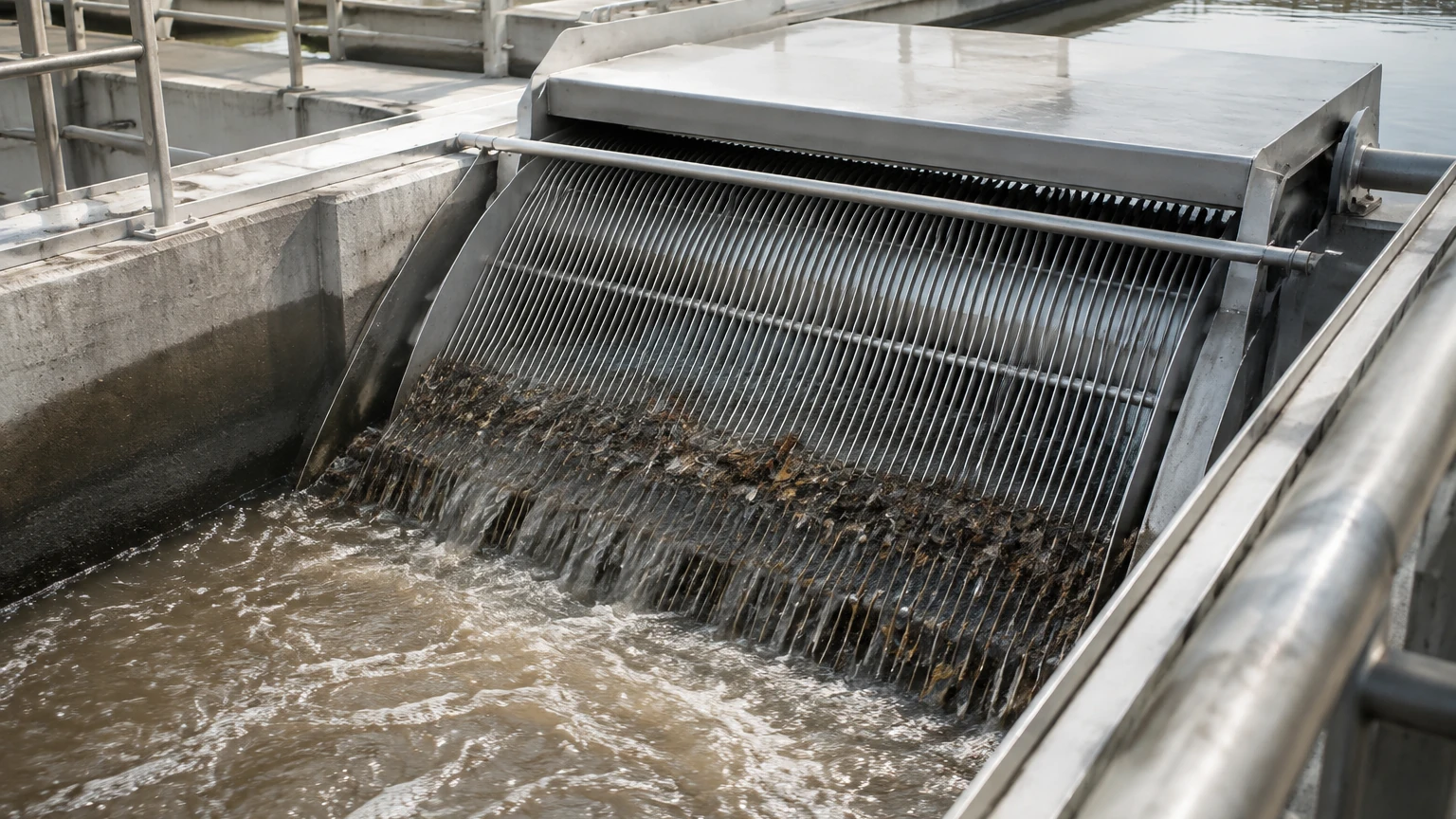
Screening in wastewater treatment is the critical first step in the preliminary treatment phase, designed to remove large solids, debris, and inorganic materials from the influent stream. This process serves as a physical barrier that protects downstream mechanical equipment—such as pumps, valves, and aerators—from damage, clogging, and excessive wear. For engineers and facility managers, selecting the appropriate screening technology is not merely a matter of filtration but a strategic decision that impacts the operational efficiency and maintenance costs of the entire treatment plant.
Industrial and municipal wastewater contains a diverse array of contaminants, ranging from plastic fragments and rags to organic matter and grit. Without effective screening, these materials can lead to catastrophic pump failures or settle in digestion tanks, significantly reducing the effective volume and biological efficiency of the system. As a manufacturer of precision filtration components, Kaifil emphasizes the importance of material integrity and hydraulic design in ensuring that these systems perform reliably under the harsh conditions typical of wastewater environments.
Fundamental Principles of Screening in Wastewater Treatment
The primary objective of screening in wastewater treatment is the separation of solids based on physical size. This is achieved by passing the wastewater through a medium with uniform openings, such as bars, perforated plates, or wire mesh. The effectiveness of the screen is determined by the size of the openings, the velocity of the fluid, and the total surface area available for flow.
From an engineering perspective, the screening process must balance two competing factors: the removal efficiency of solids and the hydraulic head loss. Smaller openings provide higher removal rates but increase the resistance to flow, leading to a higher head loss across the screen. If the head loss becomes too great, it can cause upstream flooding or bypass events. Therefore, the design of the screening system must be tailored to the specific characteristics of the influent, including the peak flow rate and the expected solids loading.
Categorization of Screening Equipment
Screening systems are generally classified into three categories based on the size of the openings: coarse, fine, and micro-screens. Each serves a distinct role within the treatment hierarchy.
Coarse Screens
Coarse screens, often referred to as bar screens or trash racks, typically have openings ranging from 6mm to 150mm. These are the first line of defense, designed to capture large objects like branches, rocks, and large plastic containers. They are often installed at the intake of the treatment plant or at pumping stations. Coarse screens can be manually cleaned in small-scale operations or mechanically raked in larger facilities to ensure continuous flow.
Fine Screens
Fine screens utilize openings smaller than 6mm, often constructed from wedgewire or perforated stainless steel plates. These screens are increasingly used as a primary treatment step to remove smaller debris that coarse screens miss, such as hair, fibers, and food particles. By capturing more solids at the beginning of the process, fine screens reduce the burden on primary clarifiers and secondary biological treatment stages. For those exploring advanced component designs for these systems, the Main Page of Kaifil offers insights into custom stainless steel filtration options.
Micro-screens
Micro-screens feature openings smaller than 0.5mm and are typically used for tertiary treatment or specialized industrial applications. These are often drum-type or disc-type filters that utilize fine stainless steel wire mesh to remove suspended solids and algae from treated effluent before discharge or reuse.
Technical Specifications and Engineering Design Criteria
When specifying components for screening in wastewater treatment, engineers must evaluate several key performance metrics to ensure long-term reliability.
1. Aperture Size and Geometry: The shape of the opening—whether it is a square mesh, a circular perforation, or a continuous slot—affects the "blinding" tendency of the screen. Continuous slots, such as those found in wedgewire, are often preferred for their non-clogging characteristics, as the V-shaped profile allows particles to pass through more easily once they clear the surface.
2. Approach Velocity: The velocity of the wastewater as it approaches the screen should be high enough to prevent grit from settling in the channel (typically above 0.3 m/s) but low enough to prevent solids from being forced through the openings (typically below 0.9 m/s).
3. Open Area Ratio: This is the ratio of the total area of the openings to the total surface area of the screen. A higher open area ratio reduces head loss and allows for a more compact screen design for a given flow rate.
4. Inclination Angle: Screens are often installed at an angle (typically 30° to 85° from the horizontal). A steeper angle reduces the footprint of the installation but may complicate the mechanical raking process.
Material Engineering: The Case for Stainless Steel
The environment within a wastewater treatment plant is exceptionally corrosive. The presence of hydrogen sulfide (H2S), organic acids, and various industrial chemicals necessitates the use of high-performance materials. Stainless steel is the industry standard for screening components due to its superior corrosion resistance and structural strength.
Kaifil specializes in the fabrication of filter components using Grade 304 and Grade 316L stainless steel. While Grade 304 is suitable for many municipal applications, Grade 316L—with its added molybdenum content—is essential for environments with high chloride levels or aggressive chemical effluents. The durability of stainless steel ensures that the screen maintains its dimensional stability and filtration accuracy over years of continuous exposure to abrasive grit and turbulent flow.
Furthermore, stainless steel components can be precision-engineered to meet tight tolerances. In fine screening applications, the uniformity of the wire mesh or the slot width in wedgewire is paramount. Variations in aperture size can lead to "leakage" of solids, which compromises the protection of downstream equipment.
Maintenance, Cleaning, and Operational Longevity
No screening system is "set and forget." The accumulation of solids on the screen surface, known as screenings, must be removed to prevent clogging. Maintenance strategies generally fall into two categories: manual and automated.
* Mechanical Raking: In most modern facilities, mechanical rakes or brushes move across the screen surface, lifting the captured solids to a discharge point. The frequency of the raking cycle is often controlled by a differential pressure sensor that triggers the cleaning mechanism when the head loss exceeds a pre-set threshold.
* Backwashing: For fine screens and micro-screens, high-pressure water jets or air scour systems are used to dislodge particles trapped within the mesh. This is particularly important for oily or greasy wastewater, which can cause rapid blinding of the filter media.
Engineers should also consider the replacement cycle of the screening media. While the structural frame of a screen may last for decades, the filtration surface is subject to wear from abrasive particles. Selecting high-quality, custom-manufactured stainless steel cartridges or mesh panels allows for easier replacement and ensures that the system returns to its original performance specifications without requiring a complete overhaul of the mechanical assembly.
Customization and OEM Solutions for Industrial Applications
While municipal wastewater follows relatively predictable patterns, industrial wastewater treatment often requires bespoke screening solutions. Industries such as food and beverage, pharmaceuticals, and chemical processing produce effluents with unique characteristics, such as high temperatures, extreme pH levels, or high concentrations of fibrous materials.
In these scenarios, off-the-shelf screens may fail prematurely or provide inadequate filtration. Custom-designed stainless steel filter cartridges and wire mesh screens allow for the optimization of wire diameter, weave pattern, and support structures to handle specific industrial loads. For example, a brewery may require a screen designed specifically to handle spent grain, while a chemical plant may need a filter resistant to specific solvents.
By working with a specialized manufacturer like Kaifil, engineering teams can develop OEM filtration components that integrate seamlessly into their existing infrastructure. This collaboration ensures that the material selection and filtration accuracy are perfectly aligned with the operational goals of the facility.
Conclusion: Selecting the Right Screening Solution
Effective screening in wastewater treatment is a prerequisite for a stable and cost-effective treatment process. By understanding the hydraulic requirements, the nature of the solids to be removed, and the environmental challenges of the site, engineers can specify screening systems that minimize downtime and maximize the lifespan of downstream assets.
When evaluating potential screening components, it is essential to confirm the grade of stainless steel, the precision of the manufacturing process, and the ease of integration into the mechanical cleaning system. For more information on technical specifications and customized filtration components, professionals are encouraged to visit the Main Page to explore the full range of industrial solutions available. Investing in high-quality, precision-engineered screening media is a fundamental step toward achieving long-term operational excellence in wastewater management.
