


Automatic Filter
In modern industrial processing, the demand for continuous operation and minimal manual intervention has driven the adoption of the automatic filter. Unlike traditional batch filtration systems that require periodic shutdowns for manual cleaning or element replacement, an automatic filter utilizes integrated cleaning mechanisms to maintain flow and efficiency without interrupting the production cycle. For engineers and facility managers, selecting the right automated system requires a deep understanding of fluid dynamics, material compatibility, and the mechanical nuances of self-cleaning technologies.
As a specialized manufacturer of stainless steel filtration components, Kaifil provides the precision-engineered elements—such as wire mesh and sintered metal cartridges—that form the heart of these sophisticated systems. This guide explores the technical considerations, selection criteria, and operational realities of implementing automatic filtration in demanding industrial environments.
Understanding the Role of Automatic Filtration in Industrial Systems
An automatic filter is designed to remove suspended solids from a liquid stream while simultaneously cleaning its own internal filter element. This dual-action capability is critical in industries where downtime is prohibitively expensive or where the process fluid is hazardous, making manual handling undesirable.
The primary objective of automation in filtration is to manage the build-up of the "filter cake" or debris. As particles accumulate on the surface of the filter medium, the differential pressure (ΔP) across the unit increases. Once a pre-set pressure threshold or time interval is reached, the system triggers a cleaning cycle. This ensures that the system remains within its optimal operating parameters, protecting downstream equipment such as heat exchangers, spray nozzles, and high-pressure pumps.
Core Technologies and Cleaning Mechanisms
There are several mechanical approaches to achieving automated cleaning. The choice of mechanism often depends on the nature of the contaminants (fibrous, granular, or organic) and the viscosity of the fluid.
1. Backwashing Systems
Backwashing is one of the most common methods used in an automatic filter. When the cleaning cycle is initiated, a portion of the filtered fluid (or an external clean fluid source) is diverted to flow in the reverse direction through the filter element. This reverse flow dislodges the accumulated debris from the mesh or wedge wire surface and flushes it out through a dedicated drain valve. These systems are highly effective for removing non-deformable solids from water and low-viscosity liquids.
2. Mechanical Scraper Filters
For fluids with higher viscosities or sticky contaminants, mechanical scraping is often preferred. In this configuration, a scraper blade or brush moves across the surface of the filter element—typically a robust stainless steel wedge wire or perforated plate. The scraper physically removes the debris, which then settles into a collection chamber at the bottom of the housing to be purged. This method is common in the food and beverage industry for processing syrups, fats, and chocolate.
3. Suction Scanner Technology
Suction scanning combines the principles of backwashing with localized high-velocity cleaning. A scanner nozzle moves in a spiral path across the inner surface of the filter screen. By opening a flush valve to the atmosphere, a high-velocity vacuum effect is created at the nozzle tip, drawing the debris off the screen. This method uses significantly less flush water than traditional backwashing, making it ideal for large-scale water treatment applications.
Material Selection and Component Engineering
The reliability of an automatic filter is fundamentally tied to the quality of its internal components. Because these systems are subject to frequent cleaning cycles and mechanical stress, the filter media must exhibit exceptional structural integrity.
Stainless Steel Wire Mesh and Sintered Metals
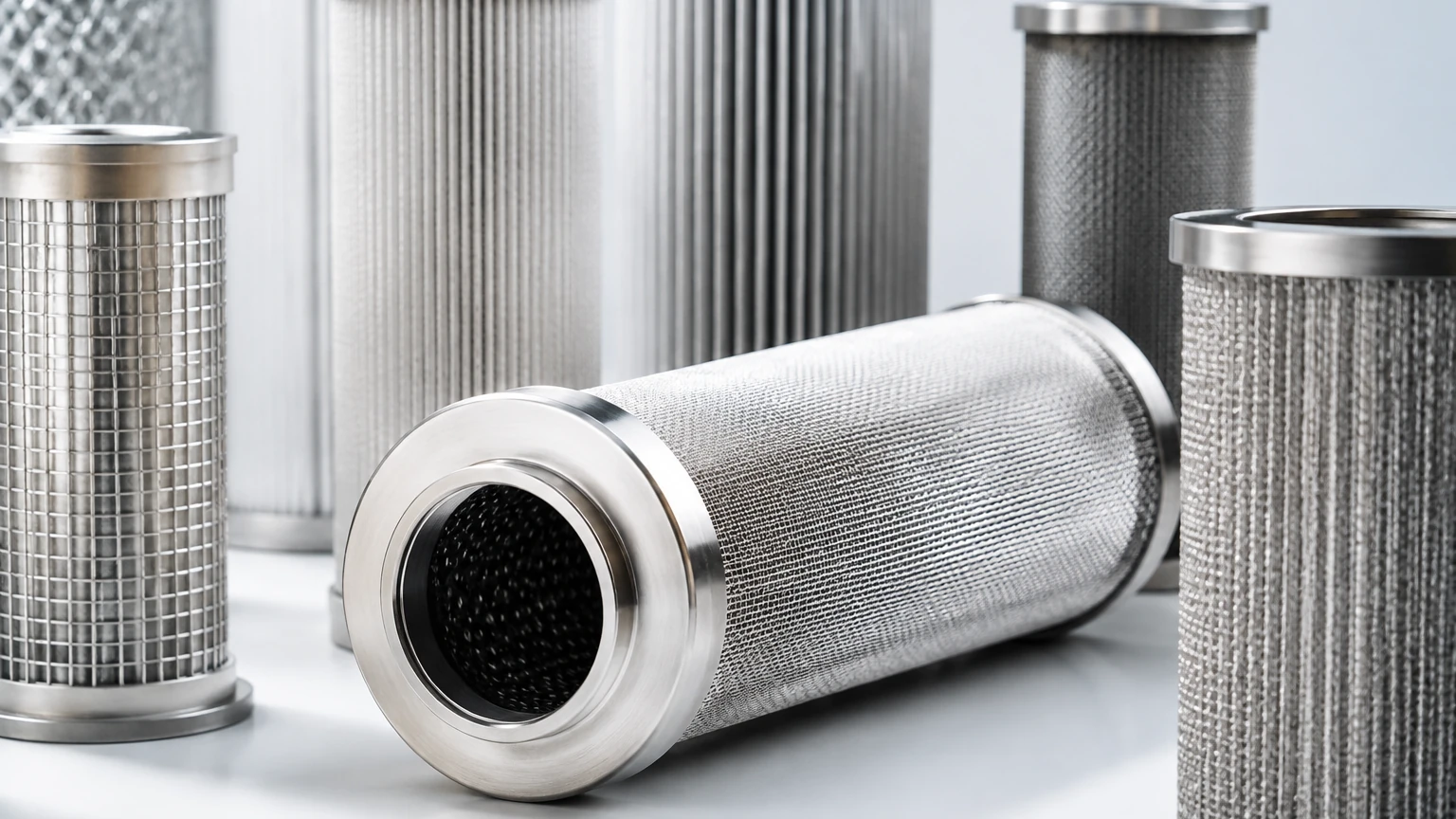
Stainless steel is the industry standard for automated filtration due to its corrosion resistance and mechanical strength. At Kaifil, we focus on high-grade alloys such as 304, 316L, and specialized Duplex steels.
* Multi-Layer Sintered Mesh: For applications requiring fine filtration (down to 1-5 microns) under high pressure, sintered mesh provides a rigid, porous structure that will not deform during backwashing. The diffusion bonding process ensures that individual wires cannot shift, maintaining a consistent pore size.
* Wedge Wire (V-Wire): Known for its non-clogging characteristics, wedge wire is frequently used in scraper-style filters. The V-shaped profile allows only two-point contact with particles, making them easier to dislodge during the cleaning cycle.
* Customized Cartridges: Depending on the housing design, filter elements may be configured as pleated cartridges to increase surface area or as cylindrical screens for high-flow bypass systems.
Key Performance Indicators for Filter Selection
When evaluating an automatic filter for a specific project, engineers must look beyond the initial purchase price. Several technical KPIs dictate the long-term viability of the installation:
Filtration Accuracy (Micron Rating)
Defining the required micron rating is a balance between downstream protection and cleaning frequency. An overly fine filter will trigger cleaning cycles too often, leading to excessive fluid loss and mechanical wear. Conversely, a filter that is too coarse will fail to protect sensitive equipment. It is essential to distinguish between nominal and absolute ratings based on the particle size distribution of the influent.
Flux Rate and Pressure Drop
The flux rate (flow per unit area) determines the size of the filter housing. A low flux rate generally leads to a longer lifespan for the filter element but requires a larger initial footprint. The clean pressure drop should typically be kept below 0.05 MPa (7 psi) to allow sufficient "room" for the differential pressure to rise before the cleaning cycle is triggered.
Fluid Compatibility and Temperature
Industrial processes often involve aggressive chemicals or extreme temperatures. The seals (O-rings), housing materials, and the filter media itself must be chemically compatible with the process fluid. For high-temperature applications (exceeding 200°C), specialized metallic seals and all-welded filter elements are required to prevent bypass and structural failure.
Mitigating Risks in Automatic Filter Implementation
While automation reduces labor, it introduces mechanical complexity. Engineers should be aware of common risks associated with these systems:
1. Material Fatigue: The repetitive nature of backwashing or scraping can lead to metal fatigue in the filter screen. Using high-quality sintered materials or reinforced mesh structures can mitigate this risk.
2. Seal Failure: Moving parts within the filter housing require dynamic seals. If these seals fail, unfiltered fluid can bypass the element, contaminating the downstream process.
3. Inadequate Waste Management: The "reject" or "flush" stream from an automatic filter contains a high concentration of contaminants. If the facility’s drainage or recovery system cannot handle this intermittent high-volume flow, it can create operational bottlenecks.
4. Oversizing/Undersizing: Undersizing a filter leads to constant cleaning, while oversizing can lead to insufficient velocity for effective backwashing in certain scanner-type designs.
Total Cost of Ownership and Operational Efficiency
The transition to an automatic filter is often justified by the Total Cost of Ownership (TCO) analysis. While the initial capital expenditure (CAPEX) is higher than that of a manual bag or basket filter, the operational savings are significant:
* Labor Savings: Eliminating the need for manual cleaning reduces man-hours and minimizes the risk of human error during reassembly.
* Consumable Costs: Unlike disposable cartridges or bags, stainless steel elements in an automatic system are designed for years of service, significantly reducing the waste stream and recurring procurement costs.
* Product Recovery: Many automated systems can be designed to concentrate the waste stream, allowing for the recovery of valuable process fluids or solids that would otherwise be lost in a disposable filter medium.
* Process Stability: By maintaining a consistent pressure drop, an automatic filter ensures that downstream processes (like cooling or chemical dosing) operate under stable conditions, improving overall product quality.
Engineering Considerations for Customization
No two industrial processes are identical, and off-the-shelf filtration solutions often fall short in specialized applications. Customization is where engineering expertise becomes vital. When working with a manufacturer like Kaifil, engineers can specify unique parameters such as:
* Custom Flange Configurations: Ensuring the filter housing fits into existing piping without extensive modifications.
* Specialized Coatings: Applying PTFE or other coatings to the stainless steel mesh to assist in the release of sticky cakes.
* Reinforced Support Structures: Designing internal cages that can withstand extreme differential pressure spikes without collapsing.
For more information on customized stainless steel filtration components and to explore how specific mesh designs can improve your system's performance, visit our Main Page.
Conclusion
The integration of an automatic filter into an industrial process is a strategic move toward operational excellence. By automating the removal of contaminants, facilities can achieve higher throughput, protect critical infrastructure, and reduce the environmental impact of disposable filter waste. However, the success of these systems relies heavily on the quality of the filtration media and the precision of the engineering behind the cleaning mechanism.
When selecting a system, engineers should prioritize material durability, ease of maintenance, and the manufacturer's ability to provide customized solutions that align with specific fluid characteristics. With the right configuration of stainless steel wire mesh and a robust mechanical design, an automatic filter becomes a reliable, long-term asset in any industrial fluid handling application. To review product options and application support for your next filtration project, please refer to the technical resources available on our Main Page.
