


Column Chromatography Frit
In the field of liquid chromatography, the efficiency of a separation process is often determined by the precision of its smallest components. Among these, the column chromatography frit plays a dual role: it serves as a physical barrier to retain the stationary phase within the column and acts as a flow distributor to ensure the mobile phase enters the packing material uniformly. For engineers and laboratory managers, selecting the correct frit is a critical step in optimizing peak resolution, minimizing dead volume, and extending the operational lifespan of expensive chromatography columns.
As industrial processes in pharmaceuticals, biotechnology, and chemical processing move toward higher pressures and more aggressive solvent systems, the demand for high-performance filtration components has increased. Understanding the technical nuances of frit selection—from material compatibility to porosity and mechanical strength—is essential for achieving reproducible results in both analytical and preparative chromatography.
The Critical Role of Frits in Chromatography Systems
A column chromatography frit is a porous disk typically positioned at both the inlet and the outlet of a chromatography column. While its primary function is to prevent the stationary phase (such as silica gel or resin beads) from escaping the column, its impact on the fluid dynamics of the system is profound.
1. Retention of Stationary Phase
The frit must have a pore size smaller than the smallest particles of the stationary phase. If the frit pores are too large, media migration occurs, leading to column voids, loss of resolution, and potential damage to downstream detectors or valves. Conversely, if the pores are unnecessarily small, they may cause excessive backpressure and become prone to premature clogging.
2. Flow Distribution
At the column inlet, the frit is responsible for transforming a narrow stream of mobile phase from the tubing into a wide, uniform front that covers the entire cross-section of the column bed. Poor flow distribution leads to "wall effects" and uneven migration of analytes, which manifests as peak broadening and tailing.
3. Protection Against Contaminants
Frits act as the final line of defense against particulate matter that may have bypassed upstream filters. By trapping these particles before they reach the packed bed, the frit protects the integrity of the separation media, which is often significantly more expensive than the frit itself.
Material Selection: Why Stainless Steel Dominates Industrial Applications
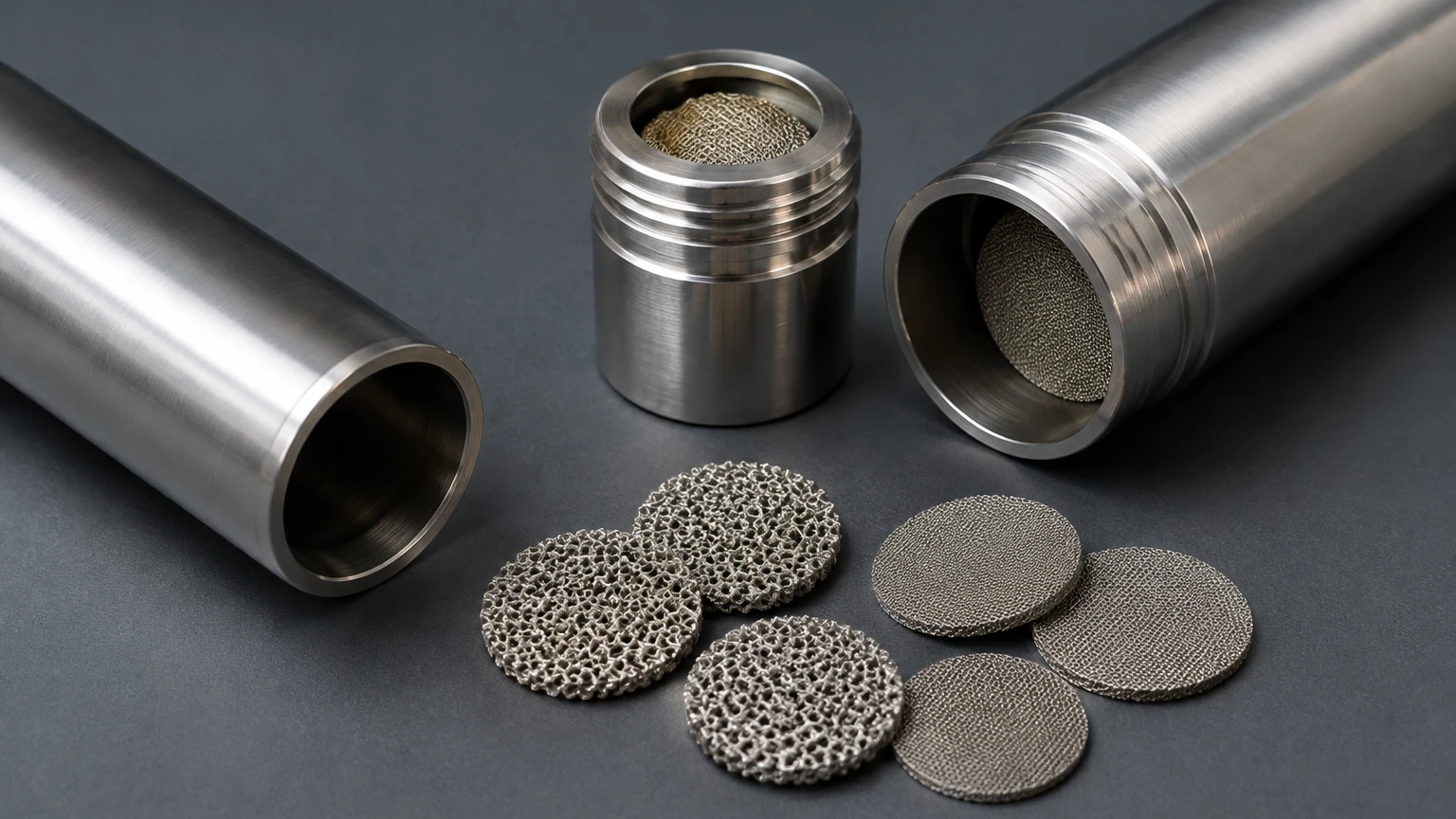
While frits can be manufactured from various materials, including polyethylene (PE), polytetrafluoroethylene (PTFE), and titanium, sintered stainless steel remains the industry standard for most high-pressure and industrial-scale applications.
Sintered Stainless Steel (316L)
Stainless steel 316L is favored for its exceptional mechanical strength and broad chemical resistance. In high-performance liquid chromatography (HPLC) and ultra-high-performance liquid chromatography (UHPLC), where pressures can exceed 10,000 psi, polymer frits may deform or compress, altering the flow path. Sintered metal frits maintain their structural integrity under these extreme conditions.
Furthermore, stainless steel offers superior thermal stability, making it suitable for applications involving high-temperature separations or sterilization processes (SIP/CIP) in pharmaceutical environments. For highly corrosive environments involving high concentrations of halides or strong acids, specialized alloys or titanium frits may be specified, but for the vast majority of industrial filtration needs, 316L provides the best balance of performance and cost-effectiveness.
Engineering Considerations for Frit Selection
When specifying a column chromatography frit for a new system or as a replacement part, engineers must evaluate several technical parameters to ensure compatibility with the separation goals.
Porosity and Micron Ratings
The "micron rating" of a frit refers to the size of particles it is designed to retain. In chromatography, a common rule of thumb is to select a frit with a pore size that is at least 50% smaller than the average particle size of the packing material. For example, a column packed with 5-micron particles typically requires a 0.5-micron or 2-micron frit.
It is important to note that porosity also affects the "permeability" of the frit. A frit with high porosity (more open space) will allow for higher flow rates at lower pressures, which is advantageous in preparative-scale chromatography where throughput is a priority.
Thickness and Diameter
The physical dimensions of the frit must be manufactured to tight tolerances to ensure a leak-free seal within the column hardware. Even a slight mismatch in diameter can create "dead volume"—pockets of stagnant fluid at the edges of the frit. Dead volume is a major contributor to extra-column band broadening, which degrades the sharpness of the chromatographic peaks.
Edge Sealing and Integration
In many modern designs, the frit is encapsulated in a polymer ring (such as PEEK or PCTFE). This ring serves as a gasket, providing a high-pressure seal against the column wall. For industrial-scale columns, metal-to-metal seals or specialized compression fittings are often used to ensure the frit remains seated during pressure fluctuations.
Performance Challenges: Clogging and Backpressure
The most common issue encountered with a column chromatography frit is an increase in system backpressure. This is usually indicative of frit clogging. Clogging can occur due to:
* Particulate Contamination: Solids from the sample or the mobile phase accumulating on the inlet frit surface.
* Media Fines: Small fragments of the stationary phase (fines) migrating to the outlet frit.
* Chemical Precipitation: Buffer salts or sample components precipitating out of solution due to changes in solvent composition during gradient elution.
To mitigate these risks, it is recommended to use pre-column filters and to ensure that all samples are filtered through a 0.22 or 0.45-micron membrane before injection. When backpressure becomes prohibitive, the frit should be replaced. In some industrial setups, sintered metal frits can be cleaned using ultrasonic baths or acid washing, though replacement is often preferred to ensure absolute cleanliness and prevent cross-contamination.
Customization and OEM Solutions in Industrial Filtration
Every chromatography application has unique requirements based on the scale of operation and the nature of the analytes. Standard off-the-shelf frits may not always meet the specific needs of specialized industrial equipment. This is where custom manufacturing becomes essential.
Manufacturers like Kaifil specialize in producing precision-engineered stainless steel filtration components tailored to specific OEM requirements. Customization options often include:
* Bespoke Geometries: Non-standard diameters and thicknesses for proprietary column designs.
* Controlled Pore Distribution: Engineering the sintering process to achieve specific flow characteristics and filtration efficiency.
* Surface Treatments: Passivation or specialized coatings to reduce non-specific binding of proteins or other sensitive biomolecules to the metal surface.
By working with a dedicated manufacturer, engineering teams can ensure that their filtration components are optimized for the total cost of ownership, balancing durability with high-resolution performance. For a comprehensive look at available filtration technologies and custom manufacturing capabilities, professionals can visit the Main Page to explore technical specifications and application support.
Total Cost of Ownership and Replacement Cycles
While the initial cost of a column chromatography frit is relatively low compared to the cost of the column and the chromatography system, its impact on operational costs is significant. A failed frit can lead to:
1. Loss of Expensive Stationary Phase: If a frit ruptures, the entire column bed may need to be replaced.
2. System Downtime: Unexpected pressure spikes require troubleshooting and maintenance, halting production or analysis.
3. Data Inaccuracy: Ghost peaks or broad peaks caused by a contaminated or damaged frit can lead to failed quality control tests and the need for re-analysis.
Establishing a proactive replacement cycle based on the number of injections or the volume of solvent processed is a best practice in regulated industries such as pharmaceuticals. Monitoring the baseline pressure of the system is the most effective way to track frit health; a 15-20% increase in pressure over the initial baseline usually indicates that the frit is reaching the end of its functional life.
Conclusion
The column chromatography frit is a foundational component of any liquid chromatography system. Its influence on flow dynamics, pressure management, and the protection of the stationary phase makes it a critical point of consideration for engineers. By selecting the appropriate material—predominantly sintered stainless steel for industrial use—and precisely defining the micron rating and physical dimensions, organizations can ensure high-efficiency separations and long-term system reliability.
As chromatography continues to evolve with smaller particle sizes and higher pressures, the engineering behind the frit must keep pace. Partnering with experienced manufacturers who understand the complexities of industrial filtration ensures that these small but vital components perform flawlessly under the most demanding conditions. For more information on custom filtration solutions and high-performance metal filter components, reviewing product options and application support on the Main Page is a recommended next step for technical procurement and engineering teams.
