


Filter Press Manufacturers
In the landscape of industrial liquid-solid separation, selecting the right equipment is a decision that impacts operational efficiency, product purity, and long-term maintenance costs. Filter press manufacturers provide the specialized machinery required to dewater slurries and recover solids across diverse sectors, including chemical processing, mining, food and beverage, and wastewater treatment. However, for engineers and procurement professionals, the challenge lies in distinguishing between standard equipment suppliers and technical partners who understand the nuances of filtration physics and material science.
A filter press is more than just a mechanical assembly; it is a pressure-driven system designed to handle specific flow rates, solids concentrations, and chemical environments. Understanding how to evaluate filter press manufacturers involves looking beyond the frame of the machine and into the engineering of the filtration media, the durability of the components, and the manufacturer's ability to provide customized solutions for demanding applications.
The Role of Filter Press Manufacturers in Industrial Separation
Industrial filter press manufacturers are responsible for designing systems that can withstand high internal pressures while maintaining a leak-proof seal. The core function of a filter press—separating solids from liquids via pressure filtration—requires a robust frame, a reliable hydraulic system, and a precisely engineered plate stack.
Manufacturers typically categorize their offerings based on the volume of the chamber and the total filtration area. For large-scale industrial operations, the choice often falls between recessed chamber presses and membrane squeeze presses. A reputable manufacturer must provide detailed technical specifications regarding the maximum feed pressure, the squeeze pressure (if applicable), and the cake thickness achieved. These parameters directly influence the cycle time and the dryness of the resulting filter cake, which are critical metrics for calculating the return on investment (ROI).
Beyond the machine itself, the manufacturer’s expertise in fluid dynamics is essential. They must assist in determining the optimal pump sizing and manifold configuration to ensure even distribution of the slurry across all chambers. Improper distribution can lead to uneven cake formation, which puts mechanical stress on the filter plates and reduces the lifespan of the filtration media.
Technical Specifications to Verify with Manufacturers
When engaging with filter press manufacturers, engineers must verify several critical technical specifications to ensure the equipment meets the application's demands. These include:
1. Filtration Area and Cake Volume: These figures determine the throughput capacity. Manufacturers should provide calculations based on the specific gravity and solids concentration of the client's slurry.
2. Operating Pressure: Standard presses often operate at 100 to 225 PSI. For applications requiring extremely low moisture content in the cake, high-pressure manufacturers may offer systems capable of exceeding these limits.
3. Closure System: The hydraulic closing system must be rated to hold the plate stack together against the full force of the feed pump. Verification of the hydraulic cylinder’s bore size and pressure rating is a standard engineering requirement.
4. Material of Construction: While the frame is typically carbon steel, the wetted parts—including the manifold, piping, and filter plates—must be compatible with the process fluid. In corrosive or high-purity environments, manufacturers often utilize stainless steel or specialized thermoplastic coatings.
For those seeking advanced filtration components that integrate with industrial systems, reviewing technical options on the Main Page can provide insights into how specialized metal filtration media can enhance standard separation processes.
Evaluating Material Compatibility and Durability
Material selection is perhaps the most critical factor in the longevity of a filter press. Filter press manufacturers often offer plates made from polypropylene, PVDF, or stainless steel. While polypropylene is common for its chemical resistance and cost-effectiveness, certain industrial environments—such as those involving high temperatures or aggressive solvents—require the mechanical strength and thermal stability of metal.
In the chemical and pharmaceutical industries, the risk of contamination and the need for rigorous cleaning protocols often dictate the use of stainless steel components. Manufacturers who specialize in precision metal filtration understand the importance of surface finish and weld integrity. For instance, using 316L stainless steel for manifolds or specialized filter elements ensures that the system can withstand CIP (Clean-In-Place) procedures and resist pitting corrosion.
Engineers should ask manufacturers for material certifications (MTRs) and inquire about their experience with specific chemical profiles. A manufacturer’s ability to provide customized alloy selections, such as Hastelloy or Duplex stainless steel, is often a sign of a high-tier engineering partner.
Comparing Filter Media: Wire Mesh vs. Synthetic Fabrics
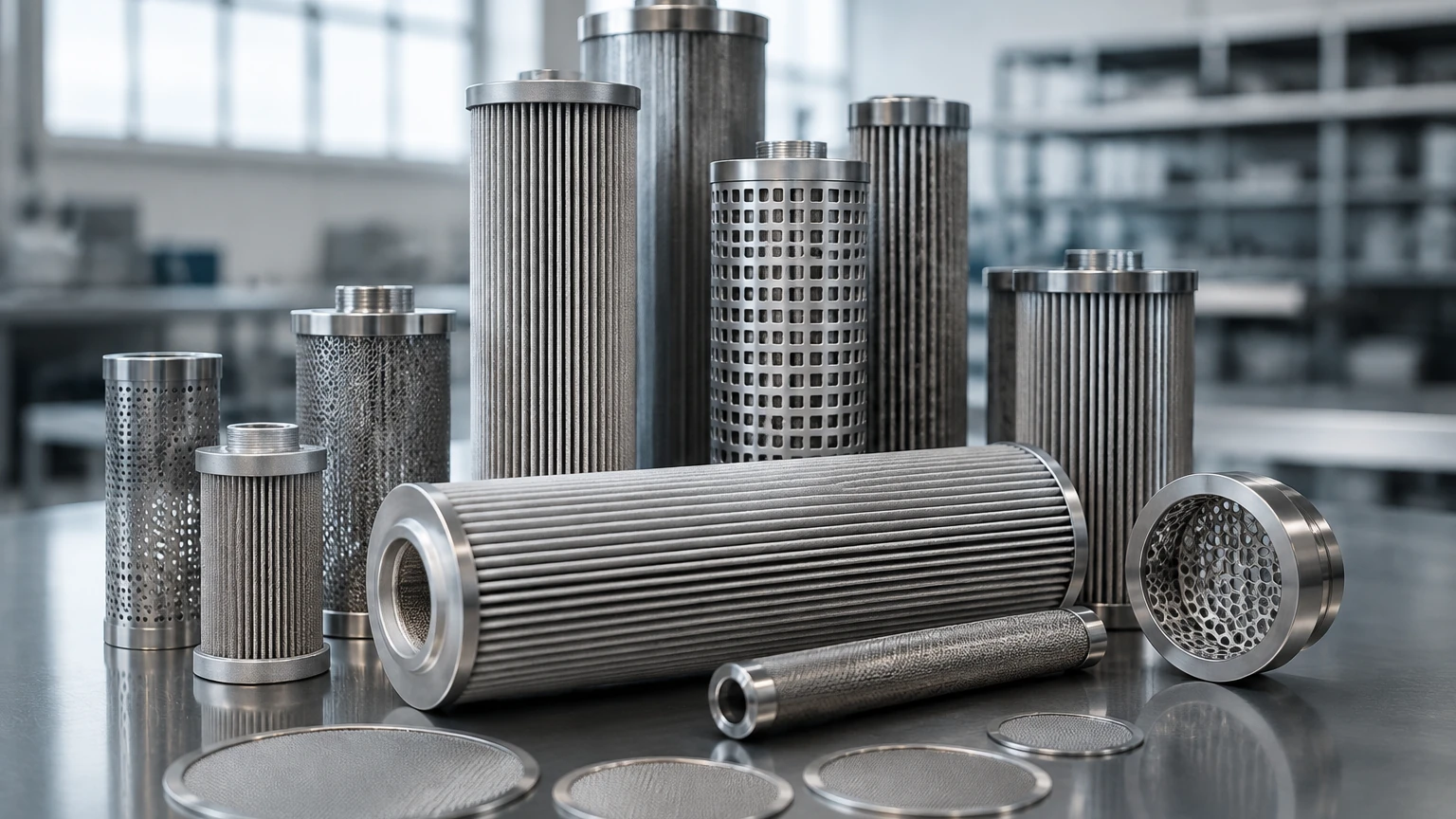
While many filter press manufacturers provide standard synthetic cloth media, certain high-performance applications benefit significantly from stainless steel wire mesh or sintered metal filters. The choice of media dictates the filtration accuracy (measured in microns) and the ease of cake discharge.
* Synthetic Cloth: Generally lower in initial cost and flexible, but prone to blinding, stretching, and chemical degradation over time. They often require frequent replacement cycles.
* Stainless Steel Wire Mesh: Offers superior mechanical strength and precise pore size distribution. Wire mesh media are ideal for high-temperature applications where synthetic fibers would melt or lose structural integrity. Furthermore, stainless steel mesh provides a rigid surface that facilitates better cake release and can be ultrasonically cleaned, extending the service life of the media.
When selecting a manufacturer, it is vital to discuss whether their equipment can be outfitted with custom-engineered metal filter elements. Precision-manufactured wire mesh filters provide the durability needed for the most demanding industrial environments, reducing the total cost of ownership by minimizing downtime for media changes.
Identifying Risks in the Procurement Process
Procuring a filter press involves several risks that can lead to operational bottlenecks if not addressed during the selection of filter press manufacturers. Common risks include:
* Proprietary Part Lock-in: Some manufacturers design their systems to only accept proprietary filter plates or cloths, forcing the end-user into expensive, long-term supply contracts. It is advisable to seek manufacturers who utilize industry-standard dimensions or provide open-source specifications for consumables.
* Inadequate Testing: Slurry characteristics can vary significantly even within the same industry. Manufacturers who do not offer pilot-scale testing or laboratory analysis of the slurry run the risk of under-sizing the equipment.
* Poor After-Sales Support: A filter press is a mechanical system that will eventually require seal replacements, hydraulic maintenance, and technical troubleshooting. Choosing a manufacturer with a documented support structure and available spare parts inventory is essential for maintaining plant uptime.
* Substandard Weld Quality: In stainless steel systems, poor welding can lead to crevice corrosion and structural failure. Engineers should verify the manufacturer’s welding certifications and quality control processes, particularly for pressure-rated components.
Customization Options and Engineering Collaboration
Top-tier filter press manufacturers distinguish themselves through their ability to provide customized engineering. Off-the-shelf solutions rarely meet the exact needs of complex industrial processes. Customization might involve specialized cake wash manifolds, automated plate shakers to assist in cake discharge, or integrated safety light curtains for operator protection.
Collaboration between the manufacturer and the client’s engineering team is necessary to integrate the filter press into the broader plant PLC (Programmable Logic Controller) system. This allows for automated cycles where the feed pump, air blow-down, and plate opening are all synchronized to maximize throughput.
Furthermore, for applications requiring high-precision filtration, manufacturers like Kaifil offer the capability to develop custom stainless steel filtration solutions that complement the primary separation process. Whether it is a specialized filter cartridge for polishing the filtrate or custom wire mesh components for the press itself, engineering-led customization ensures the system performs to its theoretical maximum.
Total Cost of Ownership (TCO) Considerations
When comparing quotes from different filter press manufacturers, the initial purchase price is often a misleading metric. A comprehensive evaluation must include the Total Cost of Ownership (TCO), which accounts for:
1. Energy Consumption: The efficiency of the hydraulic power pack and the feed pump's energy requirements.
2. Consumables Cost: The frequency and price of replacing filter cloths or plates. As noted, investing in durable stainless steel media can often reduce this long-term cost.
3. Labor Costs: Systems with high levels of automation require fewer man-hours to operate and clean.
4. Disposal Costs: A dryer filter cake results in lower weight and volume, significantly reducing the costs associated with transporting and disposing of waste solids.
5. Downtime: The reliability of the components and the ease of maintenance determine how much production time is lost each year.
By focusing on these factors, purchasing teams can justify a higher initial investment in a premium, well-engineered system that offers lower operational costs over its 15-to-20-year lifespan.
Technical Checklist for Selecting Filter Press Manufacturers
Before finalizing a contract with a manufacturer, engineers should confirm the following details to ensure the equipment is fit for purpose:
* Micron Rating: Does the media provide the required clarity for the filtrate? Is the pore size distribution consistent across the entire filtration area?
* Pressure Rating: Is the frame and plate stack rated for the maximum possible pressure the feed pump can deliver?
* Chemical Compatibility: Have all wetted parts (O-rings, gaskets, plates, manifolds) been verified against the chemical profile of the slurry at operating temperatures?
* Cycle Time Estimates: Based on pilot testing, what is the expected time for filling, filtration, cake washing, and air blow-down?
* Compliance: Does the equipment meet relevant industrial standards (e.g., ASME for pressure vessels, CE marking, or specific food-grade certifications)?
Industrial filtration is a precise science. By partnering with filter press manufacturers who prioritize engineering integrity and material quality, facilities can achieve reliable, repeatable separation results. For those looking to optimize their filtration systems with high-performance metal components, exploring the technical resources and product options available from specialized manufacturers like Kaifil provides a path toward enhanced durability and precision. Review product options and application support on the Main Page to see how custom stainless steel solutions can be integrated into your industrial filtration workflow.
